Finding The Best Home Exercise: Why Tempo Beats Heavy Weights
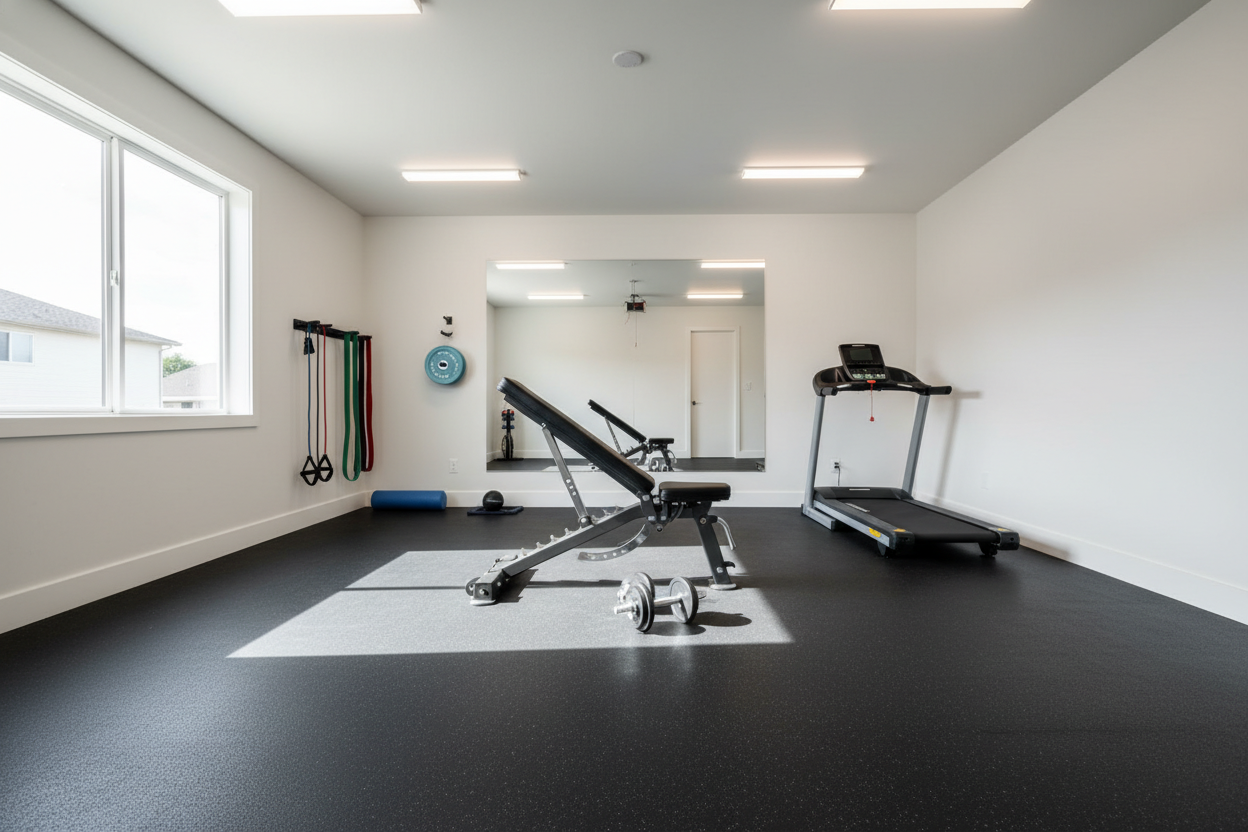
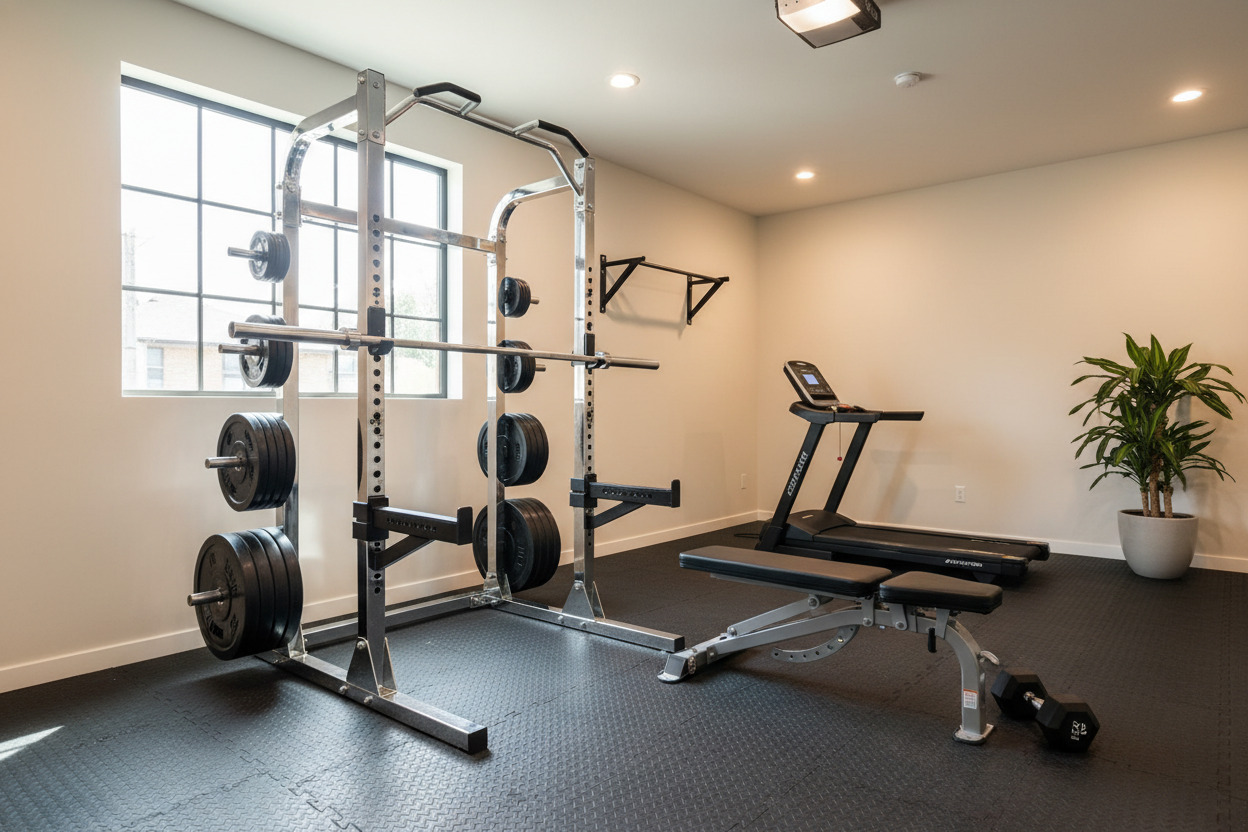
I remember walking into my client Mark's apartment a few years ago. He lived in a cramped 500-square-foot studio and was convinced he needed to buy a $1,500 squat rack and 300 pounds of iron to see any real muscle growth. His living room looked like a storage locker for cast iron. He was frustrated, out of space, and desperately searching for the best home exercise to get results without entirely sacrificing his floor plan.
I told him to sell the plates. As a personal trainer who has built and tested dozens of home setups, I see this mistake constantly. People assume that to get bigger and stronger, you must constantly add more weight to the bar. But your muscles do not know how much weight you are lifting. They only understand tension.
If you learn how to manipulate the speed of your repetitions, you can make a simple bodyweight squat feel like you are carrying a heavy barbell on your back. This concept is called tempo manipulation. By strictly controlling the speed of each phase of a movement, you dramatically increase the time under tension, forcing your muscle fibers to adapt and grow.
Quick Takeaways for Tempo Training
- Tension over load: Your muscles respond to mechanical stress, which you can create by slowing down your movements.
- Zero equipment required: Tempo manipulation turns basic bodyweight moves into grueling hypertrophy tools.
- Joint friendly: Slower reps drastically reduce the sheer force on your knees, elbows, and shoulders.
- Space saving: You only need enough floor space to lay down, completely eliminating the need for bulky racks and weight trees.
The Myth of Needing More Weight at Home
Most home trainees fall into the trap of thinking they need expensive, heavy equipment to see physical changes. You might buy a pair of 5-52.5 lb adjustable dumbbells, use them for a few months, and then feel stuck when your chest press maxes out. The immediate reaction is to hunt down heavier plates or an entirely new machine.
This mindset stems from traditional gym culture, where adding five pounds to the bar every week is the holy grail of progress. But mechanical tension is the true driver of muscle growth, not just the external load. Tension is created when a muscle is forced to contract against resistance. If you change the parameters of that resistance—specifically how long the muscle is forced to work during a single repetition—you completely change the stimulus.
I have trained clients who could easily knock out forty fast, sloppy bodyweight squats but collapsed halfway through a set of ten strictly timed, slow-motion squats. When you eliminate momentum, you take away your body's ability to cheat. Bouncing out of the bottom of a push-up relies on the elastic energy of your tendons. Forcing a dead-stop pause at the bottom forces the muscle bellies to do 100 percent of the work. You do not need more weight; you need more discipline in your execution.
Understanding the Tempo Manipulation Strategy
To get the most out of the best home fitness exercises, you need to understand how a repetition is broken down. Every lift consists of three distinct phases: the eccentric, the isometric, and the concentric.
The eccentric phase is the lowering portion of the movement, like dropping down into a squat. The isometric phase is the pause at the bottom or top, where the muscle is under tension but not changing length. The concentric phase is the actual lifting portion, where you push back up to the starting position.
In a standard, rushed workout, a trainee might take one second to drop down, zero seconds to pause, and one second to push up. That is two seconds of tension per rep. A set of ten reps takes twenty seconds. Now, imagine applying a tempo strategy. You take four seconds to lower yourself, pause for two seconds at the bottom, and take two seconds to push back up. That is eight seconds of tension per repetition. A set of ten reps now takes eighty seconds.
You just quadrupled the time your muscles spend working without adding a single ounce of external weight. This prolonged exposure to tension creates massive metabolic stress and micro-tears in the muscle fibers, which is exactly what triggers hypertrophy. Slowing down the eccentric phase is particularly effective because your muscles can handle more force while lengthening, making it the prime phase for stimulating muscle damage and subsequent growth.
The Core Movements for Your Tempo Routine
When selecting the best in home exercises for a tempo routine, you want to focus on foundational compound movements. Isolation exercises like bicep curls are fine, but massive muscle recruitment comes from squats, hinges, and pushing variations.
Because you are moving slowly and focusing on the mind-muscle connection, stability becomes your biggest limiting factor. You cannot execute a perfect 5-second eccentric descent if your feet are sliding apart on a slick hardwood floor. Before you start, setting up a large exercise mat gives you the dedicated, non-slip traction required to safely perform these grinding repetitions.
Once your foundation is secure, you can start applying tempo to the basics. The beauty of this method is that it requires intense focus. You are not just repping out movements while watching television; you are actively counting, squeezing, and fighting gravity every single inch of the way.
The 4-1-2-1 Squat Protocol
The bodyweight squat is often dismissed as a warm-up, but the 4-1-2-1 protocol turns it into a brutal leg builder. Here is how it works: you will take 4 seconds to lower your hips, 1 second to pause at the very bottom, 2 seconds to stand back up, and 1 second to reset at the top.
Start with your feet shoulder-width apart. As you initiate the descent, count slowly: one, two, three, four. You should reach the bottom of your range of motion right as you hit four. Hold that bottom position for a strict one-second count. Do not rest your hamstrings on your calves; keep the tension active in your quads and glutes.
Now, drive through your heels and take two full seconds to return to the standing position. Squeeze your glutes for one second at the top before starting the next rep. Try to complete 4 sets of 12 reps with this exact tempo. By rep eight, your quads will be burning significantly more than they would with a standard barbell back squat.
The 3-2-1-1 Push-Up Protocol
Upper body pushing responds incredibly well to tempo manipulation. For the 3-2-1-1 push-up protocol, you will use a 3-second descent, a 2-second hover at the bottom, a 1-second explosive push upward, and a 1-second reset.
Get into a tight plank position. Lower your chest toward the floor over three seconds. The crucial part of this protocol is the 2-second hover. Stop your descent when your chest is exactly one inch off the floor. Hold that hover, keeping your core braced and your elbows tucked tight.
This isometric hold eliminates the stretch reflex and forces maximum recruitment from your chest and triceps. After the two seconds, press up forcefully in one second. Take a one-second breath at the top, then repeat. Aim for 3 sets to failure. You will likely find your push-up numbers cut in half, but your chest development will accelerate rapidly.
Setting Up Your Space for Floor-Based Tension
When you commit to tempo training, you will spend a lot of time grinding out slow reps on the floor. This demands intense joint stability. If your hands or feet shift even a fraction of an inch during a 4-second eccentric push-up, you lose the tension in the target muscle and transfer the strain to your joints.
This is why high-quality, supportive flooring is a non-negotiable part of your setup. When you choose the best exercise mat, you need to prioritize high-density foam that will not compress completely under your body weight. Cheap, squishy yoga mats will bottom out, leaving your wrists and knees grinding against the subfloor during those brutal isometric pauses.
You also need enough surface area to move freely. For most of my clients, a 6x8ft exercise mat is the ideal dimension. It easily fits into a standard 6x6 ft or 8x8 ft clearing in a living room while providing enough runway to perform walking lunges, wide-grip push-ups, and lateral planks without constantly stepping off the edge. Once your floor space is dialed in, your only focus is fighting the clock.
When to Finally Add Resistance Machines
Tempo training is incredibly effective, but it does have a natural ceiling. Eventually, your muscles will adapt to the extended time under tension, and you will find yourself able to perform 20 or 30 reps of a 4-1-2-1 squat without hitting failure.
When you reach the point where you can easily knock out 15 strict reps of the 3-2-1-1 push-up, your body is signaling that it is ready for a new stimulus. This is the milestone that indicates it is time to invest in heavier equipment. At this stage, looking into the best exercise machines for home makes sense because you have built the foundational joint stability and mind-muscle connection required to safely handle mechanical resistance.
Personal Experience: The Mental Toll of Tempo
I actively test everything I program. Last year, I spent six weeks doing exclusively bodyweight tempo workouts in my living room to see how it compared to my standard barbell routine. The physical pump was undeniable, but I want to be honest about the downside: it is incredibly mentally taxing.
Counting seconds while your muscles are screaming requires a level of focus that standard lifting does not. It is easy to cheat the count when the burn sets in. A four-second eccentric quickly becomes a two-second drop if you lose focus. I highly recommend using a metronome app on your phone. Hearing the physical ticks keeps you honest and ensures you are actually getting the time under tension you need.
Frequently Asked Questions
How often should I do tempo workouts?
Because tempo training causes significant muscle damage through slow eccentrics, you need adequate recovery. I recommend 3 to 4 days a week, alternating between upper body and lower body focus.
Does tempo training build mass or just endurance?
It absolutely builds mass. By keeping the muscle under tension for 45 to 90 seconds per set, you tap directly into the hypertrophy rep range, triggering the metabolic stress required for muscle growth.
Can I use tempo with dumbbells?
Yes. Once you master bodyweight tempo, you can apply the exact same 4-1-2-1 or 3-2-1-1 counts to goblet squats, dumbbell bench presses, and rows to dramatically increase the difficulty of light weights.