The Only 4 Exercises for Strength and Flexibility I Actually Do
I remember sitting on my cold garage floor for twenty minutes every Sunday, trying to touch my toes and breathing through the boredom. It didn't work. The second I got under a heavy barbell on Monday morning, my hips felt like rusted hinges again, and my back was just as stiff as before. Passive stretching is a lie for most lifters because your brain won't let your muscles relax into a range of motion it can't actually control.
I finally ditched the traditional 'mobility day' and started using exercises for strength and flexibility that actually carry over to my heavy sessions. If you want to stop feeling like a tin man, you have to stop separating your lifting from your stretching. You need to load the stretch.
- Passive stretching is a temporary fix; loaded movement creates permanent change.
- Full range of motion (ROM) is the best mobility tool in your arsenal.
- Focus on eccentric control to 'tell' your nervous system the new range is safe.
- Invest in a grippy floor; you can't get mobile if you're slipping.
Why I Stopped Stretching and Started Loading
Passive stretching doesn't stick because your nervous system doesn't trust the new range of motion. If you pull a muscle into a deep stretch without any tension, your brain sees that as a vulnerability. The moment you stand up, your muscles tighten back up to protect the joint. It's a survival mechanism, not a lack of 'suppleness.'
Integrating strength and flexibility training is the only way to make your mobility gains permanent. While some people get great results using targeted yoga exercises for buttocks and thighs, barbell athletes usually respond better to loaded resistance. We need the weight to physically pull us into those deep corners of the joint where we normally don't venture.
The 'Two Birds, One Stone' Muscle Method
Loaded stretching is the secret. By taking a heavy weight through a full range of motion, you create a flexibility and strength workout that effectively lengthens the muscle under tension. Think of it as eccentric training with an attitude. You aren't just getting stronger; you're teaching your body to be strong in positions where you are currently weak and tight.
This method builds 'usable' range. It’s one thing to have the flexibility to do a split on a mat; it’s another thing to have the strength to stand back up out of one. We want the latter. This approach saves me about 45 minutes a week that I used to waste on foam rolling.
My 4 Go-To Movements for Iron-Clad Mobility
These aren't fluff movements. These are legitimate strength and flexibility exercises that I program as primary or secondary lifts. If you treat these like a casual warm-up, you won't get the adaptation. You need to push the intensity while maintaining a strict, deep range of motion.
1. The Deficit Romanian Deadlift
Standard RDLs are great, but the deficit RDL is a different beast. By standing on a 2-inch plate or a small platform, you remove the floor as an obstacle. This forces an extreme stretch on the hamstrings and glutes at the bottom of the movement. It is arguably the best exercise for flexibility and strength in the posterior chain because it forces you to control a heavy load in a fully lengthened position.
I recommend using straps or other strength training accessories to ensure your grip doesn't fail before your hamstrings get that deep, painful stretch. Focus on pushing your hips back as far as possible until you feel like your hamstrings are about to snap (in a good way).
2. Ass-to-Grass Goblet Squats with a Pause
The goblet squat is the ultimate 'joint un-gluer.' Holding a heavy kettlebell or dumbbell against your chest acts as a counterweight, allowing you to keep your torso upright. This opens up tight ankles, hips, and the thoracic spine simultaneously. I don't just squat; I sit at the bottom for a three-second count, using my elbows to pry my knees apart. It’s a total flexibility strength workout disguised as a leg exercise.
3. The Deep Dumbbell Pullover
This is an old-school bodybuilding staple that most modern lifters ignore. It’s a secret weapon for upper body mobility. By letting the dumbbell sink behind your head while lying across a bench, you create a massive loaded stretch across the lats, chest, and triceps. If you have 'overhead' issues during presses, this movement will fix your thoracic extension faster than any PVC pipe drill.
4. Weighted Cossack Squats
Most powerlifters move exclusively in the sagittal plane (forward and back). This makes our adductors and hips incredibly stiff. The weighted Cossack squat forces you to move laterally. Holding a weight at your chest while squatting deep into one leg bulletproofs the adductors and fixes the rigid, robotic movement patterns that lead to groin strains and hip impingement.
You Can't Do Loaded Mobility on Slippery Concrete
Safety is the elephant in the room here. When you are holding a 70-lb kettlebell in a deep Cossack squat, your nervous system is on high alert. If your feet start to slide on cheap foam or bare garage concrete, your brain will panic and cause your muscles to seize up to prevent a tear. You won't get the stretch, and you might get hurt.
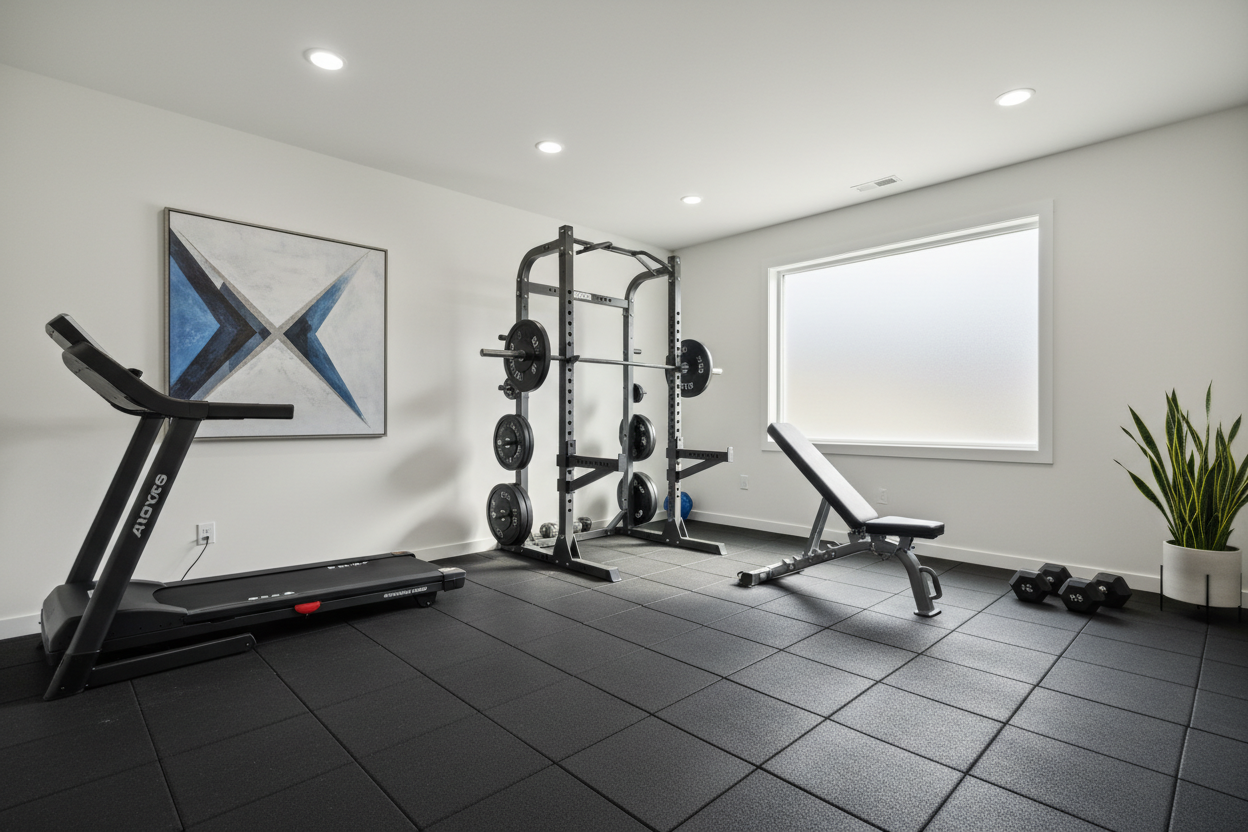
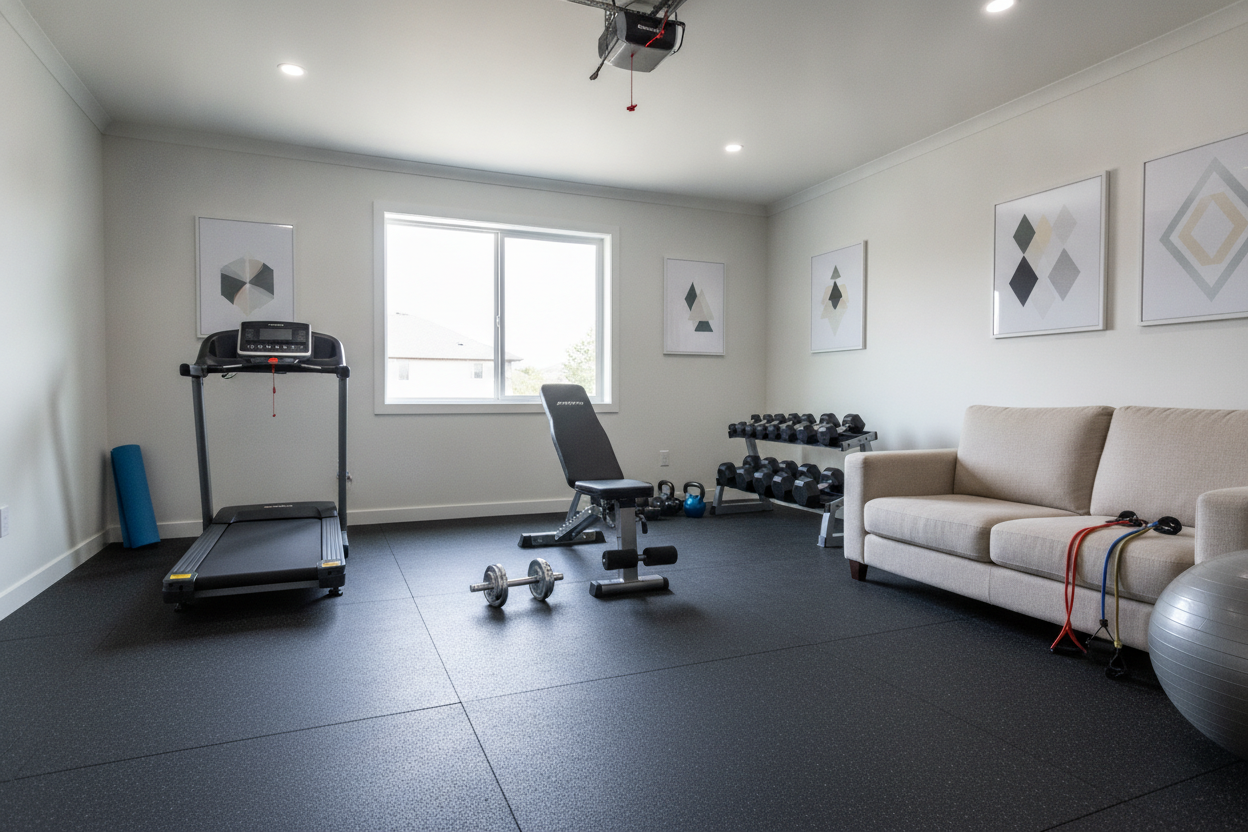
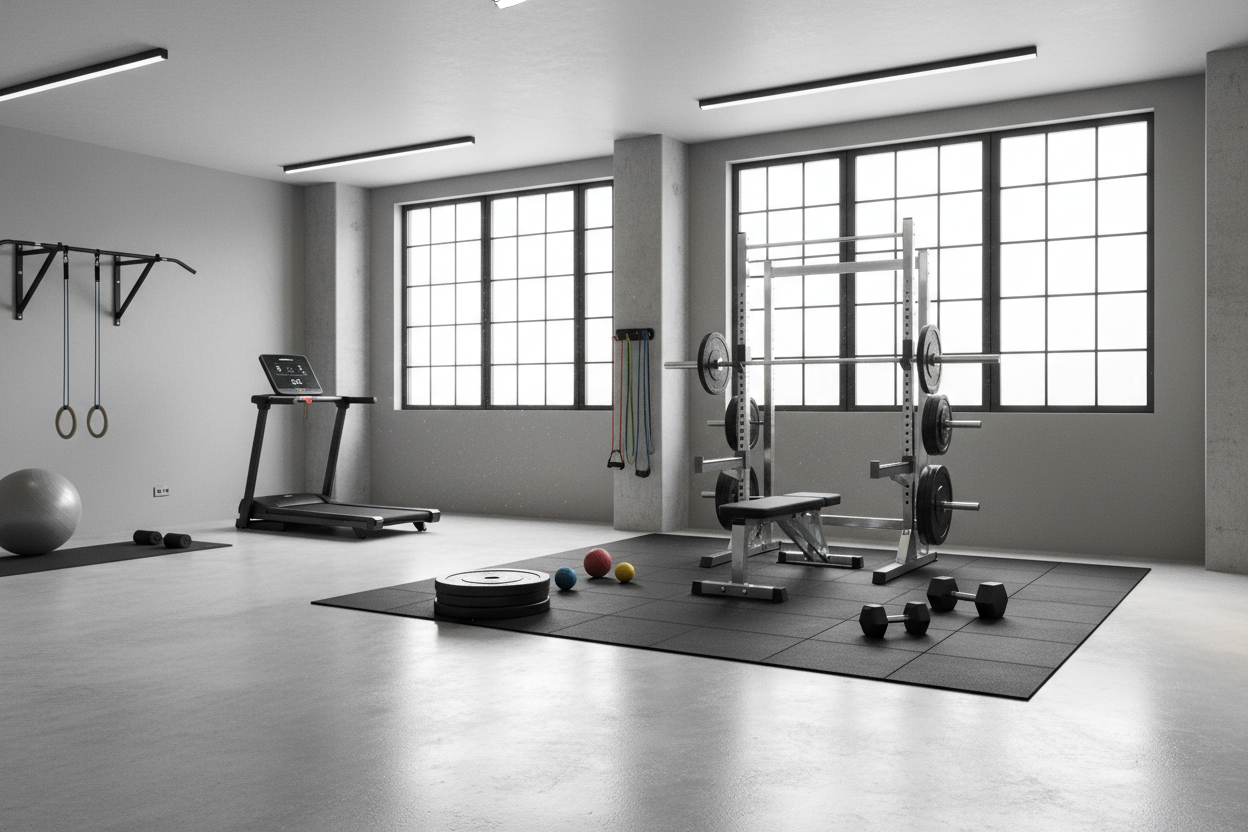
A solid foundation is mandatory for a proper flexibility strength workout. I've learned the hard way that investing in grippy, high-density gym flooring for home workouts is non-negotiable. You need to know that when you drive your heel into the floor, it isn't going anywhere. That stability allows your nervous system to 'relax' into the strength and flexibility training.
How to Program This Without Wrecking Your Recovery
Don't just add these on top of a high-volume program. Replace one standard lift per day with one of these hybrid flexibility and strength exercises. For example, swap your standard leg curl for the Deficit RDL. Use the Goblet Squat as your primary squat variation for a 4-week block. Aim for higher reps (8-12) and slow eccentrics. You aren't trying to hit a 1-rep max here; you're trying to master the range.
FAQ
Is this better than yoga?
For a lifter, usually yes. It builds the specific strength needed to handle heavy loads in deep positions, which yoga often misses.
How often should I do these?
Pick two and rotate them into your current split. Doing these twice a week is plenty to see massive changes in how your joints feel.
Will this make me sore?
Yes. Loaded stretching creates significant muscle damage because of the eccentric focus. Start light and focus on the feel of the stretch rather than the weight on the bar.