How to Sculpt Strength Using Yoga Exercises for Buttocks and Thighs
Many people mistakenly view yoga as purely a flexibility practice, reserving leg day for the squat rack. This is a missed opportunity for functional strength. While heavy lifting builds bulk, yoga exercises for buttocks and thighs create dense, lean muscle through isometric holds and eccentric loading. If you want legs that are not just strong but also stable and enduring, you need to change how you view your mat practice.
Key Takeaways
- Time Under Tension: Unlike quick gym reps, yoga holds force muscles to stay contracted longer, building endurance.
- Compound Movement: Poses like Warrior II engage the thighs, glutes, and core simultaneously for functional stability.
- Mind-Muscle Connection: Slow transitions prevent momentum from taking over, ensuring the targeted muscle groups do the work.
- Injury Prevention: Strengthening the stabilizing muscles around the hips and knees protects joints during other activities.
The Mechanics of Yoga for Lower Body Hypertrophy
To understand why yoga for thighs and bum works, we have to look at muscle physiology. In a gym setting, you often rely on concentric movement (shortening the muscle). Yoga relies heavily on isometric contraction (holding a position under tension) and eccentric contraction (lengthening the muscle under load).
When you hold a pose like Chair Pose (Utkatasana), you aren't just sitting there. You are forcing the quadriceps and gluteus maximus to fire continuously to fight gravity. This increases time under tension (TUT), a critical factor in muscle growth and toning. It activates the slow-twitch muscle fibers that contribute to that lean, sculpted look rather than bulky mass.
Core Poses for Glute and Quad Development
You don't need a complex flow to see results. You need precision. Here is how to execute the most effective movements.
The Warrior Series (Virabhadrasana)
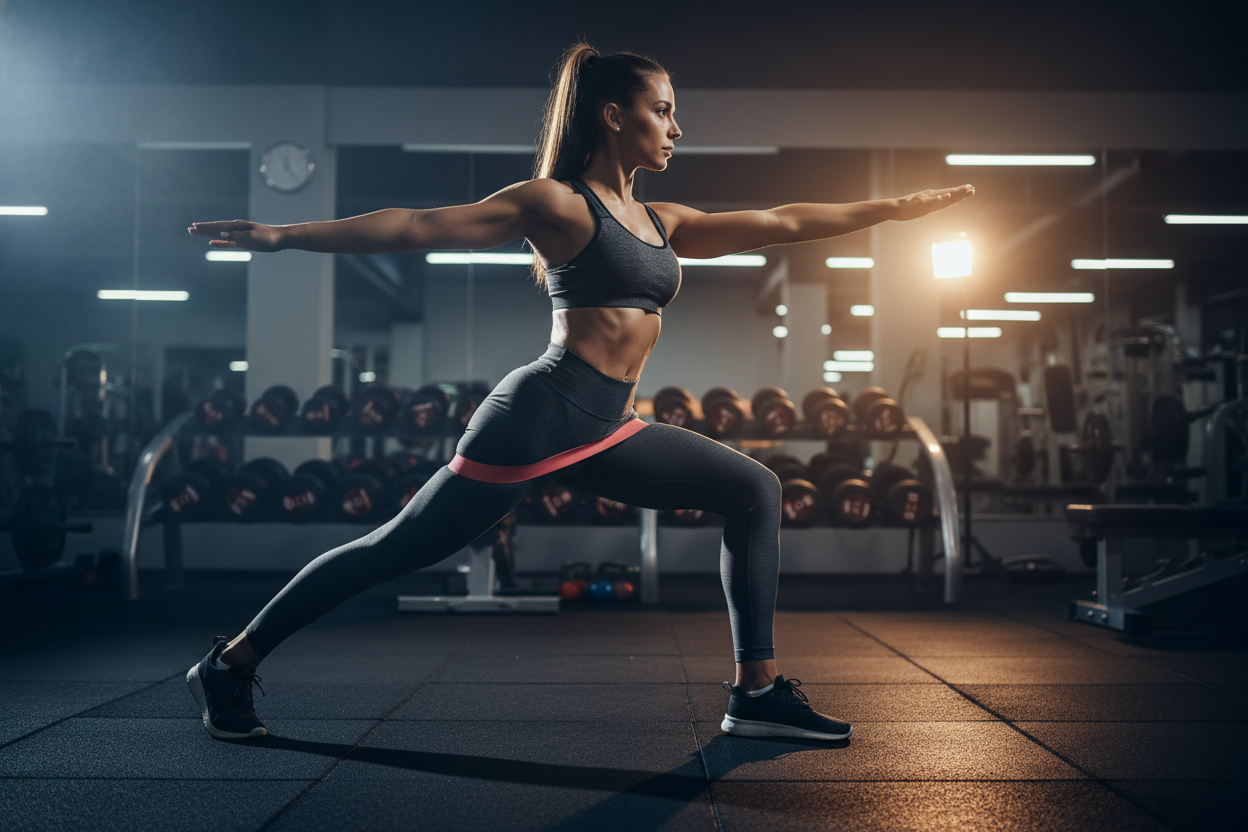
Warrior I and II are staples of yoga for thighs and buttocks. The front leg acts as a stabilizer, firing the quadriceps, while the back leg requires intense glute activation to keep the hips open and grounded. The secret here is depth; bringing the front thigh parallel to the floor significantly increases the load on the glute muscles.
Chair Pose (Utkatasana)
This is essentially a static squat. To target the posterior chain (the back of the legs and bum), shift your weight into your heels. You should be able to wiggle your toes. This shift forces the glutes to take the load off the knees. For added intensity, squeeze your inner thighs together to activate the adductors.
Bridge Pose (Setu Bandhasana)
While often used as a backbend, Bridge is a premier exercise for posterior strength. By driving through the heels and lifting the hips, you isolate the glutes. Avoid clenching the buttocks aggressively; instead, focus on lengthening the tailbone toward the knees to engage the hamstrings and lower glutes evenly.
Modifying for Beginners
If you are looking for yoga for buttocks and thighs for beginners, the intensity of holding these poses can be shocking. It is acceptable to pulse in and out of the pose rather than holding it statically. For example, in Chair pose, straighten the legs on the inhale and sink back down on the exhale. This dynamic movement builds heat without overwhelming the muscles to the point of failure.
My Personal Experience with Yoga for Buttocks and Thighs
I used to think I had strong legs because I could leg press a decent amount of weight. Then I took a power yoga class that focused on long holds. I vividly remember being in a high lunge variation about 20 minutes in. My front leg started doing what I call the "sewing machine leg"—that uncontrollable, violent shaking where your heel bounces off the mat.
It wasn't a lack of strength; it was a lack of stability. The most humbling moment wasn't the shaking, though. It was the cramp I got right in the "gluteal fold" (where the butt meets the hamstring) during a transition to Warrior III. It felt like a knot being tied inside my leg. That specific, deep burn is something I never got from a machine. It taught me that my big muscles were strong, but my stabilizers were asleep. Once I embraced that shake, my squat form actually improved because my hips finally learned how to stabilize the load.
Conclusion
Building a strong lower body doesn't strictly require iron plates. By utilizing gravity and your own body weight, you can build exceptional strength and definition. Consistency is the key variable here. Commit to these holds, embrace the shake, and watch your stability improve.
Frequently Asked Questions
Can yoga really replace squats for building glutes?
Yoga can build significant muscle tone and endurance, but it triggers muscle growth differently than heavy weighted squats. For maximum size (hypertrophy), weights are superior. For lean definition, stability, and endurance, yoga is incredibly effective.
How often should I do yoga for thighs and bum to see results?
Aim for 3 to 4 sessions per week. Because yoga is lower impact than heavy lifting, you can perform these exercises more frequently with less recovery time needed between sessions.
Is yoga effective for reducing cellulite on thighs?
While no exercise can spot-reduce fat or completely erase cellulite (which is largely genetic), increasing muscle tone in the glutes and thighs can smooth the appearance of the skin by creating a firmer foundation underneath it.