I Built a Routine of At Home Exercises for Seniors Using Just a Couch
I spent last weekend helping my 70-year-old neighbor move a heavy coffee table, and it hit me: the fitness industry is failing older adults. We keep seeing commercials for those flimsy seated pedal machines or 'as-seen-on-tv' chair gyms that offer zero real-world utility. If you want to stay independent, you don't need a gadget; you need a plan for at home exercises for seniors that actually mimics life.
I've built out dozens of home gyms, and the most effective 'equipment' I've ever seen for an elderly home workout is already in your living room. It's your sofa. By using furniture as a bench, a squat box, or a support beam, you can build the kind of strength that makes grocery trips and stairs feel easy again.
- Functional strength beats bicep curls every time.
- Safety starts with a high-traction floor surface.
- The kitchen counter is a better chest press than any machine.
- Control the 'down' phase of every movement to build muscle faster.
Why the 'Deep Sofa Test' Matters More Than Bicep Curls
Most home exercise for older adults focuses on 'toning' the arms. That’s fine for aesthetics, but it won't help you if you’re stuck in a low, plush armchair. I call this the Deep Sofa Test. If you need to rock your body weight forward three times or use your hands to shove yourself off the cushion, your functional leg strength is lagging.
Isolating muscles with seated curls is practically useless if you struggle with basic transitions. We need to focus on compound movements. When we talk about simple exercises for seniors, we’re really talking about training the nervous system to handle your own body weight under control. If you can’t squat to a bench, you can't use a public restroom or get out of a car easily. That is the reality of independence.
First, Fix Your Slippery Living Room Floor
The biggest barrier to senior home exercise isn't lack of motivation; it's the fear of falling. Most living rooms are a nightmare of area rugs that slide and hardwood floors that offer zero grip. You can't focus on your form if you're worried about your feet 'skating' away from you during a home workout for seniors.
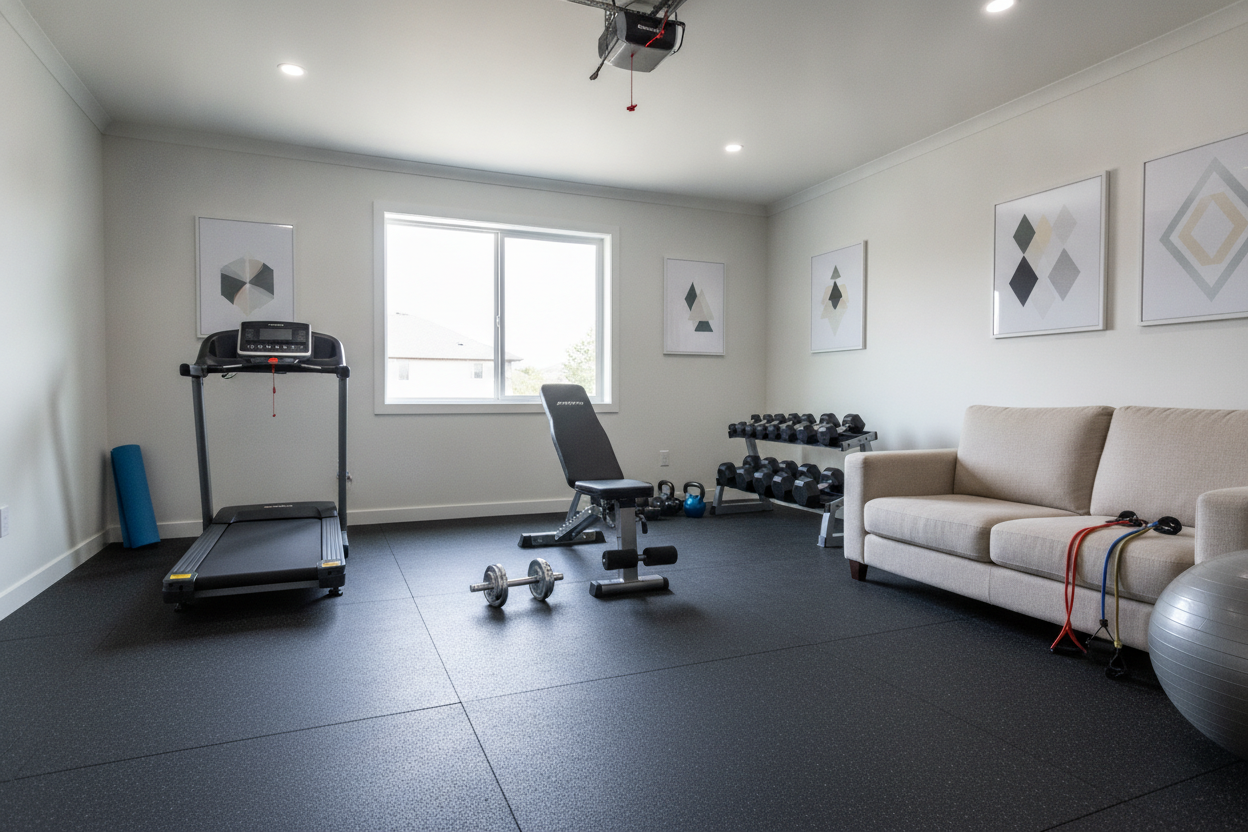
Before you do a single rep, create a 'Safe Zone.' Rolling out a large exercise mat for home gym use is the fastest way to fix a dangerous floor. I usually recommend a 6x8ft exercise mat because it provides a massive, high-traction footprint right in front of your couch. This gives you enough room to move laterally without your sneakers catching on the edge of a rug or sliding on polished wood.
The 3 Non-Negotiable At Home Exercises for Seniors
You don't need a 20-step home exercise routine for seniors. You need three movements that cover your entire body. These translate gym mechanics—the squat, the press, and the hinge—into easy exercise for seniors at home using what you already own.
1. The Couch Box Squat
This is the king of home exercises for seniors. Stand in front of your sofa with your feet shoulder-width apart. Instead of just flopping down, take three full seconds to lower your hips until they graze the cushion. Don't fully sit. The second you feel the fabric, drive through your heels to stand back up. This eccentric control is what builds the stability you need for stairs.
2. The Kitchen Counter Press
Forget floor push-ups; they are hard on the wrists and shoulders. Stand a few feet back from your kitchen counter and place your hands on the edge. Lower your chest toward the counter, keeping your elbows tucked at a 45-degree angle. This simple exercise for seniors targets the chest and triceps while keeping you upright and safe. It’s the best way to maintain upper body pushing power.
3. The Doorway Hinge
To prevent back pain, you have to learn to hinge at the hips, not the spine. Stand in a doorway and hold the frame for balance. Soften your knees and push your butt straight back as if you're trying to close a drawer with your tailbone. You should feel a stretch in your hamstrings. This simple home exercises for seniors staple protects your back every time you reach down to pick up a grandkid or a bag of mulch.
When Is It Time to Add Real Resistance?
Bodyweight is a great starting point, but the human body is smart—it adapts. Eventually, the easy exercises for older people won't feel challenging anymore. If you can do 15 couch squats without breaking a sweat, it’s time to add a load. This doesn't mean you need a 300-lb barbell, but you do need a way to progressively challenge your muscles.
Don't get sucked into buying those plastic 'as-seen-on-TV' weights that leak sand. When you're ready to level up, check out a best home exercise equipment for seniors guide to see what actual trainers recommend. A pair of adjustable dumbbells or a high-quality resistance band set will last a lifetime, whereas the cheap stuff usually ends up in a garage sale within six months.
Personal Experience: The 'Mom' Test
I tried to get my mother on a standard home exercise program for seniors a few years ago. I gave her a list of floor exercises. She did them once and quit. Why? Because getting down to the floor and back up was more exhausting than the actual exercise. We pivoted to this furniture-based routine—using the counter and the sofa—and she hasn't missed a session in two years. The best routine is the one you actually do because it doesn't feel like a chore.
FAQ
How many days a week should I do these exercises?
Aim for three non-consecutive days. Your muscles need 48 hours to recover and grow stronger. Monday, Wednesday, and Friday is a classic schedule for a seniors workout at home.
Should I wear shoes or go barefoot?
If you have a high-traction mat, barefoot is great for foot strength. However, if you have balance issues or neuropathy, wear a supportive pair of sneakers for better stability during your home exercise elderly routine.
What if my knees hurt during squats?
Don't go as low. Place a firm pillow or two on the couch to raise the 'floor.' As you get stronger, remove the pillows one by one. This is the easiest way to scale easy exercises for older adults.