Reclaim Your Mobility: The Best Home Exercise Equipment for Seniors Guide
Maintaining independence starts with maintaining muscle mass and cardiovascular health. But let’s be honest: walking into a commercial gym can feel intimidating, loud, and frankly, unsafe for many older adults. You want to stay strong, but you don't want to risk a fall or a strained lower back. That is why finding the best home exercise equipment for seniors is about more than just fitness—it is about investing in your longevity and quality of life.
We aren't looking for massive weights or complicated pulleys here. We are looking for stability, low-impact movement, and ease of use. Let's break down exactly what you need to build a safe, effective sanctuary for your health right in your living room.
Key Takeaways: Quick Summary
If you are in a rush, here is the shortlist of the safest, highest-value gear categories for older adults:
- Recumbent Bikes: The gold standard for cardio. Offers lumbar support and eliminates balance risks associated with upright bikes.
- Resistance Bands with Handles: Safer than dumbbells for joints; provides variable resistance without the risk of dropping weights.
- Ellipticals (with fixed handles): excellent for low-impact bone density building without the jarring impact of a treadmill.
- Stability Balls: Essential for core strength and balance training, but requires supervision initially.
- Rowing Machines: Provides a full-body workout with zero impact on the knees or hips.
The Science of Senior Fitness: What to Look For
Before you buy the shiny gadget you saw on TV, you need to understand the biomechanics of aging. The best home fitness equipment for seniors must address three physiological realities: Sarcopenia (muscle loss), Osteopenia (bone density reduction), and proprioception (balance).
When selecting gear, prioritize ergonomics over intensity. Equipment that forces you into an unnatural posture or requires high-velocity movement increases cortisol and injury risk. We want equipment that supports the spine and allows for a full range of motion without joint shearing.
Cardio: Why Recumbent is King
When discussing the best in home exercise equipment for seniors regarding cardio, the recumbent bike is unrivaled. Unlike a treadmill, which carries a fall risk, or an upright bike that compresses the lumbar spine, a recumbent bike places the rider in a laid-back reclining position.
The Spinal Benefit
This position distributes your weight over a larger surface area (your back and buttocks), drastically reducing the pressure on the hips and lower back. For anyone managing spinal stenosis or arthritis, this machine allows you to elevate your heart rate without the accompanying pain.
Strength Training: Bands vs. Iron
Many home gyms for seniors rely heavily on old, rusted dumbbells. While free weights are effective, they rely on gravity. If your grip strength fails, gravity takes over, and that weight is heading for your toes.
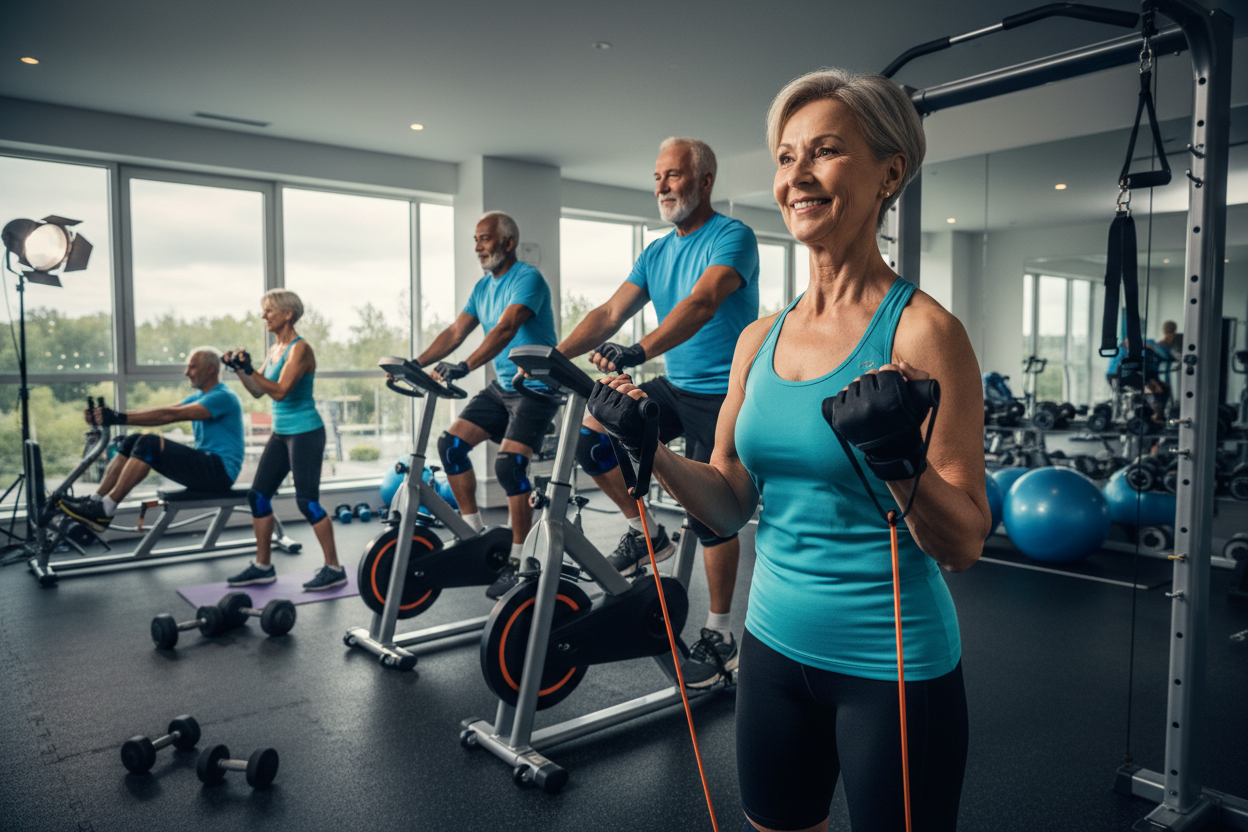
A superior alternative is resistance bands—specifically those with ergonomic handles. The "science" here is Linear Variable Resistance. As you stretch the band, the resistance increases. This matches your muscle's natural strength curve; you are strongest at the peak of the movement, which is exactly where the band provides the most tension. It is joint-friendly and eliminates the momentum cheating common with dumbbells.
The All-In-One Solution
If you have the budget and space, looking for the best home gym for seniors often leads to cable machines or functional trainers. These machines allow you to perform seated rows, lat pulldowns, and chest presses in a controlled environment. The fixed path of motion acts as a safety net, ensuring your form stays strict even as you fatigue.
My Training Log: Real Talk
I need to be transparent about the reality of setting up this gear. A few years ago, I helped my 74-year-old father set up a "budget" under-desk pedal exerciser because he wanted to keep moving while watching the news. On paper, it seemed like the perfect solution.
The reality? It was a nightmare. The unit didn't have enough weight to anchor itself. Every time he pushed past resistance level 3, the machine would jerky-slide across the hardwood floor. He spent more time bending over to pull it back than he did actually pedaling. I also noticed the pedal stride was incredibly short—choppy circles rather than smooth ellipses—which actually aggravated his hip flexors rather than loosening them up.
We eventually swapped it for a full-sized recumbent bike. The difference was immediate. The heavy steel frame meant zero wobble, and the smooth magnetic flywheel stopped that "stuttering" feeling that ruins the rhythm of a workout. Don't skimp on stability; a wobbly machine is a dust collector.
Conclusion
Building a home workout space doesn't require a spare garage or thousands of dollars. It requires intention. By choosing the best home exercise equipment for seniors that prioritizes safety and ergonomics, you aren't just buying metal and plastic; you are buying years of mobility. Start with a good recumbent bike or a set of quality bands, and build consistency before you build complexity.
Frequently Asked Questions
What is the absolute safest piece of exercise equipment for seniors?
The recumbent bike is widely considered the safest. It supports the back, removes the risk of falling, and is very low impact on the knees and hips, making it ideal for those with arthritis or balance issues.
How much space do I need for a senior-friendly home gym?
You don't need much. A set of resistance bands can fit in a drawer. However, for a recumbent bike or elliptical, you should allocate a space of about 3 feet by 6 feet, plus a small buffer zone for getting on and off the machine safely.
Are treadmills safe for seniors?
Generally, treadmills are riskier due to the moving belt and balance requirements. If you prefer walking, a treadmill with extended handrails and a safety stop clip is essential, but for many, an elliptical or bike is a safer choice for indoor cardio.