The Front Raise vs Shoulder Press Debate: Why I Dropped One
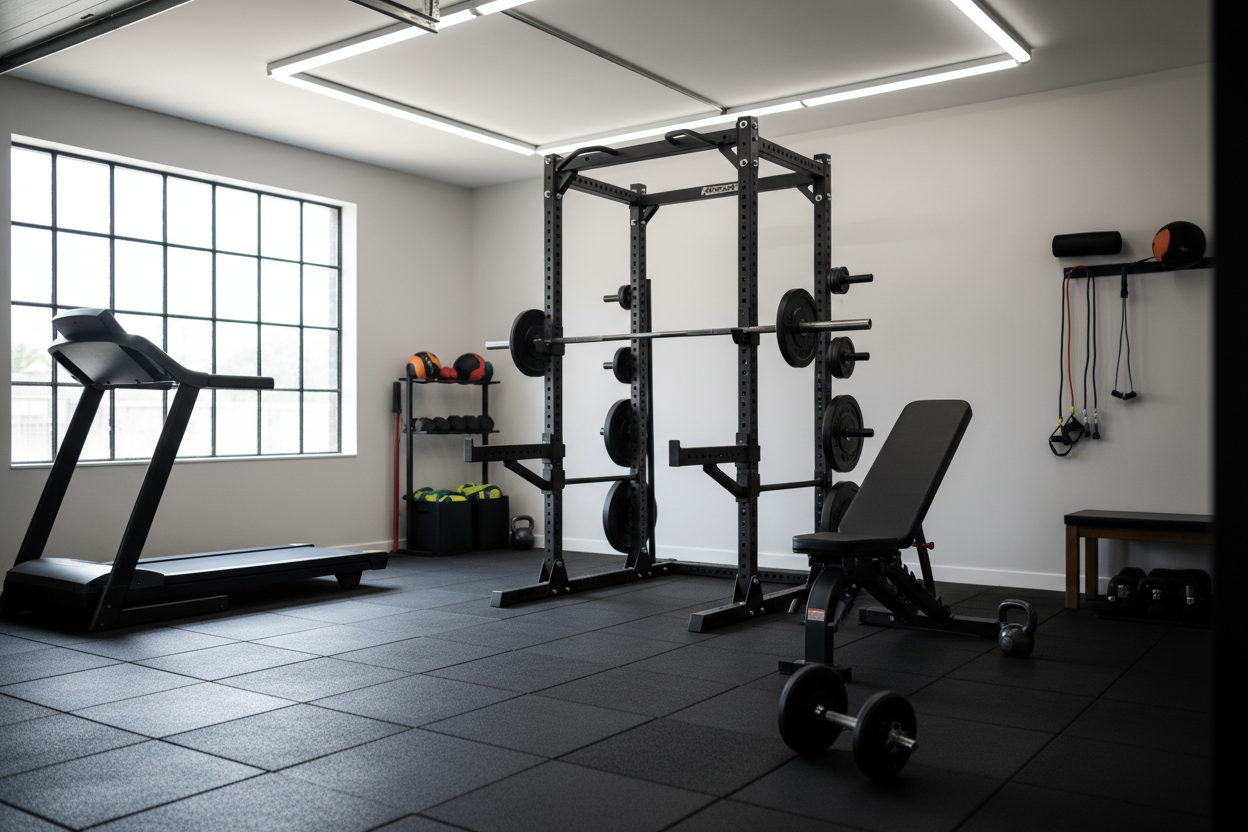
I remember the exact moment my left shoulder decided it had enough. I was halfway through a high-volume 'boulder shoulder' session in my garage, trying to gut out a set of 35-pound dumbbell front raises after already hitting heavy triples on the rack. A sharp, hot needle sensation shot through my rotator cuff, and I had to drop the weight on my rubber mats with a pathetic thud. That was the day I realized my obsession with the front raise vs shoulder press debate was missing the point entirely: I was simply doing too much.
- The overhead press is a compound king that builds the foundation of your upper body.
- Front raises are isolation movements that often provide redundant volume for most lifters.
- Heavy benching and incline work already hammer your anterior deltoids.
- Dropping front raises usually leads to better shoulder health and heavier pressing numbers.
Why Your Front Delts Are Already Exhausted
Walk into any commercial gym on a Monday and you'll see a line for the bench press. Every single one of those reps is a front delt exercise. When you move to the incline bench, you're shifting even more of that load onto the anterior deltoid. By the time you get to your actual shoulder training, those small muscles have already been through the ringer. Adding more isolation work on top of that is often the definition of junk volume.
I used to think I needed to hit the muscle from every conceivable angle to see growth. The reality is that the anterior deltoid is a workhorse that assists in almost every 'push' movement you perform. If your program includes heavy barbell work and a few sets of dips, your front delts are likely getting more stimulation than they can actually recover from. I've found that my shoulders actually look fuller now that I've stopped trying to isolate the front and started focusing on recovering for my heavy sessions.
Most garage gym lifters are working with limited time and recovery capacity. If you're spending 15 minutes on front raises, you're taking away energy that could be spent on your side or rear delts—the areas that actually create that wide, 3D look. Stop treating your front delts like they're a lagging muscle group when they're likely the most overused part of your upper body.
The Core Mechanics: Front Raise vs Shoulder Press
When we look at shoulder press vs front raise, we are comparing a multi-joint powerhouse to a single-joint lever. The shoulder press allows you to move massive weight because you have the triceps and upper chest assisting the movement. It’s a functional pattern that translates to real-world strength. You’re pushing a load vertically, which requires stability through your core and a massive amount of motor unit recruitment.
The front raise, on the other hand, is a long-lever isolation move. Think about the physics: you're holding a weight at arm's length, which creates a huge amount of torque at the shoulder joint. Because the lever is so long, you can’t use much weight. If you try to go heavy, you inevitably start using momentum, swinging your hips and arching your back just to get the weight to eye level. It’s an inefficient way to build mass compared to the raw loading potential of a press.
In my testing, I've noticed that the overhead press vs front raise comparison also highlights a major difference in joint stress. The press keeps the weight stacked over your skeleton. The raise puts all that stress on the tendons and the small muscles of the rotator cuff. For someone training in a home gym without a physical therapist on speed dial, the risk-to-reward ratio of heavy front raises just doesn't add up.
When Do Front Raises Actually Make Sense?
I'm not saying front raises are 'illegal,' but they belong in a very specific toolbox. If you're a competitive bodybuilder looking to etch out every ounce of detail for a show, maybe you need them. Or, if you have a specific injury that prevents you from pressing overhead, light front raises can help maintain some blood flow and muscle activation in the area. They can also work as a 'pre-exhaust' tool if you find your triceps always give out before your shoulders during a press.
However, for 90% of us, they are the first thing that should be cut from the program. I've seen guys spend years obsessing over their front delt isolation while their side delts are non-existent. If you want that capped look, you need lateral raises, not more front raises. In fact, many lifters find that the best shoulder routine doesn't include a single front raise because the indirect work from other lifts is more than enough.
If you absolutely must do them, keep them light and focus on the squeeze. Don't go above shoulder height, as that's where impingement usually rears its head. Use them at the very end of your workout as a finisher, rather than a primary builder. But honestly? Try skipping them for six weeks. I bet your shoulders will feel better and your bench will actually go up.
Why the Overhead Press Always Wins for Mass
If you want big shoulders, you need to move big weight. It’s that simple. The overhead press is the king of deltoid development because it allows for consistent progressive overload. You can add 2.5 or 5 pounds to a barbell press for a long time. Trying to add 5 pounds to a front raise is a recipe for a torn labrum. The overhead press vs front raise debate is won by the press every time because of this scalability.
Whether you prefer a shoulder press machine vs dumbbell setup, the goal is the same: mechanical tension. When you press, you're hitting the anterior delt, the lateral delt, the triceps, and even the upper traps. This creates a systemic growth signal that a 15-pound dumbbell raise just can't match. I’ve found that my best shoulder growth came when I stopped worrying about isolation and started chasing a 200-pound overhead press.
Another benefit of the press is the stability it builds. Holding a heavy weight locked out over your head requires every muscle in your upper back and core to fire. This builds a rugged, athletic look that isolation exercises can't replicate. If you're short on time in your home gym, one heavy pressing movement is worth five different isolation exercises. It’s the highest ROI movement in your shoulder arsenal.
How to Program Both (If You Really Want To)
If you’re a glutton for punishment and still want to keep both in your routine, you have to be smart about the shoulder press vs front raise volume. Don't do them on the same day. If you have a dedicated shoulder day, start with your heavy press and then move to lateral and rear delt work. If you still feel like your front delts aren't 'done,' you can throw in two sets of light front raises at the very end.
A better way to program is to split them across your week. Do your heavy overhead pressing on your 'Strength' day and maybe some light front raises on a 'Hypertrophy' or 'Accessory' day. This gives your joints a break from the heavy vertical loading while still getting that isolation pump. Just keep an eye on your total weekly sets. If your front delts start feeling 'tight' or you're losing range of motion, the isolation work is the first thing that needs to go.
My Personal Experience: The Front Raise Mistake
I spent about two years doing 'complete' shoulder days: Overhead press, front raises, lateral raises, and face pulls. My shoulders always felt 'full,' but they also always hurt. I couldn't sleep on my side without a pillow propping up my arm. I thought it was just the price of training hard. One month, I got busy and had to cut my workouts short, so I ditched the front raises. Within three weeks, the pain was gone. Within two months, my overhead press jumped 15 pounds because I wasn't pre-fatiguing my delts with useless isolation. I haven't done a front raise in three years, and my shoulders have never looked better.
FAQ
Is the shoulder press enough for front delts?
For almost everyone, yes. Between the shoulder press, flat bench, and incline bench, your front delts are receiving an enormous amount of stimulus. Isolation is rarely needed.
Do front raises help with bench press?
In theory, they strengthen a prime mover. In practice, they usually just fatigue the muscle and irritate the joint, which can actually hurt your bench press performance. Stick to heavy pressing for carryover.
Can I do front raises with a barbell?
You can, but it's often even harder on the wrists and shoulders than dumbbells. If you must do them, dumbbells or a cable machine allow for a more natural path of motion.