The 3-Second Workout is Clickbait (But the Science Works)
I was scrolling through my feed at 11 PM, probably looking for a deal on calibrated plates, when I saw it. A headline claiming I could get 3-second workout results. Every fitness influencer and their dog seemed to be posting it to their workout hub overnight. I almost threw my phone across the room. As someone who has spent a decade chasing a 500-pound deadlift, the idea of getting jacked in the time it takes to sneeze felt like a personal insult.
Quick Takeaways
- The study focuses on heavy eccentric (lowering) contractions, not just moving fast.
- You need 100% maximal effort for those three seconds to see any benefit.
- It is a strength-building tool, not a shortcut for cardiovascular health or fat loss.
- It works best as a high-intensity 'finisher' rather than a stand-alone program.
The Headline That Made Me Roll My Eyes
Let's be real: the internet loves a shortcut. When the claim started circulating that you could get stronger muscles in 3 seconds a day, it sounded like the ultimate lazy man's dream. Most of these 'fitness gurus' pushing the story have never actually felt the grind of a heavy squat session. They saw a university study and stripped away all the nuance to get clicks. It’s the kind of clickbait that makes people think they can skip the hard work and still look like a pro bodybuilder.
What the 'Stronger Muscles in 3 Seconds a Day' Study Actually Said
I actually read the Edith Cowan University study so you don't have to. Here is the reality: they didn't just have people curl a 5-pound dumbbell for three seconds. They had participants perform a single, maximal-effort eccentric contraction. This means they were lowering a weight that was at the absolute limit of what their muscles could handle. The researchers found that doing this just once a day, five days a week, significantly increased muscle strength over four weeks. It’s not about the time; it’s about the intensity of the stimulus.
The Big Catch: It's All About the Eccentric Phase
The secret sauce here is eccentric overload. Your muscles are naturally about 20% to 30% stronger when lowering a weight than when lifting it. When you focus solely on the lowering phase—the eccentric—you can use much heavier loads than you could ever press or curl upward. This creates massive mechanical tension and micro-tears in the muscle fibers. That tension is the primary driver for hypertrophy and strength gains, even if the window of work is incredibly short.
Why You Can't Just Abandon Your Normal Routine
Before you sell your rack, realize this is a micro-dose of training. While it builds strength, it does almost nothing for your metabolic health, endurance, or bone density compared to a traditional 3-day muscle building full body workout. If you only train for three seconds, you aren't building the work capacity needed for real-world athleticism. It is a supplement to a real program, not the foundation of one.
How to Actually Steal This Trick for Your Routine
I’ve started using this '3-second' logic as a finisher on my heavy pull days. I’ll take a weight I can barely cheat-curl to my chin, then spend a full, grueling three seconds fighting it on the way down. This is a brutal way to force muscle fatigue at the end of a session. Using high-intensity techniques like this actually allowed me to cut my volume in half during a particularly busy month while still maintaining my bench and row numbers. It’s about quality, not just mindless reps.
Protect Your Joints (and Your Floor) When Dropping Weights
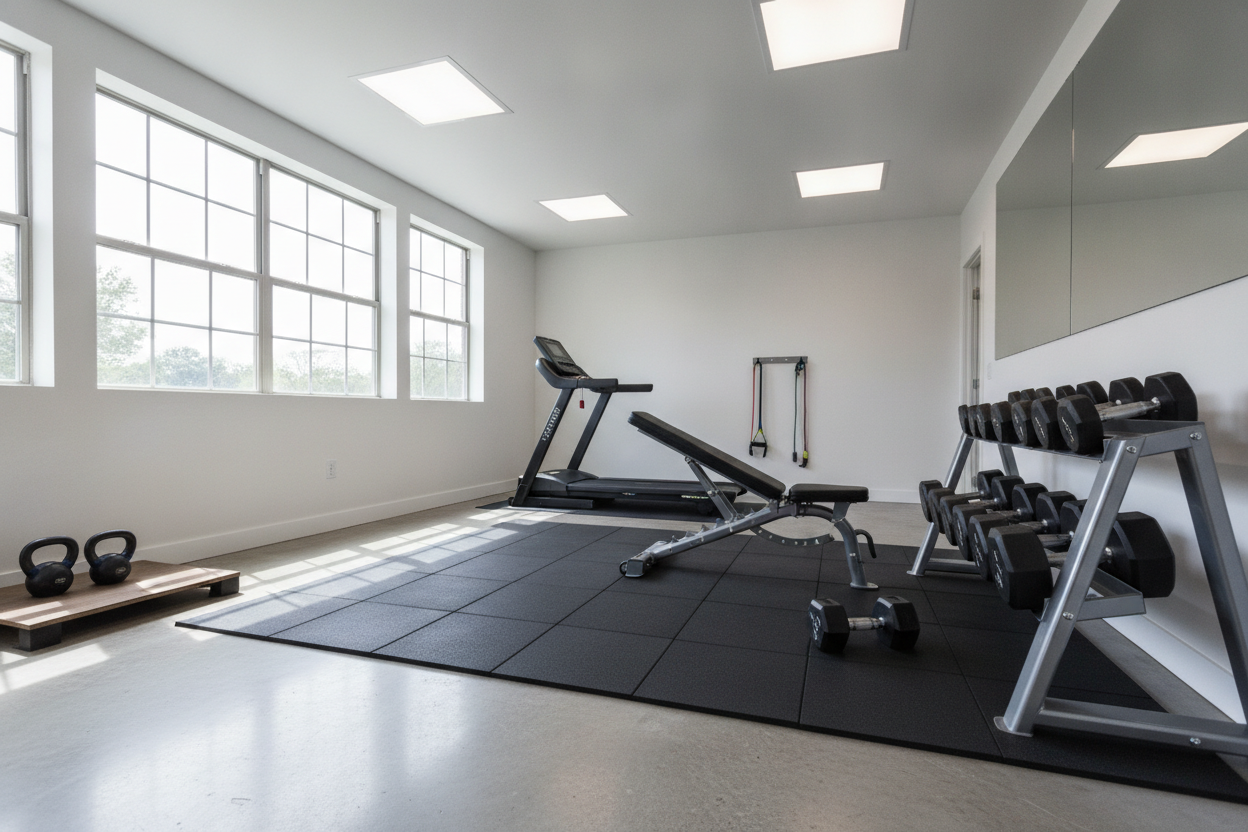
If you’re going to play with maximal eccentric loads, you’re going to fail. That’s the point. You are lowering weight that you physically cannot lift back up. Eventually, you’ll have to bail or drop the weight. If you're training in a garage, don't risk your concrete foundation. Invest in some high-density gym flooring for home workout setups. I learned this the hard way after chipping my floor with a 60-pound dumbbell during a set of heavy negatives. Thick mats are cheaper than a foundation repair.
Personal Experience: The 'Flat' Feeling
I tried doing 'eccentric-only' training for two weeks when I was traveling. My top-end strength stayed surprisingly high, but I felt 'flat.' I missed the blood flow and the pump that comes with traditional hypertrophy work. Also, without a spotter to help me lift the weight back into the starting position, I ended up straining my wrist trying to 'cheat' a heavy dumbbell into place. If you do this, have a partner or a power rack with safety pins set at the right height.
FAQ
Can I do this with bodyweight exercises?
Yes. Slow-motion pull-up lowers (negatives) are a classic example. Jump to the top and take 3-5 seconds to lower yourself until your arms are straight.
Will this help me lose weight?
No. Three seconds of work burns negligible calories. If fat loss is the goal, you still need a caloric deficit and consistent movement.
How often should I do these 3-second reps?
The study used a daily protocol, but for most people, 3-4 times a week as a finisher is plenty to avoid tendonitis and overtaxing the central nervous system.