I Hated Exercises for Home Gym Machine Units Until I Tried This
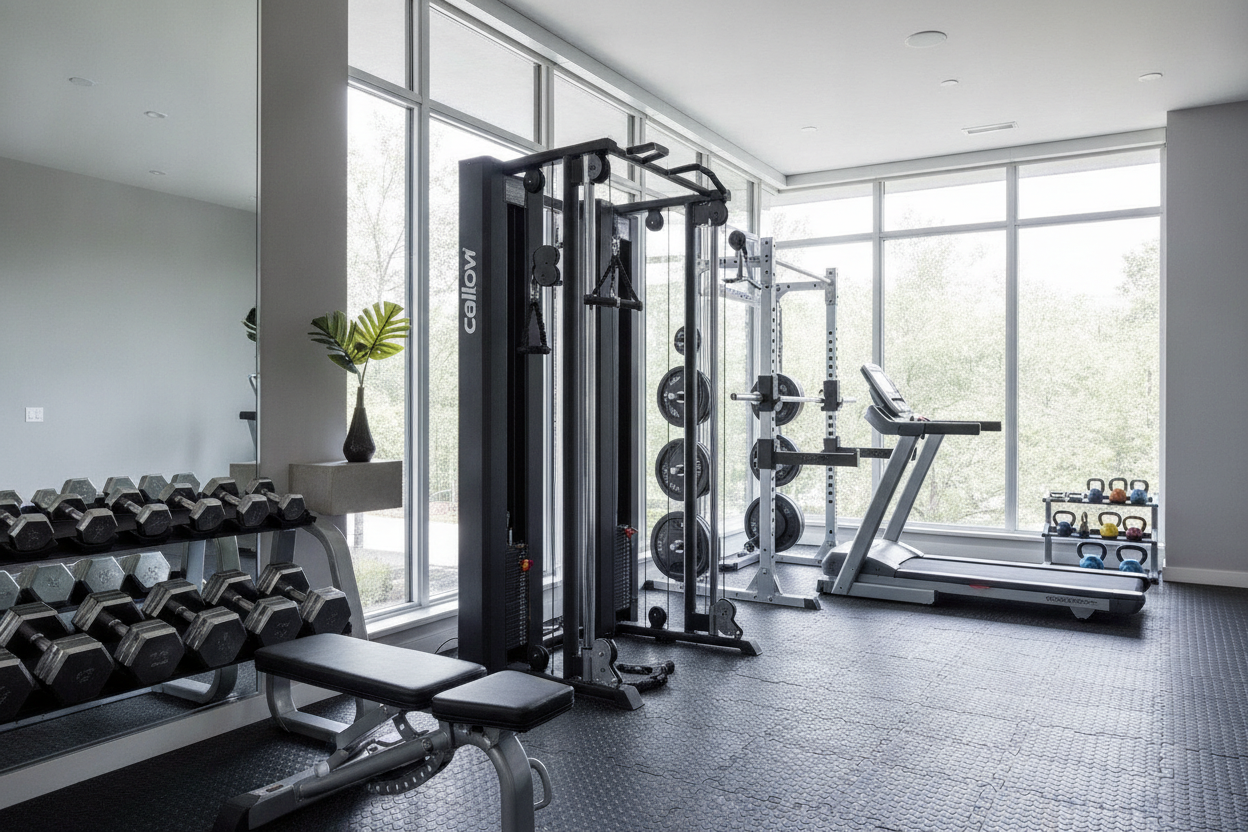
I used to be the guy who laughed at all-in-one cable stations. If it wasn't a rusty barbell or a pair of heavy dumbbells, I didn't think it was worth my time. But then I hit thirty, my lower back started acting like a grumpy landlord, and I realized that exercises for home gym machine setups offer something my power rack can't: constant mechanical tension throughout the entire range of motion.
The problem isn't the machine. The problem is that most people use them like they're reading a 1990s fitness magazine. If you are just mindlessly pulling the pin and doing twenty reps of fluff, you won't see results. You need to treat these cables with the same respect you'd give a 405-pound squat.
- Constant tension means better hypertrophy, especially in the lengthened position.
- Safety is built-in, allowing you to train to absolute failure without a spotter.
- Ditch the 'circuit' mentality and focus on heavy, progressive loading.
- Maintenance is key—a dry cable is a noisy, jerky mess that ruins your mind-muscle connection.
The Multi-Station Stigma (And Why We Are Wrong)
For years, the 'serious' lifting community has looked down on the multi-station rig. We saw them as the centerpiece of a middle-aged basement, right next to the dusty treadmill. We were wrong. The stigma exists because most people don't know how to program workouts for home gym machine units correctly. They treat it like a cardio circuit rather than a muscle-building tool.
Cable machines provide a resistance profile that barbells physically cannot. When you do a dumbbell fly, there is zero tension at the top. On a cable machine, that weight stack is pulling against you from start to finish. By dismissing these machines, you're leaving gains on the table simply because you're worried about looking like a 'hardcore' lifter. High-level bodybuilders have used cables for decades for a reason: they work.
Throw Away the Poster: Finding Real Workouts for Home Gym Machine Setups
Every home gym unit comes with a glossy poster showing a guy in spandex doing thirty different movements. Throw that poster in the trash. Most of those movements are isolation fluff designed to make the machine look more versatile than it needs to be. You don't need a seated oblique twist or a standing kickback to build a physique.
When planning a workout routine for home gym machine success, you need to ignore the junk volume. The poster wants you to do 'toning' exercises. I want you to focus on movements where you can actually move the entire weight stack. If an exercise doesn't allow for significant loading or a deep stretch, it shouldn't be the cornerstone of your session. Focus on the big levers, not the tiny accessory movements that just waste your time and energy.
The Big 4: Selecting High-Yield Movements
If you want to actually grow, you need to pick movements that let you move heavy weight. First is the heavy lat pulldown. Don't just swing your torso; keep your chest up and drive your elbows to your hips. Second is the seated cable row. This is where most machines fail because the footplates are often flimsy, but if you can brace yourself, it is the king of mid-back thickness.
Third is the chest press. Most home units have a fixed path, which is actually a benefit because it allows you to focus entirely on the pec contraction without stabilizing a bar. Finally, the leg extension/curl combo. These are often the weakest point of a home unit, but if you control the eccentric, they are brutal. If you find yourself maxing out the stack on these, you need to implement The Pin-Drop Protocol to increase intensity without needing more plates.
Structuring a Workout Routine for Home Gym Machine Gains
To make a 150-pound stack feel like 300 pounds, you have to master the eccentric phase. Gravity is your enemy on a barbell, but on a cable, friction is your friend if you use it right. I recommend a 3-second negative on every single rep. This increases time under tension and makes every ounce of that weight stack count toward muscle fiber recruitment.
I also suggest using mechanical drop sets. Start with your weakest grip or position (like a wide-grip pulldown) and go to failure. Immediately switch to a stronger position (like a close-grip neutral pulldown) and keep going. This allows you to push past the point where a barbell would have pinned you to the floor. It’s about efficiency, not just spending hours in the garage moving light weights around.
Fixing Machine Wobble and Cable Friction
Nothing kills a workout faster than a jerky cable. If your machine feels like it’s catching, it’s usually the guide rods. Buy some 100% silicone spray—never use WD-40, as it attracts gunk—and wipe down the rods once a month. It makes a $500 machine feel like a $3,000 Life Fitness unit. Also, check your bolts. A home gym machine has dozens of pivot points that loosen over time, causing that annoying 'sway' during heavy sets.
If your machine slides across the floor when you're doing heavy rows, you need to anchor it. I highly recommend placing your unit on high-quality gym flooring for home workout setups. Not only does this protect your subfloor, but it provides the necessary friction to keep the machine from walking away while you're trying to set a PR. A stable base is the difference between a focused set and a frustrating one.
How do I know if my machine's weight stack is enough?
Weight stacks on home units are often rated differently due to pulley ratios. A 2:1 ratio means 100 lbs feels like 50 lbs. If you can do 15+ reps with the full stack on your main lifts, you need to slow down your tempo or use single-arm variations to double the effective load.
Can I build as much muscle as I would with a power rack?
Yes, for hypertrophy. Your muscles don't have eyes; they only feel tension. While you might miss out on the specific 'skill' of balancing a heavy barbell, the stimulus for muscle growth is identical, and often superior, on a machine because you can reach failure more safely.
How often should I grease the cables?
Don't grease the actual cables—that’s a mess. Use silicone lubricant on the vertical guide rods that the weight plates slide on. Do this every 30 days or whenever you notice the weight 'stuttering' on the way down.