The 3 Phases of Real Strength and Conditioning Training at Home
I remember my first attempt at a 'hard' garage workout. I did 100 burpees, some air squats, and swung a light kettlebell until I puked in a bucket. I felt like a hero, but two weeks later, I was actually weaker and my knees felt like they were filled with crushed glass. I was chasing sweat, not performance.
Real strength and conditioning training isn't about how much you suffer; it's about how much you improve. You aren't a fitness influencer trying to look busy for a 30-second clip; you're an athlete—even if the only 'sport' you play now is hauling groceries or keeping up with your kids. To get results, you need a system that respects your central nervous system and your joints.
Quick Takeaways
- Strength always comes before conditioning in a session.
- Focus on compound movements (squats, pulls, presses) for your base.
- Conditioning should be intentional, not just a way to get 'gassed.'
- Quality flooring is the most underrated piece of safety equipment.
The Difference Between Getting Tired and Getting Athletic
Throwing a 20lb kettlebell around for 45 minutes straight makes you tired, but it doesn't necessarily make you more capable. True s&c training is built on the principle of progressive overload. If you're just doing random strength conditioning workouts every day, your body never has a specific stimulus to adapt to. You're just spinning your wheels in a puddle of sweat.
Intentional strength-and-conditioning workouts focus on building a massive engine (conditioning) and a strong chassis (strength). When you train with intention, you're tracking your rest periods and your bar speed. You aren't just 'working out'; you're following a program designed to make you more explosive and harder to kill. If you can't tell me why you're doing a specific strength conditioning training movement, you probably shouldn't be doing it.
How to Structure Your Workouts Without Losing Your Mind
The biggest mistake I see in home gyms is the 'circuit-only' approach. People think that because they have limited time, they should do everything at once. This is a recipe for mediocrity. You need to prioritize. Your heavy barbell work—the stuff that requires a fresh brain and stable spine—must happen at the beginning of the session. If you try to deadlift 400 lbs after a three-mile run, you're asking for a trip to the physical therapist.
I like to program my training and conditioning in blocks. Start with a 10-minute dynamic warm-up, move into a 20-minute heavy strength block, and finish with a 10-15 minute 'finisher.' For example, you can boost strength and stamina by following a heavy bench press session with a high-intensity interval circuit involving medicine ball slams and battle ropes. This allows you to tax your cardiovascular system without compromising your form on the heavy lifts.
Gear You Actually Need (And What to Ignore)
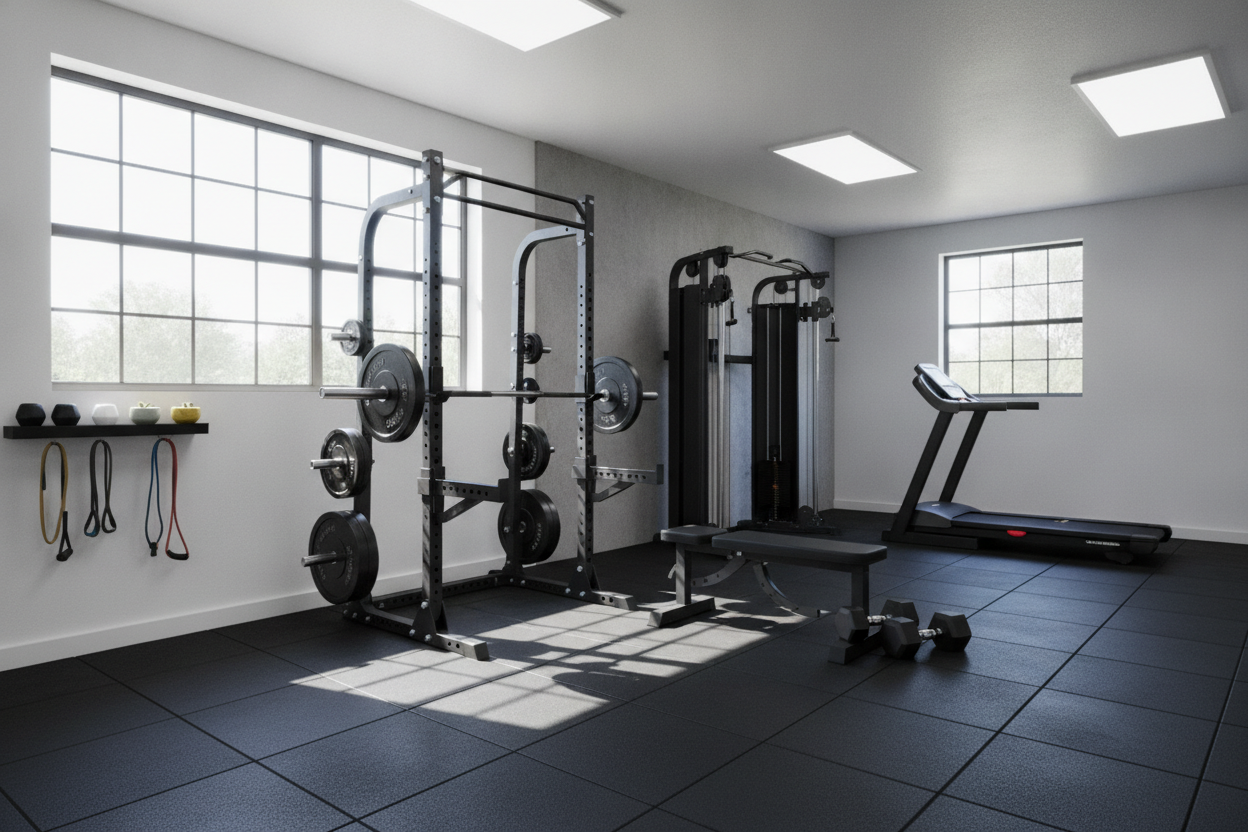
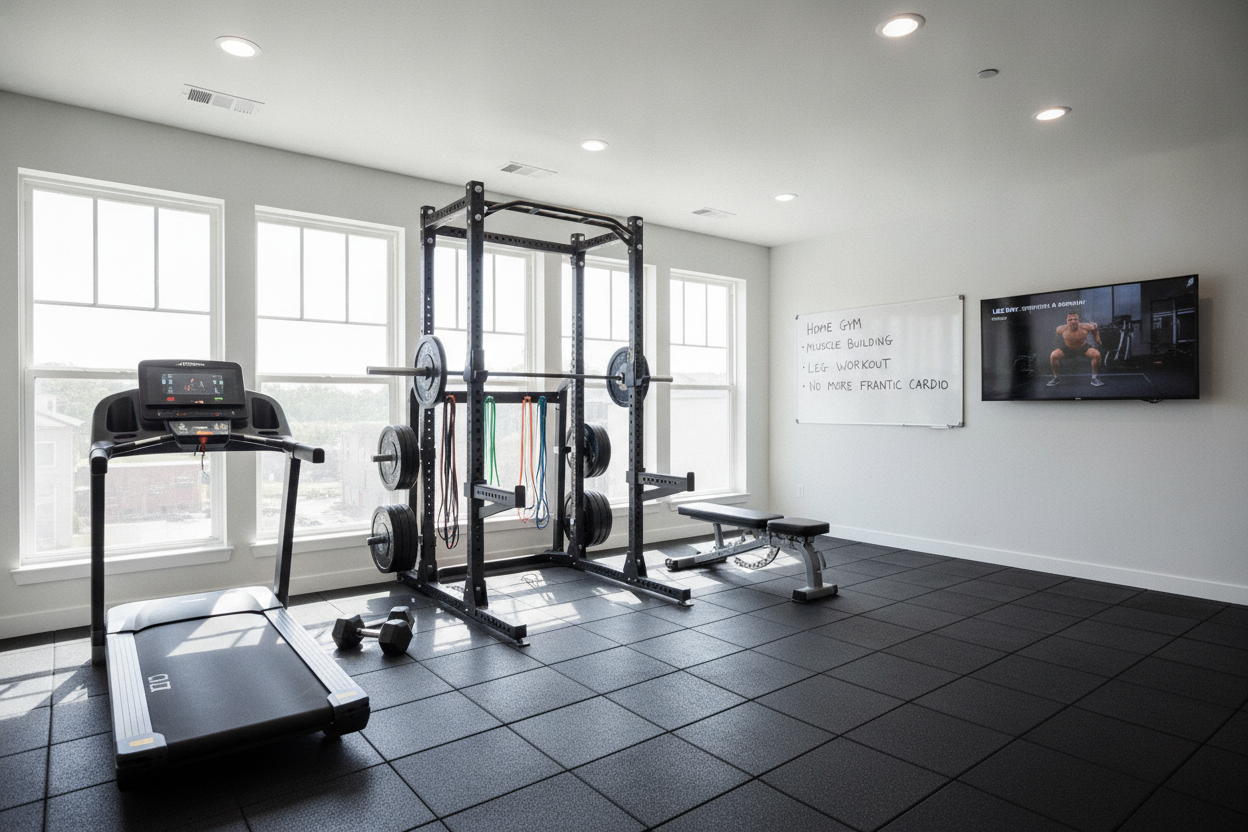
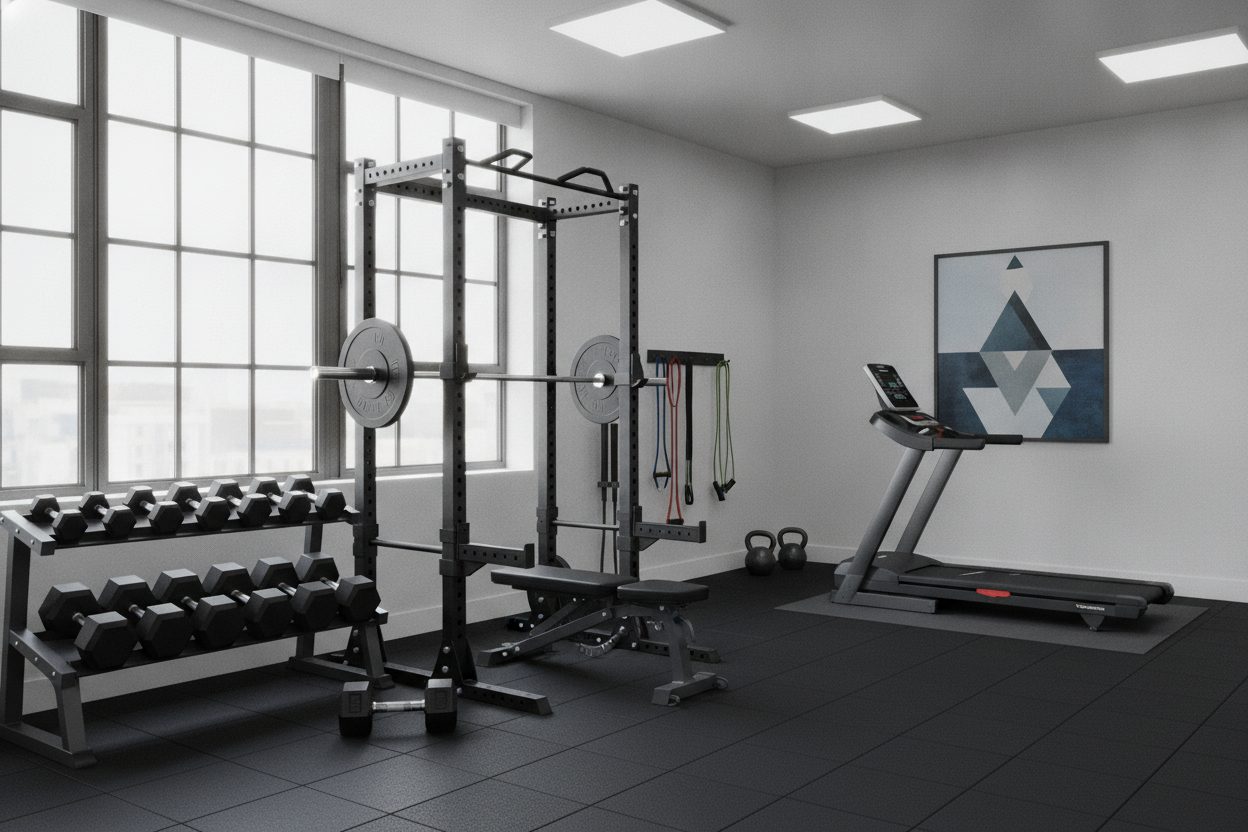
You don't need a $3,000 cable machine or a vibrating platform. For effective conditioning strength workouts at home, you need the basics. Get a power rack made of at least 11-gauge steel with 2x3 or 3x3 uprights. You need a barbell that can take a beating—look for one with a 190,000 PSI tensile strength so it doesn't permanently bend the first time you drop it during a heavy clean.
Beyond the bar, a couple of heavy kettlebells (I recommend a 16kg and a 24kg to start) and a sandbag are your best friends. These tools allow for 'odd object' conditioning and strength training that mimics real-world movements. Skip the cheap plastic-coated weights that rattle; they’re a distraction. Buy once, cry once. Solid iron or competition-grade steel will last longer than you will.
Putting It Together: A Real-World Example
If you're ready to stop guessing, you need a template. I usually run a 4-day split: two days of lower-body focus and two days of upper-body focus. This gives your muscles 48 to 72 hours to recover between similar stressors. A typical Monday might look like heavy back squats, followed by Romanian deadlifts, and ending with a 10-minute EMOM (Every Minute on the Minute) of kettlebell swings and burpees.
This structure ensures you are hitting your strength and conditioning fitness goals simultaneously. If you want a 'plug-and-play' option, check out this full body strength and conditioning workout that you can easily adapt for a garage or basement setup. The key is consistency over intensity. I’d rather see you give 80% effort for five years than 100% effort for five weeks before you burn out or get hurt.
Protecting Your Joints While Pushing the Pace
Garage floors are brutal. Concrete has zero 'give,' and if you’re doing high-rep plyometrics or fast-paced strength and conditioning training workouts, your ankles and lower back will pay the price. I learned this the hard way after a month of jumping rope on bare concrete left me with shin splints so bad I couldn't walk to my mailbox.
Invest in a large exercise mat for cardio to put under your feet for any movement that involves leaving the ground. It absorbs the shock that your joints would otherwise have to handle. Beyond flooring, make sure you're prioritizing mobility work. S&c training makes you tight; if you don't actively work on your hip and ankle range of motion, your 'athleticism' will come with a very short expiration date.
FAQ
How many days a week should I do s&c training?
For most people with jobs and lives, 3 to 4 days is the sweet spot. This allows for high intensity on training days and enough recovery time to actually see progress. Anything more usually leads to diminishing returns unless you're a pro athlete.
Can I do strength and conditioning in the same session?
Absolutely, just do the heavy strength work first. Your brain needs to be fresh to coordinate heavy lifts safely. Save the 'gas tank' stuff for the end of the workout.
What if I only have 20 minutes?
Focus on one big compound lift (like a trap bar deadlift) for 10 minutes, then do a high-intensity finisher like hill sprints or a heavy sandbag carry for the remaining 10. It’s better than doing nothing.