Stuck on Your Lifts? The Real Answer to 'How Do I Increase Weight'
I have been there. It is a Tuesday night, you are in your garage, and the 225-pound barbell that felt like a feather last month now feels like it is bolted to the floor. You have hit a plateau. Most people at this point start scrolling through social media looking for a magic supplement or a 'secret' Russian program, but the reality is much simpler and much more frustrating. You are likely asking yourself, how do i increase weight without snapping a tendon or ego-lifting your way into a physical therapy office.
Quick Takeaways
- Micro-loading with fractional plates is the most underrated way to sustain long-term progress.
- Upper body lifts like the overhead press require smaller weight jumps and better shoulder stability.
- Step-loading allows you to build volume at a specific weight before attempting to increase the load.
- Safety equipment like a power rack is non-negotiable if you want to push close to failure safely.
The 'Just Add 10 Pounds' Trap (And Why You're Stuck)
When you first start lifting, you can add weight to the bar almost every session. This is the 'newbie gains' honeymoon phase where your nervous system is just learning how to fire your muscles correctly. But eventually, that easy progress hits a wall. You try to jump from 135 to 145 on your bench press, and suddenly you can only get two reps instead of five. This is where most people fail because they try to force how to increase your weight lifting capacity by making jumps that are too large for their current physiological state.
The standard 5-pound jump (a 2.5-pound plate on each side) represents a massive percentage increase as you get stronger. If you are pressing 100 pounds, a 5-pound jump is a 5% increase. In any other world, a 5% weekly increase in output would be considered unsustainable. Your body cannot rebuild tissue and adapt its neural drive fast enough to keep up with that kind of linear demand. When you hit this wall, simply 'trying harder' usually leads to breakdown in form, nagging joint pain, and eventually, a total stall in progress.
So, How Do I Increase Weight Safely? The Micro-Loading Secret
If you want to know how to increase weight exercise progressions for the long haul, you need to buy a set of fractional plates. These are small plates that weigh 0.25, 0.5, or 1 pound. Most commercial gyms don't have them because they are easy to lose, but for a home gym owner, they are the ultimate tool. By adding just 1 or 2 pounds to the bar total, you are 'tricking' your nervous system. The weight feels identical to last week, but the data says you are getting stronger.
This is the most effective strategy for how to increase weight in exercise routines where the muscle groups are smaller. You can't expect your side delts or your triceps to handle a 5-pound jump every week. However, they can almost certainly handle a 1-pound jump. Over a year, a 1-pound weekly increase is 52 pounds added to a lift. I would take a guaranteed 52-pound increase on my overhead press over a six-month plateau any day of the week. It keeps the momentum moving forward and keeps your confidence high.
How to Increase Weight Lifting on Stubborn Upper Body Movements
The bench press and the overhead press are usually the first lifts to stall. Unlike the deadlift, where you have your entire posterior chain to move the weight, pressing movements rely on smaller, more volatile joints. If you are struggling with how to increase weight lifting on these movements, you have to look at your stability. If your shoulders are 'leaking' force because they are unstable or painful, your brain will literally shut down your strength to protect the joint.
I have found that whenever my bench press stalls, it is usually because my rotator cuffs are screaming for help. If you find that nagging twinges are stopping you from adding plates, you need to address your weight lifting exercises upper body mechanics. Adding more weight to a dysfunctional shoulder is a recipe for a tear. Fix the stability first, then use those fractional plates to climb back up. A stable shoulder is a strong shoulder.
Stop Chasing Maxes: The Step-Loading Method
Most people think the only way to progress is to change the weight on the bar. That is a mistake. If you want to master how to increase lifting weight in gym sessions, you need to embrace step-loading. Instead of adding weight every week, you keep the weight the same and increase the 'density' of the workout. For example, if you are doing 3 sets of 8 reps at 200 pounds, don't go to 205 pounds next week. Instead, try to do 3 sets of 10 with that same 200 pounds.
By the third week, you might hit 3 sets of 12. Now, you have 'earned the right' to increase the weight. When you finally do jump to 210 pounds, you drop your reps back down to 8 and start the process over. This method builds a massive base of volume and ensures that your tendons and ligaments—which heal slower than muscle—have time to catch up to your strength. It is less ego-satisfying in the short term, but it is how you build a physique that doesn't crumble under heavy loads.
How to Increase Weight in Gym Sessions Without Getting Crushed
You need to learn the language of RPE, or Rate of Perceived Exertion. If you are wondering how to increase weight at gym workouts effectively, you have to stop training to failure every single set. If every set is a 10/10 effort where your eyes are bulging and your form is breaking, you are frying your recovery. You should aim for an RPE of 8 or 9—meaning you finish the set feeling like you could have done one or two more clean reps.
When an 8/10 effort starts feeling like a 7/10 effort, that is the objective signal that it is time to add weight. This is the most honest way to handle how to increase weight in gym programming. It removes the guesswork and the ego. If the weight feels light, it is light. If it feels heavy, stay where you are. Listen to the feedback your body is giving you rather than just following a spreadsheet blindly.
The Setup That Actually Lets You Push Your Limits
I learned the hard way that you cannot push your limits on cheap equipment. I once tried to hit a PR on a bench press using a flimsy bench I found on a garage sale site. Every time I breathed, the bench shifted. You cannot generate power if your foundation is moving. A high-quality adjustable weight bench with a high weight capacity and a non-slip pad is essential. It allows you to dig your shoulders in and use your legs to drive the weight up.
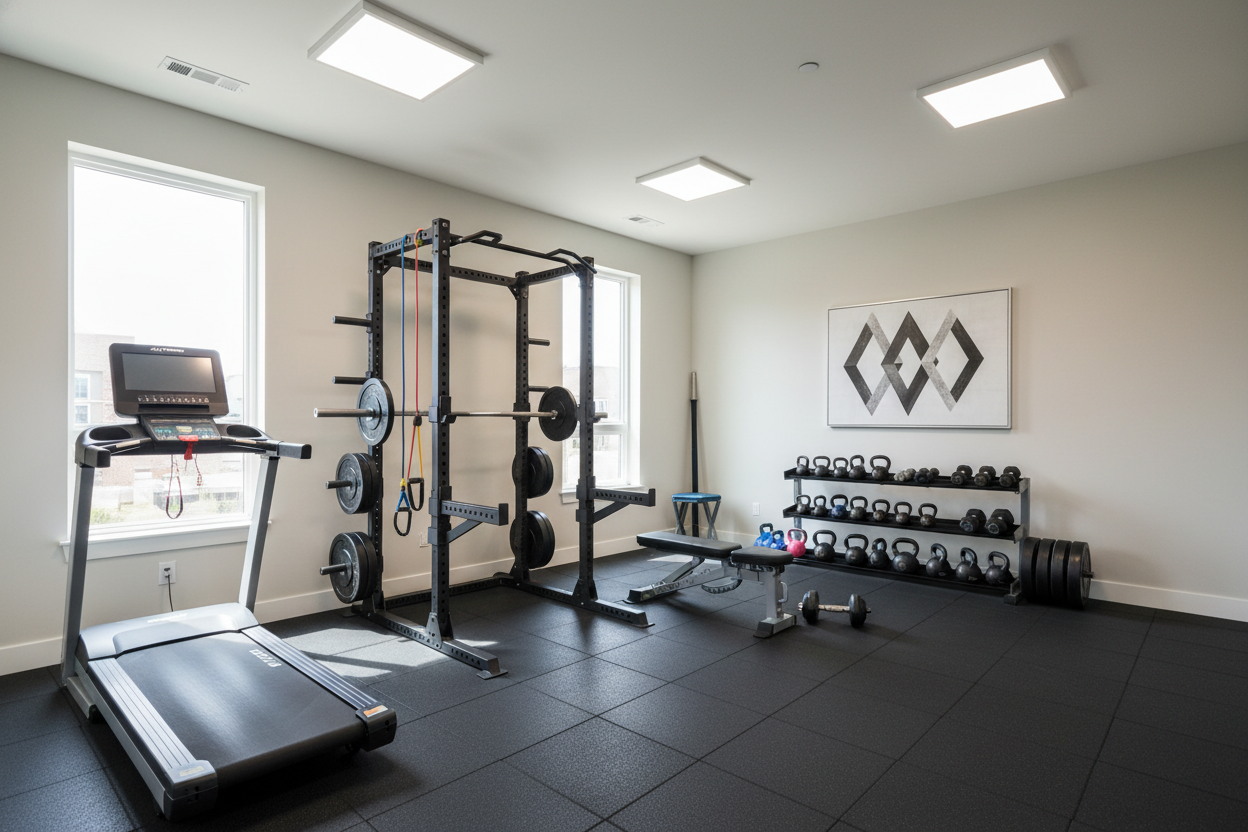
Furthermore, if you are training alone, you need a safety net. You will never truly find out how do i increase weight to your max potential if you are scared of the bar crushing you. Investing in a power rack weight bench package gives you the physical and mental security to attempt that heavy triple. When you know the safety arms are there to catch the bar, you can focus 100% of your aggression on the lift. Finally, don't ignore weight lifting machines for your accessory work. Using machines to hammer your lats or triceps after your main barbell work builds the 'support' muscles that keep your big lifts moving upward.
Your 4-Week Strength Breakthrough Checklist
Ready to stop stalling? Follow this protocol for the next month. First, stop making 5-pound jumps on your presses; get those fractional plates and aim for 1-2 pounds. Second, implement the step-loading method—increase your reps by two each week before you touch the weight. Third, film your sets. If your form breaks down, the 'increase' doesn't count. Lastly, ensure your recovery is on point. You don't get stronger in the gym; you get stronger while you sleep. If you follow this 'slow and steady' approach, you will look back in six months and realize those 'impossible' weights have become your warm-ups.
FAQ
How often should I increase the weight?
For beginners, every session or every week is possible. For intermediate lifters, aim for every 2-3 weeks using step-loading or micro-loading. If you can't maintain perfect form, you moved up too fast.
Is it better to add reps or weight?
Both are forms of progressive overload. Adding reps builds volume and endurance, while adding weight builds peak strength. A mix of both, where you increase reps first and then 'solidify' that progress with a weight jump, is usually the safest path.
What if I fail a rep when trying to increase weight?
Don't panic. If you fail, drop the weight by 10% for your next session to build back momentum, or stay at that weight and focus on increasing the total number of sets you can complete with good form.