I Built a Beginner Olympic Lifting Routine That Won't Wreck Your Joints
I remember the first time I tried to follow a professional Bulgarian weightlifting program in my garage. It was 35 degrees outside, I had a 9-to-5 starting in six hours, and the PDF I was following expected me to snatch at 90 percent for ten singles. By Wednesday, my knees felt like they were filled with crushed glass and my lower back was screaming. I realized quickly that most internet advice is written for full-time athletes, not real people with jobs and aging joints.
If you are looking for a beginner olympic lifting routine, you need something that respects your recovery. You don't need a translated Soviet manual; you need a protocol that builds the technical foundation without burning you out by week three. I’ve spent a decade dropping bars on horse stall mats to figure out what actually works for the home gym lifter.
Quick Takeaways
- Prioritize technical consistency over the weight on the bar.
- Stick to 3 days a week to allow your connective tissue to adapt.
- Invest in a bar with needle bearings to protect your wrists.
- Keep reps low (1-3) to prevent form breakdown from fatigue.
- Use video recording for every set to check your bar path.
Elite Weightlifting Programs Will Destroy You (And Your Motivation)
The massive disconnect in the lifting world is that beginners often try to mirror the habits of elites. A professional olympic weightlifting program for beginners found on a random forum is usually just a watered-down version of a pro athlete's schedule. Those guys have massage therapists and four-hour nap windows. You have a commute and a lawn to mow.
Jumping straight into high-frequency training usually leads to tendonitis before you even learn how to hook grip. Your muscles might be strong enough to pull the weight, but your tendons and ligaments are not ready for the violent turnover of a snatch or clean. A realistic olympic weightlifting routine for beginners focuses on the 'slow' movements first—positional work that builds the necessary structural integrity.
I’ve seen too many guys quit after a month because they tried to max out every Friday. The snatch and clean and jerk are skill-dominant movements. If you treat them like a meathead leg press session, you will stall. This isn't about grinding; it's about precision. If the bar isn't moving perfectly, the weight is too heavy.
First Things First: Master the Olympic Lifting Basics
You have to swallow your pride. For the first two weeks of any olympic lifting beginner phase, your best friend is a PVC pipe or an empty bar. You are training your nervous system to move around the bar rather than pulling the bar around your body. This is where most people fail because they want to look strong for their Instagram followers immediately.
The equipment you use matters more here than in powerlifting. In a squat, a stiff bar is fine. In a clean, you need a bar that spins. I’ve been using the Gxmmat Olympic Bar for technical drills because the sleeve rotation is smooth enough to prevent that nasty wrist torque when you're catching the bar. Mastering the olympic lifting basics requires a bar that doesn't fight you.
Mobility is the other non-negotiable. If you can't sit in a deep overhead squat with a PVC pipe, you have no business putting plates on the bar. Spend ten minutes a day on ankle and thoracic spine mobility. If you skip this, your body will compensate by arching your lower back, and that’s a one-way ticket to a disc bulge.
Why the Snatch and Clean Require Immediate Patience
There is a massive difference between raw strength and explosive power. You might be able to deadlift 500 pounds, but that doesn't mean you can snatch 135. Olympic lifting for beginners is a lesson in humility. It’s about timing—hitting that 'power position' where the bar meets the hip and explodes upward.
If you pull too early, the bar loops out. If you pull too late, you miss it behind. It’s a game of millimeters. This is why beginner olympic weightlifting is more about footwork than biceps. I always tell people to focus on the sound of their feet hitting the platform. It should be a crisp 'pop,' not a lazy shuffle. If your feet are slow, your lift is slow.
The 3-Day Beginner Olympic Lifting Routine
This is a simple olympic lifting program designed for sustainability. We are going with a Monday/Wednesday/Friday split. This gives your central nervous system 48 hours to recover between sessions. I previously tested a free Reddit olympic lifting routine that had me lifting five days a week, and it was total overkill for a novice. Stick to three.
Monday: Snatch Focus
1. Snatch Balance: 5 sets of 3 (Empty bar focus)
2. Hang Snatch: 5 sets of 2 (Focus on the hip contact)
3. Overhead Squat: 3 sets of 5
4. Pull-ups: 3 sets to failure
Wednesday: Clean & Jerk Focus
1. Tall Clean: 5 sets of 3 (Focus on speed under the bar)
2. Clean & Jerk: 5 sets of 2 (Focus on the split stance)
3. Front Squat: 4 sets of 3 (Heavy but crisp)
4. Push Press: 3 sets of 5
Friday: Total Day
1. Power Snatch + Snatch: 5 sets of 1+1
2. Power Clean + Clean: 5 sets of 1+1
3. Back Squat: 3 sets of 5 (Standard strength work)
4. Plank: 3 sets of 60 seconds
Keep the intensity around 60-70% of what you *think* you can do. The goal is 100% technical proficiency. If you catch a clean and your elbows drop, the set is a wash. This olympic weightlifting program for beginners is about building the habit of perfect movement.
Setting Up Your Garage for Dropping Heavy Weight
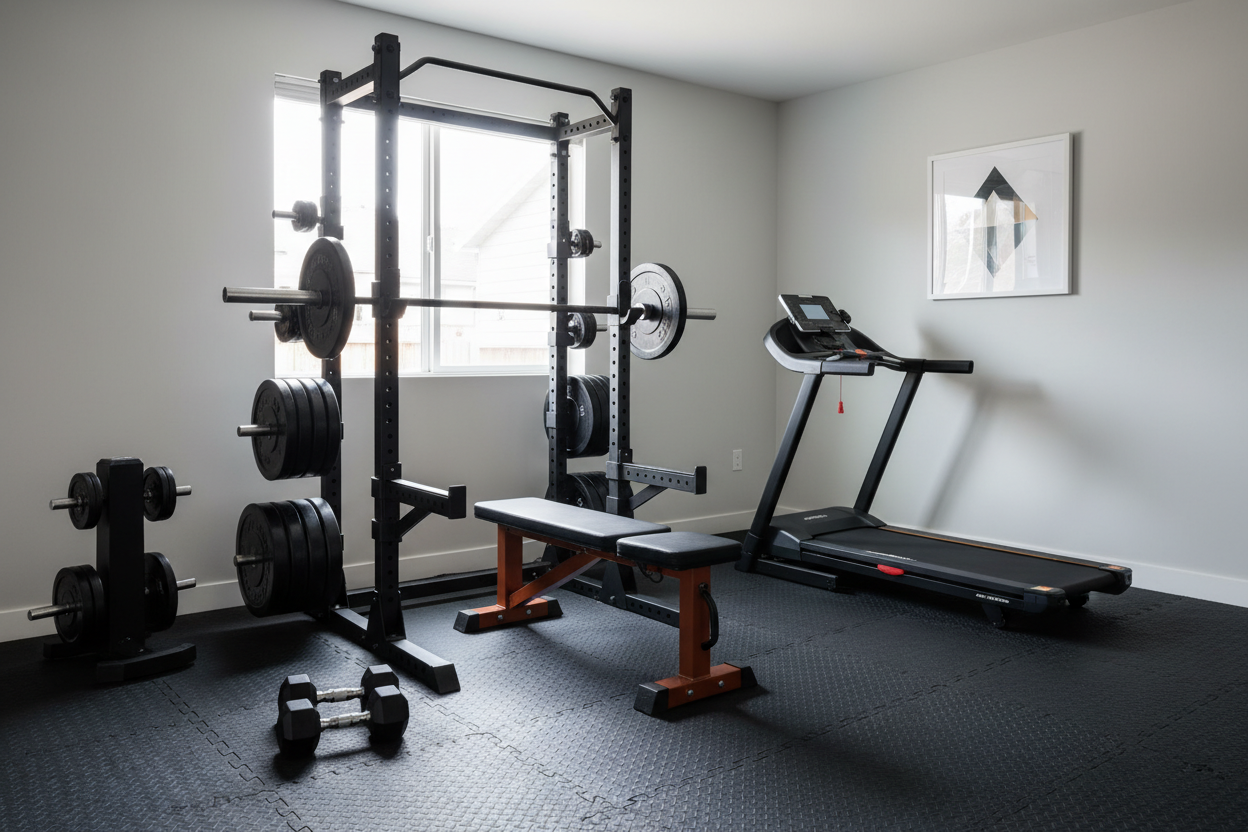
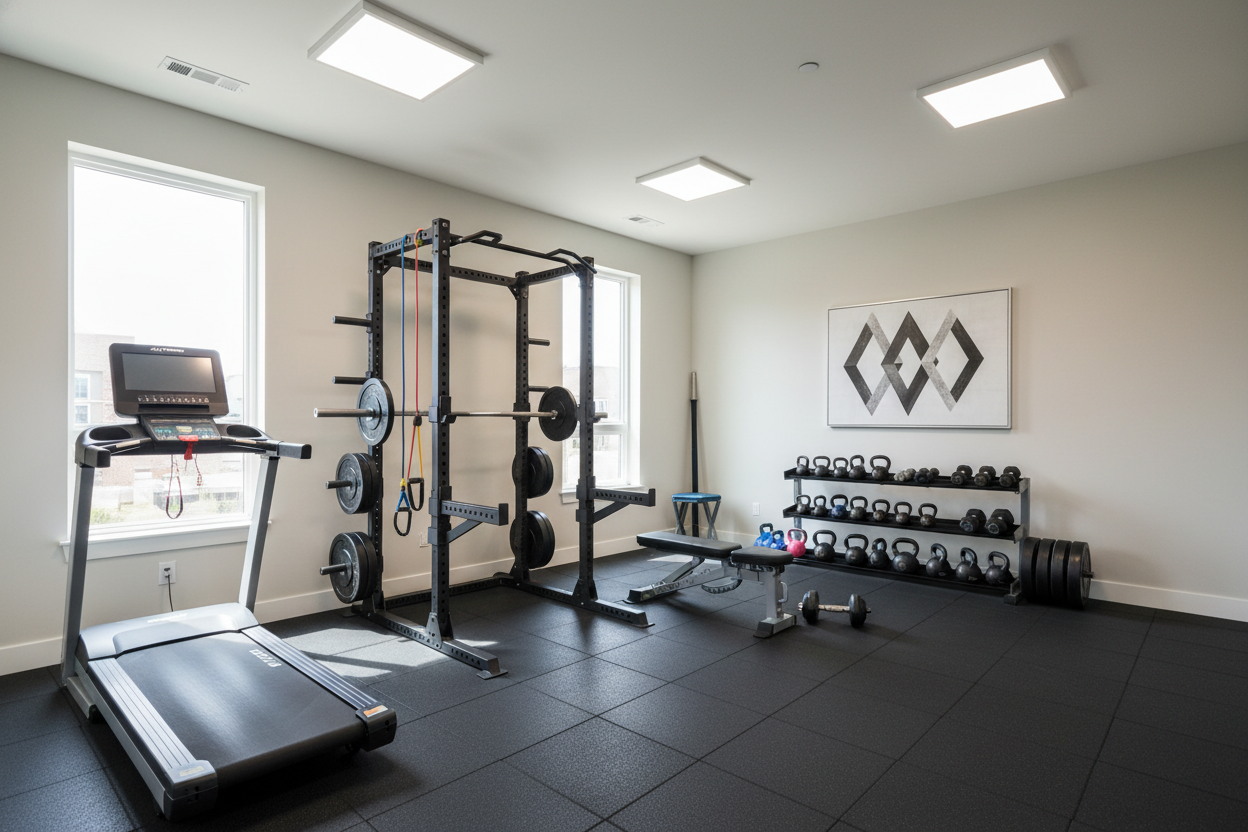
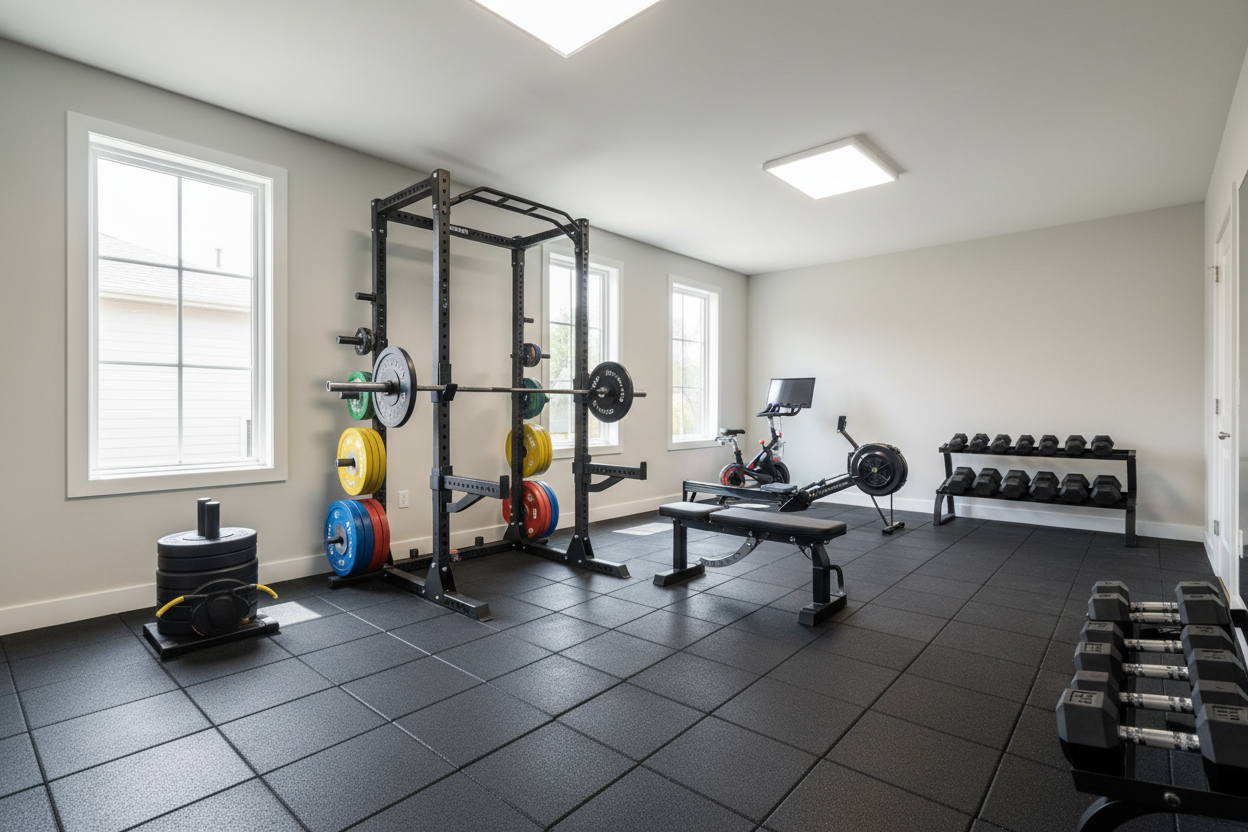
If you're training at home, you can't just drop 200 pounds on bare concrete. You’ll crack your foundation and ruin your bar. You need a dedicated space. I’ve written an olympic lifting home gym blueprint that covers how to build a platform, but the short version is: get 3/4 inch stall mats and a plywood center.
You also need proper strength equipment—specifically bumper plates. Do not try to do these lifts with iron plates. The vibration from dropping iron is terrible for the bar's bearings and even worse for your ears in a small garage. A good set of high-temp or virgin rubber bumpers will save your gear and your relationship with your neighbors.
Make sure you have at least an 8x8 foot space. You don't want to be chasing a missed snatch into your lawnmower or your water heater. Safety in a garage gym is about clearing the 'splash zone' for when a lift goes sideways.
How to Measure Progress Without Maxing Out
In powerlifting, progress is more weight. In a beginner olympic weightlifting program, progress is a straighter bar path. Use a phone app to track your bar trajectory. If the line is getting tighter and more vertical over eight weeks, you are getting stronger, even if the weight stays the same.
Speed under the bar is another metric. Are you catching the bar at the same height every time, or are you getting faster at dropping into the hole? Consistency is the ultimate goal. If you can hit 10 out of 10 snatches at 115 pounds with identical form, you’re ready to move up. If you’re 'starfishing' your legs out to catch the weight, you’re just practicing bad habits.
FAQ
Do I need weightlifting shoes?
Yes. The hard heel and elevated pitch allow you to stay upright in the bottom of a squat. Lifting in running shoes is like trying to lift on a mattress; it's unstable and dangerous for your ankles.
How long until I can max out?
Give it at least 12 weeks. Your first three months are about neurological adaptation. Maxing out too early just tests how well you can compensate with bad form. Build the engine before you redline it.
Is olympic lifting dangerous for the back?
Only if you pull with a rounded spine or have poor mobility. Done correctly, it actually strengthens the posterior chain and core more effectively than almost any other exercise. It’s all about the setup.