I Ignored a Tweak: The Pulled Shoulder Exercises That Saved My Bench
I was halfway through my third set of 225 lb when I felt it. A sharp, hot needle jabbed into my front delt. Like a moron, I racked the bar, shook my arm out, and tried to finish the set. That decision turned a week of rest into three months of misery and a complete inability to even reach for a coffee mug without wincing. If you are currently scouring the internet for pulled shoulder exercises, you are probably in the same boat: ego-bruised and physically stuck.
Quick Takeaways
- Stop pressing immediately; if it hurts to move, it is too early for weights.
- Learn how to elevate shoulder joints during sleep to manage nighttime throbbing.
- Start with gravity-supported floor work to regain range of motion without strain.
- Isometrics are your best friend for waking up the rotator cuff safely.
- Progress to light movements only after hitting pain-free daily milestones.
The 'It's Just a Tweak' Lie (And Why It Costs You Months)
We have all done it. You feel a pinch during a heavy overhead press or a wide-grip bench, and you tell yourself it is just tightness. You grab a lacrosse ball, smash the tissue for two minutes, and go right back to the rack. That is how a minor Grade 1 strain becomes a legitimate tear.
When I finally admitted I was hurt, I could not even do a bodyweight pushup. My shoulder felt unstable, like the ball wasn't sitting right in the socket. Ignoring the initial signal cost me my entire spring training cycle. The lesson? The minute the pain feels 'sharp' rather than 'sore,' the workout is over. Period.
Step One: How to Elevate Shoulder Joints for Pain Relief
The first 48 hours are about survival. You are dealing with inflammation that wants to pool in the joint. This is where most people mess up their recovery by sleeping on the injured side or lying flat, which increases pressure on the subacromial space.
You need to learn how to elevate shoulder positioning properly. Use a wedge pillow or a stack of firm cushions to keep your torso at a slight 45-degree incline. Prop a smaller pillow under your elbow to keep the arm from falling backward. This position reduces blood pooling and keeps the joint in a neutral 'loose-pack' position, which is the only way you are getting any sleep during that first week.
Floor Work First: Regaining Basic Range of Motion
Once the acute throbbing stops, do not reach for a dumbbell. Your first rehab movements should be done on the ground where gravity can't pull on the joint. I spent weeks on the floor doing supine slides and scapular retractions just to get my arm past 90 degrees.
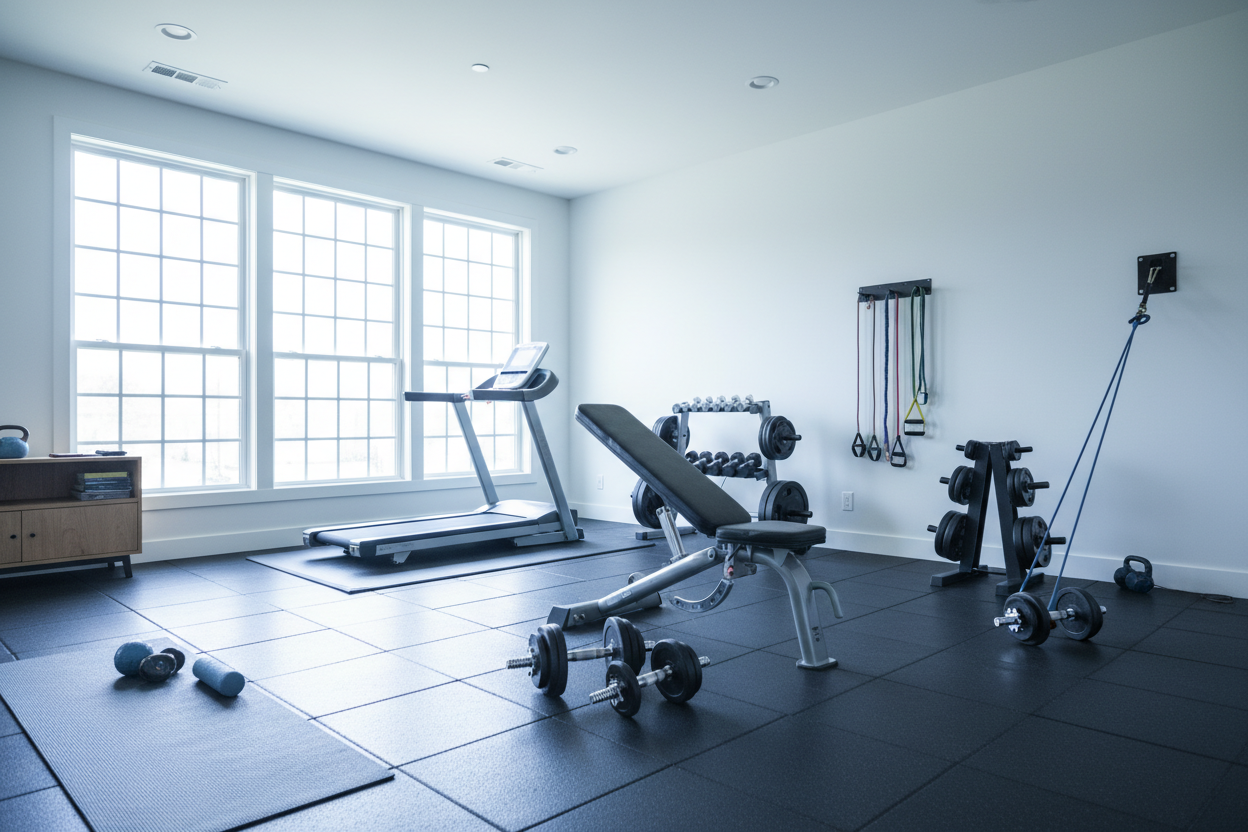
I suggest using a high-density surface like the Gxmmat New Upgraded Exercise Mats for this. These mats are huge—the 7x8 ft version gives you plenty of runway to do floor slides without your arm catching on the carpet or sliding off a narrow yoga mat. The extra padding is also a lifter's savior when you are trying to keep your spine neutral while moving a compromised shoulder.
The 4 Pulled Shoulder Muscle Exercises You Actually Need
Rehab is boring, but it is the only way back to the platform. These pulled shoulder muscle exercises focus on blood flow and stability. If any of these cause sharp pain, back off. You are looking for a 'productive' ache, not a 'stabbing' sensation.
- Pendulums: Lean over a bench, let your arm hang dead, and make tiny circles. It decompresses the joint.
- Scapular Squeezes: Sitting tall, pinch your shoulder blades together like you are trying to hold a coin between them.
- External Rotation (No Weight): Keep your elbow tucked to your side and rotate your hand outward.
- Sleeper Stretches: Gently stretching the posterior capsule to prevent the 'frozen shoulder' effect.
Wall Crawls for Gradual Flexion
Wall crawls are the gold standard for regaining overhead mobility. Stand facing a wall and literally 'walk' your fingers up the surface as high as you can go without shrugging your ear to your shoulder. It is humbling to realize you can only reach eye level at first, but millimeter by millimeter, you will get that overhead reach back.
Isometric Wall Pushes to Wake Up the Cuff
Before you can move weight, you need to prove the muscle can fire. Stand in a doorway and press the back of your wrist into the frame. Hold for 10 seconds at 25% effort. This creates tension without movement (isometrics), which is the safest way to rebuild the neural connection to a damaged rotator cuff. Increase the intensity only as the pain stays at zero.
When Are You Actually Ready to Press Again?
Do not go back to the barbell just because you can reach the top shelf for a box of cereal. You are ready when you can pass three tests: full pain-free range of motion, symmetrical strength in a side-lying external rotation, and ten strict, slow pushups with no 'clicking' in the joint.
When you do return, start with high-rep, low-load beginner shoulder exercises to build volume and work capacity. Swap the barbell for dumbbells or a neutral-grip Swiss bar for a few weeks to take the stress off the anterior delt. It took me three months to get back to my old bench numbers, but because I did the boring mat work, my shoulder actually feels more stable now than it did before the tweak.
FAQ
Can I train legs with a pulled shoulder?
Yes, but avoid the back squat. The 'low bar' position puts massive strain on the shoulder capsule. Stick to belt squats, leg presses, or Bulgarian split squats holding a dumbbell in the non-injured hand.
Should I use a sling?
Unless a doctor told you to, avoid slings for simple pulls. Immobilizing the joint for too long leads to stiffness and 'frozen shoulder.' You want movement, just not loaded movement.
How long until I can bench press again?
For a minor strain, usually 2-4 weeks. For a significant pull where you lost strength, expect 8-12 weeks of rehab before you are touching a 45-lb bar again.