Stop Yanking the Bar: How to Lift a Heavy Weight
You’re standing over the bar, knuckles white, heart hammering against your ribs. You’ve been stuck at the same three-plate deadlift for six months, and no matter how much caffeine you chug, the iron won't budge. You walk up, take a breath, and yank—only to feel that sickening 'pop' in your lower back while the plates stay glued to the platform. Learning how to lift a heavy weight isn't about being the loudest guy in the garage; it's about understanding that strength is a skill you practice, not just a feeling you chase.
Quick Takeaways
- Tension is the secret sauce; if you’re loose, you’re weak.
- Bracing is about internal pressure, not just sucking in your gut.
- Body weight provides leverage, which is why 'mass moves mass.'
- Safety gear like power racks removes the psychological 'fear' of failing.
Why You Are Stuck Lifting the Exact Same Iron Every Week
Most people fail because they treat a heavy lift like a wrestling match. They try to 'out-effort' the bar. But here is the reality: the bar doesn't care how hard you're trying. If you are struggling to lift weights you’ve handled before, it’s usually a leak in your power transfer. You’re losing energy because your setup is soft.
Think of your body like a crane. If the crane’s base is made of wood, it doesn't matter how strong the motor is—the whole thing will collapse. To learn how to lift more weight, you have to stop thinking about moving the bar and start thinking about becoming a rigid, unyielding pillar of tension. You need to learn how to lift heavy by creating a 'sealed' system from your feet to your hands.
The Physics of Bracing: How to Lift Heavier Weights Without Injury
If you want to know how to lift heavier, you have to master the Valsalva maneuver. This isn't just holding your breath; it's expanding your midsection into your belt to create intra-abdominal pressure. This pressure stabilizes your spine from the inside out, turning your torso into a solid block of granite.
Don't just pull the bar off the floor. Wedge yourself into it. Pull the 'slack' out of the bar until the plates click against the sleeves. Engage your lats like you’re trying to snap the bar in half across your shins. This 'pre-loading' is how to lift bigger weights without your form breaking down the second the load leaves the floor.
If You Weigh More Can You Lift More? (The Mass Moves Mass Rule)
It’s a common question: if you weigh more can you lift more? Generally, yes. This isn't just about having more muscle; it’s about physics and leverages. A thicker torso reduces the distance the bar has to travel on a bench press. A heavier body acts as a better counterweight on a squat or deadlift.
This doesn't mean you should go on a 'dirty bulk' and eat everything in sight. But if you’re trying to figure out how to lift more and you’re intentionally staying at a 5% body fat percentage, you’re fighting an uphill battle. Sometimes, adding five or ten pounds of body mass is the simplest way to see your numbers climb.
Fixing Your Weak Links: How to Lift Heavier Dumbbells
Dumbbells are a different beast. They don't offer the stability of a barbell, which is why they feel exponentially heavier. If you want to know how to lift heavier dumbbells, you have to master the setup. You can't just manhandle 100-pounders into position without wasting all your energy before the first rep.
Use your knees to kick the weights into place. Once you’re back on the bench, you need a surface that doesn't let your shoulders slide. I personally find that using a high-grip surface like the Gxmmat adjustable weight bench allows me to dig my traps in and create a stable platform. If your back is sliding around, your brain will 'cut the power' to your chest and triceps to prevent an injury.
A Realistic Timeline: How Long Does It Take to Lift Heavier Weights?
Everyone wants to know: how long does it take to lift heavier weights? If you're a beginner, you might see jumps every week. But for the rest of us, progress is measured in months and years. Your nervous system learns quickly, but your tendons and ligaments take much longer to thicken and adapt.
If you’re trying to build stronger bigger glutes with weights, expect to spend at least 12 to 16 weeks on a specific program before you see a significant jump in your 1RM. Adding five pounds to your squat every month might seem slow, but that’s 60 pounds in a year. Most lifters would kill for that kind of progress.
The Gear That Actually Helps You Lift More
I’ve spent thousands on gear, and most of it is fluff. However, the one thing that will absolutely help you learn how to lift heavier is a sense of safety. If you are afraid of the weight, you will never fully commit to the lift. Your brain has a built-in governor that prevents you from exerting maximum force if it thinks you're about to be crushed.
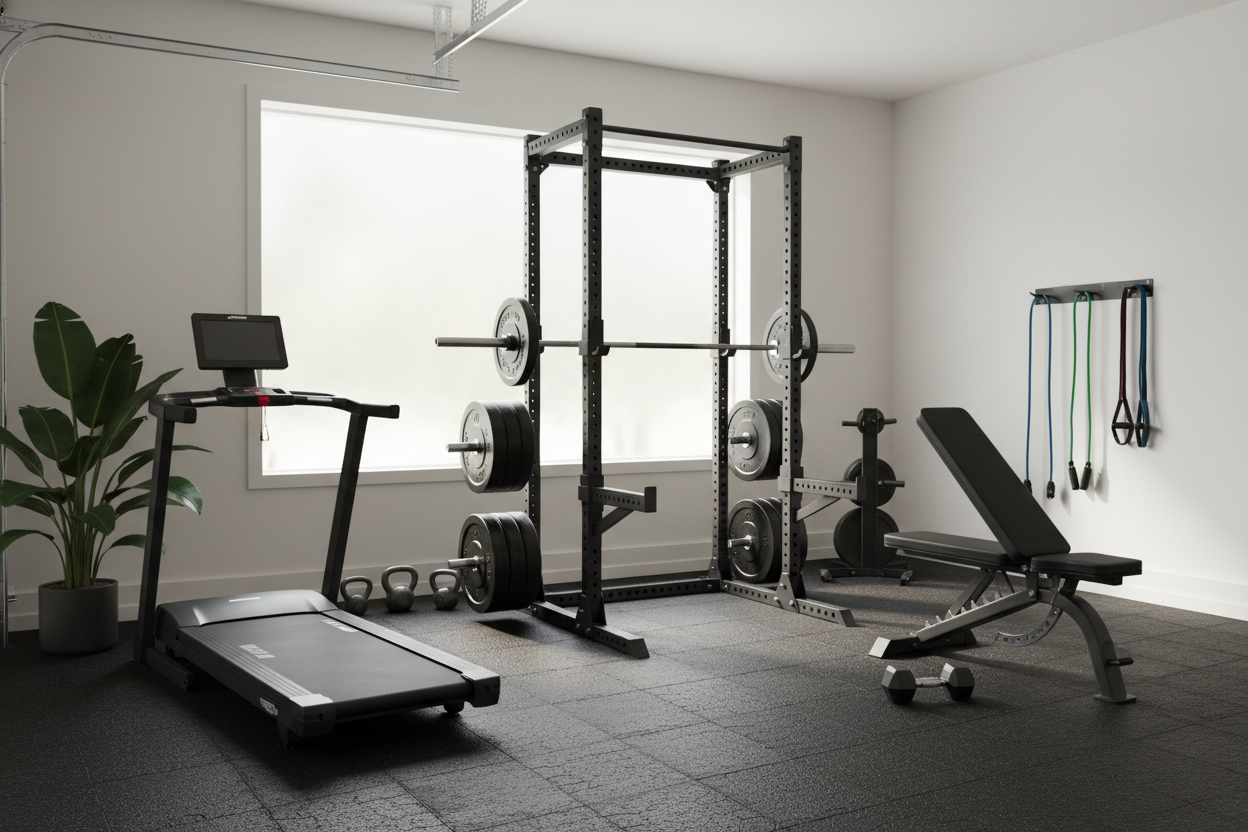
This is why I recommend the Gxmmat X6 Power Rack Weight Bench Package for home lifters. Having heavy-duty spotter arms means you can take that heavy triple to failure without wondering if you're going to end up in the hospital. When you remove the fear, your central nervous system finally lets you move the weight you’re actually capable of pulling.
My Personal Take
I once tried to ego-lift a 500-lb deadlift on a whim because I felt 'good.' I didn't brace, I didn't wedge, and I didn't respect the weight. I felt my lower back shift like a tectonic plate. It took me six months to get back to even pulling 135 lbs without pain. The lesson? Respect the mechanics. Tension isn't optional; it's the requirement for entry.
FAQ
How do I stop my grip from failing on heavy pulls?
Use chalk or straps. Don't let a small muscle like your forearm limit the growth of huge muscles like your back and hamstrings. If the goal is strength, use the tools available.
Is it better to lift fast or slow?
On the way down (eccentric), control it. On the way up (concentric), try to move the bar as fast as possible. Even if it moves slowly because it's heavy, the *intent* to move it fast recruits more muscle fibers.
Why does the weight feel heavier some days?
Sleep, hydration, and stress. Your central nervous system is like a battery. If you had a stressful day at work or only four hours of sleep, your 'battery' is at 40%, and the iron will feel like lead.