How to Actually Start Home Strength Training for Beginners
I have spent way too many Tuesday nights staring at a $2,000 power rack in a digital shopping cart while my actual workout consisted of exactly zero reps. Most people fail at home strength training for beginners because they think they need a commercial-grade facility in their garage before they can do a single lunge. You do not. In fact, starting too big is the fastest way to end up with a very expensive clothes rack.
- Start with bodyweight movements to master the 'Big Four': Squat, Hinge, Push, and Pull.
- Don't buy gear until you have consistently trained for at least three weeks.
- A stable, non-slip floor is more important than a fancy barbell in the early days.
- Progressive overload is the only 'secret'—add a rep or a pound every week.
Why Your First Home Setup Should Be Dirt Cheap
The biggest mistake I see is the 'all-in' buy. People drop three grand on a Rogue rack and a set of competition bumpers before they even know if they enjoy weight training for beginners at home. Your muscles are incredibly dumb; they cannot tell the difference between a $300 custom-milled dumbbell and a gallon of milk. They only respond to mechanical tension.
Focus on mastering basic movement patterns first. If you cannot perform a clean goblet squat with a heavy backpack, you have no business under a 45-pound barbell. Use what you have. Use the floor. Use a sturdy chair for step-ups. This phase is about building the neurological habit of moving under load, not showing off a shiny home gym on Instagram.
Protecting Your Joints (and Your Living Room Floor)
If you are trying to execute a beginner weight lifting routine at home on a slick hardwood floor or a bunch of bunched-up area rugs, you are going to get hurt. I have seen more rolled ankles and 'mystery' knee pains from unstable surfaces than from heavy weights. You need a foundation that does not move when you do.
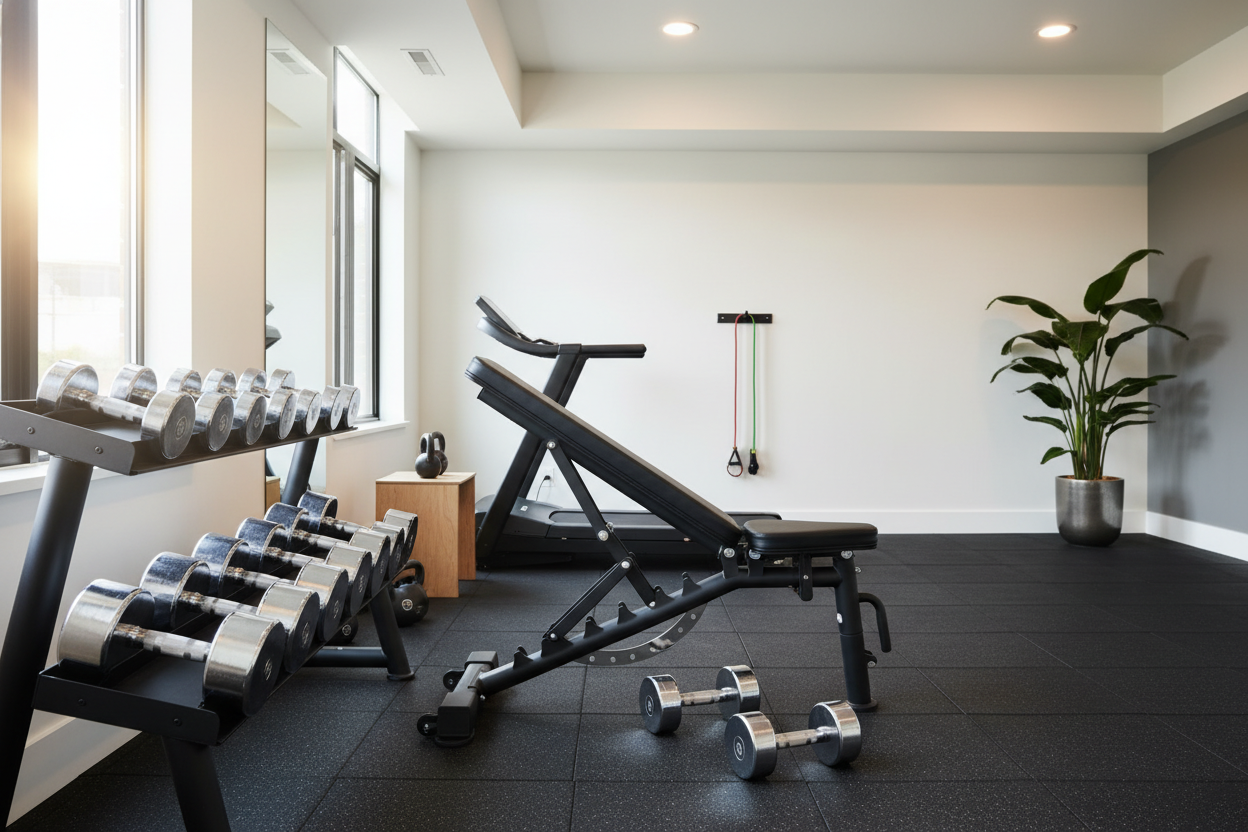
A dedicated training zone keeps you safe and mentally 'in the zone.' Investing in a Large Exercise Mat For Home Gym is probably the smartest first purchase you can make. It provides the necessary grip for your sneakers and dampens the noise so your neighbors or family don't think you're dropping furniture every time you finish a set of lunges.
My Go-To Beginner Strength Training Routine at Home
Keep it simple. If your program has 15 different exercises and weird supersets, you will quit by week two. You need to Stop Overcomplicating At Home Weight Training for Beginners and stick to the basics. This 3-day full-body split is all you need for the first three months.
Day A: Bodyweight Squats (3 sets of 12-15), Standard Push-ups (3 sets to failure), and Bird-Dogs (3 sets of 10 per side). Day B: Alternating Reverse Lunges (3 sets of 10 per leg), Inverted Rows using a sturdy table or a doorway (3 sets of 8-10), and Glute Bridges (3 sets of 15). Day C: Repeat Day A. Rest at least 48 hours between sessions. This beginner strength training routine at home focuses on high-quality reps over high-intensity sweat.
Scaling Up: When to Add Real Weight
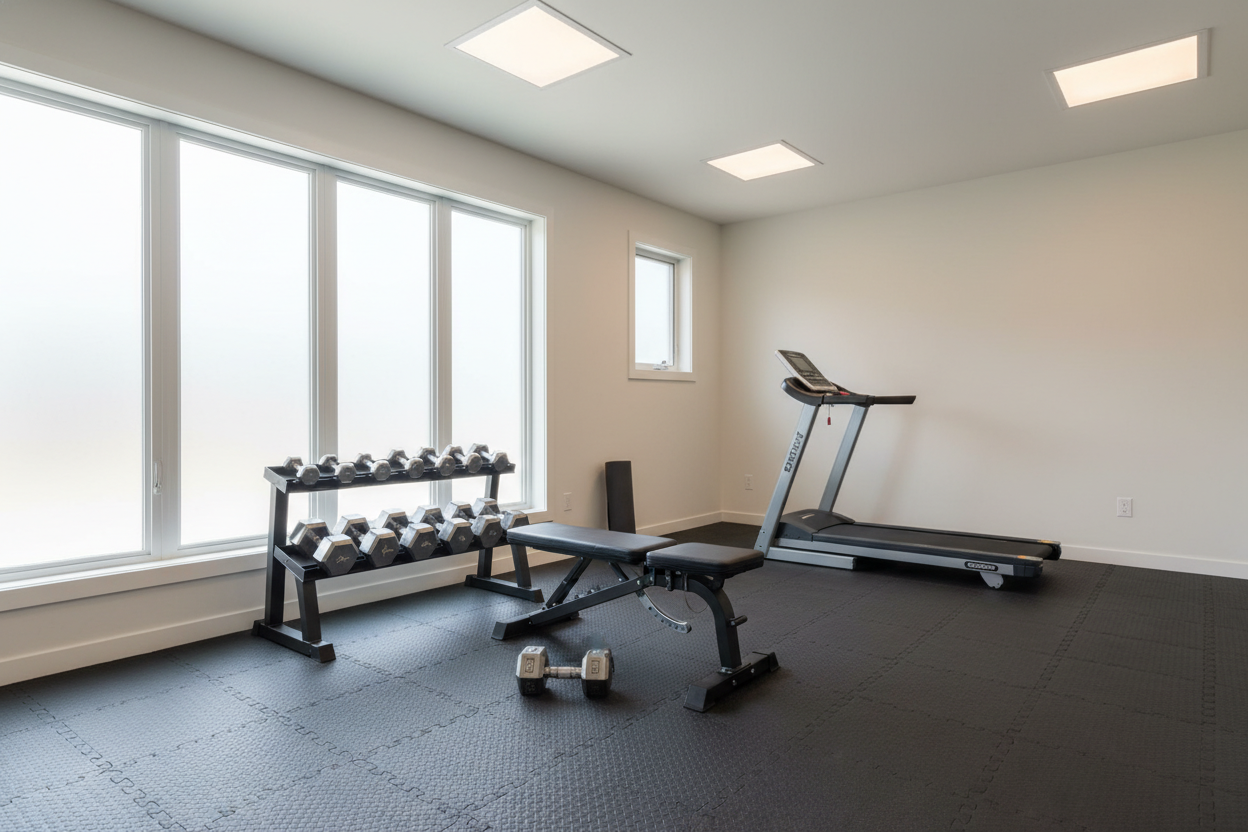
Eventually, your bodyweight won't be enough to trigger growth. This is when weightlifting for beginners at home gets fun. You don't need a full rack yet, but a pair of adjustable dumbbells or a couple of kettlebells will change your life. This is the 'Progressive Overload' phase—if 15 air squats are easy, hold a 20-pound weight.
As you start adding iron, you have to protect your house. Dropping a 25-pound dumbbell on a thin mat can crack a subfloor. I recommend upgrading to a 6X8Ft Exercise Mat Yoga Mat Gym Flooring For Home Workout once you start using external weights. It is thick enough to handle the impact and large enough that you won't step off the edge during a dynamic movement.
When Are You Ready for the Heavy Iron?
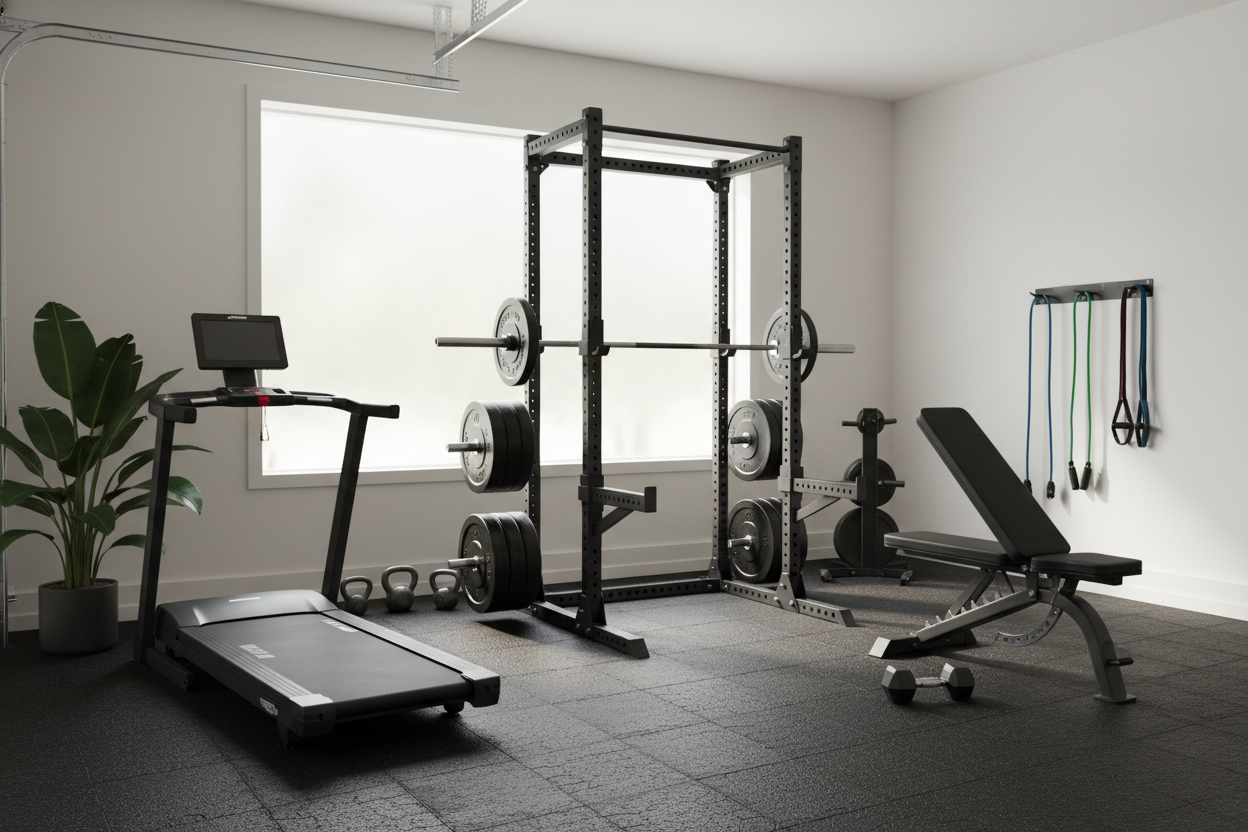
You are ready for a barbell when you have maxed out your dumbbells and your consistency is bulletproof. A basic weight lifting routine for beginners at home can take you surprisingly far—usually 6 to 12 months of solid progress. But if your goals involve squatting 300 pounds, you will eventually need the big stuff.
When that time comes, do your homework. You can check out Free Weight Gyms Explained Building Raw Strength At Home to understand the jump from 'fitness enthusiast' to 'home gym owner.' Transitioning to a power rack and barbell is a commitment, but if you've built the foundation correctly, it is the most rewarding investment you will ever make.
Personal Experience: My $100 Mistake
When I first started, I bought a set of plastic, sand-filled weights from a garage sale. Within a month, the plastic cracked and I had literal sand leaking into my carpet. It was a mess, and the handles were so thick they were impossible to grip properly. I learned the hard way: buy once, cry once. Stick to cast iron or high-quality rubberized gear. It lasts forever and holds its resale value if you ever decide to quit.
FAQ
How much space do I really need?
If you can lie down and spread your arms without hitting a wall, you have enough space. A 6x8 foot area is the gold standard for most home workouts.
Is it normal to be sore for three days?
In the beginning, yes. It is called DOMS (Delayed Onset Muscle Soreness). As long as it is a dull ache in the muscle and not a sharp pain in the joint, you are fine. Keep moving.
Do I need to do cardio too?
Strength training is the priority for body composition, but a 20-minute walk on your 'off' days will do wonders for your recovery and heart health.