Free Weight Gyms Explained: Building Raw Strength at Home
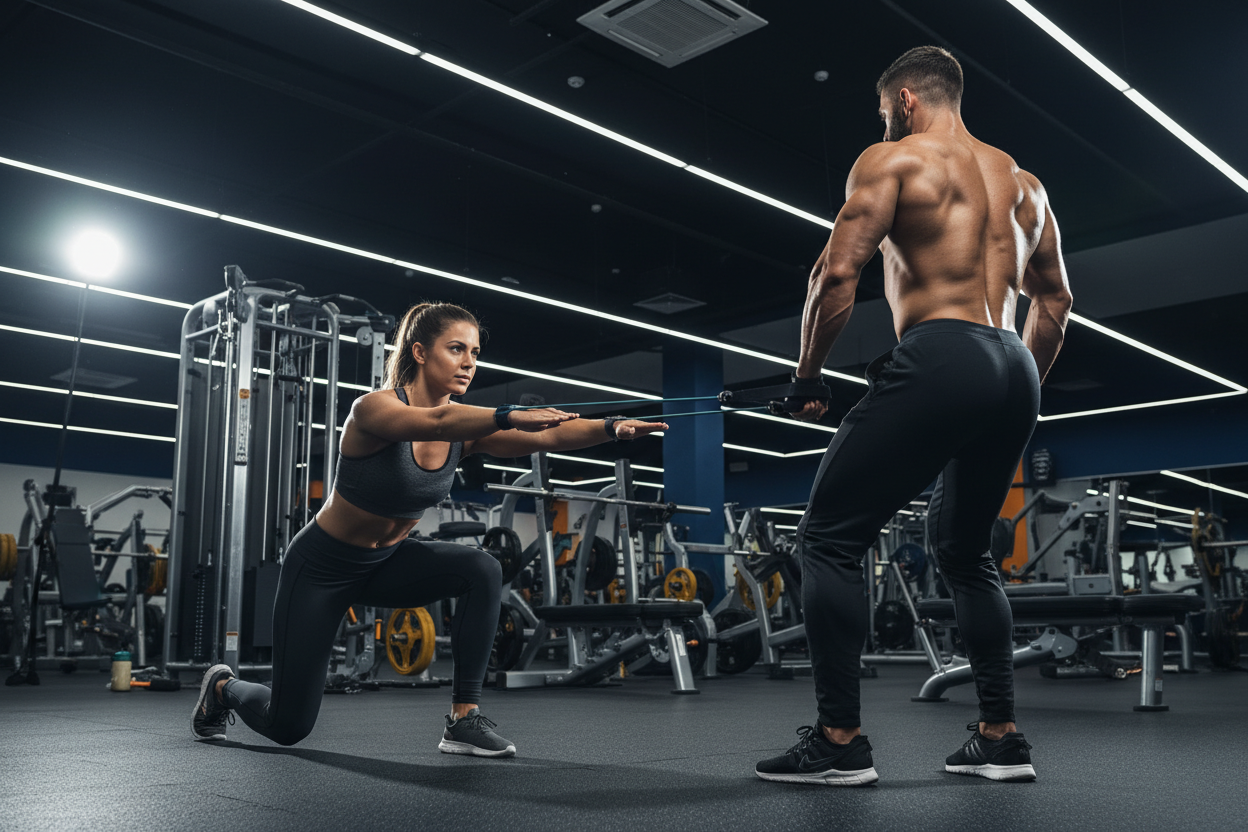
If you've ever stared at a massive, complicated cable machine taking up half a basement and wondered if there was a better way, you aren't alone. The shift toward building dedicated free weight gyms is taking over the North American home fitness scene, and for good reason. Whether you are dealing with limited garage space, a strict budget, or a frustrating workout plateau, stripping your training down to the raw essentials might be exactly what you need.
In this guide, we are going to break down why ditching the selectorized machines for iron and steel is the smartest investment you can make for your home setup, what gear you actually need, and how to plan your space effectively.
Key Takeaways
- Free weights force you to use stabilizer muscles, translating to better functional strength than fixed-path machines.
- A complete setup requires surprisingly little space; an 8x8 foot area is plenty for a rack, bench, and barbell.
- Maintenance is virtually non-existent—no cables to snap, pulleys to lubricate, or complex moving parts to replace.
- Pound-for-pound, free weights offer the highest return on investment for home gym owners.
Why Ditch the Machines? The Free Weight Advantage
Functional Strength & Stabilizer Muscles
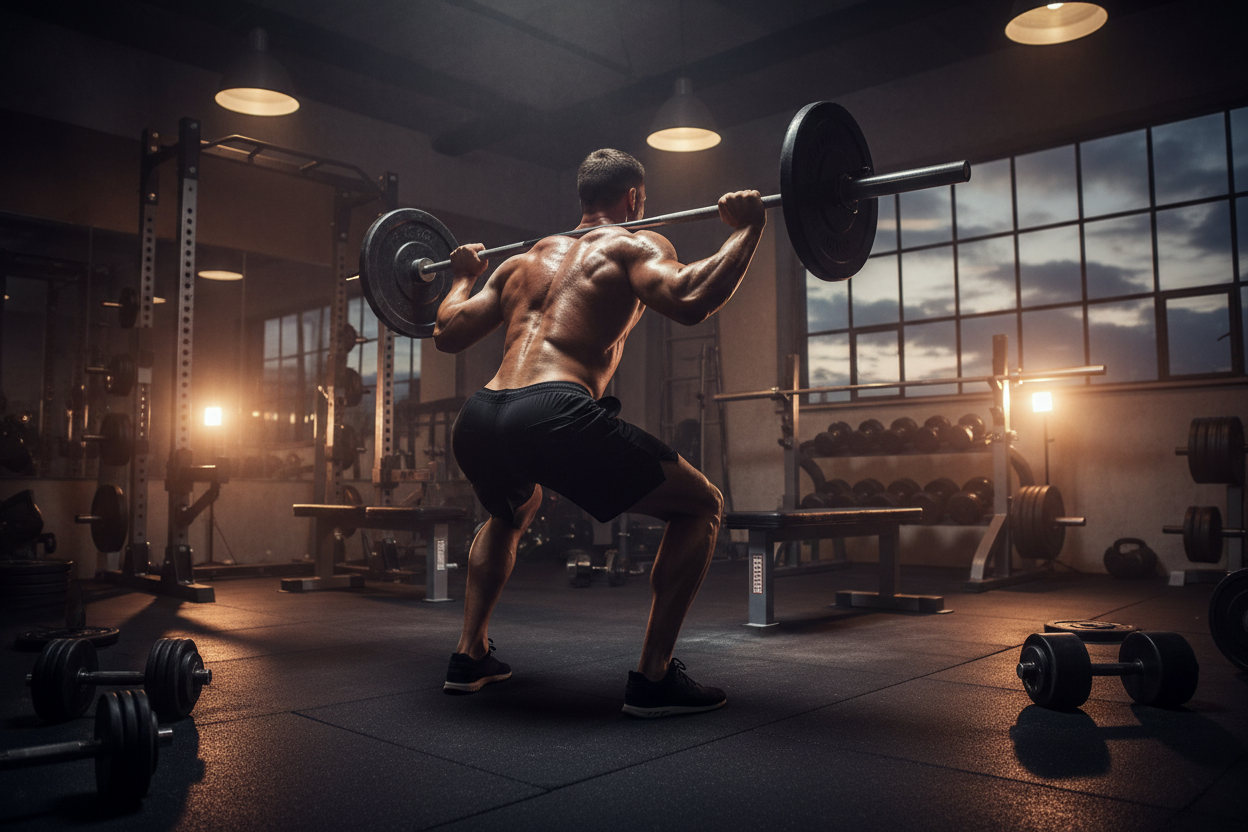
Commercial gym machines lock you into a fixed range of motion. While this is great for isolating a single muscle, it does nothing for your core or your stabilizer muscles. When you squat with a barbell or press a pair of heavy dumbbells, your body has to work overtime just to balance the load. This builds real-world, functional strength that translates directly to everyday life and athletic performance.
Space Efficiency for North American Homes
Most home gym owners are working with a standard two-car garage, a spare bedroom, or an unfinished basement. Large multi-gyms consume massive amounts of floor space and often require high ceilings for their pulley towers. Conversely, a free weight setup is modular. Dumbbells can be tucked against a wall, plates stack neatly on a weight tree, and a folding wall-mounted squat rack can practically disappear when not in use.
The Core Essentials for Your Setup
The Holy Trinity: Rack, Barbell, and Bench
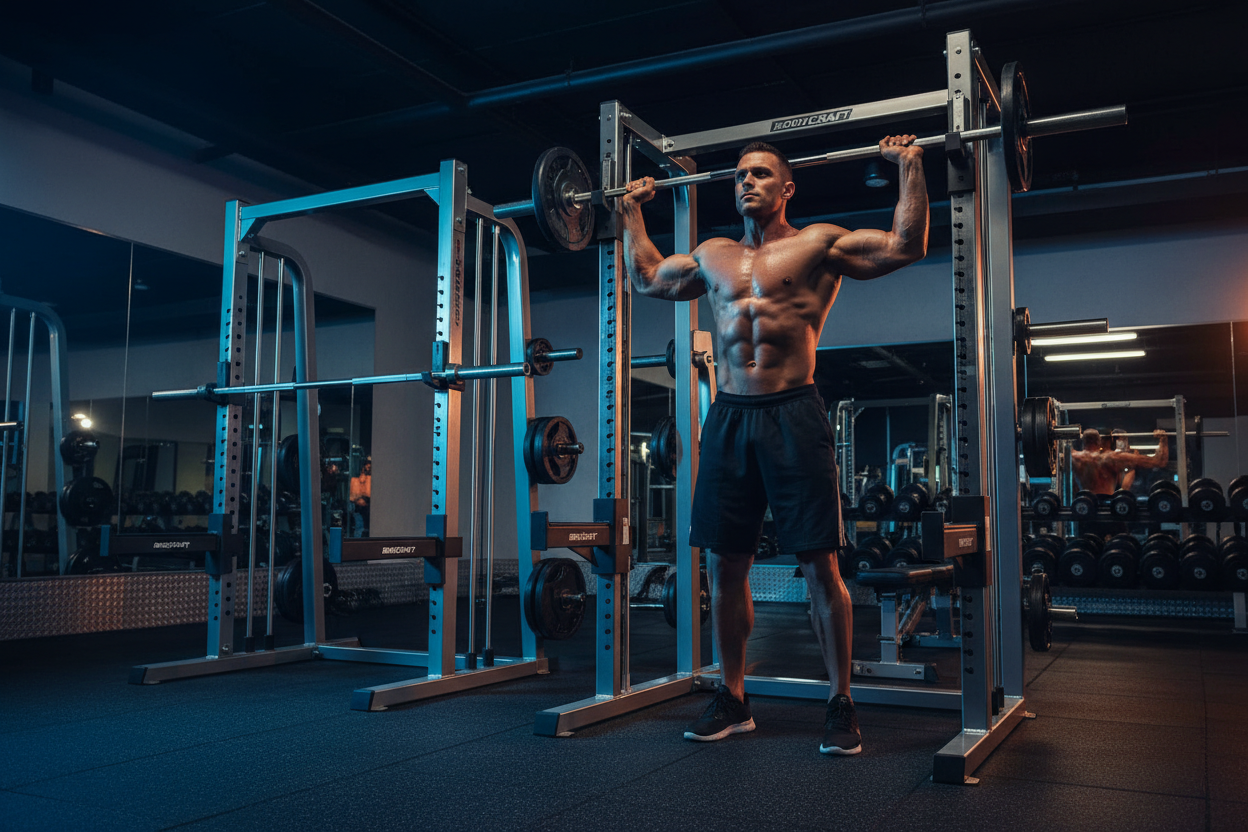
You don't need a massive catalog of gear to get started. The foundation of any serious strength setup consists of three things: a power rack (or half rack), an Olympic barbell, and an adjustable flat-to-incline bench. With just these three pieces, you unlock the ability to perform the big compound lifts—squats, deadlifts, bench presses, and overhead presses—which are responsible for 80% of muscle growth and strength gains.
Dumbbells vs. Kettlebells
To complement your barbell work, you'll want unilateral (single-arm) resistance. Adjustable dumbbells are the crown jewel of home gyms because they replace an entire commercial rack of weights in a compact footprint. If you prefer dynamic, explosive movements, a small set of kettlebells (typically 16kg, 24kg, and 32kg) can offer incredible conditioning and strength benefits without eating into your budget.
From Our Gym: Honest Take
When I first built out my garage setup in the Midwest, I made the classic rookie mistake: I bought a massive, all-in-one functional trainer. I thought the versatility would be amazing. Within six months, it became a very expensive coat rack. I sold it at a loss and pivoted to a pure free weight setup.
The difference was night and day. I installed a standard 8x8 foot deadlift platform made from plywood and 3/4-inch horse stall mats to protect my concrete floor. The knurling on my new cerakote barbell was noticeably more aggressive than the cheap bars at my old commercial gym, and my chalked grip held solid through heavy deadlift sets. One detail most product pages don't mention: if you are over 6 feet tall, make sure you have at least 90 inches of ceiling clearance above your rack for standing overhead presses. I had to move my setup away from the garage door track just to press safely!
Frequently Asked Questions
How much space do I need for a free weight home gym?
At a minimum, you need an area of about 8 feet by 8 feet (64 square feet). This gives you enough room for a standard 7-foot Olympic barbell, a power rack, and enough clearance on the sides to load and unload plates safely.
Are free weight gyms safe to use without a spotter?
Yes, provided you buy the right equipment. A power rack with heavy-duty safety pins or spotter arms is non-negotiable for solo lifting. If you fail a heavy squat or bench press, the safety bars will catch the weight, keeping you completely safe.
Do I need special flooring for free weights?
Absolutely. Dropping iron plates or heavy dumbbells directly on concrete will crack your foundation and ruin your equipment. High-density rubber flooring—such as 3/4-inch vulcanized rubber stall mats—is the gold standard for protecting your floor and absorbing sound.