The Heavy Truth: How to Build Stronger, Bigger Glutes with Weights
For years, I spun my wheels doing hundreds of bodyweight kickbacks and air squats, wondering why my physique wasn't changing. I felt the burn, sure, but the growth just wasn't there. It wasn't until I dropped the high-rep calisthenics and picked up a barbell that I saw a physical difference. The reality of muscle building is rooted in progressive overload. If you want to change the shape and strength of your posterior chain, you have to challenge the muscles with resistance.
Finding the best glute exercises with weights isn't about discovering a secret magic trick; it's about mastering biomechanics. Your glutes are the largest muscle group in your body, designed to extend the hip with tremendous force. To stimulate hypertrophy (muscle growth), you need to subject them to tension that bodyweight alone simply cannot provide after a certain point. Let’s look at the movements that actually deliver a return on your investment.
The King of Contraction: The Hip Thrust
If you are looking for the absolute most effective movement for glute isolation under a heavy load, the hip thrust reigns supreme. Unlike standing exercises where the tension curve varies, the hip thrust places maximum tension on the glutes when they are fully shortened (contracted) at the top of the movement.
I recall being intimidated by the setup initially—finding a bench, rolling the bar over my hips, and dealing with the awkward stares in the gym. But once I mastered the setup, the results were undeniable. The key here is the posterior pelvic tilt. At the top of the thrust, you want to tuck your tailbone slightly and keep your ribs down. This prevents your lower back from taking over the load and ensures the gluteus maximus is doing the heavy lifting.
While the barbell version allows for the most weight, you can easily modify this. If you have limited equipment, a heavy dumbbell placed across the hips works exceptionally well for high reps.
The Essential Stretch: Romanian Deadlifts (RDLs)
While the hip thrust builds the muscle through contraction, the Romanian Deadlift builds it through the stretch. This is arguably one of the best exercises to grow glutes with weights because it creates significant muscle damage (the good kind) which is a primary driver for growth.
The RDL is a hinge movement, not a squat. Imagine you are trying to close a car door behind you with your butt. You keep a soft bend in your knees, push your hips back as far as they can go, and stop lowering the weight once your hips stop moving back. If you go lower than your hamstring flexibility allows, your lower back will round, shifting tension away from the glutes.
Mastering the RDL was a turning point in my own training. I realized that soreness isn't always the goal, but the deep stretch felt during the eccentric (lowering) phase of an RDL signals that the fibers are being pulled under load, which is fantastic for hypertrophy.
Unilateral Training: The Bulgarian Split Squat
We cannot talk about lower body development without addressing imbalances. Most people have one leg stronger than the other. If you only do bilateral movements (like squats), the dominant side will overcompensate. This is where the Bulgarian Split Squat shines. Many trainers consider this the best dumbbell exercise for glutes due to the stability requirements and the deep range of motion it allows.
To make this glute-biased rather than quad-biased, you need to adjust your torso angle. Lean forward slightly (hinging at the hips) and ensure your front foot is far enough away from the bench that your shin stays relatively vertical. Drive through the heel of the front foot. It is a grueling exercise—often the one people dread the most—but the payoff in terms of stability and targeted growth is unmatched.
Squat Variations for Glute Focus
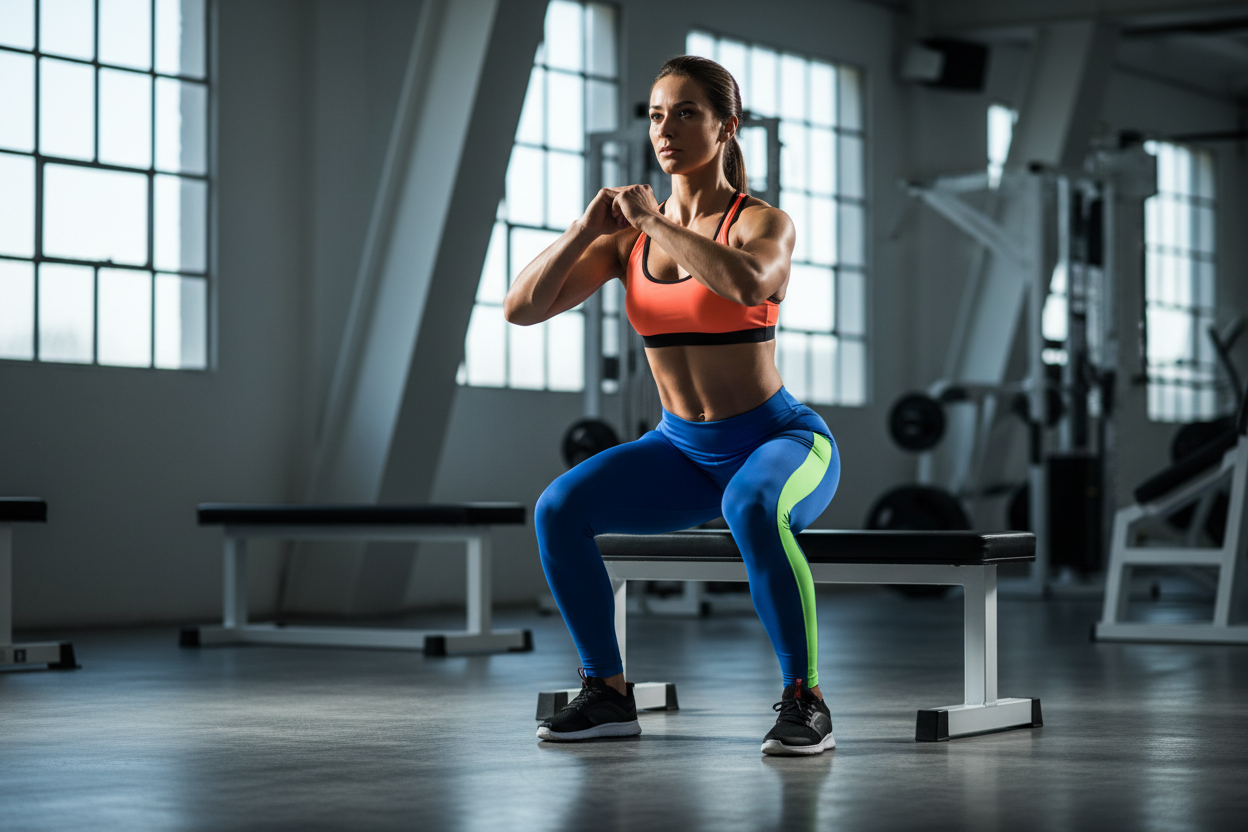
Squats are often touted as the ultimate leg builder, but traditional back squats are heavily quad-dominant for many lifters. To shift the focus posteriorly, you need to look at the Sumo Squat or the Goblet Squat. These are some of the best weighted glute exercises because the wider stance and foot flare allow for greater hip flexion and activation.
In a Sumo Squat, you take a wide stance with toes pointed out. As you descend, think about pushing your knees out to track over your toes. This position naturally engages the glute medius and maximus more than a narrow stance squat. Whether you use a kettlebell, a single heavy dumbbell held at chest height, or a barbell, the mechanics remain the same: sit down and back, keeping the chest proud.
Structuring Your Routine
Knowing the moves is half the battle; arranging them into a cohesive plan is the other. The best glute workout with weights should be balanced. You don't need twenty different exercises in a single session. You need three to five executed with high intensity and proper form.
A solid structure might look like this:
- Compound Lift (Heavy): Barbell Hip Thrusts (3-4 sets of 8-10 reps)
- Stretch Movement: Romanian Deadlifts (3 sets of 10-12 reps)
- Unilateral Movement: Dumbbell Step-Ups or Split Squats (3 sets of 12 reps per leg)
- Pump/Isolation: Weighted 45-degree Hyperextensions (3 sets of 15-20 reps)
This approach hits the muscle from different angles—shortened, lengthened, and unilateral—ensuring comprehensive development. The goal isn't to be exhausted; the goal is to progress. If you lifted 100lbs this week, try for 105lbs or an extra rep next week.
The Role of Progressive Overload
You can have the perfect selection of exercises, but without progressive overload, your physique will remain stagnant. Muscles are adaptive tissue. If the stress placed upon them remains constant, they have no reason to grow larger or stronger. This doesn't always mean adding more weight to the bar, though that is the most common method.
You can also increase the number of reps, increase the number of sets, decrease rest times, or improve your technique to make the rep harder. Slowing down the tempo, specifically on the way down, increases time under tension. For example, taking three full seconds to lower into your squat before exploding up can make a light weight feel incredibly heavy.
Common Mistakes to Avoid
The most frequent error I see in gyms is lifting with the ego rather than the muscle. Swinging the weight up during a deadlift or arching the lower back excessively during a hip thrust transfers tension to the lumbar spine. This not only kills your gains but invites injury. If you cannot feel your glutes working, drop the weight. Establish the mind-muscle connection first, then load it.
Another pitfall is inconsistency. Doing a random assortment of Instagram workouts every week prevents you from tracking progress. Stick to the basics. The movements discussed here—thrusts, hinges, and squats—have stood the test of time because they work. Consistency with a boring routine beats inconsistency with an exciting one every time.
Final Thoughts on Gear
While you don't need fancy equipment, having the right tools helps. Flat-soled shoes (like Converse or specialized lifting shoes) or simply training in socks can improve your stability. Running shoes often have compressible soles that make heavy lifting unstable. A lifting belt can also help brace your core during heavy RDLs or squats, providing a safer environment for your spine to handle the load.
Building a strong posterior chain is a marathon, not a sprint. It requires fueling your body with enough protein to support recovery and sleeping enough to let the repairs happen. Trust the process, respect the heavy iron, and the results will follow.
Frequently Asked Questions
How often should I train glutes to see results?
For most lifters, training glutes 2 to 3 times per week is the sweet spot. This frequency allows for sufficient volume to stimulate growth while providing roughly 48 hours of rest between sessions for muscle recovery and repair.
Can I build glutes with just dumbbells?
Absolutely. Dumbbells are incredibly versatile and allow for a high range of motion. Exercises like Bulgarian split squats, goblet squats, and RDLs can all be performed effectively with dumbbells, provided you continue to increase the weight as you get stronger.
Why do I feel leg exercises in my lower back instead of my glutes?
This usually indicates a form breakdown or a weak core. Ensure you are bracing your core (ribs down) and maintaining a neutral spine during movements. If you are arching your back to move the weight, you are bypassing the glutes; try lowering the weight and focusing on a posterior pelvic tilt.