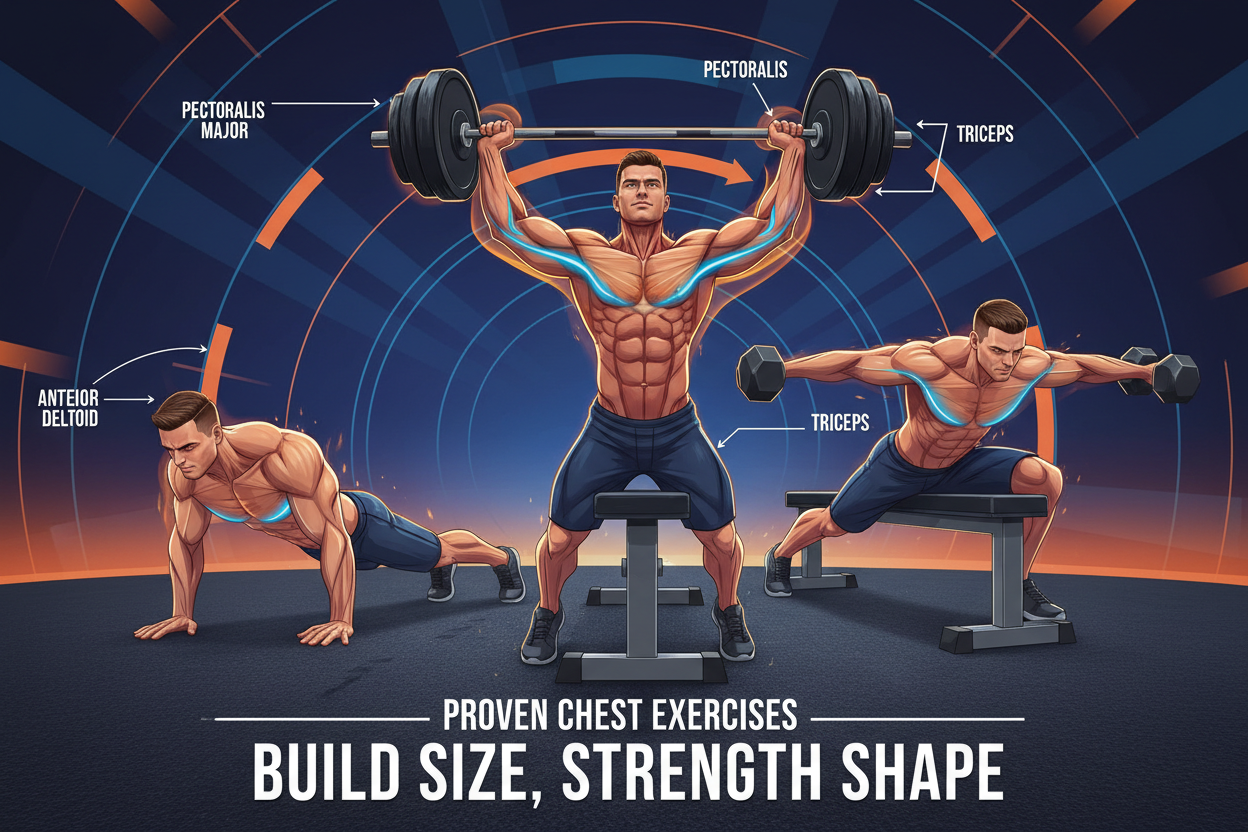
Proven Chest Exercises to Build Size, Strength, and Shape
Building a strong and well-defined chest is a goal shared by many fitness enthusiasts. Whether you are aiming to improve strength, enhance muscle size, or achieve a balanced physique, understanding the best chest exercises can guide you toward effective progress. The chest muscles, primarily the pectoralis major and minor, play a key role in upper body power and aesthetics. Choosing the right movements, optimizing workout structure, and focusing on proper form are the foundations of success.
Understanding the Importance of Chest Training
The chest isn’t just about appearance – it’s crucial for functional strength. Strong pectorals stabilize the shoulder joint, assist in pushing movements, and contribute to athletic performance. A well-developed chest also complements the arms and shoulders, creating a balanced look that enhances overall physique. Incorporating a variety of chest exercises ensures that you target different muscle fibers for fuller development.
The Best Chest Exercises for Overall Development
Barbell Bench Press
The barbell bench press is often considered the king of chest lifts. It allows you to lift heavy weights, promoting growth and strength across the entire chest. By adjusting grip width, you can favor different parts of the chest – a wider grip targets the outer pecs, while a narrower grip adds triceps involvement. Proper form includes keeping the bar path steady, avoiding excessive bounce, and maintaining a stable core.
Dumbbell Bench Press
Using dumbbells allows for a greater range of motion and can help correct muscle imbalances between sides. This exercise recruits stabilizing muscles more effectively and can lead to better pectoral engagement. Lower the dumbbells slowly to feel the stretch and press them upward in a controlled manner.
Incline Bench Press
The incline bench press focuses on the upper chest, helping build a more complete chest shape. Both barbell and dumbbell variations work well here. This movement also engages the front deltoids and triceps, contributing to shoulder stability.
Chest Dips
By leaning forward slightly during dips, you can shift the emphasis from the triceps to the chest. This bodyweight movement builds lower chest mass and can be progressively overloaded with additional weight belts once you gain strength.
Cable Fly
Cable flies provide constant tension on the chest muscles throughout the movement. You can adjust the pulley height to target different parts of the pecs – high pulley for lower pecs, low pulley for upper chest, and mid-level for overall development. Keep your elbows slightly bent to reduce shoulder strain.
Shaping and Sculpting the Chest
For those aiming to improve chest shape rather than just size, incorporating isolation exercises such as dumbbell flyes, machine chest press, and push-ups with varied hand positions helps refine the muscle outline. These movements enhance contraction and help carve detailed definition once you’ve built a solid muscle base.
Chest Training Routine Ideas
A balanced routine should include a mix of compound lifts and isolation work. For example:
- Barbell Bench Press – 4 sets of 6–8 reps
- Incline Dumbbell Press – 3 sets of 8–10 reps
- Cable Fly – 3 sets of 12–15 reps
- Chest Dips – 3 sets to failure
- Push-Ups (weighted or standard) – 2–3 sets to failure
Training the chest one to two times per week allows for adequate recovery while promoting growth. Adjust intensity and volume based on your goals – heavier weights for strength, moderate loads with higher reps for muscle endurance and definition.
Personal Experience and Insights
In my own training journey, I struggled with achieving upper chest fullness until I consistently programmed incline movements early in my workouts. Starting with heavy incline presses followed by dumbbell flyes made a dramatic difference within months. I also noticed that improving mind-muscle connection – focusing on feeling the pecs contract during each repetition – led to greater activation and better results.
Tips to Maximize Chest Growth
- Prioritize compound lifts early in the session for maximum energy output.
- Experiment with grip width and angles to engage different muscle regions.
- Gradually increase resistance to stimulate adaptation and growth.
- Maintain proper form to prevent shoulder strain and ensure pectoral activation.
- Incorporate variety – mix free weights, cables, and bodyweight exercises.
Conclusion
Building a strong, well-shaped chest requires a strategic blend of heavy compound movements and targeted isolation work. By structuring your training around proven exercises and maintaining consistency, you can enhance both strength and physique over time. Focus on progressive overload, proper form, and varied angles to fully develop the pectorals and achieve the strong chest you’re aiming for.