Stop Swinging: Exactly How Do You Use Dumbbells for Growth?
I remember the first time I brought a pair of 50s into my garage gym. I thought I knew what I was doing because I had watched enough YouTube clips, but within three minutes, I had nearly put a hole in the drywall and my shoulder was screaming. Most people look at a pair of weights and think it is just 'pick up, put down,' but how do you use dumbbells without looking like a flailing mess? It is not about the weight on the handle; it is about the tension on the muscle.
Quick Takeaways
- Stop using momentum; if your hips move, the weight is too heavy.
- Dumbbells allow for a natural range of motion that barbells block.
- A neutral grip (palms facing in) is usually safer for your shoulders.
- Always have a designated drop zone with proper flooring to save your gear.
The Momentum Trap: Why Your Curls Are Actually Cardio
The biggest mistake I see in every home gym is the 'cheat curl.' You know the one—where the lifter leans back, thrusts their hips forward, and uses a massive swing to get the weight up. If you are doing this, you are not building bigger arms; you are just doing weird, inefficient cardio. Learning how to dumbbells effectively starts with total body stillness. You want to isolate the bicep or the shoulder, not turn every movement into a full-body clean and jerk.
To fix this, try the 'wall test.' Stand with your back and elbows against a wall and try to curl. If you cannot get the weight up without your back leaving the wall, you have failed to understand how to use a dumbbell properly. Focus on a three-second eccentric (the lowering phase). That is where the actual muscle damage and growth happen. If you are just letting the weight gravity-drop after the rep, you are wasting half of your workout.
Stop Treating Them Like Tiny Barbells
People often try to mimic their barbell bench press exactly when they switch to dumbbells. They keep their elbows flared out at 90 degrees and move in a straight line. That is a mistake. The whole point of using a dumbbell is that your hands are not locked onto a single steel shaft. You should be utilizing a converging path—starting wide and bringing the weights closer together at the top of a press.
The physical design of your gear matters here too. When you are figuring out how to pick a dumbbell for exercise, you need to consider the head size. Massive, bulky adjustable weights can actually limit your range of motion on rows or presses because the plates hit your body before the muscle is fully stretched. If you want to know how to use dumbbell variations to their full potential, you have to embrace the freedom of movement they offer.
Grip, Path, and Posture: How to Use Dumbbells Correctly
When lifting dumbbell weights, your grip is your first line of defense. Most beginners white-knuckle the handle, which leads to forearm fatigue before the target muscle even gets tired. Instead, focus on a 'crush grip' only during the actual effort, and keep your wrists stacked directly over your elbows. If your wrists are flopping back, you are asking for a strain that will keep you out of the gym for a month.
Learning how to use dumbbells correctly also means mastering the neutral grip. For overhead presses and benching, turning your palms to face each other (neutral) instead of facing away (pronated) opens up the shoulder joint. It is a much more natural path for your rotator cuffs. Also, keep your core braced. When you are doing unilateral movements—lifting with one arm at a time—your trunk has to work overtime to keep you from tipping. That is hidden core work you do not get with a barbell.
The Best Way to Use Dumbbells for Full-Body Gains
While curls are fun, the best way to use dumbbells is for heavy, compound movements that torch your entire system. Take the goblet squat. By holding a single heavy dumbbell against your chest, you create a counter-balance that allows you to sit deeper into a squat than most people ever could with a bar on their back. It is the gold standard for teaching proper squat depth without wrecking your spine.
Learning how to work with dumbbells for lower body growth also means embracing the Bulgarian split squat. Yes, everyone hates them because they burn, but they are unmatched for fixing muscle imbalances. Hold a dumbbell in each hand, put one foot back on a bench, and drop straight down. This is how to use dumbbells for exercise that actually translates to real-world strength and stability.
Setting Up Your Drop Zone (And Protecting Your Gear)
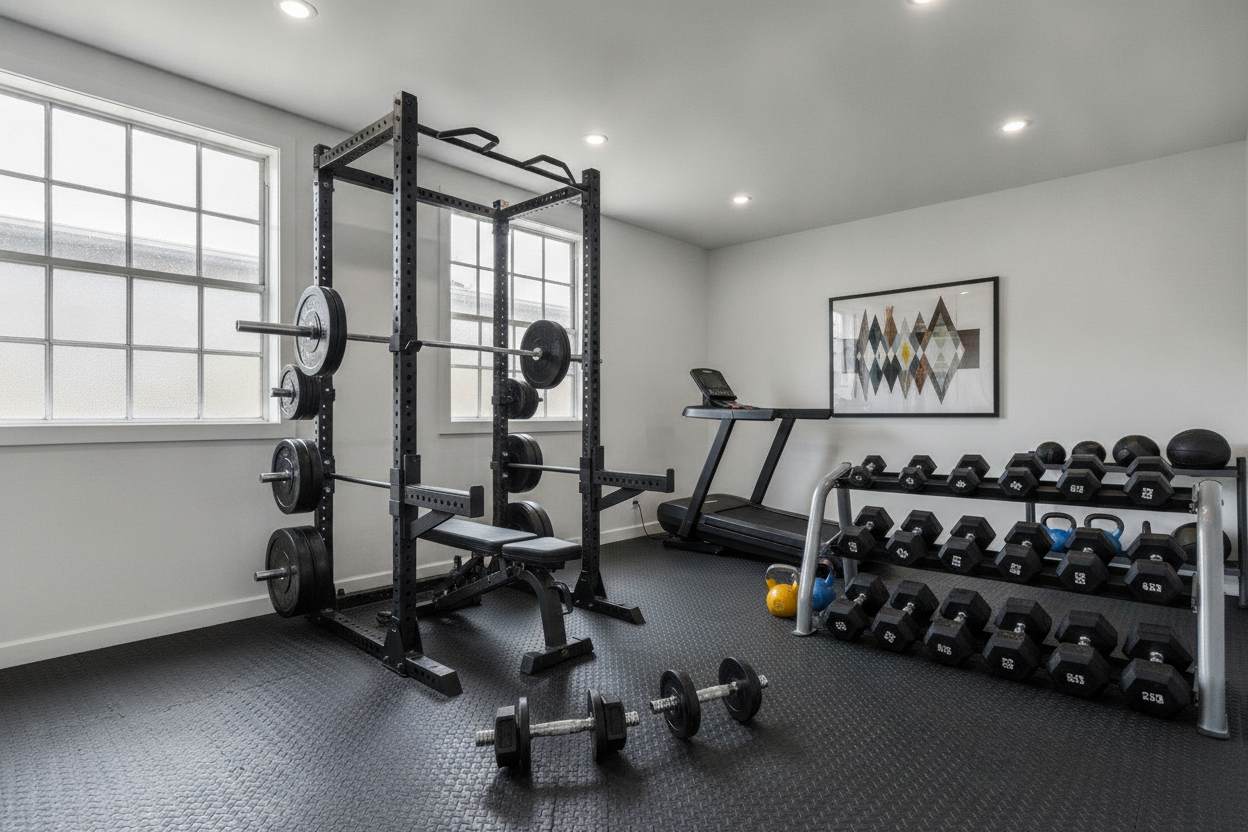
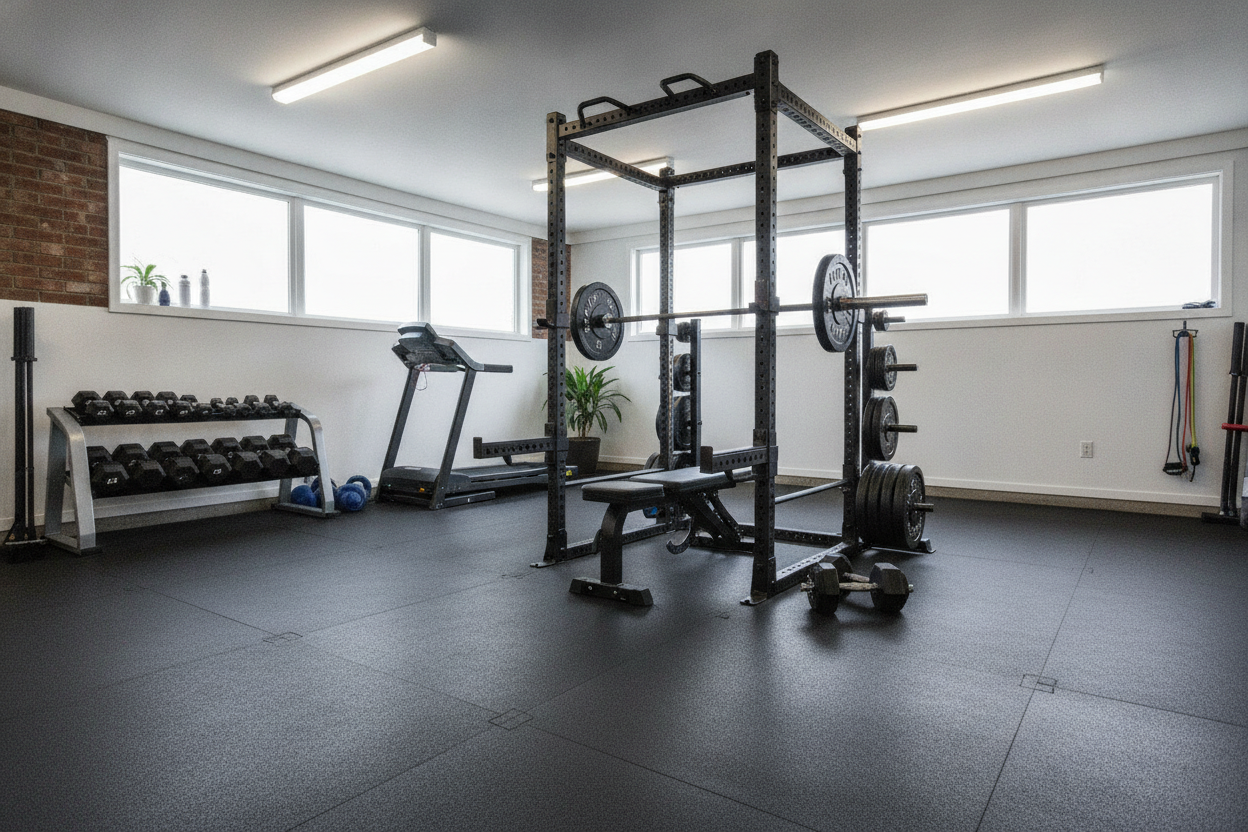
If you are training in a garage or a spare bedroom, you cannot just chuck 70-pound weights onto the floor when you hit failure. I learned this the hard way when I cracked the concrete in my first rental. You need a dedicated 'drop zone.' This means investing in high-density gym flooring for home workout. A thin yoga mat will not cut it; you need at least 1/2 inch to 3/4 inch of rubber to absorb the impact of a dropped weight.
Finally, stop leaving your weights scattered like landmines. It is the easiest way to trip and break an ankle in a cramped home gym. If you do not want to spend a fortune on a commercial rack, you can find plans for a solid DIY dumbbell rack that keeps your floor clear and your weights organized by size. It makes your transition between sets faster and keeps your training space from looking like a disaster zone.
Personal Experience: The 60-Pound Lesson
A few years back, I was ego-lifting some 60-pounders for incline press. I was tired, my form was getting sloppy, and I didn't have a spotter. Instead of controlling the weight down, I tried to 'manhandle' it up for one last rep. My left wrist buckled, and the weight came crashing down, barely missing my face and taking a chunk out of my bench. That was the day I realized that 'how to use a dumbbell' isn't just about the lift—it is about knowing when to safely bail. Now, I never start a set without checking my grip and ensuring my path is clear. Respect the iron, or it will eventually disrespect you.
FAQ
Is it better to use one dumbbell or two?
Both have perks. Two dumbbells allow for more total load and symmetry. Using one (unilateral training) forces your core to stabilize against the lopsided weight, which is great for functional strength.
Why do my wrists hurt when I use dumbbells?
You are likely letting the weight pull your wrist back. Keep your wrists 'stacked'—meaning your knuckles should point toward the ceiling, keeping a straight line through your forearm.
How heavy should my first set of dumbbells be?
If you are a beginner, look for a pair you can overhead press for 10-12 reps with perfect form. For most men, that is 15-25 lbs; for women, 5-10 lbs. Adjustable sets are usually a better long-term investment.