Don't Tell Me the Specs, Just Show Me Weights That Won't Break
I recently spent two hours scrolling through equipment listings, and I noticed a trend that drives me insane. Every brand is using the same glossy, 3D-rendered photos that look like they belong in a Pixar movie rather than a dusty garage. When I’m looking for gear to survive a decade of abuse, I don't want a digital mockup; I want a brand to show me weights that have actually touched a concrete floor and lived to tell the tale.
- Avoid 3D renders; look for real photos with shadows and imperfections.
- Cast iron is for life; cement-filled plastic is for the landfill.
- Check the collar opening; 2-inch Olympic holes are the standard for a reason.
- Surface rust is a cosmetic issue, but deep pitting is a structural red flag.
Why I Stopped Trusting Pristine Gym Equipment Photos
The fitness industry has a major honesty problem. Amazon is flooded with 'iron' plates that are actually just sand and cement encased in thin plastic shells. These brands use high-end renders to hide the fact that their products are bulky, poorly balanced, and prone to leaking dust after three months. If the photo looks too perfect, it probably is.
I’ve bought the 'deals' before. I once picked up a set of 45s that were so poorly cast they were nearly three pounds off in either direction. That’s how you end up with an asymmetrical lift and a tweaked lower back. Real iron has texture. It has minor casting marks. It looks like it was made in a foundry, not a tech lab.
The Difference Between Cheap Filler and Lifetime Steel
When people use the search term 'showmeweights' online, they are usually looking for a bargain. But there is a massive difference between a cheap 'show me weight' deal and a lifetime investment. Cheap weights use 'filler' materials. If you see a 45-lb plate that is four inches thick, it’s likely cement. Real cast iron or machined steel plates are thin, allowing you to fit more on the sleeve for heavy deadlifts.
Virgin rubber bumpers are the gold standard for home use. They don't have that recycled tire smell that lingers in your house for months. If you’re looking for 'show me the weights' results that actually last, stick to reputable brands that specify the 'durometer' rating of their rubber. A higher rating means a deader bounce, which keeps your barbell from flying through your drywall.
What Actually Matters When You Inspect a Barbell Setup
The weights are only half the battle. You need to look at the knurling—that sandpaper-like texture on the bar. If it’s too passive, the bar will roll out of your hands. If it’s too aggressive, you’ll be bleeding by the second set. Look for zinc or stainless steel finishes over cheap chrome, which tends to flake off and slice your palms.
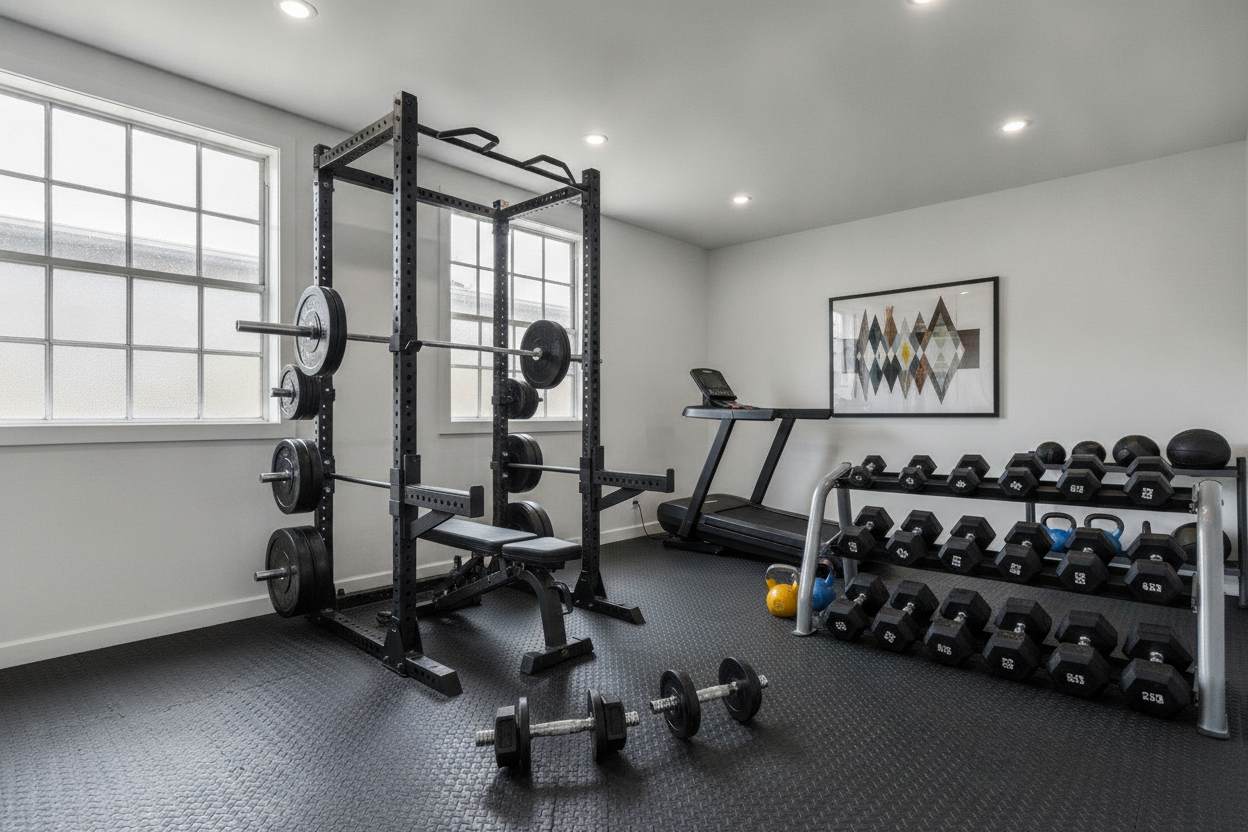
A high-quality barbell is useless if you’re loading it on a rack that shakes every time you breathe. You need a stable foundation. I typically suggest something like the Gxmmat X6 Power Rack Weight Bench Package because it provides the structural integrity needed to handle serious load without the terrifying wobble of a budget rack. If you can't trust your rack, you won't push your limits.
When Raw Iron Isn't Actually the Best Choice
I love the sound of clanging iron, but I have to be honest: my body doesn't always agree. After years of heavy squats, Why My Wrecked Joints Forced Me Into Easy At Home Weight Training became a reality for me. Sometimes, the ego of 'raw iron' needs to take a backseat to longevity.
If your knees or elbows are screaming, transitioning some of your volume to Weight Lifting Machines or cable systems is a smart move. You get the mechanical tension needed for muscle growth without the stabilizing stress that wears down your joints. It’s not 'cheating'; it’s training smart so you can still lift when you’re 60.
How to Vet Used Iron on Facebook Marketplace
Marketplace is the wild west. When you message a seller, ask them to 'show me the weights' in a clear, unedited photo of the center hole. If the inner ring is rusted out or cracked, the plate will sit unevenly on your bar, causing a dangerous 'clank' every time you move. Surface rust is actually your friend—it’s a great bargaining chip. A little vinegar and a wire brush will make a $0.50-per-pound plate look brand new.
Check the brand stamps. Old York or Ivanko plates are basically currency in the lifting world. They hold their value better than almost anything else in your house. If you find them for a steal, buy them immediately, even if you don't need them yet.
Don't Drop Heavy Iron on a Flimsy Bench
You’ve done the work to find real plates and a solid bar. Don't ruin it by lying down on a bench that feels like a wet noodle. Stability is the key to force production. If you feel like you’re balancing on a tightrope while benching, your brain will subconsciously limit your strength output.
Invest in a Gxmmat Adjustable Weight Bench or a similar heavy-duty model with a wide tripod base. You want high-density foam that doesn't bottom out and a frame that doesn't creak under a 200-lb lifter holding 100-lb dumbbells. Your gear should be the last thing on your mind when you're grinding out a final rep.
FAQ
How can I tell if a plate is actually cast iron?
Tap it with a metal screwdriver. Real cast iron will give you a distinct metallic 'ping.' Cement-filled plastic will produce a dull, hollow thud. Also, check the thickness; iron is significantly thinner than plastic-coated alternatives.
Is surface rust on weights a problem?
Usually no. It’s mostly an aesthetic issue. Unless the rust is so deep that it's flaking off in large chunks (pitting), it won't affect the weight or the balance of the plate. You can clean it up in an afternoon with some WD-40 and a wire wheel.
What is the best weight for a home gym starter?
Start with a 160-lb or 210-lb set of Olympic plates. This usually includes a pair of 45s, 25s, 10s, and a few smaller change plates. It covers most people for the first six months of a linear progression program.