I Stripped My Routine to 5 Dumbbell Exercises for Beginners
I remember staring at my first pair of 25-lb hex dumbbells, feeling like I needed a 40-page PDF and a PhD in kinesiology just to get started. I’d spent hours scrolling through 'influencer' routines that had me doing twisting lunges and lateral raises before I could even hold a proper squat. It was a mess. Most dumbbell exercises for beginners you find online are designed to make the trainer look smart, not to make you strong.
- Focus on four main movement patterns: Push, Pull, Hinge, and Squat.
- Master the Floor Press before you worry about buying a bench.
- Use a single heavy weight for Goblet Squats to fix your posture instantly.
- Consistency beats a complex 15-exercise circuit every single time.
Why Your Current Beginner Routine Feels So Awkward
If you feel like a baby giraffe on ice while lifting, it’s probably because your routine is too crowded. Most people think a dumbbell beginner workout needs to hit every muscle from six different angles. That’s how you end up with 'analysis paralysis' and a set of weights that eventually becomes a very expensive coat rack. When you try to learn 15 different isolation moves on day one, you aren’t building muscle—you’re just practicing being clumsy.
A true beginner dumbbell routine should be about mastering basic movement patterns. Your brain needs to learn how to coordinate your hips, spine, and shoulders under load. Chasing a 'pump' with bicep curls is fun, but it won’t give you the foundational strength that makes everyday life easier. I spent my first six months doing fancy variations I saw in magazines, and I gained exactly zero pounds of muscle. It wasn't until I stripped everything back to the basics that I actually saw my numbers go up.
The 'Big Four' Movement Patterns You Actually Need
Stop looking for the 'secret' exercise. There isn't one. Every effective strength program is built on four pillars: the push, the pull, the hinge, and the squat. By focusing on simple exercises with dumbbells that fit these categories, you hit every major muscle group without needing a gym full of machines. This minimalist approach is the highest-ROI way to train. You’ll spend less time checking your phone for the next move and more time actually moving weight.
The Goblet Squat: Your Leg Day Foundation
The Goblet Squat is the king of dumbbells for beginners. You hold one dumbbell vertically against your chest, like a goblet. This front-loading naturally forces your torso to stay upright. Most beginners struggle with leaning too far forward during a squat, which puts unnecessary stress on the lower back. The goblet position fixes this instantly. It’s a self-correcting movement—if you lean too far forward, the weight will literally fall out of your hands. It’s the safest way to build tree-trunk legs.
The Floor Press: Safer Than a Bench
You don't need a $200 adjustable bench to start a dumbbell routine for beginners. In fact, I prefer the floor press for new lifters. By lying flat on the floor to press your weights, the ground acts as a natural depth stop. This prevents your elbows from dropping too low, which can tear up your shoulders if you haven't built the stability yet. It limits the range of motion to exactly what you need to build a bigger chest and stronger triceps without the risk of 'over-stretching' the shoulder joint under load.
The Single-Arm Row: Building a Bulletproof Back
The biggest mistake I see with a basic dumbbell workout is people 'yanking' the weight with their bicep. To build a real back, you have to pull with the elbow. Place one hand on a sturdy surface (like a table or your own knee) and pull the dumbbell toward your hip. Think of your hand as a hook; the power comes from your lats. This exercise is the gold standard for fixing the 'slumped' posture we all get from sitting at desks all day. It builds the thick, stable back you need for heavier lifting later on.
The Seated Overhead Press: Shoulder Strength Simplified
Standing overhead presses are great, but they require a lot of core stability that most beginners haven't developed yet. By sitting down, you take your legs and lower back out of the equation. This allows you to focus entirely on the shoulder mechanics. Keep your palms facing each other (neutral grip) to keep your shoulder joints in a happier position. Once you nail the mechanics here, you can eventually progress to a more high-volume dumbbell shoulder workout at home to really fill out your shirts.
Stop Slipping Around While You Lift
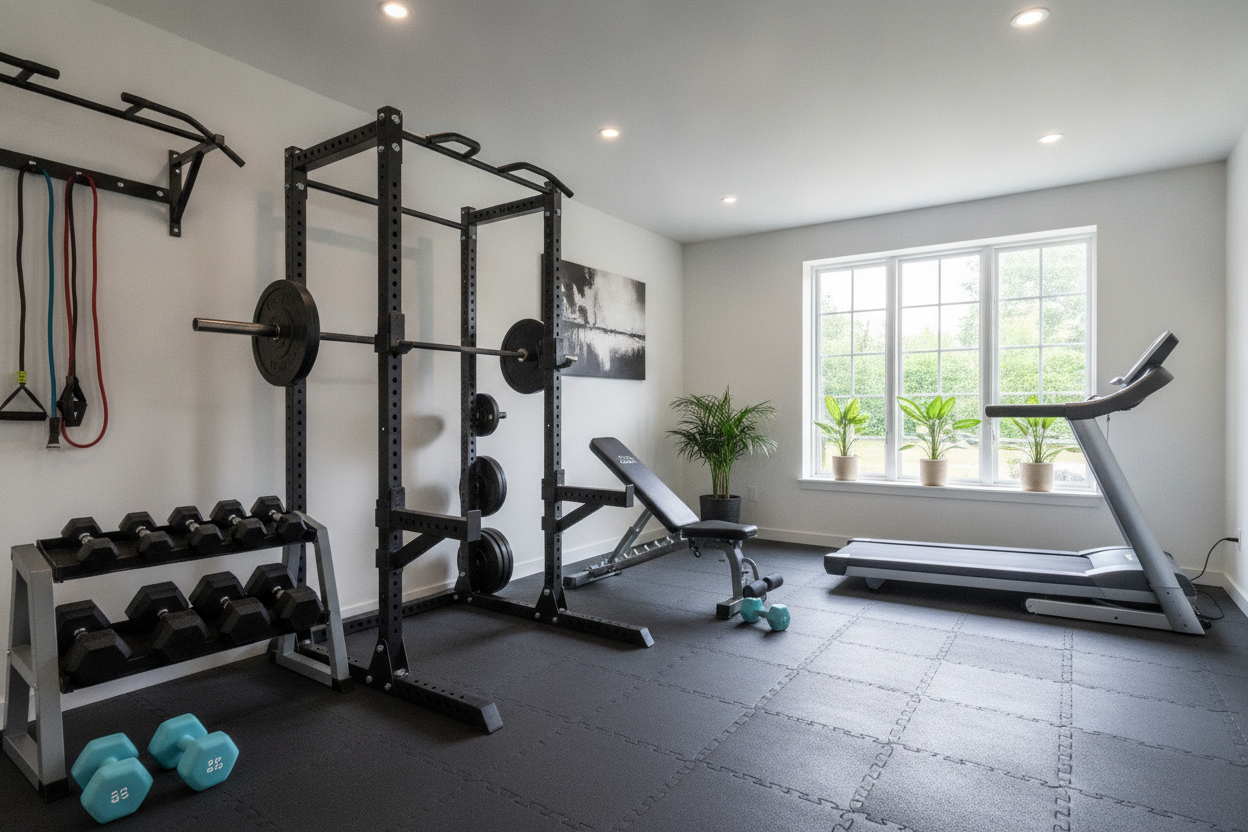
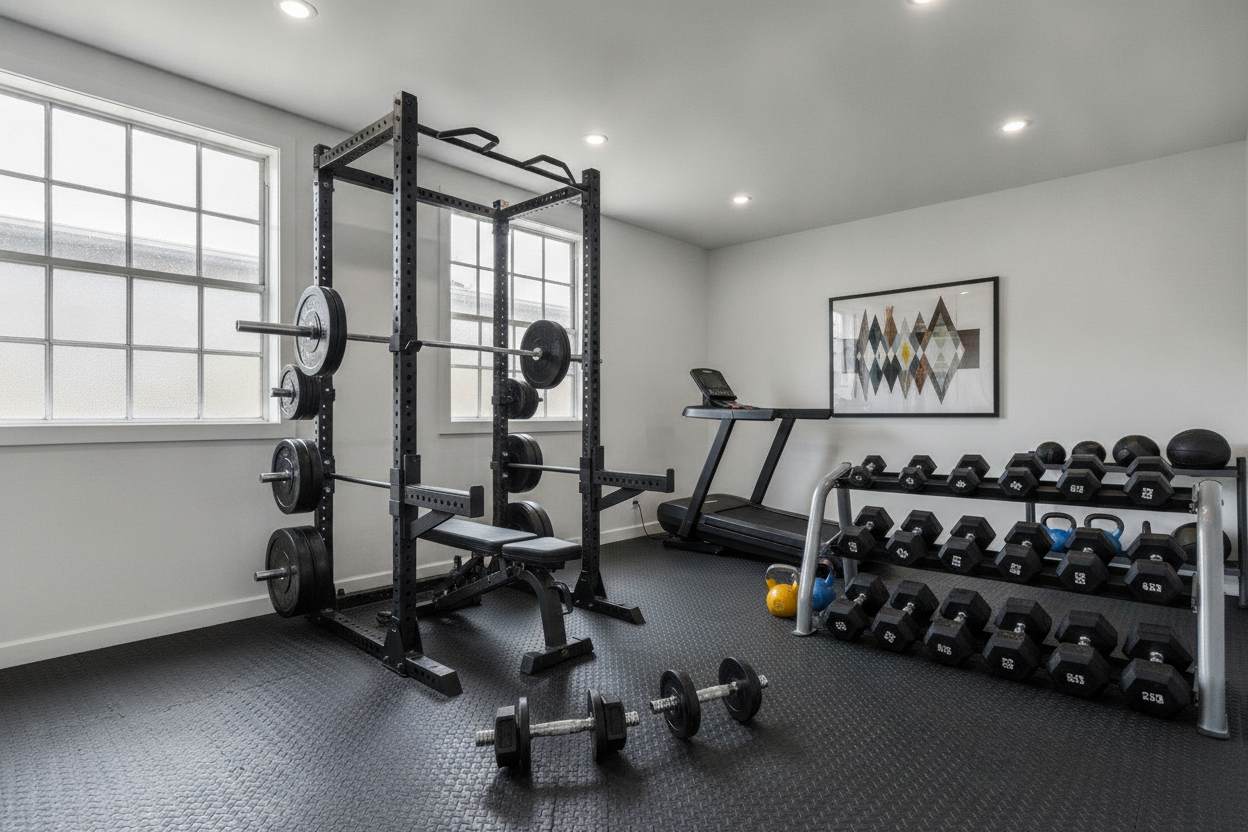
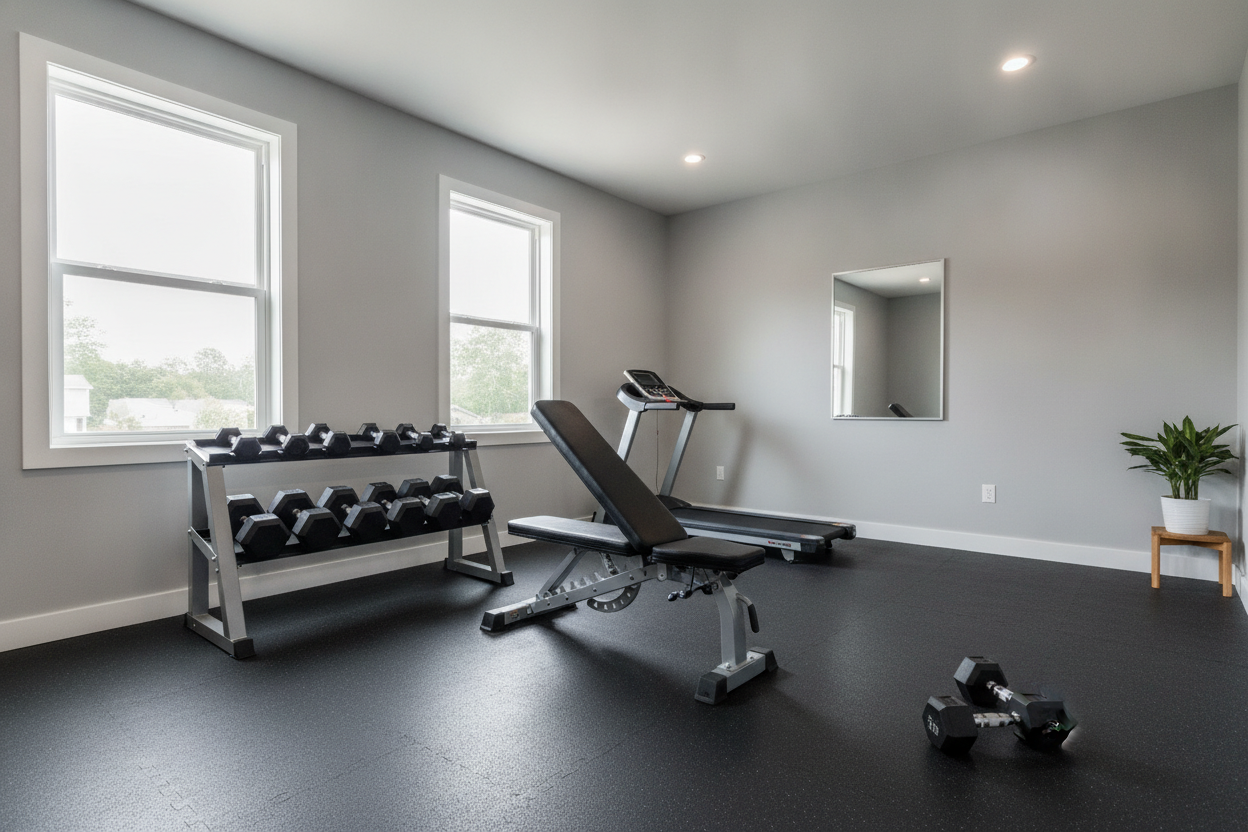
I’ve seen people try to do a full body dumbbell workout routine for beginners on a hardwood floor in socks. It’s a disaster waiting to happen. You cannot generate power if your feet are sliding. To execute a proper goblet squat or a heavy row, you need a stable, high-friction base. If you’re training at home, don’t rely on the carpet. A dedicated 6x8ft exercise mat provides the grip you need to drive through your heels without worrying about the floor moving under you.
Investing in large exercise mats for home gyms is just as important as the weights themselves. It protects your joints, protects your floor from dropped weights, and defines your 'training zone.' When I’m on the mat, I’m working; when I’m off it, I’m resting. That mental boundary is huge for staying focused during an at home dumbbell workout for beginners.
How to String These Moves Into a Weekly Plan
Don't overcomplicate the schedule. For a beginner workout with dumbbells, three days a week is the sweet spot—think Monday, Wednesday, Friday. Perform 3 sets of 8 to 10 reps for each of the exercises we discussed. If the last two reps of a set feel easy, the weight is too light. If your form breaks down before rep eight, it's too heavy. This is called progressive overload, and it's the only way to ensure your easy dumbbell exercises actually turn into hard-earned muscle.
If you find yourself short on equipment or space, you can even adapt this into a 1 dumbbell plan. The goal is to stop guessing and start lifting. You don't need a complex total body dumbbell workout for beginners with 20 different moves. You need these five, done with intensity and perfect form, three times a week. I promise you’ll see more progress in three months of this than in a year of 'muscle confusion' nonsense.
Personal Experience: The 'More is Better' Trap
When I started, I thought I was too 'advanced' for a basic dumbbell workout plan. I added three types of curls and two types of calf raises to my routine. All it did was make me too tired to do my squats and rows with any real weight. My progress stalled for months. The moment I cut the fluff and focused on getting heavy reps on the 'Big Four,' my strength exploded. I went from struggling with 30s to rowing 80s in half the time it took me to figure out how to use a cable machine. Learn from my mistake: master the basics first.
FAQ
Do I need heavy weights to start?
No. Start with a weight that allows you to complete 10 reps with perfect form. For most men, that’s a pair of 15s or 20s. For women, 8s or 10s are usually a great starting point. You can always buy heavier ones later.
How long should this workout take?
If you’re resting 90 seconds between sets, you should be in and out in about 35 to 45 minutes. Efficiency is the name of the game here.
Can I do this every day?
I wouldn't. Your muscles grow while you rest, not while you're lifting. Give yourself at least one day off between sessions to let your central nervous system recover.