An Easy Beginner Gym Workout That Requires Zero Brainpower
I remember standing in the middle of a commercial gym, staring at a 12-week powerlifting spreadsheet on my phone, feeling like a total idiot. The gym was packed, the squat rack had a line three people deep, and I spent more time scrolling through my PDF trying to figure out 'RPE' than actually lifting anything. Most people looking for an easy beginner gym workout don't need a complex spreadsheet; they need a way to stop the analysis paralysis that keeps them on the couch.
- Forget the Monday-to-Sunday calendar; it is a trap for your ego.
- Focus on six foundational movements that actually build functional strength.
- Use the 'A/B Toggle' to eliminate the stress of missed sessions.
- Keep your equipment needs minimal to avoid the 'gym tourist' shuffle.
Why 'Optimal' Programs Set Rookies Up to Fail
If you search for starter workouts at the gym, you will likely find 'Optimal 6-Day Bodypart Splits' designed by people who live in the gym. These programs demand high mental energy. You have to remember which day is 'Pull Day,' which machines are open, and how to perform fifteen different isolation exercises. For a beginner, this is a recipe for burnout. When you miss a Wednesday, the whole week feels ruined, and you're tempted to just quit until next Monday.
The reality is that your muscles don't know what day of the week it is. They only know tension and recovery. These bloated programs often focus on 'muscle confusion' or high-volume fluff that doesn't move the needle for a novice. You don't need a different exercise for every head of the tricep yet. You need to learn how to move weight safely and consistently without feeling like you're studying for a bar exam every time you lace up your shoes.
The A/B Toggle: Your Step By Step Gym Workout
The A/B Toggle is the simplest framework I have ever used. You have two workouts: Workout A and Workout B. That is it. You alternate them every time you train. If you train Monday, Wednesday, and Friday, you do A-B-A. The following week, you do B-A-B. If life gets in the way and you can only go once a week? Fine. Just do the next letter in the sequence. This step by step gym workout removes the guilt of the 'missed' day because the schedule isn't tied to the calendar.
This system works because it prioritizes the big rocks. By alternating these two sessions, you hit every major muscle group frequently enough to see results, but not so often that you're too sore to function. It turns your training into a simple habit rather than a logistical nightmare. You show up, check your last entry, and do the other workout. Zero brainpower required.
Day A: Push, Squat, and Core
Workout A focuses on the front of your body and your ability to move away from the floor. You'll start with a Goblet Squat. Grab a single dumbbell, hold it against your chest like a trophy, and sit back into your hips. This mechanic is universal; whether you are doing a lower body workout for women at the gym or training for a 500-lb back squat, the bracing and hip drive you learn here are the foundation of everything else.
Next, move to a pushing exercise, like a Dumbbell Bench Press or an Overhead Press. Dumbbells are better for beginners because they force each arm to work independently, fixing imbalances before they become problems. Finish Day A with a core stabilization move like a 30-second Plank or Deadbugs. These simple gym workouts for beginners don't need to be fancy to be effective. Focus on keeping your ribs tucked and your spine neutral. If you can do 3 sets of 10 with good form, you're winning.
Day B: Pull, Hinge, and Carry
Workout B is about the 'posterior chain'—the muscles you can't see in the mirror but that keep your back healthy. You start with a hinge, like a Dumbbell Romanian Deadlift. This isn't a squat; you are pushing your hips back as if trying to close a car door with your butt while keeping your shins vertical. This is the core of a basic workout gym routine because it protects your lower back for the long haul.
Follow the hinge with a pulling movement, such as a One-Arm Dumbbell Row. Pull the weight toward your hip, not your shoulder, to engage the lats. Finally, perform a Loaded Carry. Pick up the heaviest dumbbells you can hold and walk for 40 yards. It sounds stupidly simple, but carries build 'idiot-proof' core strength and grip better than almost any machine in the building. This balances the pushing and squatting from Day A, ensuring you don't end up with the 'hunchback' posture common in people who only train what they can see.
Carving Out Your Training Space (No Wait Times)
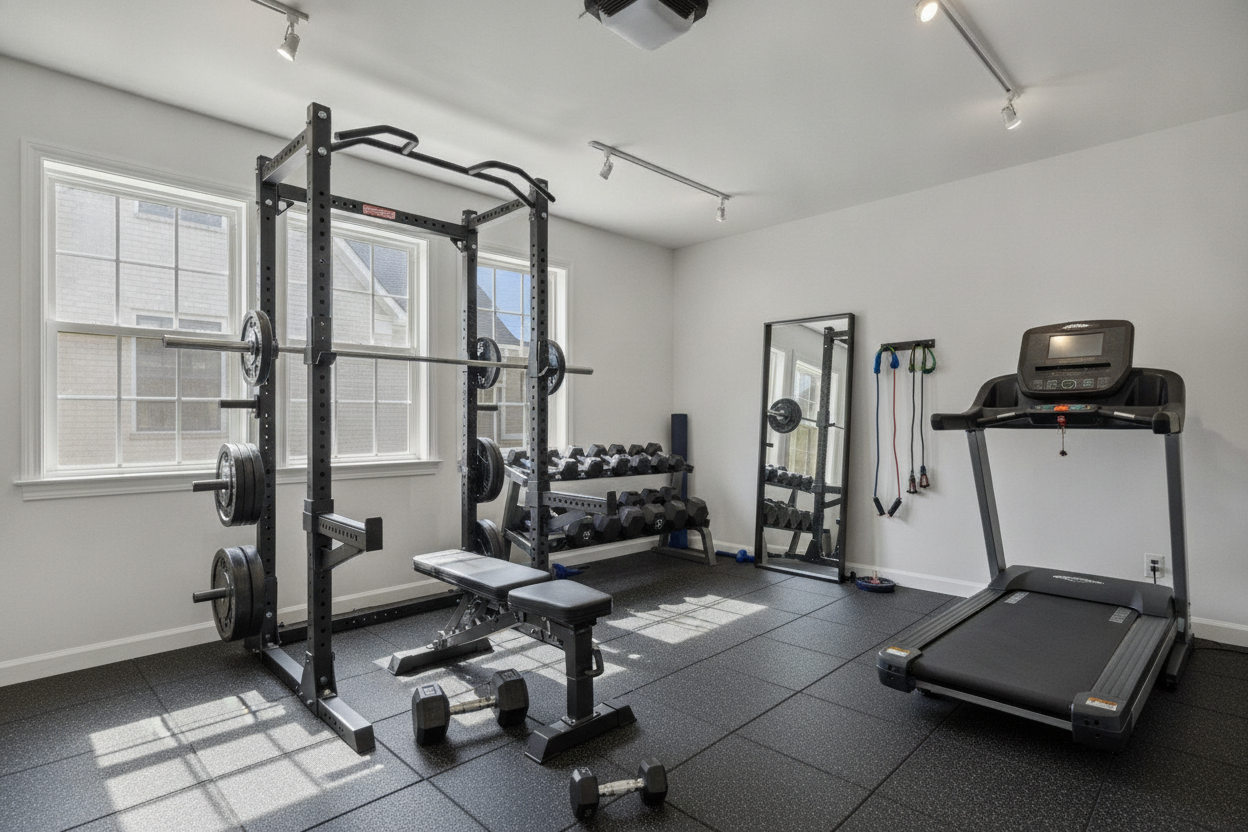
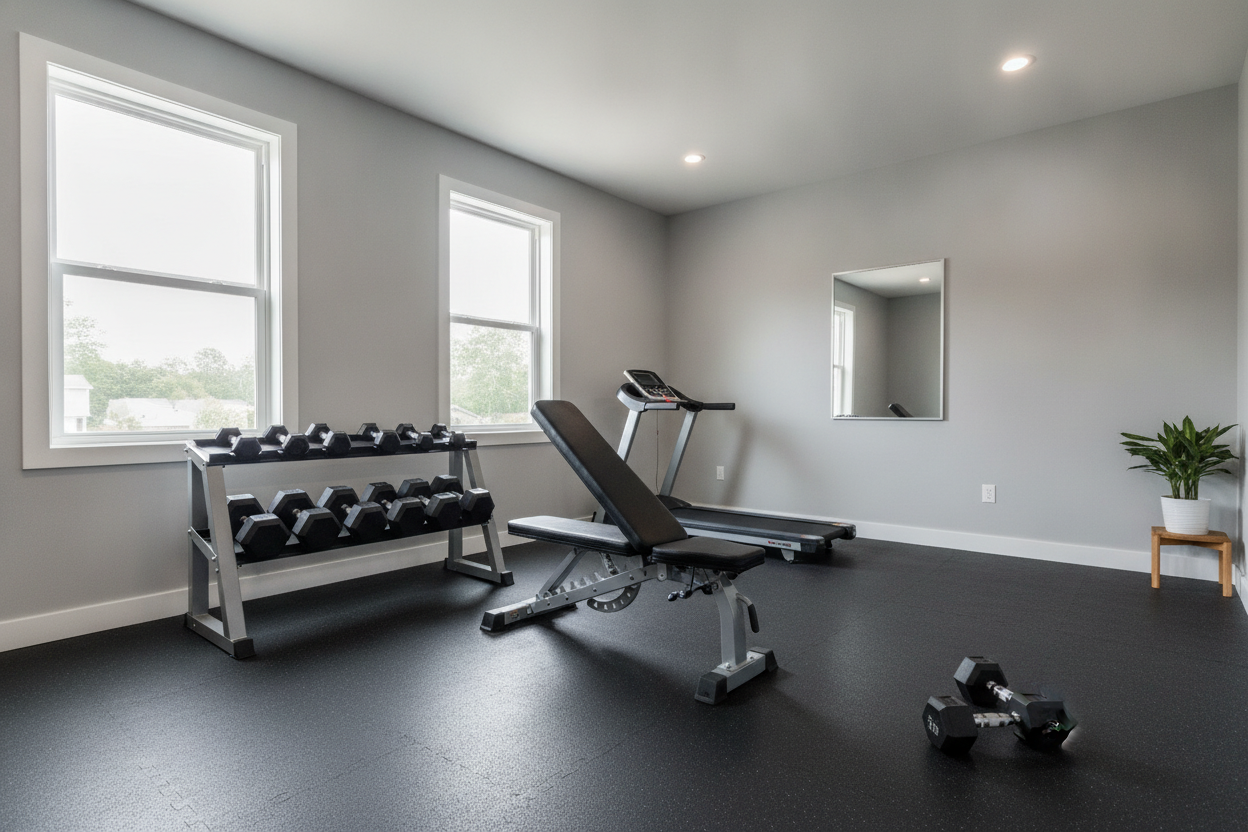
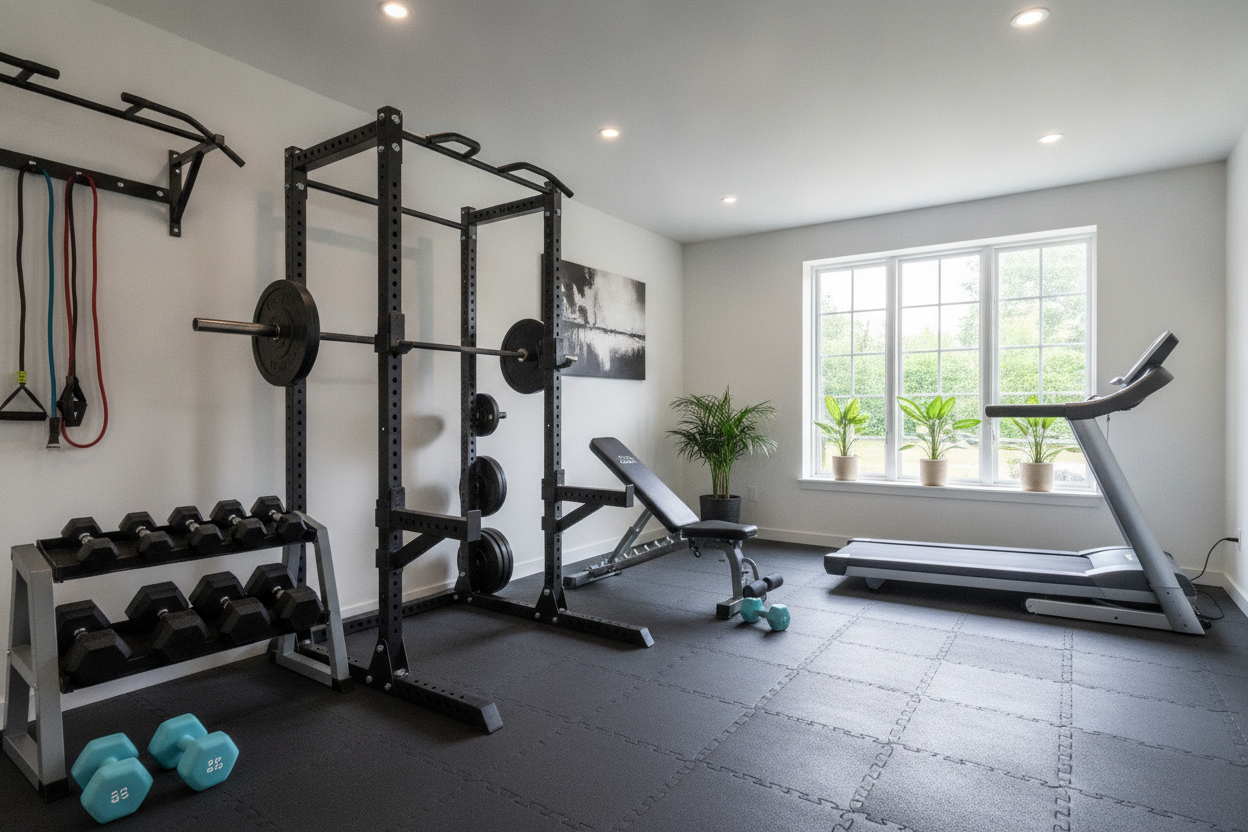
One of the biggest hurdles for beginners is the 'gym shuffle'—wandering around looking for open machines. You can avoid this entirely by claiming a small corner of the gym or your garage. If you have a pair of adjustable dumbbells and a large exercise mat for home gym use, you can perform 90% of this routine in a 6x8 foot space. You don't need the cable crossover machine or the leg press to get strong.
By staying in one spot, you keep your heart rate up and your focus sharp. If you're at a commercial gym, grab your dumbbells and head to the stretching area or a quiet corner. No one will bother you, and you won't have to wait for the guy scrolling on his phone to finish his fifth set of curls. Efficiency is the key to consistency.
How to Advance When It Gets Too Easy
Progress shouldn't involve complex math. When you can easily finish all your reps for an exercise, add a tiny bit of weight next time. If you don't have heavier weights, add one extra rep per set. This is called progressive overload, and it is the only 'secret' in fitness. Once this A/B habit is so ingrained that you feel weird when you miss a session, then you can think about expanding. Eventually, you might want to look into the best at home workout machines to add variety, but don't buy a $2,000 rower until you've mastered the dumbbell row.
My Honest Take: The Time I Overcomplicated It
I once spent $300 on a specialized 'vertical jump' program that required three different types of resistance bands, a box, and a specific brand of shoes. I spent more time setting up the equipment than actually jumping. I didn't gain an inch on my vertical because the friction of the setup was too high. I went back to basic squats and lunges, and my legs actually grew. The lesson? The program you actually do is 100% better than the 'perfect' program you find too annoying to start. Keep it simple, toggle your A and B, and just show up.
FAQ
How many days a week should I do this?
Aim for three days a week (e.g., Mon/Wed/Fri), but the beauty of the A/B Toggle is that it doesn't matter. Just do the next workout in the sequence whenever you can get to the gym.
What if I don't know how to do a specific move?
Stick to dumbbells. They are much more forgiving than barbells. If an exercise feels 'stabby' or painful in a joint, swap it for a similar movement that doesn't hurt. Comfort breeds consistency.
Do I need to do cardio too?
You can, but don't let it distract you from the lifting. A 10-minute walk before or after your A/B workout is plenty for a beginner. Don't overcomplicate the goal.