Stop Tripping Over Weights: How to Build a Rock-Solid DIY Dumbbell Rack for Under $50
Nothing kills the momentum of a workout quite like tripping over a stray weight or spending five minutes hunting for the matching 25-pounder buried under a pile of laundry. If you have been lifting at home for any length of time, you know that organization is not just about aesthetics; it is about safety and efficiency. Building a dumbbell rack diy style is often the best solution because commercial racks can be surprisingly expensive and rarely fit the specific odd corners of a garage or basement gym. By taking the time to build a weight rack yourself, you get custom dimensions, a sturdy home for your equipment, and the satisfaction of sweating over sawdust before sweating under the iron.
Why I Finally Decided to Build My Own Rack
I spent two years kicking hex dumbbells across my garage floor before I finally snapped. I had a mix of rubber-coated weights and old-school iron plates, and they were taking over my limited floor space. I looked online for storage solutions, but everything was either flimsy metal that looked like it would buckle under 50 pounds or professional-grade tiers costing hundreds of dollars. That weekend, I decided to tackle a do it yourself dumbbell rack project. I grabbed some leftover lumber and sketched a rough design. The difference it made was immediate. Not only did my garage look twice as big, but my workouts actually got faster because I wasn't wasting energy rearranging equipment between sets. If you are hesitant about your carpentry skills, don't be. If you can drive a screw and read a tape measure, you can handle this.
Planning Your Design: Vertical Trees vs. Horizontal Tiers
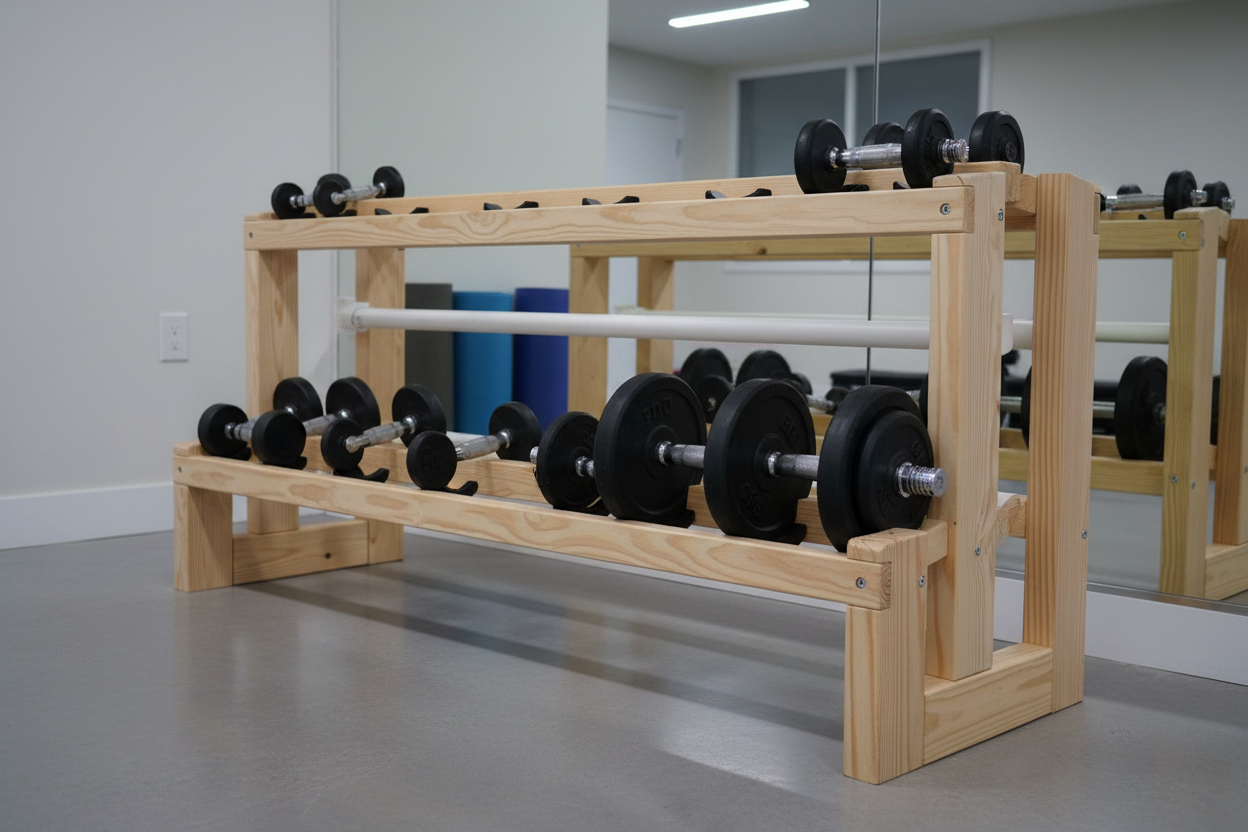
Before you buy materials, you need to determine which style fits your space. A diy vertical dumbbell rack, often called a diy dumbbell tree, is excellent for tight corners and lighter weight sets. It minimizes the footprint but can become unstable if you are racking heavy dumbbells up high. For those with a full set of weights ranging from 5 to 50 pounds or more, a horizontal tiered design is superior. This is the standard gym style where weights sit on angled rails.
You might also consider a diy dumbbell wall rack if floor space is at an absolute premium, though this requires serious structural reinforcement in your walls to handle the load. For most home gyms, a freestanding wooden dumbbell rack is the safest and most practical bet. It allows you to expand your collection later without worrying about ripping studs out of your drywall.
Materials: Why Wood Wins for DIY
While a diy dumbbell rack metal construction is incredibly durable, it requires welding skills and expensive steel tubing. For the average homeowner, a diy wooden dumbbell rack is the way to go. Wood is forgiving, easy to cut, and surprisingly strong. A standard 2x4 dumbbell rack can easily hold several hundred pounds if the joinery is correct. The compressive strength of wood is more than enough for a homemade weight rack.
To keep this a cheap diy dumbbell rack project, you generally only need:
- Five to six 8-foot 2x4s (construction grade pine or fir)
- 2.5-inch deck screws (do not use drywall screws; they snap under shear force)
- Wood glue (this adds rigidity)
- Sandpaper or a sander
- A saw (miter saw or circular saw)
- Drill and impact driver
Step-by-Step: How to Build a Dumbbell Rack
The beauty of a simple diy weight rack lies in the geometry. You want to create a sturdy base with angled shelves that prevent the weights from rolling off. Start by measuring your longest dumbbell and your shortest one. This ensures your rails are spaced correctly so the small weights don't fall through and the large ones don't get stuck.
1. Cutting the Frame
When you look at dumbbell rack plans wood designs, you will notice they usually rely on an A-frame or box-frame structure. The side supports are the most critical part. Cut four pieces of 2x4 to your desired height (usually around 30 to 40 inches). If you are building an angled rack, cut the tops and bottoms at a 15-degree angle so the rack leans back slightly. This shifts the center of gravity and makes the diy weight rack wood structure much harder to tip over.
2. Assembling the Shelves
This is where you create the actual diy dumbbell holder. Each shelf consists of two parallel rails. The rear rail should be slightly higher than the front rail to angle the weights toward the lifter. This ergonomic tilt makes racking heavy weights easier on your wrists. When you figure out how to make a dumbbell rack safe, the spacing is key. A gap of about 4 to 5 inches works for most standard handles, but measure your specific equipment first. Secure these rails to your side supports using plenty of glue and at least two screws per connection point.
3. Bracing and Stability
A wobbly dumbbell stand diy project is a recipe for a broken toe. Once your shelves are attached to the sides, you need to bridge the two sides together. Add cross-bracing at the bottom and potentially across the back. If you are learning how to build weight rack structures for the first time, remember that triangles are your friend. A diagonal brace across the back will prevent the rack from swaying side-to-side (racking) when you drop heavy weights onto it.
Customization and Aesthetics
Once the assembly of your weight rack diy project is done, don't just leave it raw unless you like the construction site look. Sand down all the edges to prevent splinters. A coat of polyurethane or paint protects the wood from sweat and moisture. Some people add a strip of rubber matting or heavy-duty felt to the rails of their wood weight holder. This protects the knurling on your dumbbells and keeps the rack looking new. If you followed solid wood dumbbell rack plans, you now have a piece of furniture that serves a functional purpose.
Alternative Storage Ideas
Maybe you don't have a full set of 5-50s. If you only have two or three pairs, you might look into diy dumbbell storage that is less intrusive. A simple box on the floor or a small shelf unit can work. For those with adjustable dumbbells, a pedestal style stand is better than a full rack. You can also explore diy dumbbell rack plans that incorporate storage for kettlebells or medicine balls on a flat top shelf, maximizing the utility of your do it yourself weight rack.
Ultimately, the goal is to get the weights off the floor. Whether you build a weight rack that spans an entire wall or a compact diy weight rack for dumbbells that fits in a closet, the effort pays off every time you work out. You save money, you save space, and you gain the pride of lifting weights off a rack you built with your own hands.
FAQ
Is a wooden dumbbell rack strong enough for heavy weights?
Yes, a properly constructed weight rack wood design using 2x4s and structural screws can easily support several hundred pounds. The key is using wood glue at the joints and ensuring the weight is transferred down through the vertical posts rather than relying solely on the shear strength of the screws.
What is the best angle for the dumbbell shelves?
A slope of approximately 15 to 20 degrees is ideal for a dumbbell rack homemade project. This angle uses gravity to keep the weights securely against the back lip of the rack, preventing them from rolling off while making them easy to pick up and put down.
How much does it cost to build a DIY weight rack?
A simple diy weight rack usually costs between $30 and $50 depending on the price of lumber in your area. This makes it significantly cheaper than commercial steel racks, which often start at $150 and go up from there.