Stop Overcomplicating Free Weight Exercises (Do These 5 Instead)
I remember scrolling through social media and seeing a 'fitness influencer' performing a one-legged overhead press while balancing on a BOSU ball. My knees hurt just watching it, and my brain hurt trying to figure out why anyone would bother. We have reached a point where free weight exercises have become more about circus acts than actual strength. I spent years chasing the 'perfect' variation before I realized I was just getting worse at the basics.
- Big compound movements provide 80% of your results.
- Progressive overload is more important than exercise variety.
- Stabilizer muscle engagement is the secret sauce of iron.
- You only need a few key pieces of gear to build a pro-level physique at home.
The Trap of the 20-Exercise Dumbbell Routine
Most people get paralyzed by choice. They walk into a facility and ask, 'what are free weight exercises that will hit my lower-inner-left quad?' and end up doing twelve different isolation moves. This is junk volume. Social media has convinced us that if we aren't changing our free weight workouts every seven days, our muscles will 'get bored.' Muscles don't have brains; they have tension receptors.
When I first started my garage gym, I bought every attachment under the sun. I had landmines, specialized bars, and three different types of handles. My progress stalled because I was a jack of all trades and a master of none. The goal of any gym free weight exercises program should be raw, functional strength. You get that by picking five movements and adding five pounds to the bar every chance you get. Anything else is just burning calories without building a foundation.
The Only 5 Lifts You Actually Need to Grow
If you want to stop spinning your wheels, you need to master these five pillars. First, the Goblet or Front Squat. It forces your core to stay upright and hits the quads harder than a back squat ever will for most beginners. Second, the Romanian Deadlift (RDL). This is the king of the posterior chain. If you aren't feeling your hamstrings scream, you're doing it wrong.
Third is the Overhead Press. Standing up, pushing weight toward the ceiling is the ultimate test of total-body stability. Fourth, the Barbell Row. Stop using the chest-supported machines and pull from the floor. Finally, the Flat Press. To do this right, you need a sturdy adjustable weight bench that doesn't wobble when you start pushing 80-pound dumbbells. A bench that feels like a rock allows you to actually drive through your feet and maximize chest activation instead of worrying about tipping over.
Turning These 5 Lifts Into Real Free Weight Workout Routines
You don't need to live in the gym six days a week. In fact, most people I know who are actually strong only train three or four times. I recommend a 3-day full-body split. You perform all five movements each session but rotate which one you go 'heavy' on. Monday might be heavy squats and light rows; Wednesday is heavy overhead press and light RDLs.
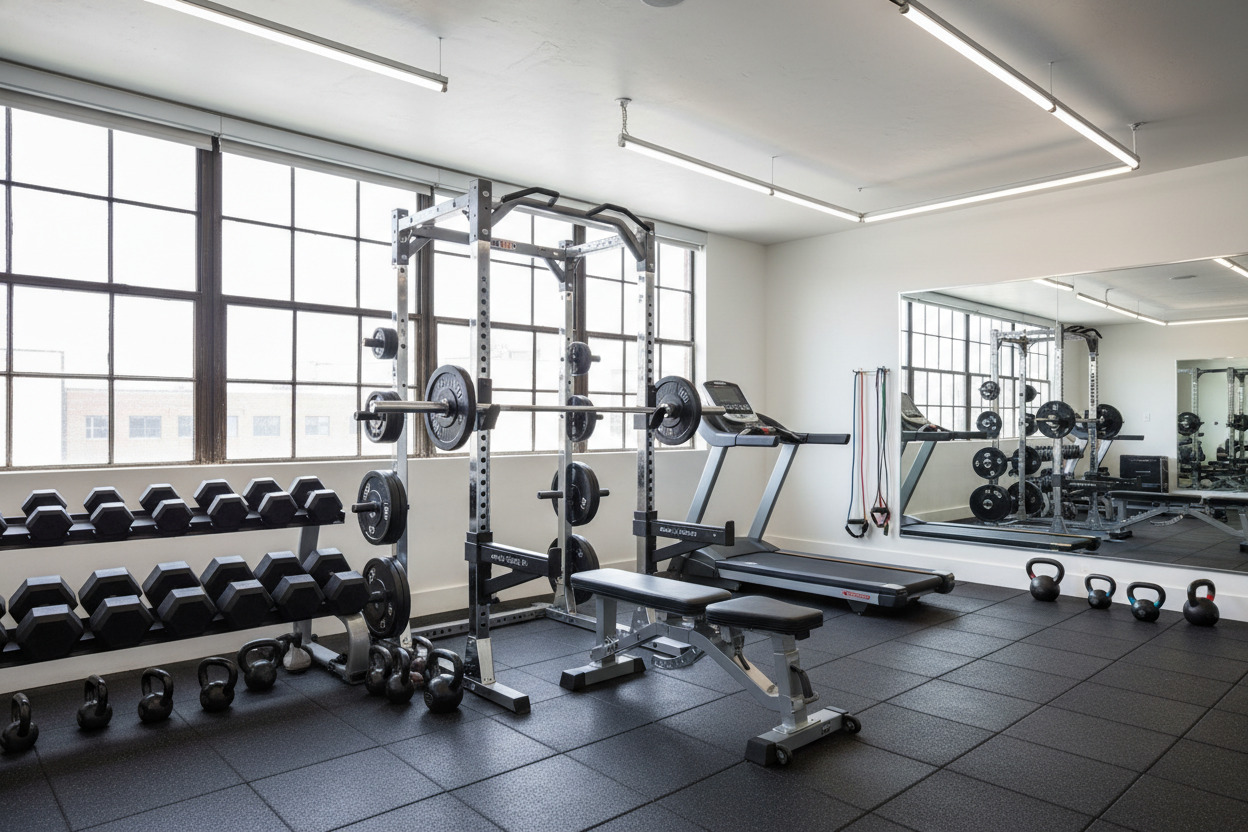
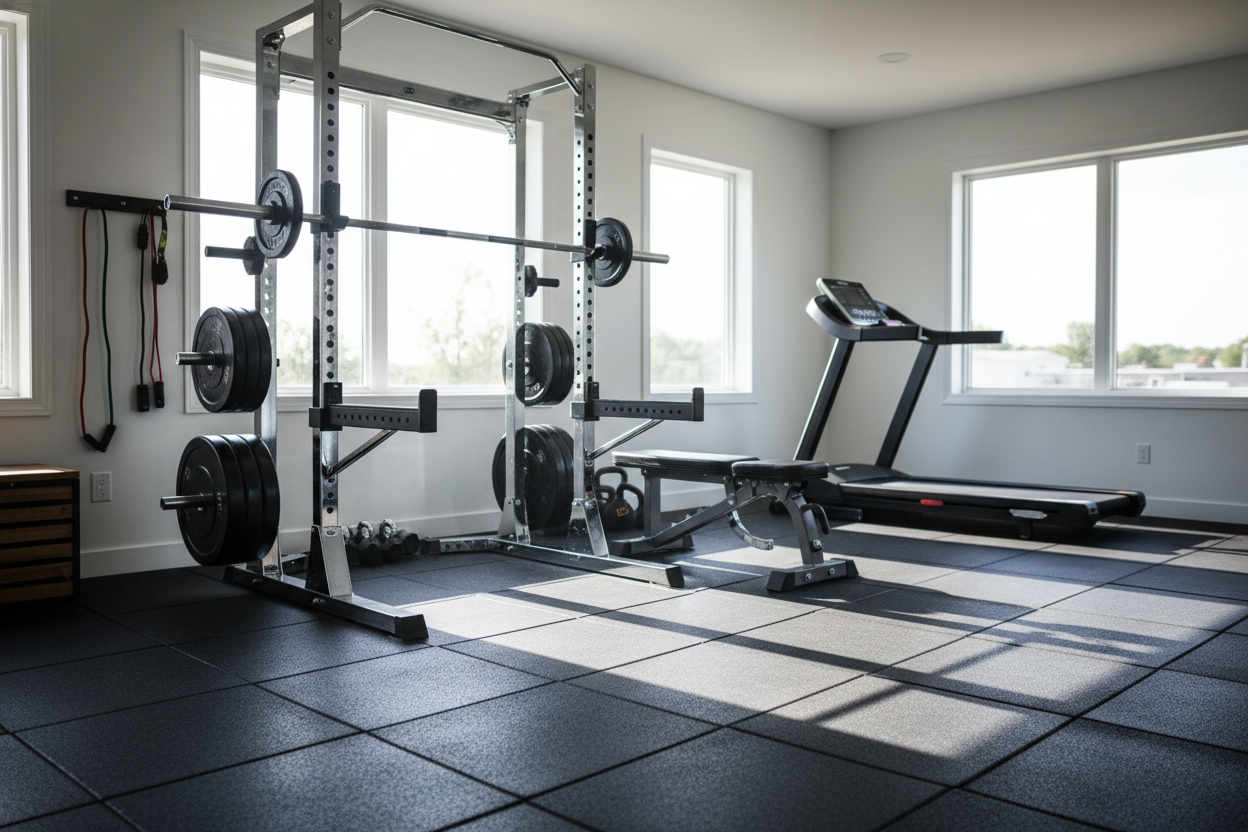
This isn't about chasing a pump; it's about execution. When you're pushing for a new personal record on your free weight workout routines, safety becomes a factor. I eventually upgraded to a full power rack and bench setup because I wanted to be able to push my overhead presses and squats to near-failure without the fear of dropping a loaded barbell on my concrete floor. Having those safety spotter arms changed my intensity levels overnight.
Why I Chose Iron Over Cams and Cables
There is a specific kind of 'old man strength' you get from a gym free weights workout that you just can't replicate on a cable machine. When you hold a heavy dumbbell, your wrists, elbows, and shoulders are all working in unison to keep that weight from drifting. This is why ditching machines for free weights is the fastest way to fix nagging joint pain and imbalances.
I’m not saying traditional weight lifting machines are useless, but they are the dessert, not the main course. A machine dictates the path of the weight for you. When you do a gym free weight exercises routine, you dictate the path. That subtle difference is what builds the stabilizer muscles that protect your spine and joints in the real world.
What You Actually Need to Run This Routine at Home
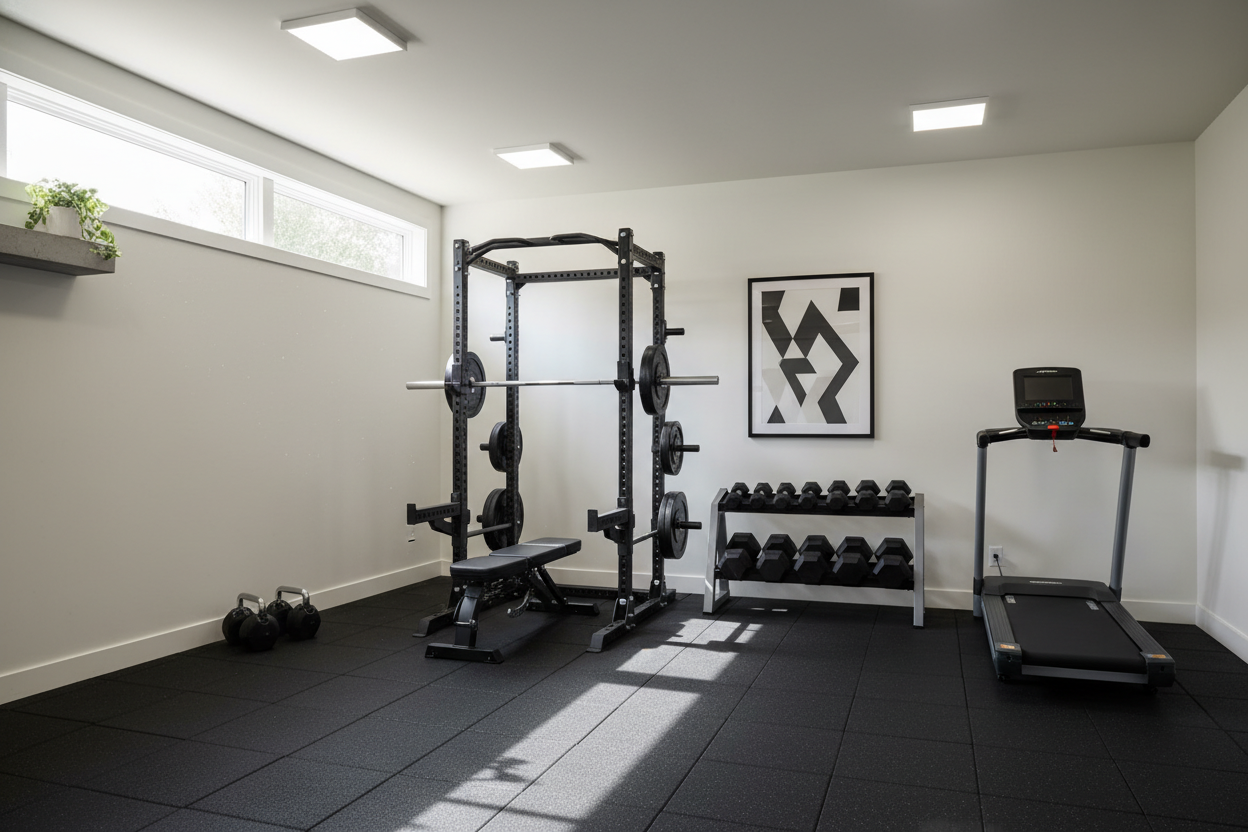
You can get 95% of the results of a commercial gym in a 6x8 foot space. You need a barbell, some plates, a pair of adjustable dumbbells, and a bench. That’s it. If you’re on the fence about investing in home gym free weights, consider the time you save not waiting for a rack to open up at the local big-box gym. I used to spend twenty minutes just waiting for a platform; now I’m halfway through my workout in that same time.
How many days a week should I do free weight workouts?
Three days is the sweet spot for most. It allows for 48 hours of recovery between sessions, which is when the actual muscle growth happens. If you're advanced, you can bump to four, but don't sacrifice intensity for frequency.
Can I lose weight doing only free weight exercises?
Yes. Heavy lifting is metabolically demanding. You’ll burn more calories in the 24 hours after a heavy squat session than you will after a 30-minute jog on a treadmill. Muscles are expensive for your body to maintain, so the more you have, the higher your resting metabolism.
Are dumbbells better than barbells?
Neither is 'better.' Barbells allow you to move the most total weight, which is great for raw strength. Dumbbells allow for a greater range of motion and fix muscle imbalances. A good routine uses both.