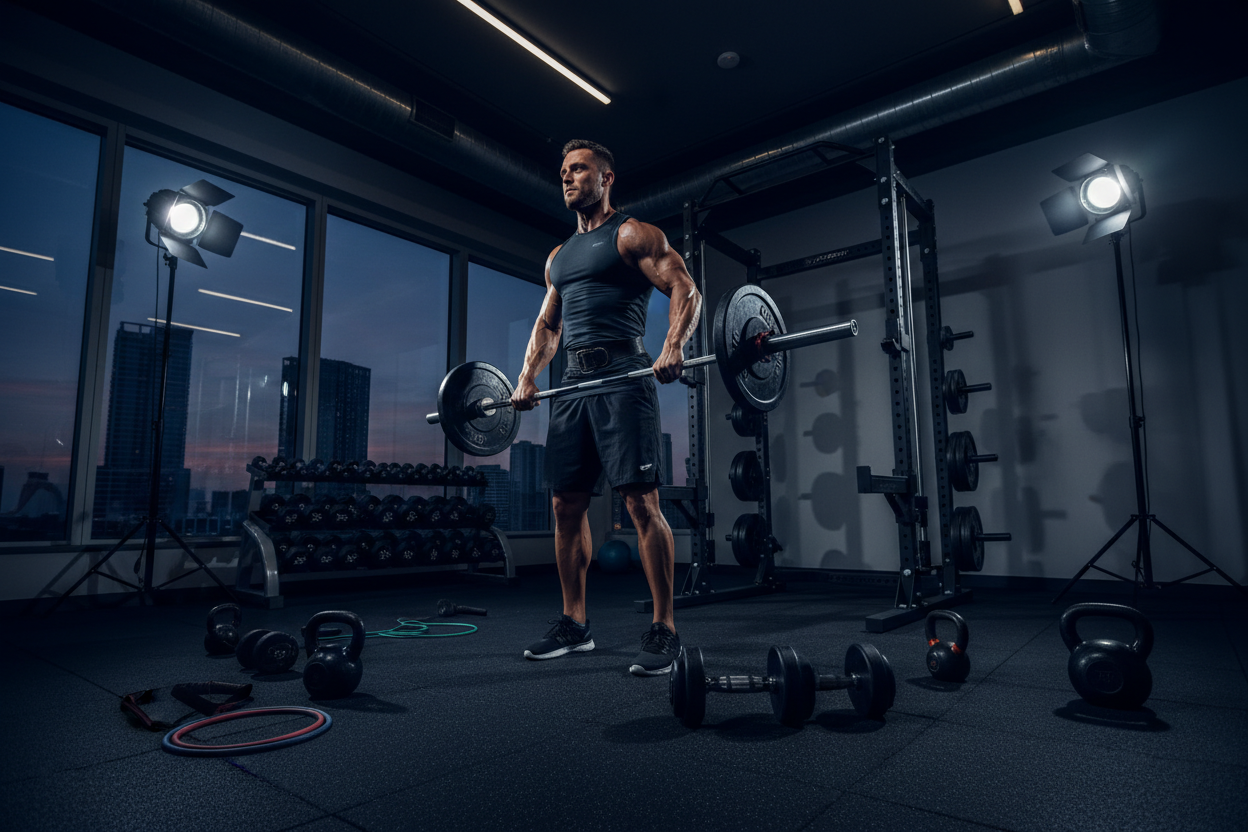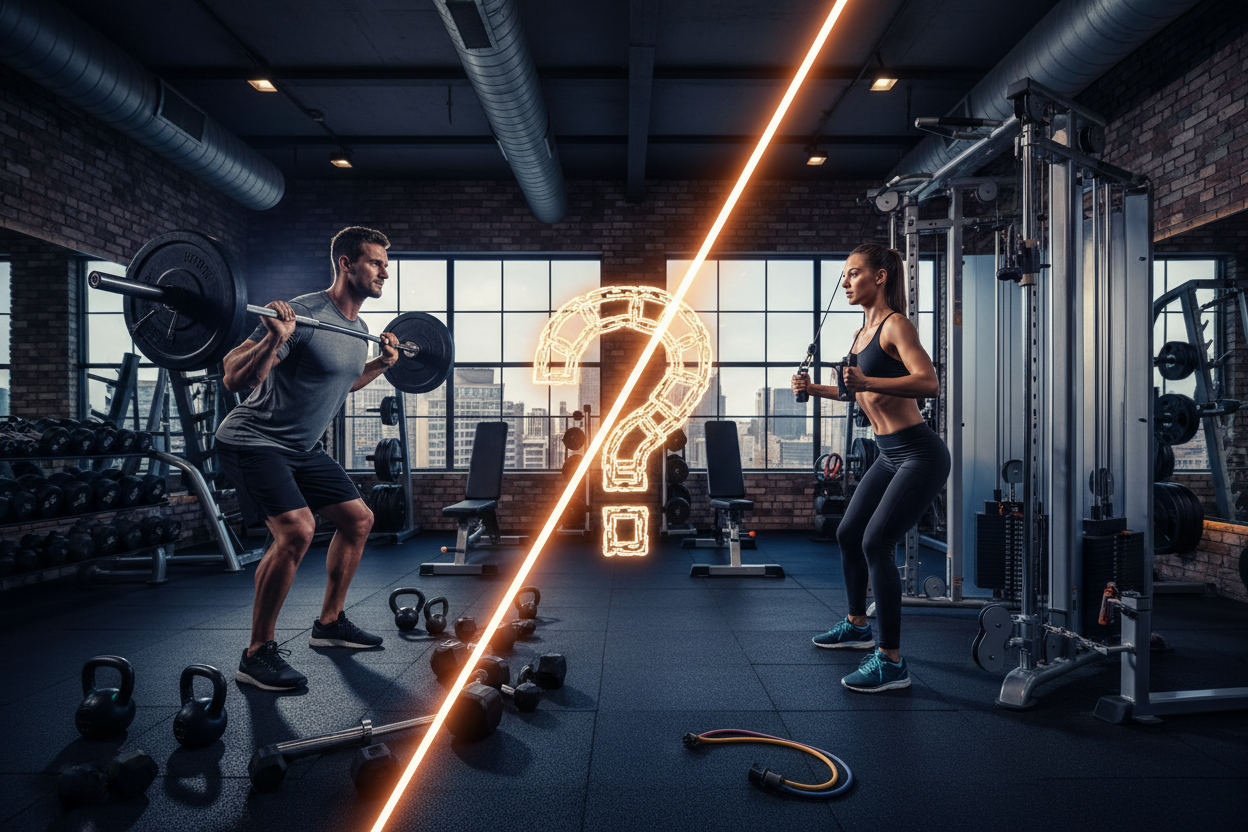
Free Weight or Machines: The Ultimate Home Gym Choice
Building a home gym usually starts with a simple but agonizing question: how do I maximize my limited space without blowing the budget? Whether you are clearing out a corner of the basement or taking over the entire garage, the foundational dilemma remains the same. When outfitting your space, deciding between a free weight or machines setup will dictate everything from your floor plan to your daily workout routine.
This guide will break down the true cost, space requirements, and training benefits of both options so you can build a home gym that actually gets used.
Key Takeaways
- Free weights require less initial budget and a smaller footprint but demand better form and technique.
- Machines provide unmatched muscle isolation and safety, especially for training close to failure.
- For most North American garage gyms, a hybrid approach (a power rack plus a plate-loaded functional trainer) offers the best value.
- Both modalities build muscle effectively when progressive overload is applied.
Space Planning and Budget Considerations
The Footprint Factor
If you are working with a standard two-car garage or a 10x12 spare bedroom, square footage is your most valuable asset. A complete free weight setup—comprising a barbell, plates, adjustable bench, and a squat stand—can easily fit into a 6x8 foot area. When not in use, dumbbells and kettlebells can be tucked away on a compact storage rack.
Machines, on the other hand, demand dedicated, permanent real estate. A standard selectorized lat pulldown or leg press machine cannot be folded away. If you are leaning toward machines, you will need to measure your ceiling height carefully, as many cable towers require at least 82 to 84 inches of clearance.
Cost to Entry
Pound for pound, iron is cheaper than pulleys and guide rods. You can build a highly effective free weight gym for under $1,000. Machines are a larger upfront investment, often starting at $1,500 for a quality multi-gym or functional trainer. However, machines often retain their resale value well if kept in good condition.
Training Application: Which Builds More Muscle?
Stabilization vs. Isolation
Free weights force your body to stabilize the load. A barbell squat doesn't just work your quads; it engages your core, lower back, and glutes to keep you upright. This functional strength translates incredibly well to everyday life.
Conversely, machines lock you into a fixed path of motion. This removes the need to balance the weight, allowing you to push the target muscle closer to absolute failure safely. A common question we get is, are machines as effective as free weights? The answer is a resounding yes—especially for hypertrophy (muscle growth). Because you don't have to worry about dropping a barbell on your chest, you can safely push a chest press machine to your absolute limit.
From Our Gym: Honest Take
Over the last decade of outfitting and training in various home gyms, I've swung back and forth on this debate. When I first built my basement gym, I was a free-weight purist. I bought a heavy-duty power rack, a 45lb Texas power bar, and 500lbs of steel plates.
But here is the honest truth: as I got older and dealt with minor shoulder tweaks, I missed the smooth, controlled resistance of commercial gym machines. I ended up compromising by adding a plate-loaded cable crossover attachment to my rack. It takes up barely any extra space but gives me the constant tension of a machine for tricep pushdowns and face pulls. If I were starting over today in a typical garage, I wouldn't choose strictly one or the other. I'd invest 70% of my budget in a premium rack and barbell, and 30% in a versatile cable machine.
Frequently Asked Questions
Are machines safer than free weights?
Generally, yes. Machines guide your body through a predetermined range of motion and feature built-in safety stops. This makes them excellent for beginners learning movement patterns or advanced lifters training alone without a spotter.
Can I build a complete home gym with just free weights?
Absolutely. With an adjustable bench, a set of adjustable dumbbells, and a barbell, you can replicate almost every major movement pattern (push, pull, squat, hinge) effectively without ever needing a machine.
How much space do I need for a basic machine setup?
A standard functional trainer requires a footprint of roughly 5 feet by 5 feet, plus an additional 3 feet of working space in front of it. Always check the assembled dimensions and account for the travel path of the weight stack or cables.