Best Full Body Strength Workout: Stop Splitting Your Days
It is a familiar trap: you build out a beautiful home gym, but life gets busy, and suddenly those six-day bro-splits are impossible to maintain. If you are struggling to stay consistent while chasing serious muscle and power, transitioning to the best full body strength workout might be the exact pivot you need.
Whether you are lifting in a spacious two-car garage or a cramped basement corner, a well-programmed routine maximizes both your equipment and your time. In this guide, we will break down how to structure your sessions, what gear you actually need, and why ditching the isolation days might be the key to your next personal record.
Key Takeaways
- Focus on the big lifts: Squats, deadlifts, presses, and rows should make up 80% of your routine.
- Frequency matters: Hitting every muscle group 2-3 times a week yields superior strength adaptations.
- Equipment efficiency: You do not need a commercial machine circuit; a power rack, barbell, and bench are plenty.
- Progressive overload: Track your volume and add weight or reps weekly to force adaptation.
Building the Foundation of Your Routine
When designing the best full body workout for strength, exercise selection is everything. You cannot hit every muscle from five different angles in a single session. Instead, you need high-ROI movements.
Focus on Compound Lifts
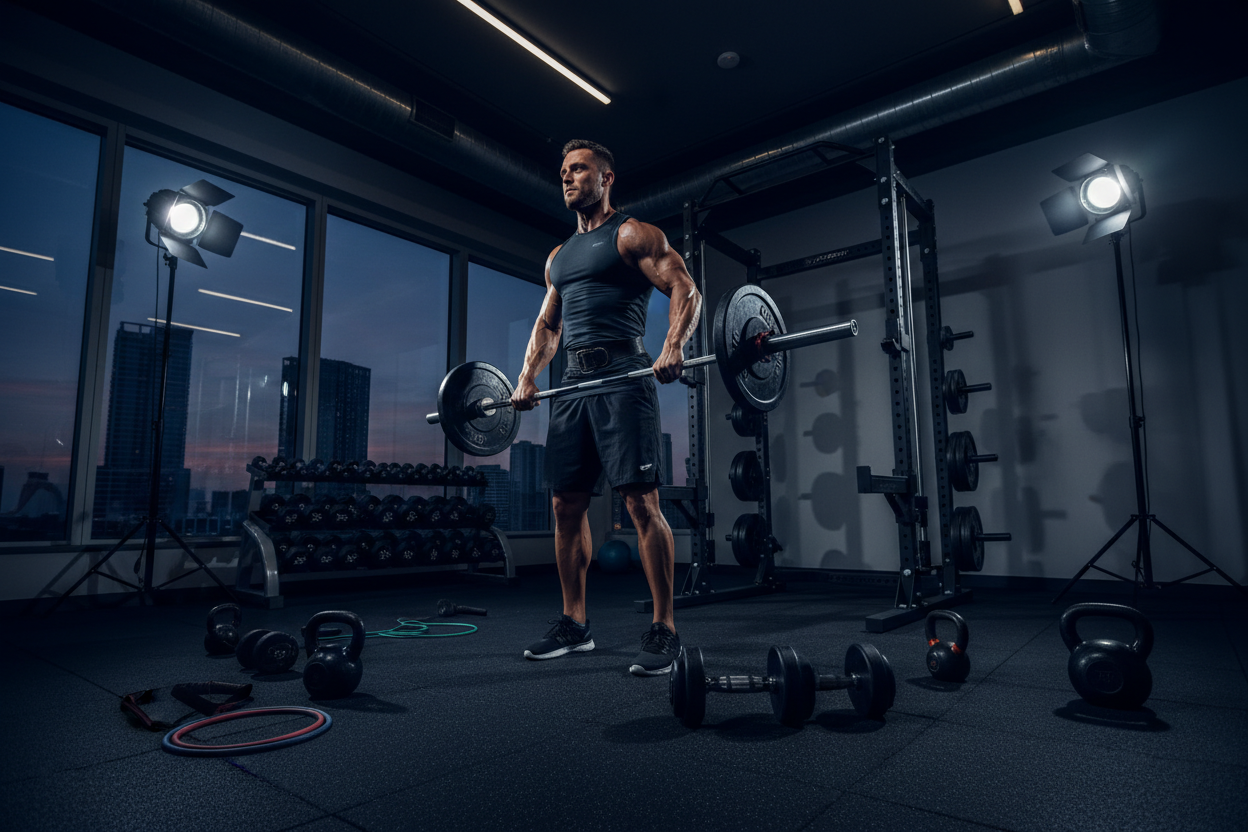
Isolation exercises have their place, but they eat up valuable time. A true strength-focused full body day revolves around compound movements that recruit multiple muscle groups at once. Think barbell back squats, overhead presses, barbell rows, and flat bench presses. These lifts demand heavy central nervous system engagement and trigger the greatest hormonal response for muscle growth.
The Perfect Weekly Schedule
For most home gym owners, training three days a week (e.g., Monday, Wednesday, Friday) is the sweet spot. This allows for 48 hours of recovery between sessions, ensuring your muscles and joints are ready to handle heavy loads again. Alternate between Workout A (squat-heavy) and Workout B (deadlift-heavy) to keep fatigue in check.
Gear Up: What You Actually Need
The beauty of full-body training is its simplicity. You do not need an entire cable crossover machine or a dedicated leg press to get brutally strong.
Maximizing Minimal Space
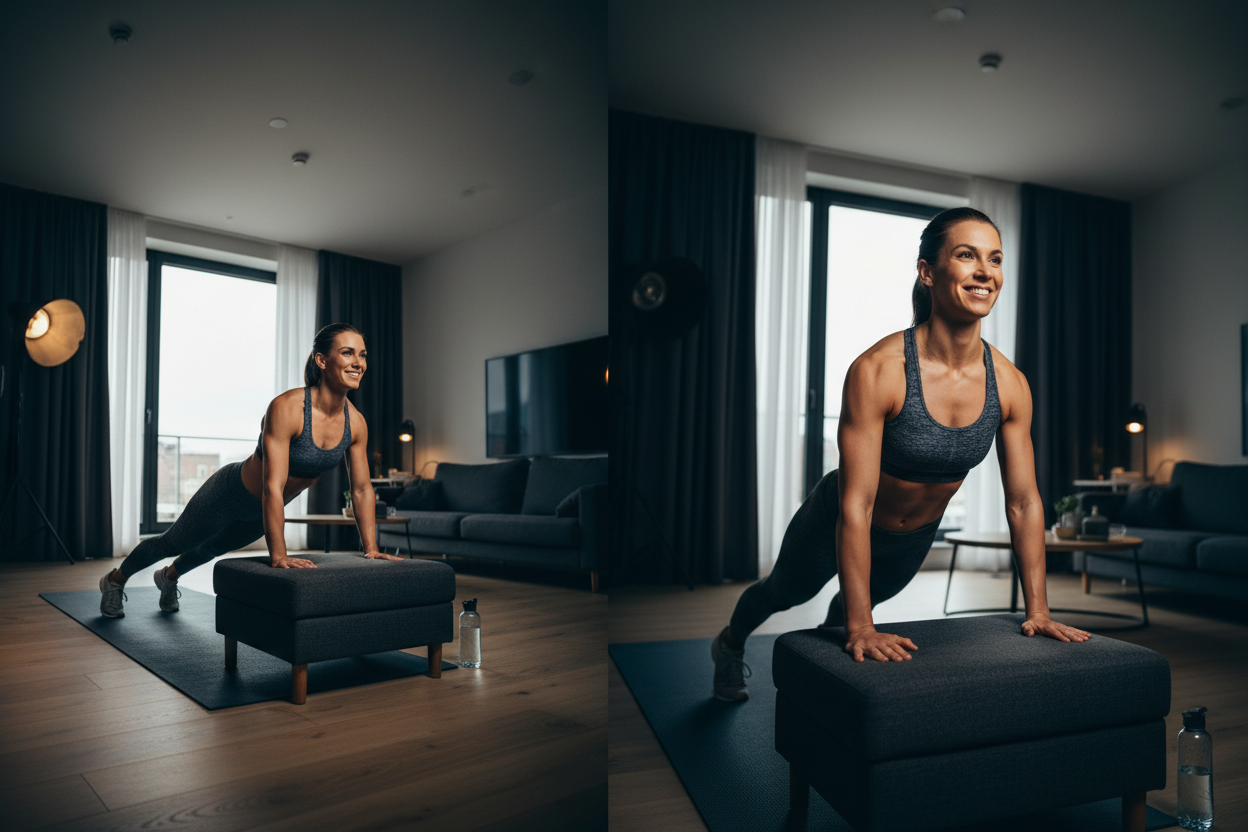
If you are outfitting a garage or spare room, prioritize versatility. A sturdy half-rack or folding wall rack, a high-capacity flat-to-incline bench, and a 300-pound Olympic weight set will cover 95% of your needs. For those in apartments, a pair of heavy adjustable dumbbells paired with a heavy-duty resistance band set can replicate almost every barbell movement without risking your floorboards.
From Our Gym: Honest Take
I used to swear by the traditional push/pull/legs split, but when my second child was born, my garage gym time was slashed to exactly 45 minutes, three days a week. I had to adapt. Switching to a heavy full-body routine saved my gains.
One specific hurdle I hit: doing heavy barbell back squats and deadlifts in the same session completely fried my lower back. The fix? I started alternating my heavy days. If I went heavy on squats on Monday, I swapped deadlifts for lighter Romanian deadlifts (RDLs) or heavy kettlebell swings. Also, my adjustable dumbbells became my best friend for accessory work—allowing me to superset dumbbell bench presses with Bulgarian split squats without having to strip and reload my barbell. It is brutal, but it works.
Frequently Asked Questions
Is a full body routine enough to build muscle?
Absolutely. By training the entire body 3 times a week, you are actually hitting each muscle group more frequently than a traditional once-a-week body part split, which is highly effective for natural lifters.
How long should a full body strength workout take?
A properly programmed session should take between 45 and 60 minutes. If it is taking longer than 75 minutes, you are likely doing too many isolation exercises or resting too long between warm-up sets.
What if I only have dumbbells?
You can easily adapt this style of training. Goblet squats, dumbbell Romanian deadlifts, floor presses, and single-arm rows make up an incredible full-body dumbbell routine. Just ensure your dumbbells are heavy enough to challenge you in the 5-8 rep range.