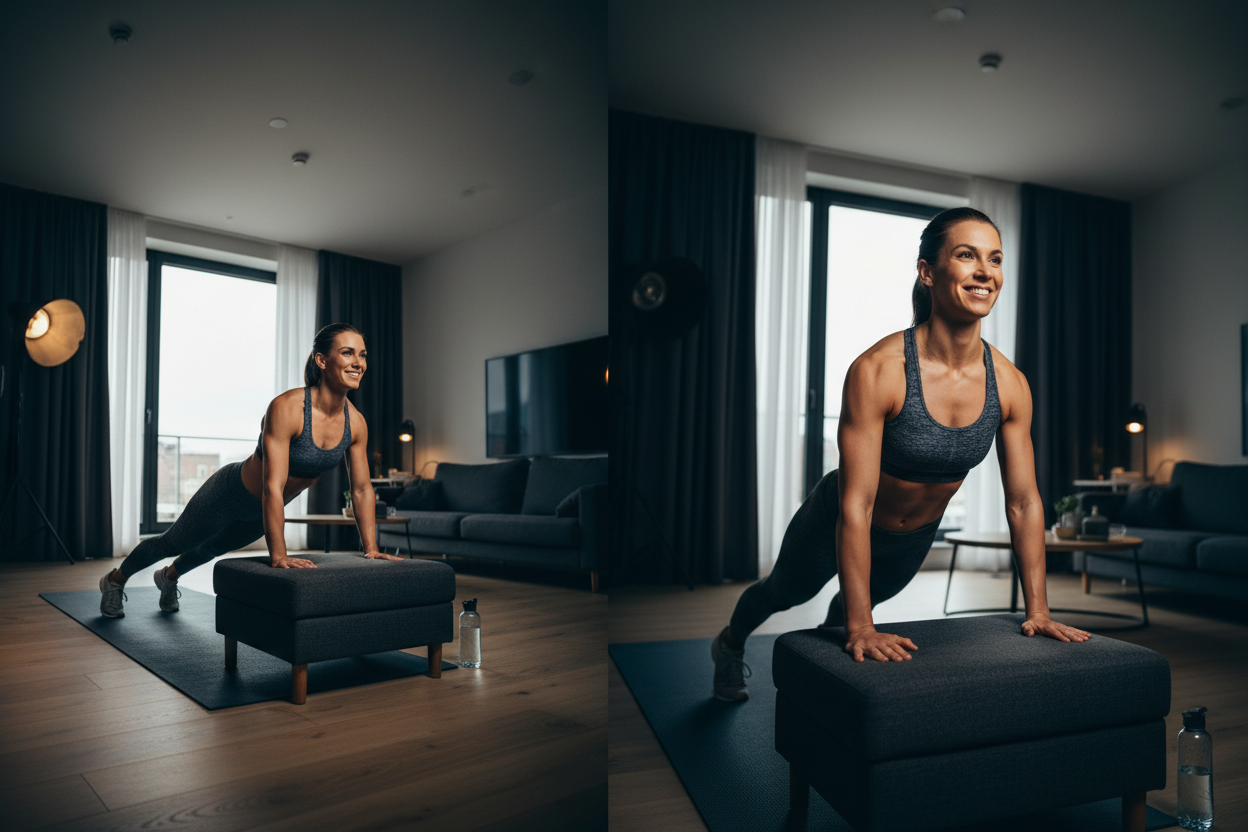
Shoulder Workout at Home for Beginners: The Zero-Equipment Guide
You want that coveted V-taper, but you don't have a rack of dumbbells or a gym membership. Many people assume that without heavy iron, deltoid growth is impossible. That is a myth. The truth is, your shoulders respond incredibly well to mechanical tension and metabolic stress, both of which you can generate in your living room.
If you execute this shoulder workout at home for beginners with the right intensity, you will stimulate growth. It’s not about how much weight you move; it’s about how you move it. Let’s break down the anatomy, the movements, and the strategy to build 3D delts without leaving your house.
Quick Summary: Key Takeaways
For those in a rush, here is the core framework for building shoulders at home without equipment. These principles are essential for the featured snippet of your training routine:
- Target All Three Heads: You must hit the anterior (front), medial (side), and posterior (rear) deltoids for a full 3D look.
- Master the Pike Push-Up: This is the king of bodyweight shoulder movements. It mimics the overhead press.
- Improvise Resistance: Use water jugs, backpacks, or resistance bands for lateral raises.
- Focus on Time Under Tension: Since weights are lighter, slow down your reps (3 seconds down, 1 second up) to fatigue the muscle.
- Frequency Matters: Train shoulders 2-3 times a week for optimal volume.
Understanding the Anatomy of a Broad Shoulder
Before we get into the sweat, you need to understand the structure. The shoulder isn't one muscle; it's three distinct heads. Most easy shoulder exercises at home fail because they only focus on the front delts (which already get worked during standard push-ups).
1. Anterior Deltoid (Front)
This gives your shoulder thickness from the front. It handles forward arm flexion. Overworking this leads to a hunched posture if you don't balance it out.
2. Medial Deltoid (Side)
This is the money muscle. The side delt is responsible for width. If you want to look wider in a t-shirt, this is your priority. It lifts the arm away from the body.
3. Posterior Deltoid (Rear)
Often neglected, the rear delt sits on the back of the shoulder. It pulls the arm backward. Developing this improves posture and gives that round, "capped" look from the side.
The Core Routine: An Easy Shoulder Workout at Home
We are going to structure this circuit to hit all angles. Perform these exercises back-to-back with minimal rest for a metabolic burn.
1. The Pike Push-Up (The Mass Builder)
This moves your body weight vertically, placing the load on your shoulders rather than your chest.
- Setup: Start in a standard push-up position, then walk your feet forward and lift your hips high until you form an inverted "V".
- Execution: Lower your head toward the floor between your hands. Look at your feet, not the floor, to keep the neck neutral. Push back up to the starting position.
- Why it works: It mimics the mechanics of a barbell overhead press using your own gravity.
2. Doorframe Face Pulls (Rear Delt Focus)
You need to offset the pushing movements. This is one of the best easy shoulder exercises at home for posture.
- Setup: Stand in a doorway. Grip the doorframe with your fingers at shoulder height.
- Execution: Lean back until your arms are straight. Pull your body forward using your rear delts, driving your elbows wide and back. Squeeze your shoulder blades together at the top.
- Tip: Don't use your biceps. Imagine pulling from your elbows.
3. Water Bottle Lateral Raises (Width)
Since the side delt is a smaller muscle, you don't need heavy weights. High volume is key here.
- Setup: Hold a water bottle (or soup can) in each hand. Stand tall.
- Execution: Raise your arms out to the sides until they reach shoulder height. Pour the bottle slightly (thumbs down) at the top to engage the side delt fully.
- Control: Lower them slowly. Do not swing. If you are swinging, the weight is too heavy or your form is loose.
How to Apply Progressive Overload Without Weights
The biggest mistake beginners make with an easy shoulder workout at home is doing the same number of reps forever. Muscles only grow when forced to adapt to new stress. Here is how to make it harder without buying dumbbells:
- Decrease Rest Times: Drop from 60 seconds rest to 30 seconds.
- Increase Time Under Tension: Take 4 full seconds to lower yourself during a pike push-up.
- Add Pauses: Hold the top of the lateral raise for 2 seconds. The burn will be intense.
- Increase Volume: Add an extra set every two weeks.
My Training Log: Real Talk
I want to be transparent about what this actually feels like. When I first started training at home during a lockdown, I underestimated bodyweight shoulder work. I thought, "It's just gravity, how hard can it be?"
I remember doing my first proper set of Pike Push-ups on a hardwood floor. The first thing I noticed wasn't the muscle pump—it was the blood rushing to my head and my socks slipping backward every third rep. I had to learn to do them barefoot on a yoga mat to get the traction right.
But the real humble pie came from the lateral raises. I grabbed two gallon jugs of water, thinking I was strong enough. By rep 12, my form broke completely. I had to dump half the water out. There is a very specific, gritty burning sensation in the side delts when you do high reps with light weights—it feels like someone is holding a lighter to your shoulder cap. That specific burn, right where the sleeve seam hits, is exactly what you are chasing. If you don't feel that "acidic" heat, you are likely swinging the weight.
Conclusion
Building shoulders at home doesn't require a complex machine. It requires the discipline to perfect your form on the pike push-up and the tolerance to endure the burn of high-rep lateral raises. Consistency is your currency here. Start today, track your reps, and beat your previous numbers next week.
Frequently Asked Questions
Can I really build muscle with just an easy shoulder workout at home?
Absolutely. Your muscles do not know if you are lifting a fancy dumbbell or a jug of laundry detergent. They only understand tension. If you push close to failure and progressively increase the difficulty (via reps or tempo), hypertrophy (growth) will occur.
How often should I do this routine?
For beginners, 2 to 3 times per week is ideal. Shoulders are smaller muscle groups and recover relatively quickly, but they also need rest to grow. A Monday-Wednesday-Friday split works well.
What if Pike Push-ups are too hard for me?
That is common. You can regress the movement by doing them with your hands elevated on a couch or sturdy chair. This reduces the amount of body weight you have to press. As you get stronger, move to the floor, and eventually, elevate your feet to make it harder.