
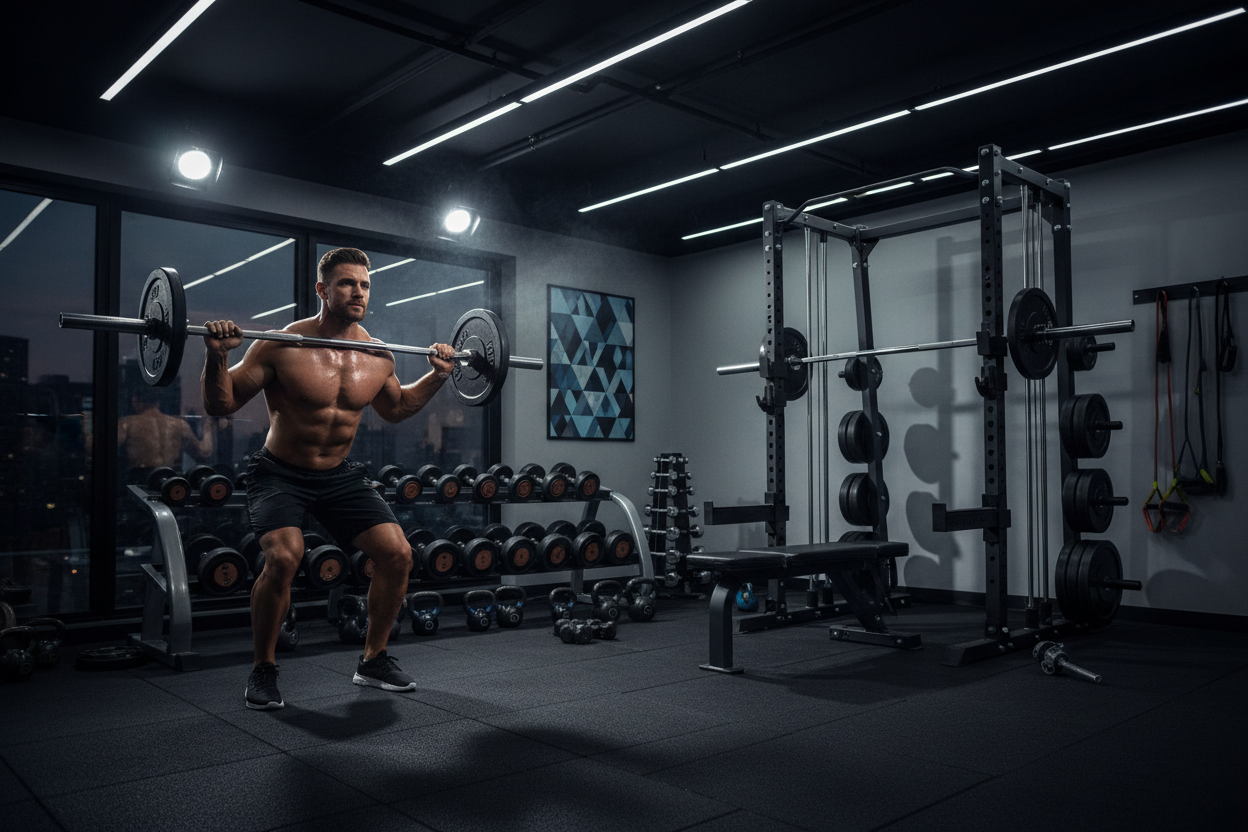
Free Weight Exercise Equipment: Is It Worth the Home Gym Space?
If you have ever stared at a crowded commercial gym floor, waiting 20 minutes for a squat rack, you already know the appeal of training at home. But when it comes to outfitting your own space, the sheer volume of options can be overwhelming. Should you invest in a massive functional trainer, or stick to the basics? For most lifters facing budget constraints and limited square footage, building a foundation with free weight exercise equipment is the smartest move you can make.
Unlike bulky machines that lock you into fixed planes of motion, free weights demand stabilization, build functional strength, and offer infinite exercise variations. In this guide, we will break down exactly how to select, space-plan, and train with the right gear so you can build a home gym that actually gets used.
Key Takeaways
- Versatility reigns supreme: A simple barbell and dumbbell setup allows for hundreds of exercises compared to single-use machines.
- Space efficiency: Most free weight workout equipment can be stored vertically or tucked away, making it ideal for garage and basement setups.
- Scalable budgets: You can start with a pair of adjustable dumbbells and scale up to a full power rack as your strength and budget grow.
- Superior durability: Cast iron and urethane-coated weights have no cables to snap or pulleys to grease, lasting decades with minimal maintenance.
Why Build Around Free Weights?
Functional Strength and Joint Health
When you use fitness equipment free weights, your body is forced to recruit stabilizing muscles to control the load. A barbell squat does not just work your quads; it engages your core, spinal erectors, and glutes to keep you upright. This translates directly to real-world strength. Plus, free weights allow your joints to move through their natural, unique range of motion, reducing the repetitive stress injuries often associated with fixed-path machines.
The Ultimate ROI on Space and Money
If you are outfitting a standard 2-car garage or a spare bedroom, space is your most valuable currency. Traditional gym free weight equipment provides the highest return on investment per square foot. A quality power rack, an Olympic barbell, and a set of bumper plates take up roughly an 8x8 foot footprint but functionally replace dozens of commercial machines.
Essential Gear: What to Buy First
Adjustable Dumbbells vs. Fixed Sets
If you are tight on space, adjustable dumbbells are the undisputed kings of free weights home gym equipment. They replace up to 15 pairs of traditional dumbbells in a fraction of the space. However, if you have the room and prefer dropping weights safely during heavy sets, a fixed rubber hex dumbbell set offers better long-term durability and a more traditional gym feel.
The Barbell and Rack Foundation
Your barbell is your primary connection to the weight. Look for a multi-purpose bar with medium knurling, dual knurl marks, and a tensile strength of at least 190,000 PSI. Pair this with a sturdy squat stand or half-rack. When mixing free weights and equipment, ensure your rack has a weight capacity of at least 700 lbs to safely accommodate your future strength gains.
Space Planning for North American Homes
Clearances and Flooring
Before ordering, measure your ceiling height. Standard basement ceilings in North America hover around 84 to 90 inches. If you plan on doing standing overhead presses, you need to account for your height, arm length, and the radius of the bumper plates. Additionally, always protect your foundation. A 3/4-inch vulcanized rubber horse stall mat is the gold standard for protecting concrete from heavy deadlifts.
From Our Gym: Honest Take
We have tested dozens of setups over the years, and I will be completely honest: my first mistake was buying cheap cast-iron plates to save a few bucks. Within six months of training in my humid, un-climate-controlled garage, they were covered in surface rust and rattling loosely on the barbell sleeve.
I eventually upgraded to a set of urethane-coated bumper plates and a cerakote-finished barbell. The difference is night and day. The knurling on the upgraded bar is noticeably more aggressive—my chalked grip holds solid through heavy deadlift sets, and the urethane plates produce a dull, quiet thud rather than a neighborhood-waking crash when dropped. One minor caveat: fresh rubber and urethane gear will smell like a tire shop for the first two weeks. Keep your garage door open to let it off-gas.
Frequently Asked Questions
Is free weight exercise equipment safe for beginners?
Yes, provided you start with light loads and focus on proper form. Unlike machines, free weights require you to learn the mechanics of a lift. We recommend beginners start with a PVC pipe or an empty barbell to master the movement patterns before adding heavy plates.
How much space do I actually need for a basic setup?
For a basic power rack, barbell, and bench setup, you need a minimum footprint of 8 feet by 8 feet. This allows enough room for the 7-foot barbell, plus clearance on either side to load and unload plates safely.
Should I buy cast iron or rubber-coated weights?
If you are on a strict budget and do not plan on dropping the weights (e.g., for bench press and controlled squats), cast iron is perfectly fine. If you perform Olympic lifts, heavy deadlifts, or train on a floor you want to protect, rubber-coated bumper plates are a necessary investment.


