Stop Chasing the Perfect Exercise to Get Stronger
I remember spending three hours on a Friday night scrolling through forums trying to find the one exercise to get stronger that would finally fix my stagnant bench press. I was looking for a hack, a secret angle, or some obscure Bulgarian method that hadn't been translated yet. I wasted a year doing that, switching my routine every time a new 'science-based' influencer posted a reel.
Quick Takeaways
- Consistency beats variety every single time in strength training.
- Your nervous system needs weeks to learn a movement before you can actually build muscle with it.
- The 'best' exercise is the one you can progressively load for months without hitting a wall.
- Solid equipment, especially your floor setup, is non-negotiable for heavy lifting.
The Myth of the 'Magic' Lift
The fitness industry thrives on the idea that you're just one 'secret' move away from a breakthrough. People constantly ask me what exercise makes you stronger as if there's a hidden button I'm not pressing. The truth is boring: your body doesn't have a sensor for the name of the lift. It only understands mechanical tension and progressive overload.
Whether you're doing a high-bar squat or a safety bar squat, your quads are just experiencing a load. When you stop looking for the strongest exercise and start looking at your logbook, you'll actually start seeing progress. Most people fail because they treat their workouts like a buffet rather than a disciplined path.
Why Exercise Hopping Kills Your Progress
When you start a new movement, the gains you see in the first two weeks aren't muscle growth—they're neurological adaptations. Your brain is simply learning how to coordinate the muscle fibers you already have. If you switch your routine every week in search of the 'perfect' workouts to get strong, you're constantly in that learning phase.
You never stay with a lift long enough to actually stress the muscle tissue. To get real results, you need to be efficient enough at a movement to move weight that actually scares you. That doesn't happen when you're constantly trying new exercises for overall strength every Tuesday.
The Foundational Patterns You Actually Need
You don't need 50 different machines. You need four basic patterns: squatting, hinging, pushing, and pulling. If you master these, you've covered 95% of what your body is capable of doing. Everything else is just expensive window dressing for people who like to spend more time adjusting cables than lifting heavy iron.
Lower Body: Pushing the Floor Away
Squats and lunges are the bread and butter. It doesn't matter if you use a barbell, a pair of heavy dumbbells, or a hack squat machine. The goal is the same: find a variation that doesn't hurt your joints and add five pounds to it every week. Exercises to make you stronger are only effective if you can do them for six months straight without a 'deload' that lasts forever.
Upper Body: Building Your Armor
Vertical and horizontal pushing and pulling cover your chest, back, and shoulders. These workouts that make you stronger don't require fancy tech. A heavy row and a solid overhead press will do more for your physique than ten different cable crossovers. Stop overcomplicating the 'what exercise makes you stronger' question and just pick a heavy weight and move it.
Don't Let Your Setup Ruin Your Base
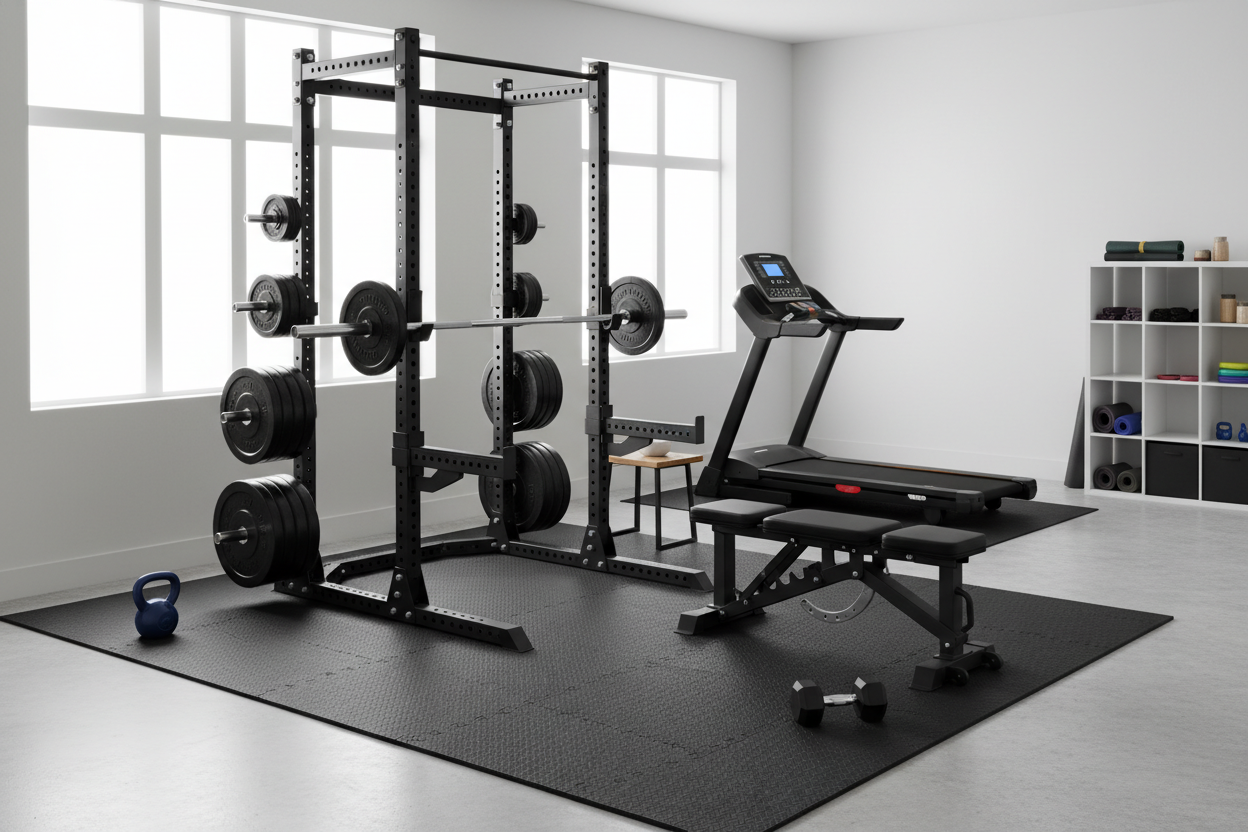
I've seen guys try to pull 405 lbs off a squishy, cheap foam mat. It's like trying to fire a cannon from a canoe. If your feet are shifting or sinking, you're bleeding power and begging for a disc injury. You need a dense, high-traction surface to safely anchor your feet during heavy squats and deadlifts.
Investing in a large exercise mat for home gym isn't about aesthetics; it's about force transfer. If the floor is eating 10% of your leg drive because it's too soft, you're literally leaving strength on the table. Get a surface that stays put when you're grinding out that last rep.
Balancing Pure Strength With Conditioning
There's a common fear that doing cardio will 'kill your gains.' That's mostly nonsense unless you're running marathons on your off days. In fact, better conditioning helps you recover between sets so you can handle more volume. I usually suggest a best bicycle for exercise for my lifters because it's low-impact.
Cycling flushes the legs without the eccentric pounding of running. It’s a great way to keep your heart healthy without digging a recovery hole that ruins your next squat session. Keep the conditioning easy and the lifting heavy.
Personal Experience: The 6-Month Boring Streak
A few years ago, I got obsessed with 'optimal' training and changed my program every time I saw a new study. My deadlift stayed at 315 lbs for a year. I finally got fed up, picked one basic linear program, and did the exact same five exercises for six months. No changes. No 'new' moves. My deadlift hit 405 lbs by the end of that streak. My mistake wasn't the exercises I chose; it was the fact that I wouldn't stop changing them. Trust the process, even when it gets boring.
FAQ
What is the single best exercise to get stronger?
There isn't one. The 'best' is any compound movement like a squat or deadlift that you can consistently add weight to over a long period.
How many days a week should I lift?
Three to four days is the sweet spot for most people. It provides enough stimulus to grow while leaving plenty of time for recovery.
Can I get strong without a barbell?
Absolutely. Heavy dumbbells, kettlebells, or even high-resistance bands can work, but barbells are the easiest to load precisely as you get stronger.