Why Chasing Soreness Ruins Your Plan to Build Muscle for Beginners
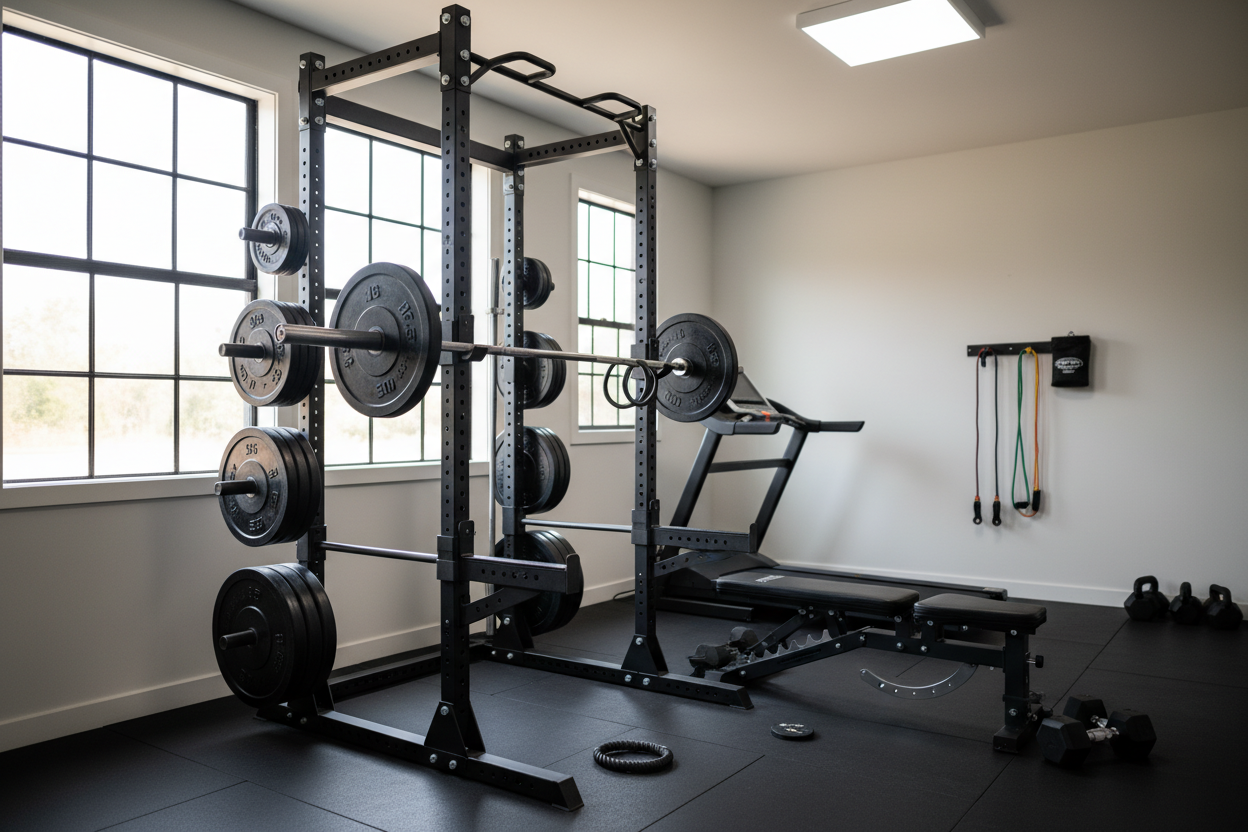
I remember the first time I set up a power rack in my garage. I hit a leg day so hard I had to crawl up the stairs to my kitchen just to get a glass of water. I thought I was a genius. I thought that level of pain was the only way to build muscle for beginners. I was wrong. I spent the next four days unable to train, watching my motivation evaporate while my legs felt like they were filled with wet concrete.
- Soreness is an inflammatory response to novelty, not a direct signal of muscle growth.
- Extreme damage forces your body to spend all its energy on repair rather than adding new tissue.
- Beginners often mistake Central Nervous System (CNS) fatigue for a 'good' workout.
- Consistency and progressive overload are the actual drivers of beginner muscle gain.
Stop Using Pain as Your Progress Tracker
We have been conditioned to believe that if we aren't limping, we didn't work hard enough. This is the 'DOMS' trap. Delayed Onset Muscle Soreness is mostly just your body reacting to a stimulus it isn't used to. It happens when you try a new exercise or drastically change your volume. It does not mean you triggered hypertrophy.
In fact, the science shows that extreme soreness can actually hinder your progress. If you are so beat up that you can't hit your next session with the same intensity, you're losing ground. I've seen guys brag about being sore for a week. That's not a badge of honor; it's a sign that you overshot your capacity and wasted three potential training days.
The fitness industry loves to sell the 'grind' because it looks good on camera. But real muscle building beginner success happens in the boring middle ground. It’s about doing enough to signal growth, then getting out of the gym so your body can actually do the work of building. If you’re constantly in a state of repair, you’re just spinning your wheels in the mud.
The Difference Between Wrecking Muscle and Building It
There is a biological 'budget' for recovery. Think of your body like a construction crew. If you show up and lightly renovate a room, the crew can finish the job and maybe even add an extension. If you blow up the entire house with dynamite, the crew spends all their time just clearing the rubble. They never get around to building that extra wing you wanted.
Hypertrophy is driven primarily by mechanical tension—lifting heavy-ish weights through a full range of motion. When you create too much tissue damage, your body’s protein synthesis is diverted to 'patching the holes' in your existing muscle fibers. This leaves zero resources for actual beginner muscle gain. You want to stimulate the muscle, not annihilate it.
I’ve tested this myself. I spent six months doing high-volume 'destroyer' workouts and gained almost nothing but joint pain. When I switched to a lower-volume approach focused on adding five pounds to the bar every week, my physique changed in two months. Stop trying to kill yourself in the gym. Start trying to beat your previous self by one rep or one pound.
Why a Muscle Building Beginner Recovers Slower
Your muscles might feel fine after a few days, but your Central Nervous System (CNS) takes much longer to bounce back. For a muscle building beginner, every heavy lift is a massive shock to the system. Your brain is literally learning how to fire your muscles in the right order. This 'neurological' fatigue is invisible but deadly for your progress.
If you try to mimic a pro bodybuilder’s six-day-a-week 'annihilation' split, you will fry your system within a fortnight. You’ll find yourself feeling lethargic, losing your appetite, and dreading the gym. Instead, you should follow a beginner exercise plan for men that prioritizes full-body movements and rest days. Your CNS needs that downtime to consolidate the gains.
How to Build Muscle Beginner-Style (Without Trashing Your Body)
The goal is the 'Minimum Effective Dose.' This is the least amount of work required to trigger a growth response. For most people starting out, that is about 2 to 3 sets per exercise, 2 to 3 times per week. Anything more than that is usually 'junk volume' that just adds to your recovery debt without adding to your bicep peak.
Focus on the 'Big Three' or their variations: squats, presses, and pulls. These movements provide the most bang for your buck. I recommend stopping your sets when you feel like you could still do two more good reps. This is called training with 'Reps in Reserve' (RIR). It keeps the quality high and the systemic fatigue low.
When you look at how to build muscle beginner programs, the ones that last are the ones that don't leave you broken. You should leave the gym feeling like you did work, but not like you need a nap and an ice bath. If you can walk out of the gym under your own power and feel energized an hour later, you hit the sweet spot.
Building a Foundation That Absorbs Force
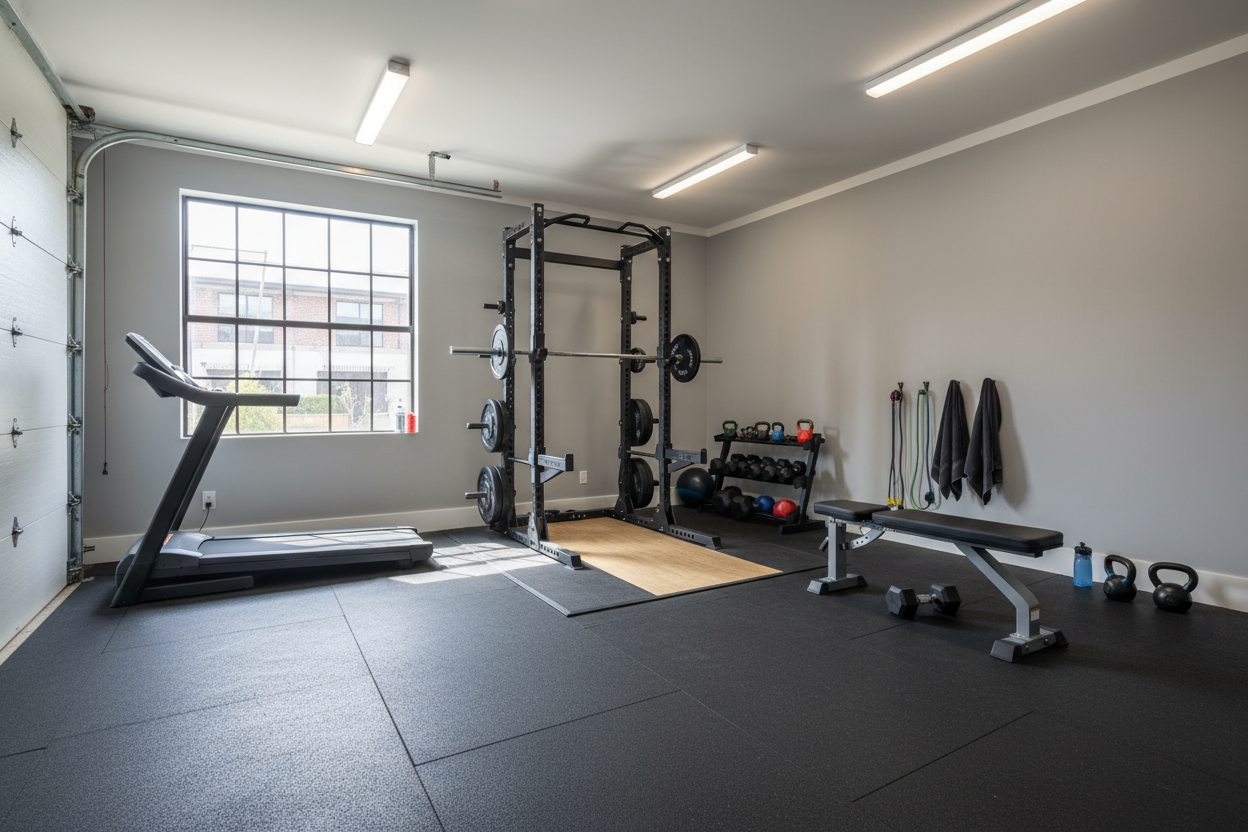
One thing people overlook is the surface they are training on. If you're lifting on a slippery garage floor or a squishy carpet, your body is constantly fighting for stability. This creates unnecessary micro-stress in your joints and connective tissue. I always tell people to invest in a solid base before they buy fancy machines.
Using a high-density 6x8ft exercise mat makes a massive difference for floor presses and deadlifts. It protects your joints by absorbing the impact and gives your feet a 'bite' into the ground so you can produce more force. More force equals more tension, and more tension equals more growth.
If you're building a home setup, browse a large exercise mat for home gym collection to find something that covers your entire lifting area. You want enough space to move around without stepping off the edge of the mat mid-set. It sounds like a small detail, but being able to set your stance firmly is the difference between a productive set and a tweaked lower back.
A Smarter Approach to Gain Muscle for Beginners
The best way to gain muscle for beginners is to keep a logbook. Forget how you feel; look at the numbers. Did you do 10 reps with 135 lbs last week? Try for 11 reps this week. If you hit 11, the workout was a success, regardless of whether you feel sore the next morning. The logbook is the only objective truth in the gym.
Spend the next 30 days focusing on form and incremental weight increases. If you find yourself cheating on form just to move the weight, you've gone too heavy. Lower the weight, fix the form, and feel the muscle actually working. That 'mind-muscle connection' is worth more than any ego-lift that leaves you reaching for the ibuprofen.
When Free Weights Leave You Too Banged Up
Sometimes, the technical demand of a barbell is just too much for a beginner's joints to handle while they are still learning. If your elbows or lower back are screaming, don't be afraid to use machines. They provide a guided path that allows you to push the muscle to failure without the stabilizer muscles giving out first.
I often suggest a machine only workout program for beginners if they are struggling with recovery. It’s a great way to build a base of strength and size while your connective tissue catches up. You can always move back to the barbell once you've built some armor. There is no rule saying you have to use a barbell to get big.
Personal Experience: My Biggest Mistake
I once tried a 'Squat Every Day' program because I read about it in a magazine. By day ten, my knees felt like they were full of broken glass and my squat numbers were actually going down. I was 'sore' every single day, but I didn't gain a single pound of muscle. I was just digging a hole I couldn't climb out of. The day I realized that 'less is more' was the day I finally started seeing the scale move in the right direction. Don't make my mistake; respect your recovery.
FAQ
Is it okay to workout if I'm still sore?
If it's a light 'stiffness,' yes. If it's a sharp pain or you can't move through a full range of motion, take another rest day. Training through extreme soreness usually leads to bad form and injury.
How long does it take to see muscle growth?
If you're consistent, you'll see changes in the mirror in about 6 to 8 weeks. However, you'll feel stronger and more 'solid' within the first 14 days as your nervous system adapts.
Do I need supplements to build muscle?
No. Focus on hitting your protein goals (about 0.8g to 1g per pound of body weight) and getting enough sleep. Creatine is the only supplement I'd actually recommend for beginners, but it's not a magic pill.