Your Muscle Building Workout Is Just Sweaty Cardio (Here's the Fix)
I spent three years doing what I thought was a muscle building workout, only to end up with the same skinny-fat physique and the resting heart rate of a distance runner. I was drenched in sweat, gasping for air, and convinced I was 'crushing it.' I wasn't. I was just doing high-intensity cardio with weights that were far too light to actually move the needle on my physique. If you're chasing a sweat angel on the floor instead of a PR on the rack, you're making the same mistake I did.
- Sweat is a measure of cooling, not a measure of hypertrophy.
- Mechanical tension is the primary driver of muscle growth.
- Rest periods should be long enough to repeat your performance, not shortened to keep your heart rate up.
- Consistency with a single plan beats variety every single time.
The Difference Between Getting Tired and Getting Bigger
Most people walk into the gym looking for a 'burn.' They want to feel like they've been through the ringer. This metabolic fatigue—that feeling of your lungs burning and your muscles stinging—is a byproduct of training, but it isn't the goal of a workout to gain muscle mass. If getting tired was the secret to getting huge, marathon runners would have 20-inch quads.
The real driver of growth is mechanical tension. This happens when you put a muscle under a heavy load through a full range of motion. Your mechanoreceptors sense that load and trigger the chemical signals needed for protein synthesis. When you're running a muscle growth workout, you need to prioritize the weight on the bar and the quality of the contraction over how much you're panting between sets. If you can't talk because you're out of breath, you aren't recovering enough to stimulate the muscle on the next set.
Why Your Current Gym Routine for Muscle Gain Is Failing
The fitness industry has sold us on the idea that if you aren't moving every second, you're wasting time. This is why your gym routine for muscle gain is likely stalling. By taking 30-second rest periods, you're turning a strength session into a circuit training class. Your nervous system and your lungs give out before your actual muscle fibers do. You end up lifting 50% of what you're capable of because you're too tired to brace properly.
Another massive pitfall is the lack of proximity to failure. Most lifters stop when it gets 'uncomfortable,' which is usually 5 or 6 reps away from true technical failure. To trigger a muscle building workout routine that actually works, you need to be within 1 to 3 reps of the point where you literally cannot move the weight with good form. Without that stimulus, your body has no reason to spend the energy building new tissue.
The 'More is Better' Trap
I see it every day in my garage: guys doing six different types of curls and four variations of lateral raises in a single session. This is what we call junk volume. Doing 20 sets of low-intensity fluff with light weights won't stimulate growth the way 3 to 4 hard, controlled sets will. If you're following a build muscle training plan, you need to focus on quality over quantity. If you can do 6 sets of an exercise and not feel like the muscle is cooked, you didn't work hard enough on the first two.
The Anatomy of a Real Muscle Building Workout
A legitimate exercise plan to gain muscle is built on three pillars: progressive overload, execution, and recovery. Progressive overload doesn't just mean adding weight; it means doing more work over time. That could be an extra rep, better tempo, or a shorter rest period (within reason). But the weight on the bar is the easiest metric to track. If you're lifting the same 40-lb dumbbells today that you were six months ago, you haven't built muscle.
Execution is the second pillar. You have to leave your ego at the door. The Best Gym Workout to Gain Muscle Starts With the Lightest Weights because you need to master the ability to stretch the muscle under load. Think about the bottom of a chest press—are you bouncing the bar off your sternum, or are you feeling the pec fibers stretch? That stretch-mediated hypertrophy is a massive piece of the puzzle that most people skip in favor of moving heavier, uglier weight.
A Barebones Exercise Plan to Gain Muscle at Home
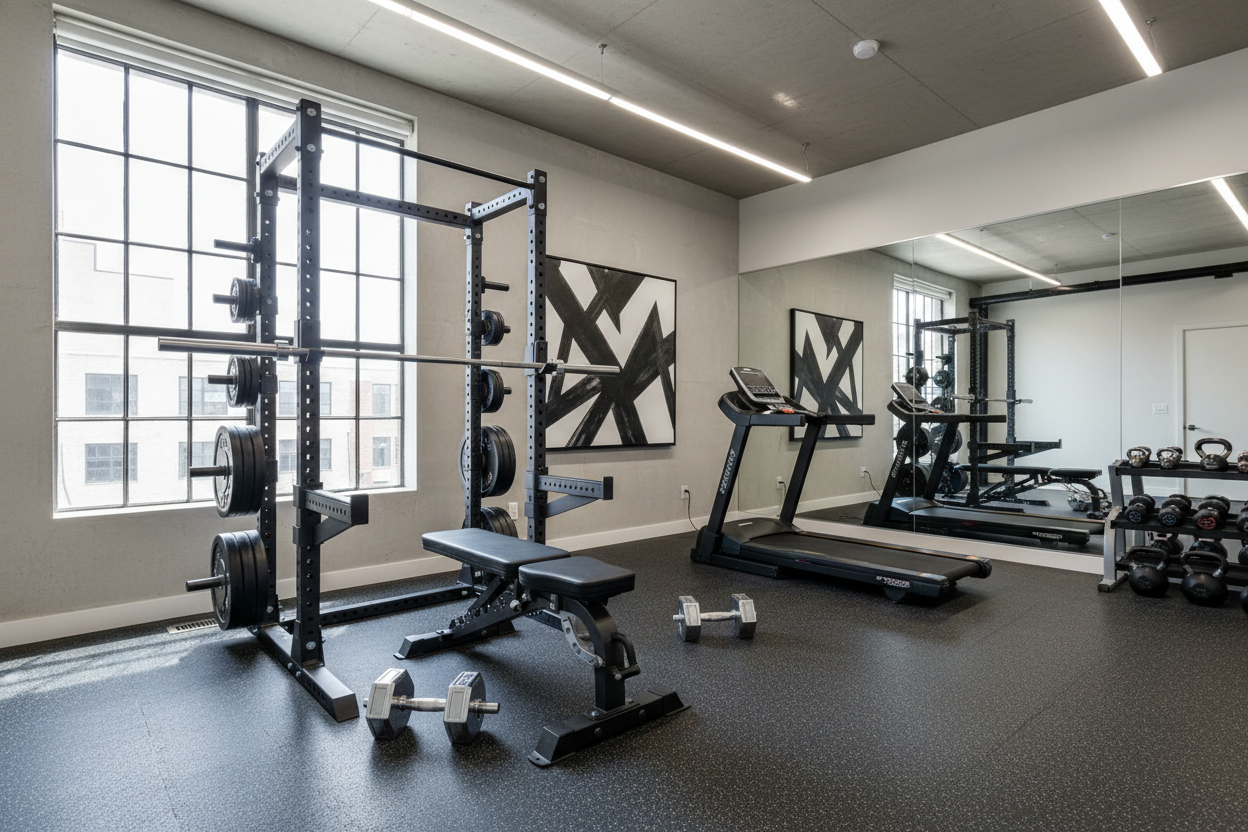
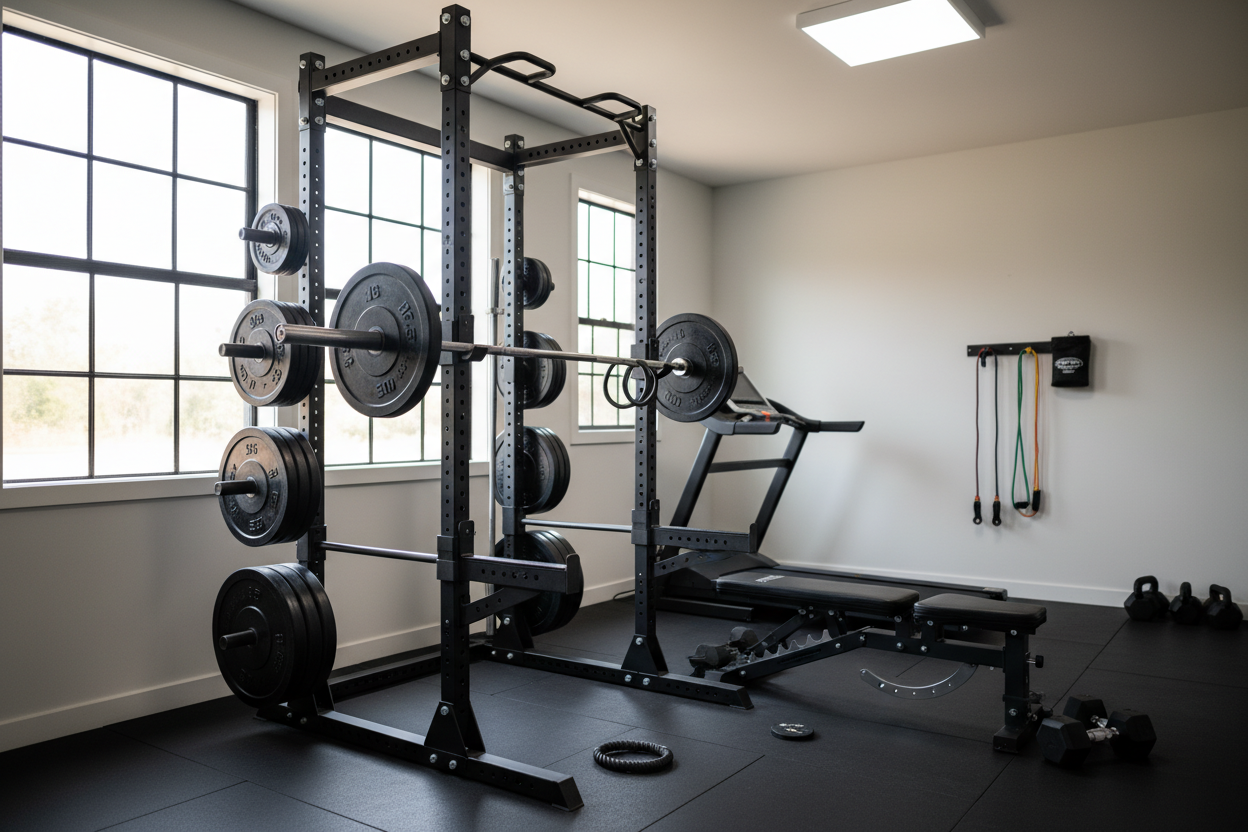
You don't need a 20,000-square-foot commercial gym to see results. A solid build muscle gym plan can be executed in a garage with a rack, a bench, and some floor space. I recommend a simple Upper/Lower split performed four days a week. This allows you to hit every muscle group twice a week, which is the sweet spot for most natural lifters. Focus on the 'Big Five': Squats, Hinges, Presses, Rows, and Pull-ups.
When you're training at home, stability is your best friend. If you're doing heavy Bulgarian split squats or RDLs, you don't want your feet sliding on dusty concrete. I use a 6X8Ft Exercise Mat Yoga Mat to create a dedicated, non-slip lifting zone. It saves my joints during floor presses and gives me the grip I need to actually push my legs to failure without worrying about a trip to the ER. A stable base allows for better force production, which leads to more muscle gain.
Stop Hopping Between Programs
The best workout routine for muscle gain is the one you actually stick to for more than a month. I've seen guys switch from a 'Powerbuilding' plan to a 'Swole-in-Six-Weeks' plan because they didn't see a change in the mirror after ten days. Hypertrophy is a slow, biological process. You need at least 8 to 12 weeks on a single training routine to build muscle mass before you can even judge if it's working.
Stop looking for the 'secret' exercise. There isn't one. There is only the boring, repetitive work of adding five pounds to your rows and eating enough protein. If you want a structured path forward, head over to the Workout Hub and pick a plan. Once you pick it, commit to it. Don't change the exercises, don't skip the rest days, and for the love of your gains, stop trying to turn your lifting into cardio.
FAQ
What is the best workout routine to build muscle?
The best routine is typically an Upper/Lower or Push/Pull/Legs split that allows you to hit each muscle group twice per week with 3-5 minutes of rest between heavy sets.
How many days a week should I work out to gain muscle?
For most people, 4 to 5 days is the sweet spot. This provides enough stimulus for growth while allowing 2 to 3 full days of recovery, which is when the actual muscle building happens.
Can I build muscle with just bodyweight exercises?
Yes, but it's much harder to provide progressive overload. You'll eventually need to add weight via a vest or dip belt to keep the mechanical tension high enough to trigger growth.