Stop Changing Your Free Weight Training Routine Every 4 Weeks
I remember sitting in my garage three years ago, surrounded by a mismatched set of iron plates and a bar that had more rust than knurling, scrolling through Instagram for a 'new' workout. I was three weeks into a program and already bored. I felt like I wasn't seeing results, so I did what every other frustrated lifter does: I scrapped the whole thing and started a '6-week shred' I found on a random blog. It was the third time I’d changed my free weight training routine in two months. My bench press hadn't moved five pounds, and my legs still looked like toothpicks.
- Consistency beats variety every single time for muscle growth.
- Progressive overload requires repeating the same movements to measure progress.
- Foundational lifts like squats and presses are the highest-yield exercises you can do.
- Most 'muscle confusion' is just a marketing tactic for influencers.
The Toxic Cycle of Program Hopping
We are living through an epidemic of 'novelty addiction.' If you spend five minutes on social media, you’ll see influencers performing single-leg-cable-cross-body-rows while standing on a BOSU ball. Why? Because performing a standard barbell row for the 500th time doesn't get views. They have to invent 'new' movements to keep their content fresh, and unfortunately, we’ve been conditioned to think that if we aren't doing something different every session, our muscles are 'getting used to it.'
The idea of 'muscle confusion' is one of the most destructive myths in the lifting world. Your muscles don't have brains; they don't get 'confused.' They respond to mechanical tension and metabolic stress. When you change your free weights program every four weeks, you never actually get past the neurological adaptation phase of a lift. The first few weeks of any new exercise are just your brain learning how to coordinate the movement. By the time you’re actually ready to move heavy weight and stimulate real growth, you’ve already jumped ship to a new 'program' because you got a little bored.
This cycle keeps you weak. You spend all your time being a 'beginner' at twenty different exercises instead of becoming an 'expert' at five. If you want to see your physique change, you have to embrace the boredom of the basics. You need to stop looking for the 'secret' exercise and start looking for the next five pounds on the bar. Real strength is built in the monotonous repetition of the foundational movements.
What Actually Makes a Free Weights Program Work
The magic of iron isn't in the variety; it's in the stability and the load. Unlike the fancy selectorized machines at the big box gyms, a barbell doesn't have a fixed path. It wants to wobble. It wants to tip. Your entire nervous system and all those tiny stabilizer muscles have to scream at once just to keep you from falling over. This is exactly why machines fall short for anyone training in a home gym environment. When you're forced to stabilize the weight yourself, you recruit more motor units and create a more robust systemic response.
To make a program work, you need three things: a logbook, a set of plates, and a refusal to quit. You need to pick a handful of movements—a squat, a hinge, a push, and a pull—and run them into the ground. You should be able to look back at your training logs from three months ago and see a clear line of progression. Maybe you added ten pounds to your squat, or maybe you stayed at the same weight but managed to squeeze out three more reps with better form. That is how tissue is built.
Raw iron forces an adaptation that guided tracks simply can't replicate. When you have a heavy barbell on your back, there is no 'easy' way out. You either move the weight or you don't. That binary nature of free weight training is what creates the mental and physical toughness that machine-based circuits lack. Stop worrying about 'hitting the muscle from every angle' and focus on moving more total weight over time.
The 'Boring' 3-Day Protocol That Builds Real Tissue
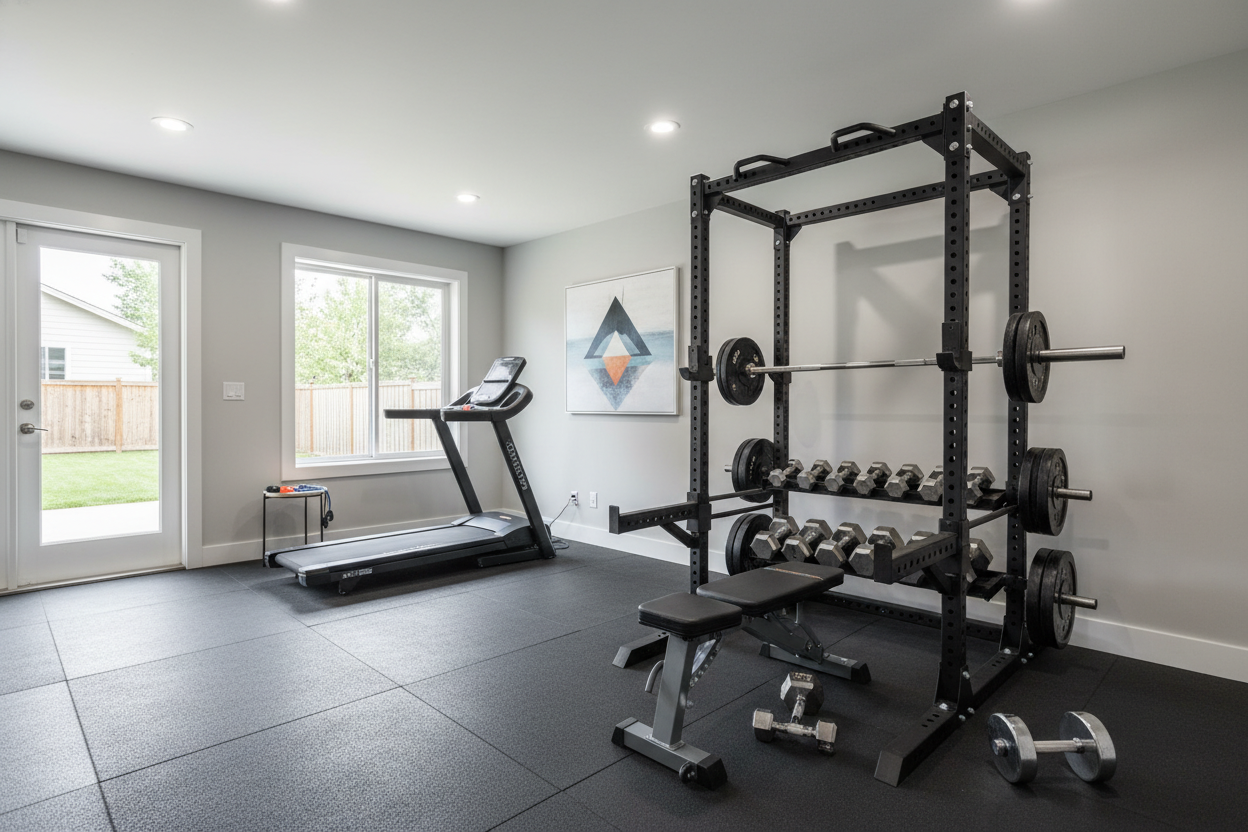
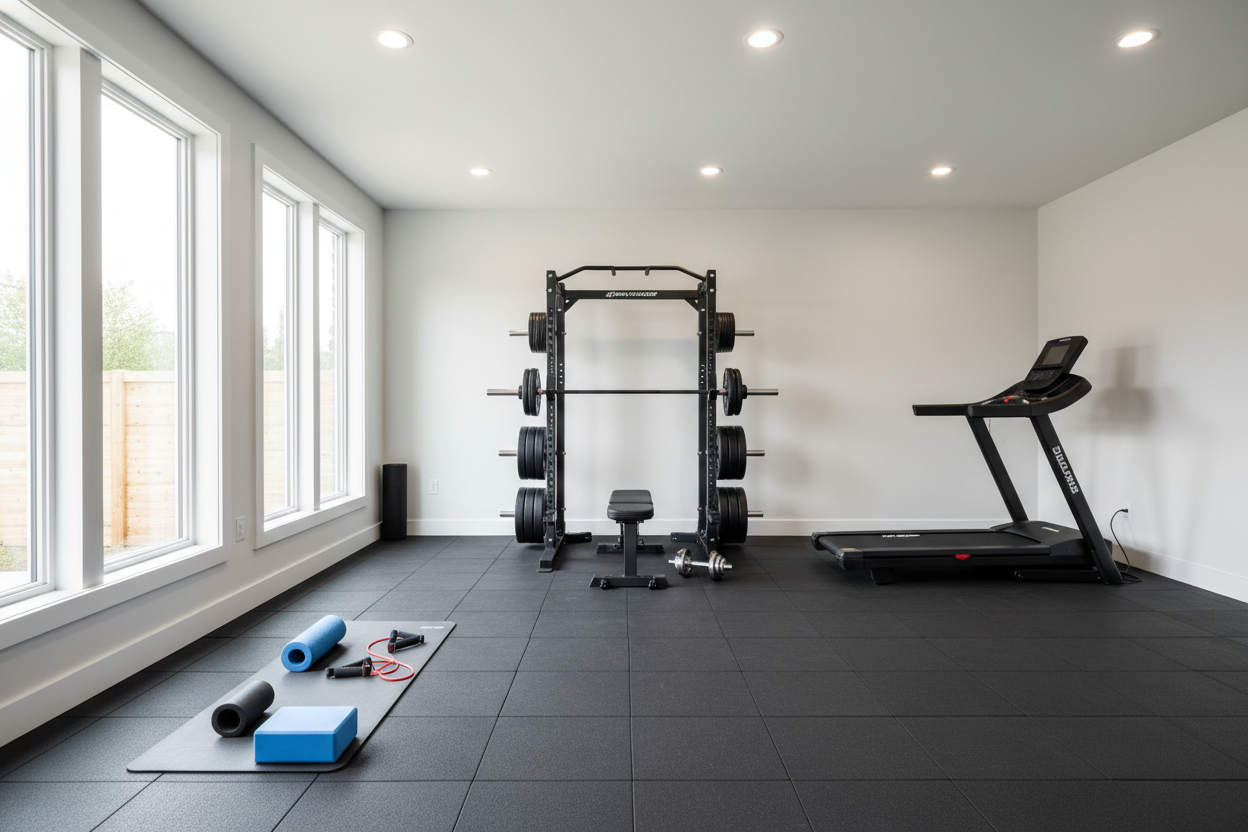
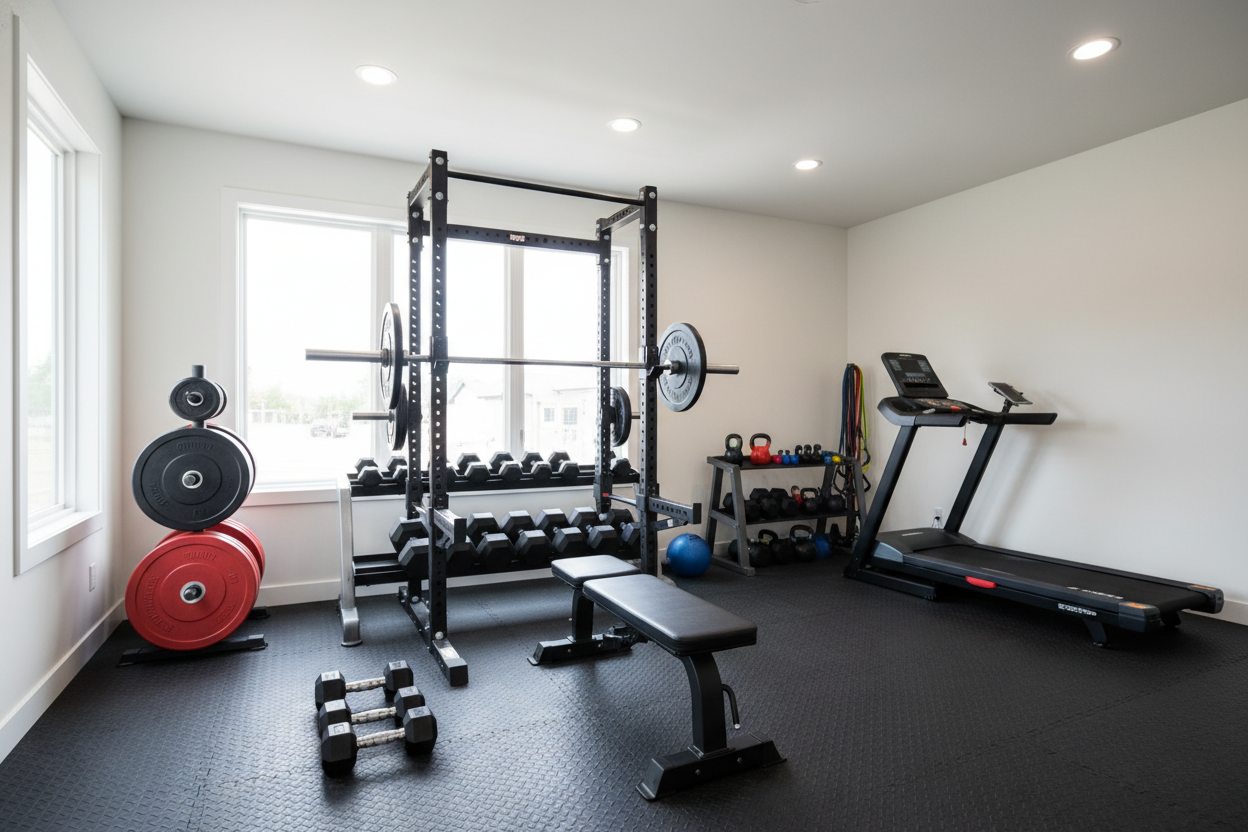
You don't need a 20,000-square-foot facility to get huge. I’ve seen guys build world-class physiques in a single-car garage with nothing but a rack and a bench. The key is high-yield movements. This 3-day split is designed to be executed with a basic power rack weight bench package, which provides the safety you need to push yourself to failure without a spotter. We aren't doing fluff here. Every exercise is chosen because it allows for the most weight to be moved through the longest range of motion.
Day 1: Heavy Pushes and Vertical Pulls
Day one is all about the upper body 'big rocks.' We start with the flat barbell bench press. Forget the 15-20 rep 'pump' sets for now. I want you in the 5-8 rep range. This is where you build the structural density that makes you look thick even in a t-shirt. If you can do 8 reps with perfect form, add 5 pounds next week. No excuses.
After the bench, we move to the overhead press (OHP). This is the ultimate test of upper body strength. Keep your core tight and don't turn it into a standing incline press. We round out the day with weighted pull-ups. If you can't do pull-ups yet, use a band for assistance, but the goal is to eventually hang a plate from your waist. These three movements cover your chest, shoulders, triceps, and the entire width of your back. It’s simple, it’s heavy, and it works.
Day 2: Squat Variations and Hinge Mechanics
Lower body day is where most people quit, but it's where the real gains are made. We start with the high-bar back squat. I don't care if you have a leg press; nothing builds leg drive like a barbell on your traps. We’re looking for 3 sets of 6-10 reps here. Focus on depth—if your hip crease isn't passing your knees, the rep doesn't count.
Next is the Romanian Deadlift (RDL). This is the king of posterior chain movements. Focus on the stretch in your hamstrings and the 'hinge' at your hips. Don't just lower the weight; push your glutes back like you're trying to close a car door with your butt. This builds the 'ham-glute tie-in' that actually protects your lower back. You don't need a fancy leg extension machine when you have a bar and the discipline to squat deep.
Day 3: Full Body Clean-up and Weak Point Training
Day three is our 'volume' day. We’ve done the heavy lifting; now we’re going to fill in the gaps. This is where we use our dumbbells and our adjustable weight bench to hit different angles. Start with incline dumbbell presses. Setting the bench to a 30-degree angle targets the upper chest in a way that flat bars sometimes miss.
Follow that up with one-arm dumbbell rows. Use the bench for support and really let the weight stretch your lat at the bottom. We finish the session with some isolation work: lateral raises for the side delts and some bicep/tricep work. This day is higher volume (10-15 reps) and focuses on the 'mind-muscle connection' that people love to talk about. It’s the perfect way to finish the week and ensure no muscle group is left behind.
How to Run This Without Dying of Boredom
The hardest part of this routine isn't the weight; it's the mental discipline to keep doing it. By week eight, you’re going to be tempted to change things. You’ll see a video of a new 'science-based' leg workout and feel like you’re missing out. Don't fall for it. Before you even think about printing a free weight strength training program from some random fitness site, ask yourself: have I actually maxed out my progress on the current lifts?
To stay engaged, look for 'micro-progressions.' If you can't add weight, can you improve your tempo? Can you take 3 seconds to lower the bar instead of 1? Can you cut your rest periods from 3 minutes to 2 minutes? These are all forms of progression that don't involve adding more iron but still force your body to adapt. Treat your training like a science experiment. You are the subject, and the logbook is your data. There is a deep satisfaction in seeing a number you struggled with in January become your warm-up weight in April.
I’ve made the mistake of chasing novelty. I once spent six months doing 'functional' workouts with kettlebells and sandbags because I thought I needed to 'shock the system.' I ended up smaller and weaker than when I started. It wasn't until I went back to a simple, boring barbell program for an entire year that I finally hit a 315-lb squat. Stick to the plan. Trust the process. The results are at the end of the 12th week, not the 4th.
FAQ
Can I add a fourth day to this routine?
You can, but I wouldn't. The beauty of a 3-day split is that it allows for maximum recovery. Most people overtrain and under-recover. If you have extra energy, go for a long walk or do some light mobility work. Let your muscles actually grow on your off days.
What if I don't have a barbell?
You can run a version of this with just dumbbells, but you'll eventually run into a loading issue. It's much harder to micro-load dumbbells than it is to add 2.5-lb plates to a bar. If you're serious about long-term strength, a rack and bar should be your first big investment.
How long should I rest between sets?
For the big compound lifts (squats, bench, OHP), take 3-5 minutes. You want your nervous system to fully recover so you can move the maximum weight. For the isolation work on Day 3, 60-90 seconds is plenty.