My Garage Forced the Most Important Exercises for Building Muscle
I remember the day I canceled my $80-a-month commercial gym membership. I traded fifty shiny machines for a rusty squat stand, a cheap bar, and a few hundred pounds of iron that smelled like a shipyard. It felt like a downgrade until my shirts started getting tight in the shoulders and chest for the first time in years. The lack of variety didn't kill my progress; it saved it.
When you have limited floor space and no cable stack, you stop doing 'fluff' sets. You stop chasing a pump with three different types of lateral raises and start focusing on the most important exercises for building muscle. My garage gym stripped away the distractions and left me with the heavy, uncomfortable movements that actually move the needle on mass.
Quick Takeaways
- Compound movements offer the highest ROI for hypertrophy and hormonal response.
- Limited equipment forces better exercise selection by removing low-yield isolation options.
- Mechanical tension is the primary driver of growth—move heavy weight through a full range of motion.
- Intensity and proximity to failure matter more than how many different machines you use.
Why Having Less Equipment Makes You Bigger
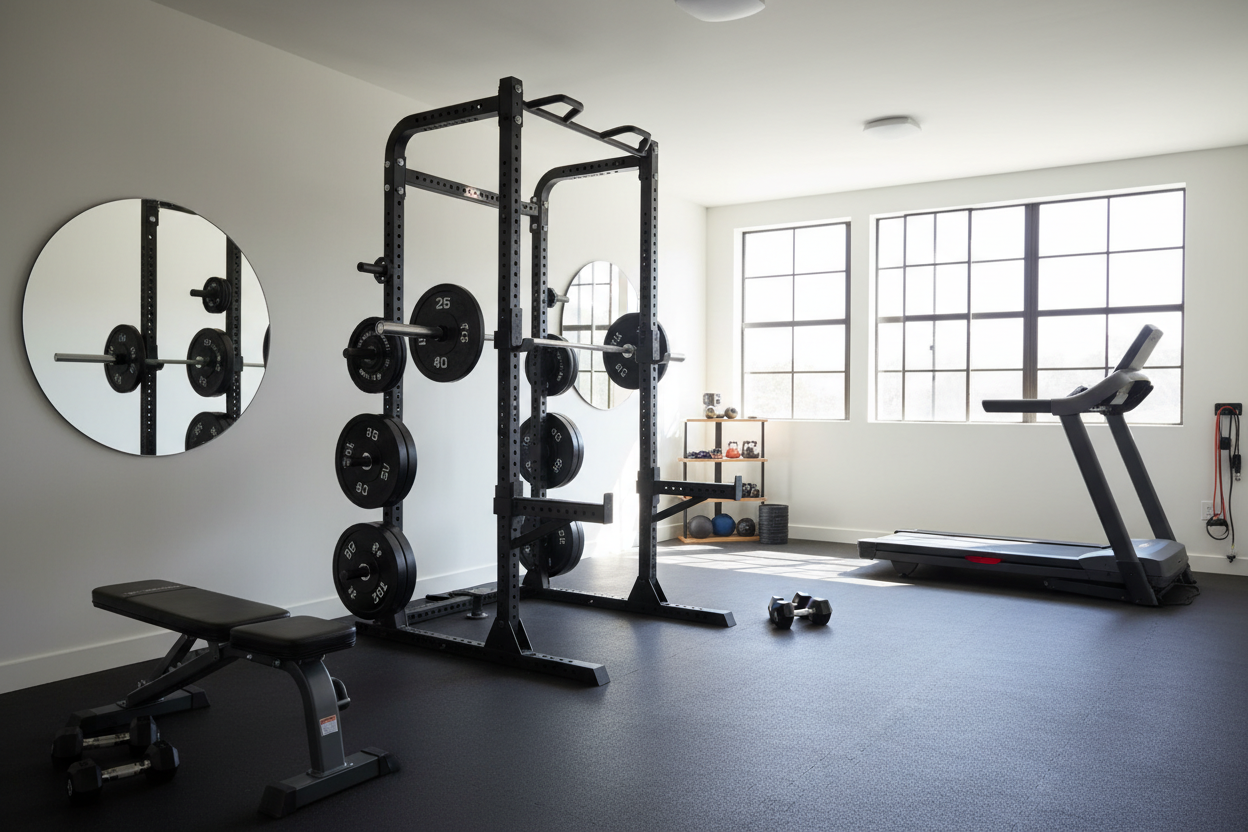
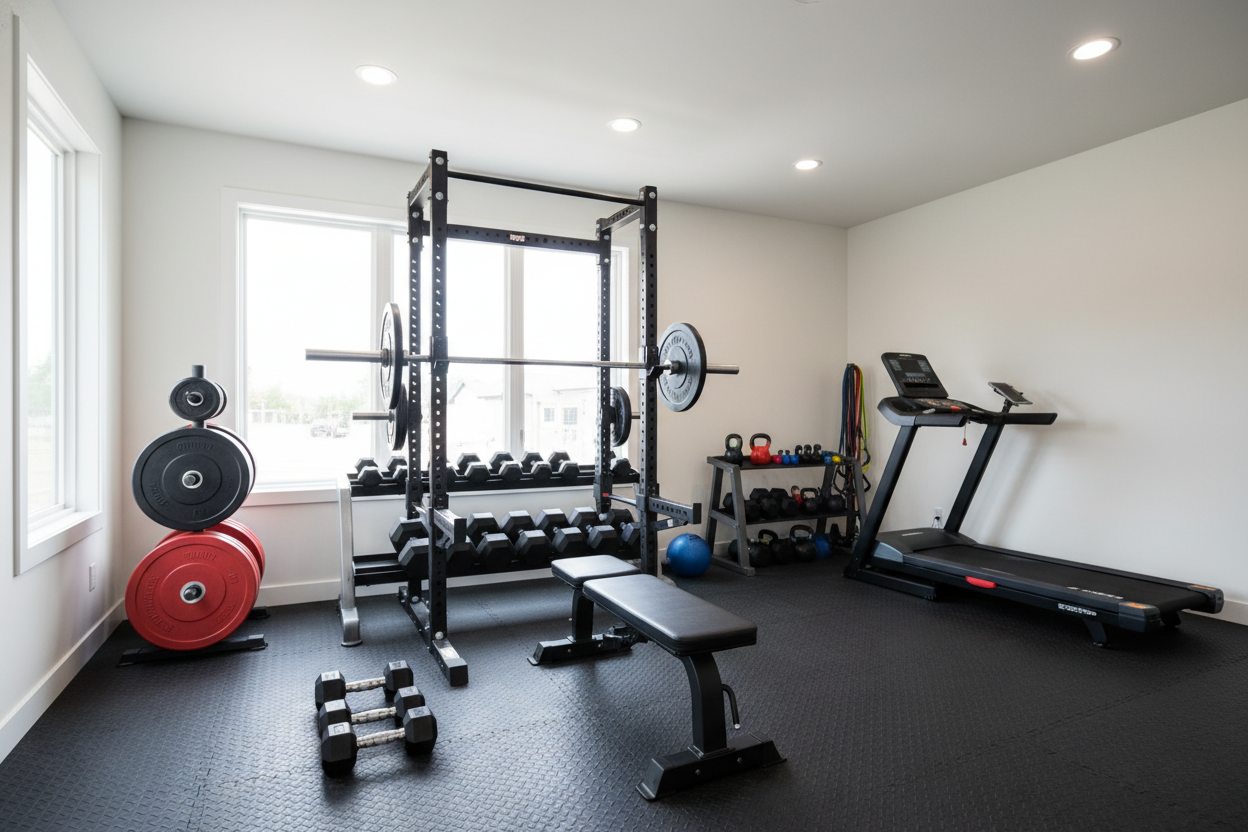
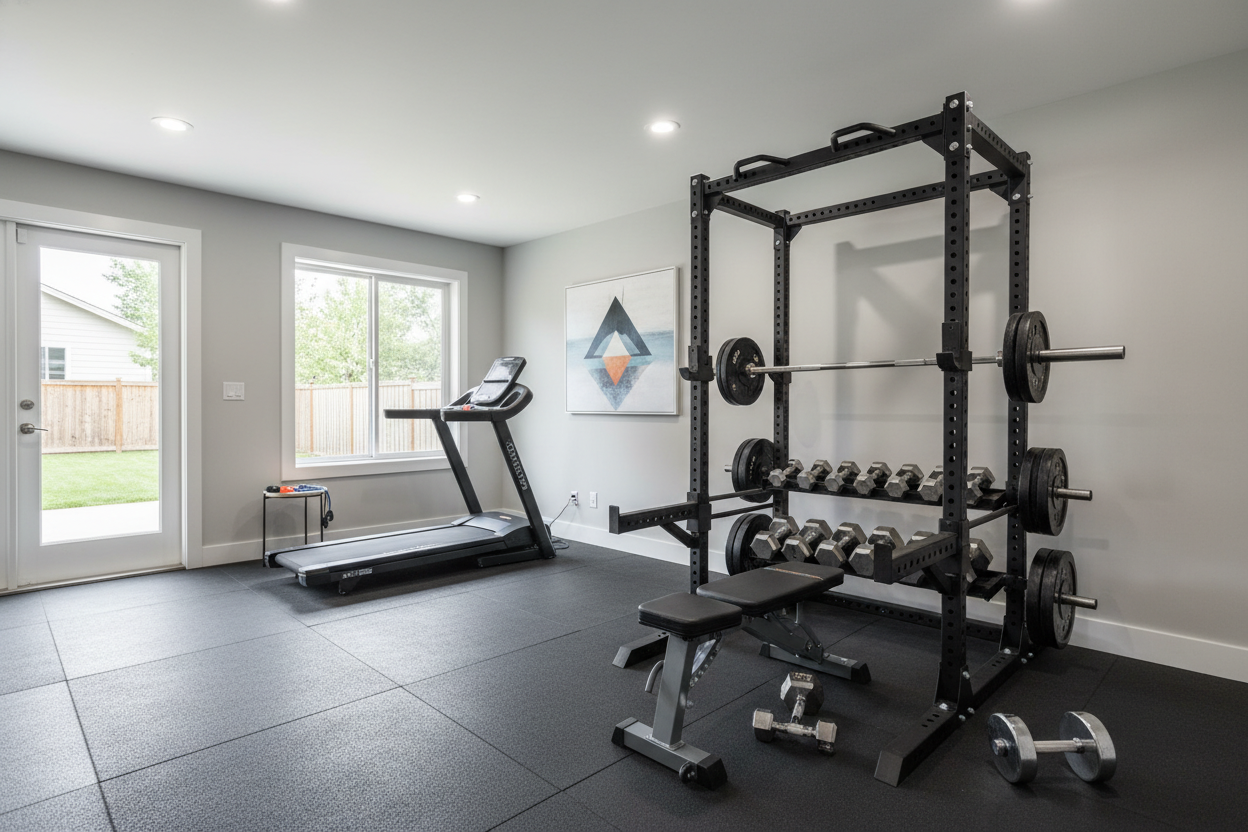
Commercial gyms are designed like shopping malls. They want you to feel like you’re doing a lot by offering a different machine for every square inch of your anatomy. In reality, most of those machines are just ways to avoid the hard work of stabilizing a heavy load. When I moved my training to a 12x20 foot concrete box, I didn't have room for a leg extension or a pec deck.
A bare-bones setup forces you into a relationship with the barbell. Without the option to hop on a machine, you’re forced to master the high-yield movements. You stop thinking about 'hitting the inner-upper-quad' and start thinking about how to move 315 pounds from the floor to your back. This focus on heavy, high-yield movements is why minimalist lifters often look thicker than the guys spending two hours on the cable machines.
The Brutal Truth About the Top Muscle Building Exercises
The top muscle building exercises share three distinct traits: they are multi-joint, they allow for massive loading, and they are physically taxing. If an exercise feels easy or comfortable, it's probably not the one driving the most growth. Hypertrophy requires mechanical tension—the kind that makes your muscles feel like they're being pulled apart under a heavy bar.
To build real mass, you need movements that allow for progressive overload over years, not weeks. You can only add so much weight to a tricep kickback before your form turns into a seizure. But you can add hundreds of pounds to a squat or a deadlift over a lifting career. That systemic stress tells your body it needs to get bigger and stronger everywhere, not just in one isolated muscle belly.
The Core Four: Stop Overcomplicating Your Lifts
If you stripped my gym down to just a rack, a bar, and a bench, these are the four movement patterns I’d keep. Everything else is just icing on the cake. If you master these, you’ll be bigger than 90% of the people in any commercial gym.
The Squat (And Why Leg Presses Don't Cut It)
The leg press is a great tool, but it’s a secondary one. The barbell squat is the king of lower body development because it requires your entire body to work as a unit. You’re not just moving weight with your quads; your core, upper back, and even your arms are engaged to stabilize that load. Mastering the best leg muscle building exercises for mass starts with getting comfortable under a heavy bar. It builds a level of 'man-strength' and thickness that machines simply can't replicate.
The Hinge (Picking Heavy Stuff Off the Floor)
Deadlifts and RDLs are the ultimate posterior chain builders. Nothing builds a thick back and powerful hamstrings like pulling heavy metal off the ground. If you're worried about your concrete, you should protect your home gym flooring with a high-density mat. Once that's settled, focus on the hinge. It provides raw mechanical tension that triggers growth in the traps, lats, and the entire erector spinae. If your back looks like a roadmap, it's because of the hinge.
Horizontal and Vertical Presses
The bench press and overhead press are the bread and butter of upper body mass. Pushing a free weight requires your stabilizer muscles to fire in a way that a Smith machine never will. A standing overhead press, in particular, is an underrated mass builder for the shoulders and triceps. It forces you to stay tight from your feet to your fingertips, creating a massive systemic stimulus.
Heavy Rows and Pull-Ups
Stop waiting for the lat pulldown station. A pull-up bar and a barbell for rows are all you need for a wide, thick back. Weighted pull-ups are arguably the best lat builder in existence, and heavy bent-over rows add the kind of 'meat' to your mid-back that makes you look wide from the front. If you can row 225 for reps, your back will not be small.
Execution Beats Selection Every Time
You can pick the perfect exercises, but if your intensity is garbage, you won't grow. I see guys in my local gym doing the right moves with zero intent. They move the bar from point A to point B without any control over the eccentric (the lowering phase). This is a massive mistake. Your exercises for beginners are way too slow if you aren't controlling the weight and feeling the muscle work.
You need to train within 1-2 reps of technical failure. That doesn't mean your form breaks down; it means you couldn't do another perfect rep if someone offered you a hundred bucks. In a garage gym, you don't have a spotter usually, so you learn very quickly where that line is. Use your safety pins, respect the weight, but don't shy away from the grind.
How to Program These Without Burning Out
You can't do heavy squats and deadlifts every single day and expect to recover. In a minimalist setting, frequency is your friend, but volume per session should be moderate. I recommend a 3 or 4-day split where you hit each major movement pattern twice a week. For example, Monday might be heavy squats and rows, while Thursday is a lighter, higher-rep squat variation and pull-ups.
Focus on adding 2-5 pounds to the bar whenever you can, or adding a single rep to your sets from the previous week. This 'slow and steady' approach is how you build a physique that lasts. You don't need a 20-page spreadsheet; you just need a logbook and the discipline to do the hard stuff when you'd rather be doing bicep curls.
Personal Experience: The 45lb Mistake
When I first started training in my garage, I tried to replicate my high-volume commercial gym routine. I was doing 20 sets per body part. Within three weeks, my elbows were screaming and my CNS was fried. I learned the hard way that when you're doing the heavy compound lifts properly, you don't need—and can't handle—that much volume. I cut my sets in half, focused on the 'Core Four,' and my strength exploded. Less really is more when the 'less' is heavy as hell.
FAQ
Can I build muscle with only a barbell?
Absolutely. A barbell is the most versatile tool ever created for hypertrophy. Between squats, hinges, presses, and rows, you can hit every major muscle group effectively for a lifetime of gains.
How many sets should I do per exercise?
For these heavy compounds, 3 to 5 working sets is usually the sweet spot. If you're truly training with high intensity, you won't want to do much more than that.
Do I ever need isolation exercises?
They have their place for 'finishing' a muscle or addressing a specific weakness, but they should never be the main course. Think of them as 10% of your total work, not 50%.