Protein for Bulking Up: Calories vs Protein for Muscle Growth and Home Lifting Foundations
Understanding Protein for Bulking Up: The Dual Engine of Hypertrophy
Stepping into a bulking cycle involves coordinating nutrition with demanding resistance workouts. Athletes often ask whether to prioritize protein for bulking up or focus on a massive caloric surplus. Effective muscle growth requires a balance between structural substrate and energy availability. Muscle protein synthesis cannot construct new contractile filaments out of thin air, and a caloric surplus cannot produce lean mass without amino acids to direct those resources.
Viewing muscle gain as an architectural project clarifies the process. Dietary amino acids provide the bricks, while calories act as the energy, labor, and delivery system driving the work. In our editorial view, separating nutrition from the lifting environment misses a crucial component: without a progressive mechanical stimulus and a stable training surface, extra nutrients remain unused. Understanding the interplay between protein intake and daily caloric totals is the foundation of any successful mass-gaining phase.
Calories vs Protein for Muscle Building: Which Matters More?
Lifting communities frequently debate calories vs protein for muscle building. The reality is that both elements handle different, complementary physiological demands. Neither factor operates in isolation when the goal is adding lean skeletal tissue.
- The role of protein: Essential amino acids, especially branched-chain varieties like leucine, trigger intracellular pathways that signal muscle protein synthesis. Without sufficient daily protein, muscle tissue lacks the raw materials required to repair micro-tears and accumulate new sarcomeres.
- The role of caloric surplus: Total caloric intake determines net energy balance. Surpluses spare dietary protein from being metabolized as fuel, ensuring consumed amino acids remain available for tissue repair. A modest energy surplus also sustains hard training sessions without sapping nervous system recovery.
Considering whether calories or protein to build muscle matters more highlights a clear trade-off. An individual consuming high protein in a deep caloric deficit can protect existing tissue but will struggle to build substantial mass. Conversely, consuming excess calories without adequate protein tends to drive adipose gain rather than lean tissue. The two factors work in concert, making balanced intake essential.
Structuring Your Daily Fuel: Pacing Protein and Surplus Intake
Planning daily meals for a bulk requires consistency rather than overwhelming complexity. Distributing protein evenly across the day maintains continuous amino acid availability, supporting muscle repair after intense training.
A practical mass-building nutrition plan balances whole foods with targeted sports nutrition:
- High-quality protein distribution: Space protein intake across balanced meals and post-workout recovery windows. Utilizing poultry, lean beef, fish, eggs, dairy, tofu, legumes, and quality protein powders supplies a complete essential amino acid profile.
- Nutrient-dense carbohydrate bases: Complex starches such as oats, rice, potatoes, and whole grains fuel intense workouts, restock muscle glycogen, and spare dietary protein.
- Controlled dietary fats: Incorporate unsaturated oils, nuts, seeds, and avocados to reach necessary surplus targets without causing digestive sluggishness during workouts.
- Hydration and digestion: High-protein bulking demands generous daily hydration and adequate dietary fiber to keep digestion running smoothly.
Translating Fuel into Mass: Training Stimulus and Mechanical Tension
Nutritional intake alone does not create muscular adaptations. The human body requires a persistent reason to synthesize new contractile tissue, which comes directly from progressive mechanical overload in your strength routines.
To turn excess dietary intake into dense tissue, your training must center on high-tension movements. Exploring a comprehensive building muscle guide helps map out how progressive overload, exercise selection, and rep ranges direct consumed amino acids toward muscle growth. Structured programming such as a baseline build muscle guide reinforces foundational compound patterns before athletes advance to specialized lifting protocols. Furthermore, lifters seeking high training volume without excessive metabolic exhaustion can consult a build more muscle guide to learn how intra-set rest intervals support heavier, cleaner lifting sessions.
Home Gym Staging for Bulking Cycles: Stability, Floor Protection, and Heavy Loads
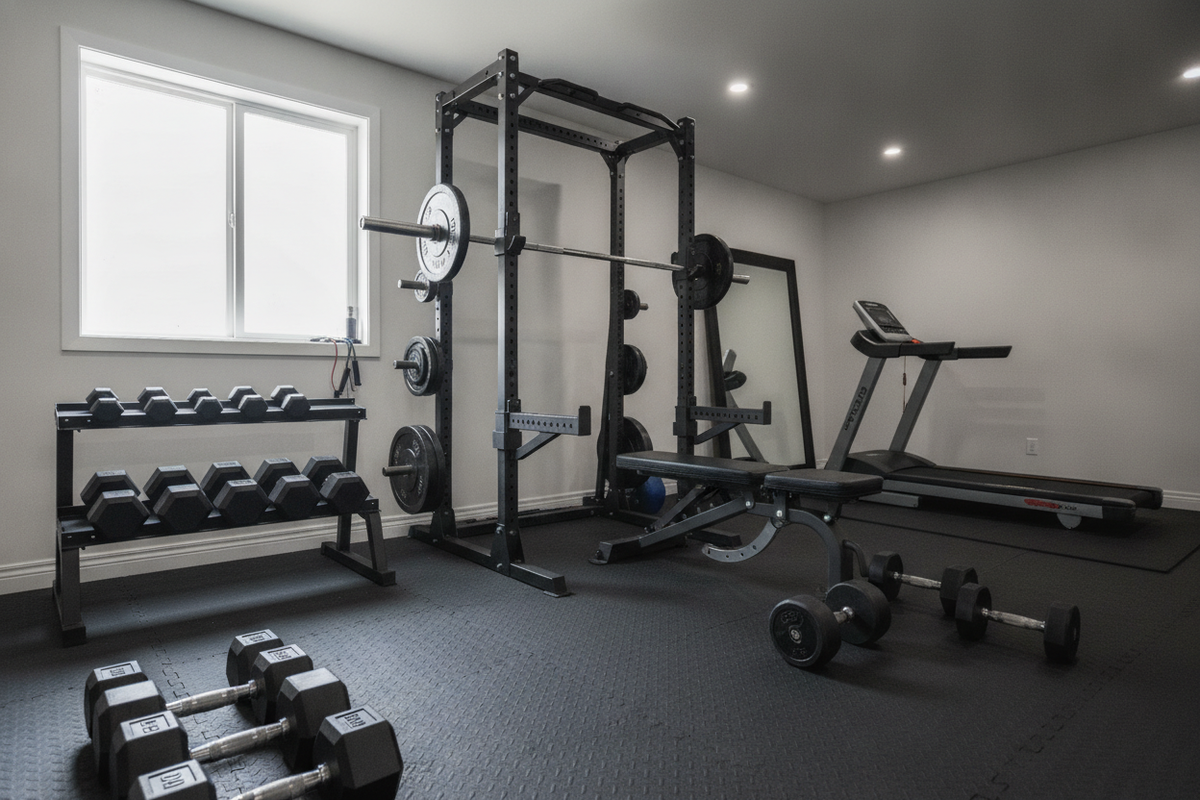
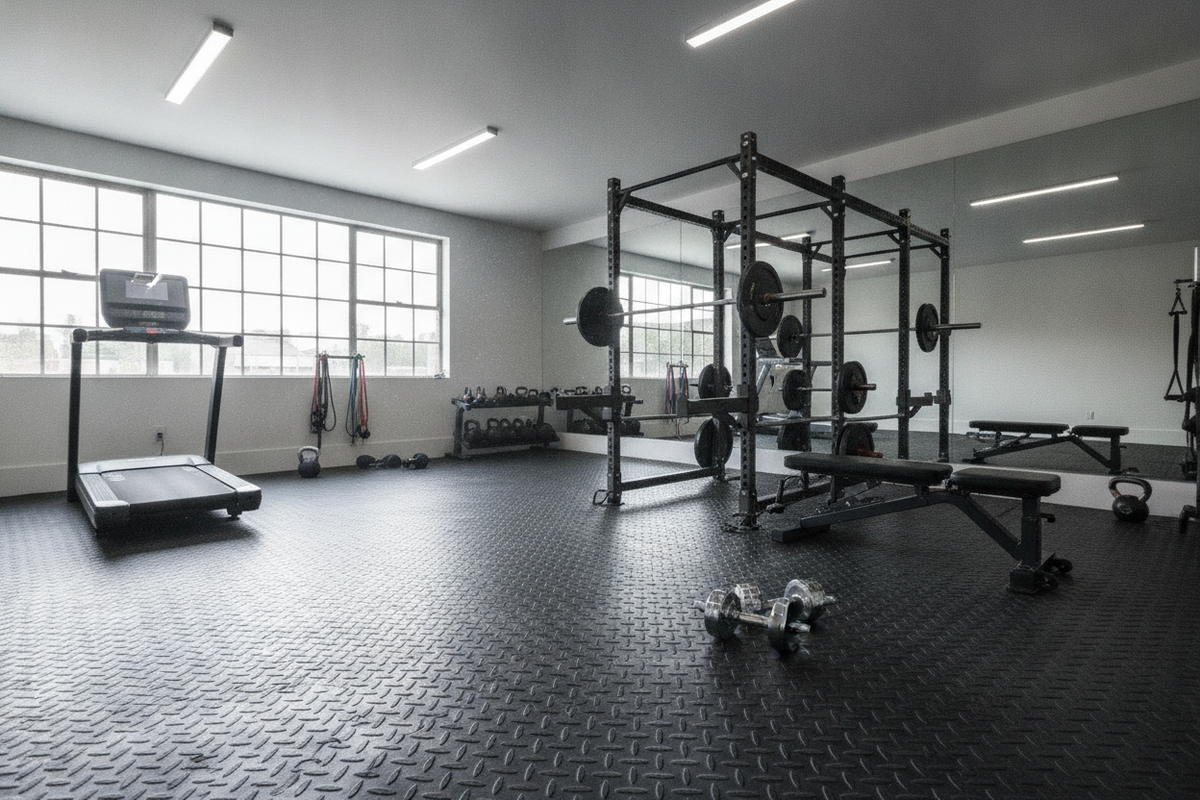
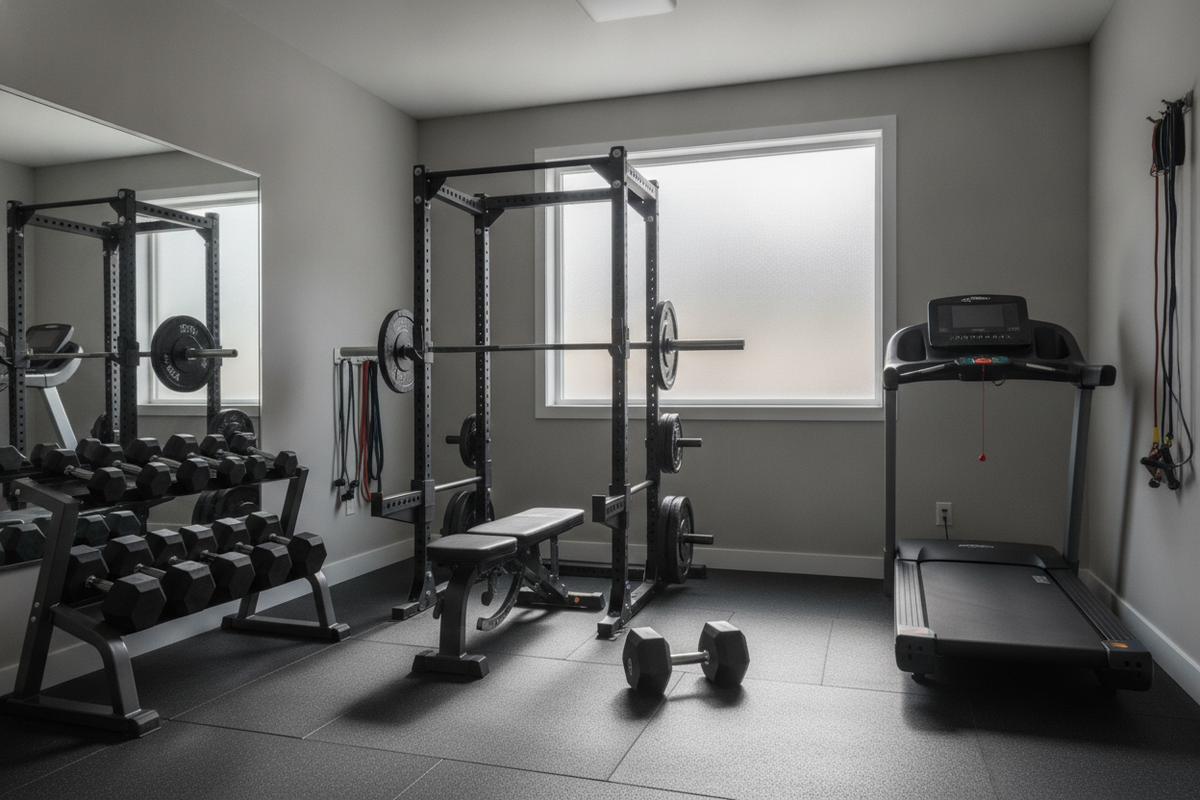
As bulking nutrition ramps up, lifting loads naturally increase. Heavy compound movements like squats, deadlifts, barbell rows, and bench presses place extreme demands on your training floor. A home gym space must be prepared for this increased stress to keep workouts safe and productive.
Consider these core floor setup factors when preparing for heavy bulking blocks:
- Subfloor preservation: Dropping or racking heavier barbells and dumbbells sends substantial shock downward. High-density rubber mats distribute localized force, protecting residential subfloors, concrete, or tile from cracks and structural wear.
- Traction and footing stability: Heavy squats and deadlifts require absolute ground traction. Compressed, textured rubber prevents shoe slippage under peak mechanical tension, giving you a firm base to produce force.
- Firm, non-spongy support: Squishy or overly cushioned mats compress unevenly under heavy loads, compromising ankle, knee, and hip alignment. High-density gym flooring remains solid underfoot, ensuring stable power transfer.
- Vibration and sound reduction: Intensive training sessions generate noise. Thick flooring deadens barbell impact and suppresses structural vibration throughout the home, making regular heavy training more practical.
Key Takeaways: Harmonizing Calories, Protein, and Grounded Training
Building dense, long-lasting muscle does not hinge on choosing between calories or protein. Hypertrophy requires the steady supply of amino acids from dietary protein alongside the thermodynamic energy of an intentional caloric surplus.
By spreading quality protein evenly throughout the day, maintaining a manageable caloric surplus, progressively overloading compound lifts, and anchoring your home lifting space with high-density protective flooring, you build a reliable foundation for consistent strength and mass development.