Gym in Home Exercises: Why Cluster Sets Build More Muscle
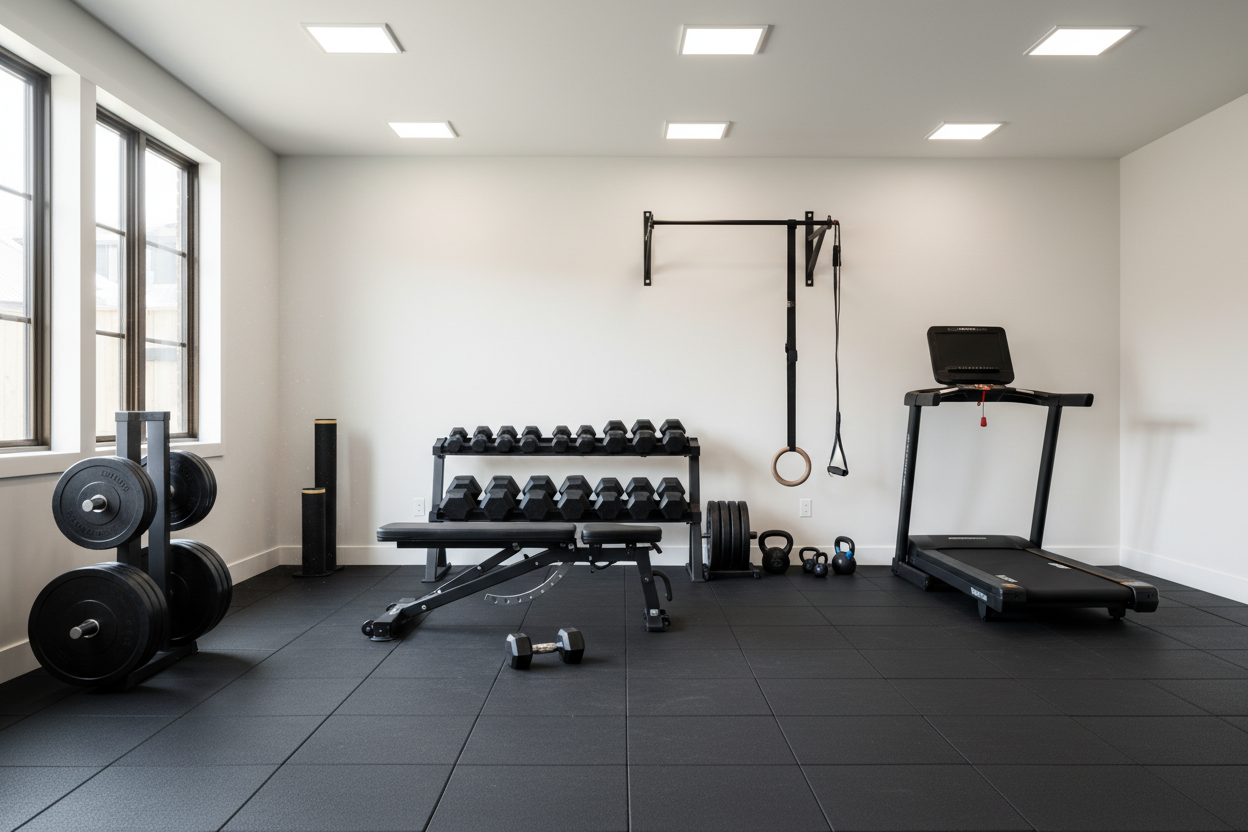
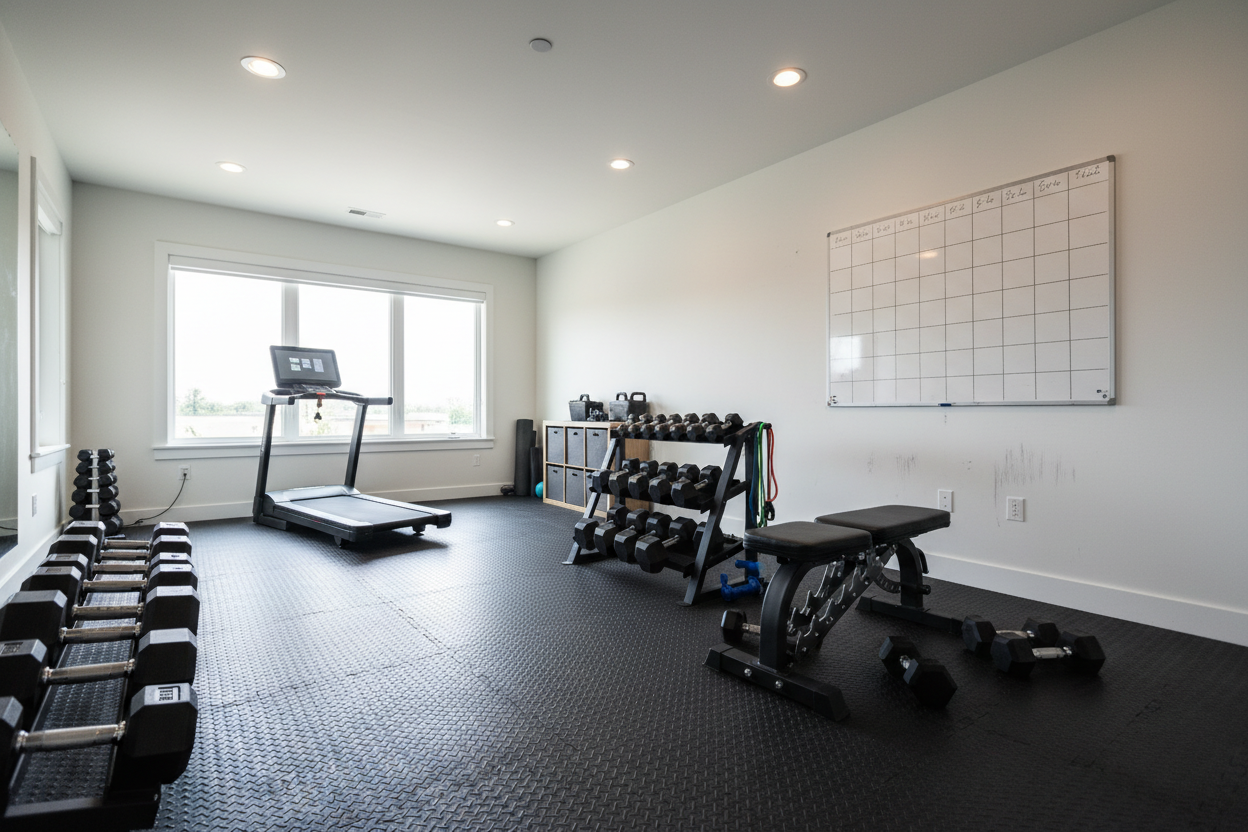
You finally carved out a 6x6 foot space in your spare bedroom, bought a pair of 50-pound adjustable dumbbells, and started lifting. For the first few months, the gains came easy. But suddenly, your 3 sets of 10 goblet squats feel like a light warmup. You have hit the classic home equipment ceiling. If you want to keep progressing with your gym in home exercises, you cannot just keep adding endless reps until your workout turns into a cardio session. You need a better strategy.
As a personal trainer who has designed dozens of apartment-friendly training setups, I see this equipment bottleneck all the time. Clients buy standard 5-52.5 lb dial-adjustable dumbbells, maximize them within six months, and assume they need a commercial gym membership to get bigger. That is simply not true. You just need to change how you structure your sets.
Quick Takeaways
- Cluster sets use 10-15 second micro-rests to let you lift heavier weights for more total reps.
- They create high mechanical tension without requiring a massive 300-pound barbell setup.
- Perfect for maxing out the utility of standard adjustable dumbbells in a small space.
- Requires strict rest timing and stable, protective flooring to execute safely to failure.
The Ceiling Effect of Standard Gym in Home Exercises
Progressive overload is the golden rule of muscle growth. In a commercial facility, when 50 pounds gets too light, you simply grab the 55s. But in a home weight training programme, your equipment is often strictly capped. Once you max out your heaviest dumbbells, traditional straight sets—like doing 3 sets of 10 reps—lose their muscle-building power.
Many people try to compensate by doing sets of 25 or 30 reps. While high-rep training has its place, pushing past 20 reps per set shifts the adaptation from muscle hypertrophy to muscular endurance. Your home exercises gym routine starts feeling more like a sweaty aerobics class than a true strength session. You get exhausted, your lungs burn, but you lack the heavy mechanical tension required to force muscle fibers to grow.
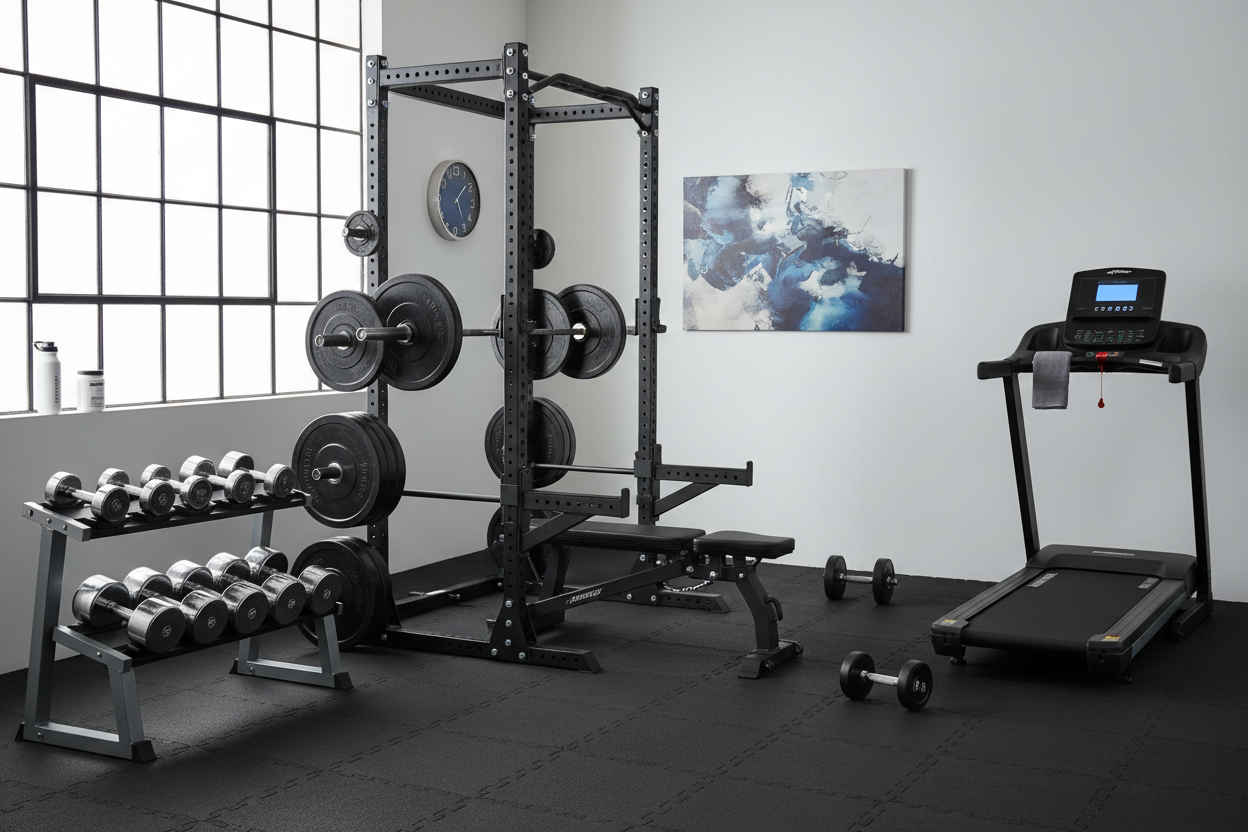
To build a highly effective weight training program at home, you have to find a way to make your existing moderate weights feel incredibly heavy. You need a method that forces your muscles to recruit high-threshold motor units without requiring you to buy an expensive, space-hogging squat rack. That is exactly where cluster sets come into play.
Enter Cluster Sets: The Secret to an Effective At Home Lifting Routine
A cluster set is a training technique where you take short, 10 to 15-second micro-rests within a single working set. Instead of doing 10 continuous reps, dropping the weight, and resting for two minutes, you break that set into smaller 'clusters' of reps.
For example, imagine you are doing a gym workout from home using a pair of 40-pound dumbbells for overhead presses. Normally, you might fail at 8 reps. With a cluster set, you would perform 4 reps, rest for 15 seconds, perform 4 more reps, rest 15 seconds, and perform a final 4 reps. You just completed 12 total reps with a weight you usually max out at 8. That extra volume with a heavier load creates massive mechanical tension.
This method is incredibly potent for an at home lifting routine because it bypasses your equipment limitations. By allowing your muscles to clear out just enough lactic acid during those 15-second pauses, you regenerate ATP (cellular energy) and keep lifting. If you are looking to build a foundation of movements to apply this to, mastering full body weight training exercises is your first step. Once you know the mechanics, applying clusters will completely change your physique.
Structuring Your Home Weight Lifting Routines with Clusters
Implementing clusters into your strength training schedule at home requires discipline. You cannot just guess the rest times. Keep your phone or a stopwatch visible. A standard cluster protocol for hypertrophy looks like this: select a weight you can normally lift for 10 reps. Perform 4 reps, rack the weight for exactly 15 seconds, do 4 more, rest 15 seconds, and do a final 4 reps. That is one complete cluster set.
Rest for 2 to 3 full minutes before starting your next cluster set. Because weight lifting routines at home using this method are neurologically demanding, keep your total volume in check. Two to three cluster sets per exercise is plenty. If you try to do five cluster sets of split squats, your legs will be useless for a week.
Upper Body Execution for Your Home Strength Training Routine
Applying this to your at home weight training routine for the upper body requires strategic exercise selection. Dumbbell bench presses, seated overhead presses, and chest-supported rows are perfect candidates. Bicep curls and tricep extensions rarely need clusters—save this intense technique for the big compound lifts.
Let's look at the dumbbell row in your home lifting routine. Grab your heaviest dumbbell. Pull for 5 strict reps. Set the dumbbell on the floor, count to 15, then grab it and pull 4 more reps. Rest 15 seconds, then grind out 3 final reps. Your lats will experience a level of exhaustion that standard straight sets simply cannot replicate.
Lower Body Overload for Your Home Weight Workout Program
The lower body is where home trainees struggle the most. Your legs are incredibly strong, and a 50-pound dumbbell goblet squat stops being challenging very quickly. To build a serious home strength workout plan, you have to use clusters on unilateral (one-legged) movements like Bulgarian split squats and heavy lunges.
Hold a dumbbell in each hand and perform 5 reps of a Bulgarian split squat. Stand up, shake your leg out for 15 seconds, and drop back in for 4 more reps. Repeat for a final 3 reps. Your quads will be on fire. Because your legs will literally be shaking by the end of this home weightlifting routine, stability is crucial. I always have my clients perform these on a durable 6x8ft exercise mat to ensure their feet do not slip on sweat and their joints are cushioned when they inevitably drop to one knee.
The Cluster-Based Home Full Body Workout Plan
Ready to put this together? Here is a highly effective strength workout plan at home designed around the cluster method. Perform this home full body workout plan three days a week, resting a day between sessions.
Exercise 1: Flat Dumbbell Bench Press
3 Cluster Sets (4 reps / rest 15s / 4 reps / rest 15s / 4 reps). Rest 2.5 minutes between full sets.
Exercise 2: Dumbbell Bulgarian Split Squats
3 Cluster Sets per leg (5 reps / rest 15s / 4 reps / rest 15s / 3 reps). Rest 2 minutes between legs.
Exercise 3: One-Arm Dumbbell Rows
3 Cluster Sets per arm (5 reps / rest 15s / 4 reps / rest 15s / 4 reps). Rest 2 minutes between arms.
Exercise 4: Dumbbell Romanian Deadlifts (RDLs)
3 Cluster Sets (6 reps / rest 15s / 5 reps / rest 15s / 4 reps). Rest 2.5 minutes between full sets.
This home weight lifting schedule takes about 45 minutes. Because you are pushing so close to muscular failure on every single block, the efficiency of this strength training workout plan at home is unmatched.
Protecting Your Space During Intense Weight Lifting Routines at Home
I have tested over 40 different home gym setups for my clients over the years. One major downside to training with high-intensity methods like clusters is that you will eventually hit muscular failure. When your grip gives out on rep 12 of a heavy row, that dumbbell is going straight to the floor.
Standard dial-adjustable dumbbells are fragile. Dropping them on a hard surface can jam the internal gears, ruining a $300 piece of equipment instantly. Furthermore, dropping weights destroys hardwood floors and guarantees noise complaints from downstairs neighbors. Proper flooring is absolutely non-negotiable for an intense at home weight training routine.
Do not rely on cheap puzzle-piece foam mats; they compress under heavy loads and pull apart when you do lateral movements. Instead, invest in high-density rubber or premium PVC. If you are setting up a dedicated space for your home weight workout routine, browse options for a large exercise mat for home gym use. A proper mat absorbs the shock of a dropped weight, protects your expensive dumbbells, and provides the grippy texture you need to push through those brutal final cluster reps without sliding.
Frequently Asked Questions
Can I do cluster sets every day?
No. Cluster sets are highly taxing on your central nervous system. Using them 2 to 3 times a week within a structured full body routine is plenty. Doing them daily will quickly lead to overtraining and burnout.
Do cluster sets build mass or just endurance?
They are specifically designed to build mass (hypertrophy) and strength. By allowing you to lift heavier loads for more total volume than a standard set, you create the mechanical tension required for muscle fibers to grow thicker.
How heavy should the weights be for cluster sets?
Select a weight that you could normally lift for about 8 to 10 unbroken reps before failing. If you can easily do 15 reps without stopping, the weight is too light for a proper hypertrophy cluster protocol.