Bum and Hip Exercises: Movement Patterns, Surface Traction, and Home Gym Floor Staging
Anatomical Planes and Movement Vectors for Glutes and Hips
Structuring an effective lower-body routine requires looking beyond isolated muscle contractions. The pelvis and surrounding musculature act as a multidirectional crossroad for the body, coordinating force transfer between the trunk and the legs. Selecting intentional bum and hip exercises means addressing movement patterns across multiple distinct geometric planes rather than repeating linear squats.
Sagittal Plane Drivers: Hip Extension and Deep Hinges
The sagittal plane governs forward and backward actions, primarily flexing and extending the hip joint. Foundational movements such as deadlifts, hip thrusts, and forward lunges live within this vector. In these patterns, the primary objective is hinging deeply at the pelvis while maintaining a neutral spinal alignment. Because sagittal training handles significant mechanical loads, it forms the bedrock of any solid glutes bum exercise guide. When executing these lifts, the drive comes through full extension of the hips rather than hyperextending the lower back at the top of the repetition.
Frontal and Transverse Angles: Abduction and Rotational Stability
True functional stability requires lateral movement and rotational control. The frontal plane accounts for side-to-side displacement, involving hip abduction where the leg moves away from the midline. The transverse plane controls internal and external rotation of the femur. Without regular work in these vectors, movement patterns can become rigid and prone to balance compensations. Incorporating rotational holds, curtsy patterns, and lateral resistance drills ensures that the stabilizing muscles along the side of the pelvis actively support pelvic levelness during both daily movement and athletic drills.
Core Movement Selections for a Complete Glute and Hip Workout
A well-rounded glute and hip workout blends compound lower-body drivers with targeted unilateral and isolation drills. Balancing these movement styles helps distribute training volume across the entire pelvic complex.
Bilateral Foundations: Hip Thrusts, Bridges, and Romanian Deadlifts
Bilateral patterns provide a secure foundation to practice balanced force production through both feet simultaneously. The barbell or dumbbell hip thrust directs tension horizontally across the hips at peak contraction, where the glutes are in a shortened position. Conversely, Romanian deadlifts target the musculature in a lengthened position through a deliberate posterior weight shift. For a comprehensive review of foundational lifting patterns, consult our detailed bum hip exercise guide to refine your setup mechanics.
Unilateral Control: Split Squats, Step-Ups, and Lateral Lunges
Unilateral variations challenge stability by placing the workload on one leg at a time. Split squats and rear-foot elevated variations require the lead leg to control both depth and balance while the rear leg assists with positioning. Step-ups demand strict hip extension without bouncing off the trailing foot. Lateral lunges shift the body dynamically through the frontal plane, requiring deep hip flexion on the working side and active lateral control. These unilateral selections reveal natural movement discrepancies between sides, offering a direct pathway to balance individual leg strength.
Mat-Based Isolations: Clamshells, Quadruped Kickbacks, and Abduction Holds
Ground-based drills provide focused tension without placing compressive stress on the spine. Side-lying clamshells and lateral leg raises isolate the smaller external rotators and abductors that keep the knees tracked properly during standing squats. Quadruped kickbacks allow for focused contraction at the top of hip extension without spinal arching. Performing these isolation movements with steady tempos and brief isometric pauses at peak contraction yields intense muscular engagement using minimal external resistance.
The Role of Surface Traction and Floor Cushioning in Lower-Body Training
While exercise selection is critical, training execution depends heavily on the surface beneath your feet. Executing dynamic lunges, heavy hinges, or kneeling hip drills on slick hardwood or thin carpeting compromises force transfer and joint comfort.
Foot Grip and Kinetic Transfer During Heavy Loading
Generating force during standing hip and glute exercises requires an unyielding grip between your footwear and the floor. When performing wide-stance sumo squats or lateral lunges, outward lateral force tends to push your feet apart. If the floor surface is slick, subtle micro-slipping forces the feet to claw for stability rather than driving cleanly into the ground. A specialized high-traction mat provides the frictional grip needed to transfer kinetic energy cleanly through the ankles, knees, and hips.
Knee and Hip Joint Comfort During Kneeling and Supine Work
Many floor-based hip movements, such as bird dogs, quadruped kickbacks, and hip bridges, position body weight directly onto boney landmarks like the patella or sacrum. Hard subfloors can create uncomfortable pressure points that distract from muscle recruitment. Utilizing a firm, dense mat from a dedicated exercise collection buffers these contact areas without feeling squishy or unstable underfoot.
Subfloor Protection from Benches and Free Weights
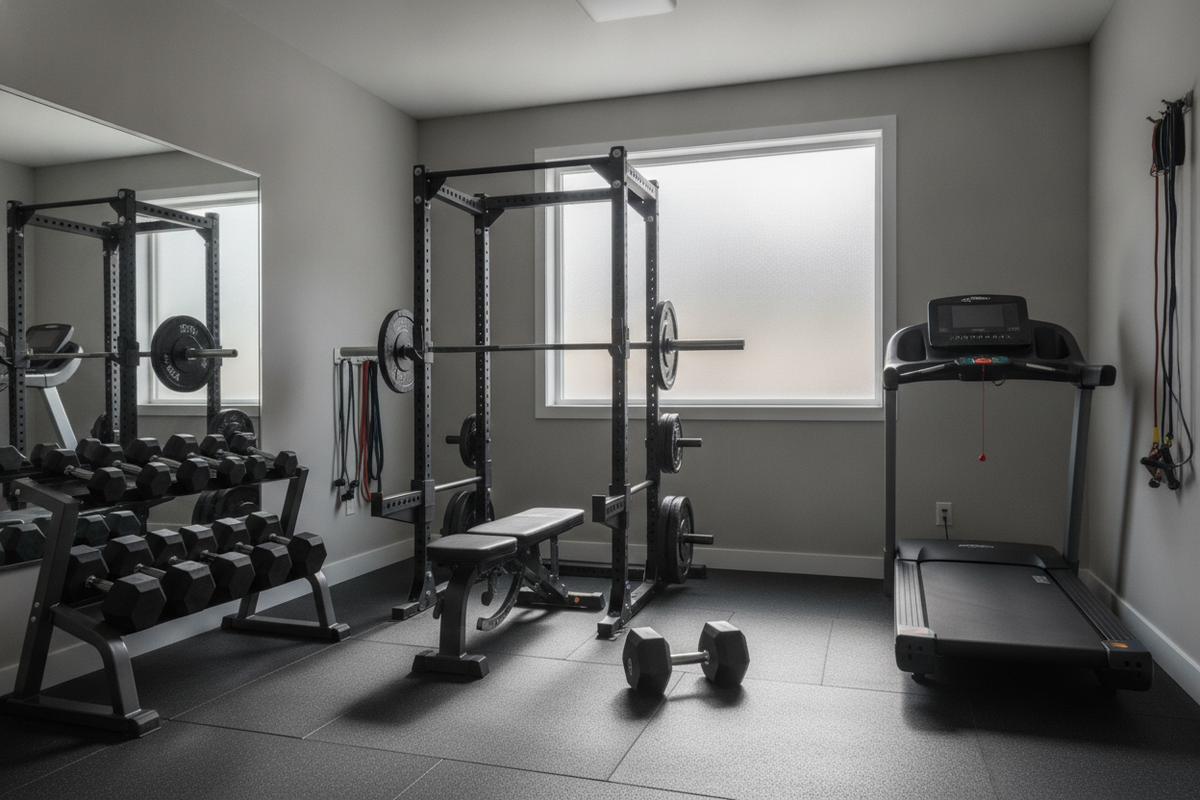
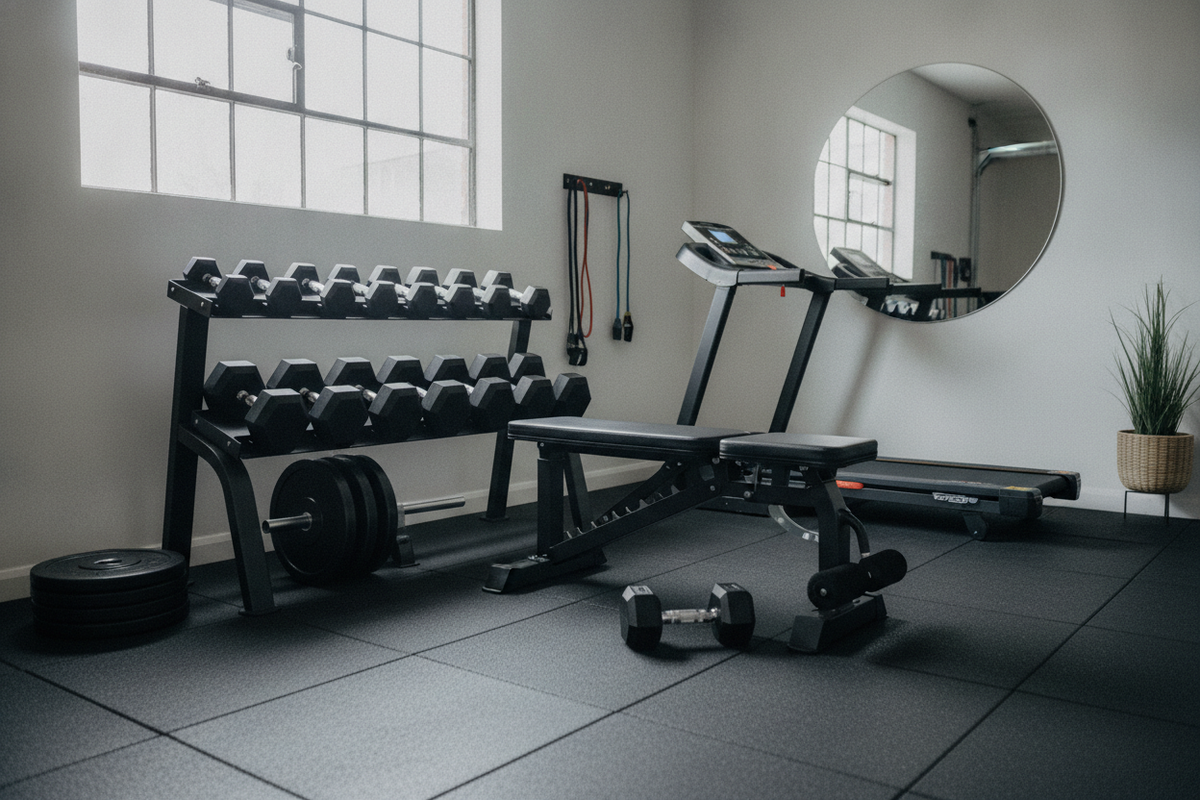
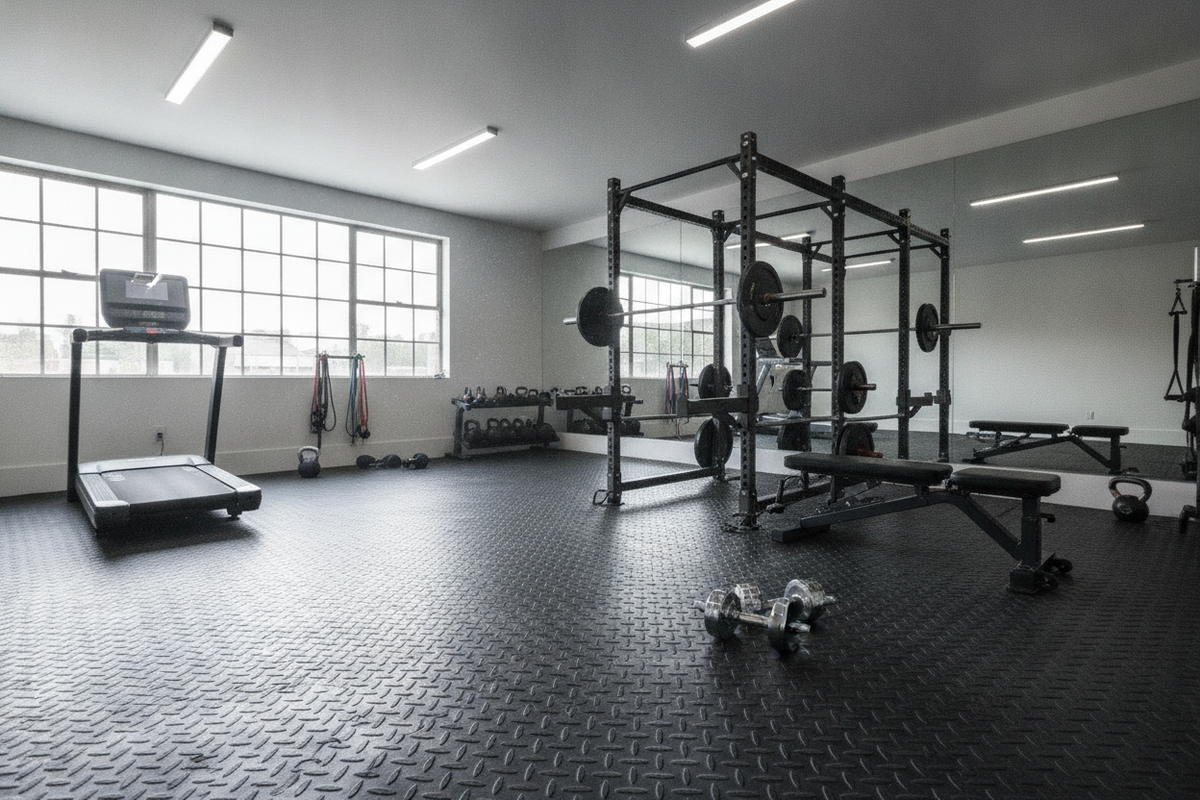
Home fitness spaces often share real estate with delicate hardwood, laminate, or tile flooring. Heavy hip thrust benches, cast-iron kettlebells, and adjustable dumbbells can easily dent or scratch residential finishes over time. Positioning heavy gear on a thick, protective workout surface preserves home flooring while establishing an organized, designated workout perimeter.
Staging Your Home Workout Zone for Glute and Hip Training
Setting up your floor space intentionally transforms a cramped living area into an efficient training environment. Smart equipment staging minimizes transition time between sets and maintains an unobstructed movement corridor.
Bench Anchoring and Clearance for Hip Thrusts
One common challenge during home hip thrusts is bench drift. As you bridge upward against a loaded weight, the backward horizontal force can cause lightweight utility benches to slide across bare floors. Setting your bench across a non-slip, large-format mat anchors the contact feet firmly in place. Ensure there is ample horizontal clearance around the mat edges so you can load and unload plates or dumbbells safely without striking nearby furniture.
Creating Dedicated Lanes for Walking Lunges and Lateral Drills
Dynamic movement drills demand continuous linear space. Walking lunges, monster walks, and side-stepping band sequences require an uninterrupted path to maintain smooth pacing. Rolling out a continuous surface like a spacious exercise workout product creates a wide, uniform lane that accommodates multidirectional footwork without catching edges or transitioning across uneven floor textures.
Mat Care and Surface Maintenance After High-Friction Sessions
High-friction floor work, sweat, and shoe rubber naturally deposit dirt on mat surfaces. In my view as a gym equipment editor, maintaining mat cleanliness is essential for sustaining floor grip over years of regular use. Wipe down the mat surface after intense sessions using a damp cloth and mild soap solution. Avoid oil-based cleaners or harsh chemical abrasives that can degrade dense composite materials or leave a slippery film.
Structuring a Balanced Weekly Glute and Hip Program at Home
Consistency and thoughtful weekly organization are key to progressing your glutes and hips workout over time without causing training fatigue.
Balancing Intensity, Volume, and Recovery Windows
Rather than cramming all lower-body work into a single exhausting session, distribute volume across two or three weekly workouts. A balanced schedule might dedicate one day to heavy sagittal patterns like deadlifts and thrusts, a second day to dynamic unilateral lunges and step-ups, and a third session to high-repetition mat-based isolations and core stability. Providing adequate rest intervals between sessions allows muscle tissue to recover and adapt effectively.
Progression Ladders Without Heavy Machinery
Home lifters do not necessarily need commercial machines or massive barbell racks to progress their training. Increasing training stimulus can be accomplished through tempo variations, such as incorporating three-second eccentric lowering phases or two-second isometric pauses at the peak of each contraction. Introducing loop resistance bands around the thighs during bridges or squats adds progressive accommodating tension that challenges the gluteal muscles throughout the entire range of motion.