Bum and Legs Exercises: Biomechanical Balance, Home Floor Stability, and Complete Lower-Body Routines
Introduction: Harmonizing Knee and Hip Mechanics for Lower-Body Development
Developing balanced lower-body strength requires coordinating several major muscle groups rather than isolating them in silos. Effective bum and legs exercises target the glutes, quadriceps, hamstrings, and calves through integrated compound patterns. Whether your objective is muscle development, joint resilience, or functional stamina, the lower body thrives when knee-dominant and hip-dominant mechanics work together.
When planning a routine to workout thighs and bum, training surface stability is just as important as rep schemes. Exercises like deep squats, Romanian deadlifts, and lunges demand firm ground contact to distribute mechanical force properly through the feet. A slippery rug, slick hardwood floor, or overly squishy padding compromises joint alignment and distracts from target muscle recruitment.
Foundational Bum and Legs Exercises: Primary Movement Classifications
A comprehensive lower-body regimen organizes movement into distinct classifications. Alternating between knee flexion and hip extension creates a balanced stimulus across the posterior and anterior chains, avoiding repetitive strain on any single structure.
Compound Knee-Dominant Movements: Squat and Split Variations
Knee-dominant movements prioritize quadricep involvement while recruiting the gluteus maximus to stabilize hip extension. The goblet squat, front squat, and barbell back squat remain standard choices. In these variations, maintaining foot pressure across the heel and ball of the foot establishes an anchored base, keeping the knees tracking naturally over the toes.
Single-leg knee-dominant movements, such as walking lunges, reverse lunges, and Bulgarian split squats, present additional balance challenges. Because one leg takes the brunt of the load, the lateral hip stabilizers work intensely to prevent pelvic tilt. Exploring a comprehensive legs thigh workout guide can provide deeper insights into balancing multi-joint knee extensions with targeted thigh loading.
Hip-Dominant and Glute-Focused Patterns: Hinges and Thrusts
Hip-dominant exercises shift emphasis toward the glutes and hamstrings. The conventional Romanian deadlift (RDL) teaches proper hip hinging by minimizing knee flexion while pushing the hips backward against tension. Maintaining an engaged core and a neutral spine keeps the tension isolated in the posterior chain.
For concentrated glute activation, barbell or dumbbell hip thrusts and floor glute bridges minimize hamstring leverage to load the gluteus maximus at peak contraction. To perform a safe hip thrust at home or in the gym, ensure your back support rests against a secure bench that will not slide across smooth flooring during dynamic lockout.
Structuring a Glute and Thigh Workout at Home
Executing a productive glute and thigh workout at home does not require commercial gym machinery. By adjusting loading modalities, movement tempo, and angles, home lifters can generate significant training stimulus using basic weights or bodyweight alone.
A well-sequenced session often starts with compound knee-dominant work, transitions to hip hinges, and finishes with unilateral or floor-based work:
- Primary Knee Pattern: Tempo Goblet Squats or Bulgarian Split Squats
- Primary Hip Pattern: Dumbbell Romanian Deadlifts
- Secondary Compound Movement: Deficit Reverse Lunges or Step-Ups
- Isolation and Floor Pattern: Weighted Hip Thrusts or Lateral Band Walks
Adjusting repetition cadence, such as adding three-second eccentrics or pausing at the bottom of a lunge, increases muscular tension without demanding excessively heavy external weights. For a detailed breakdown of bodyweight and minimal-equipment training methods, consulting a specialized legs thigh exercise guide can help you adapt your home sessions effectively.
The Role of Floor Staging, Grip, and Cushioning in Lower-Body Workouts
Lower-body movements exert substantial vertical and lateral forces into the training surface. When performing a thigh and booty workout, proper floor staging provides traction, floor protection, and joint comfort.
Selecting the Right Surface for Dynamic Lower-Body Movements
Standard yoga mats are designed for low-impact floor postures and often stretch, slide, or bunch when subjected to the dynamic lateral shear forces of lunges and split squats. Conversely, bare concrete or unpadded hardwood offers no shock dispersion and can feel harsh on the knees during kneeling movements.
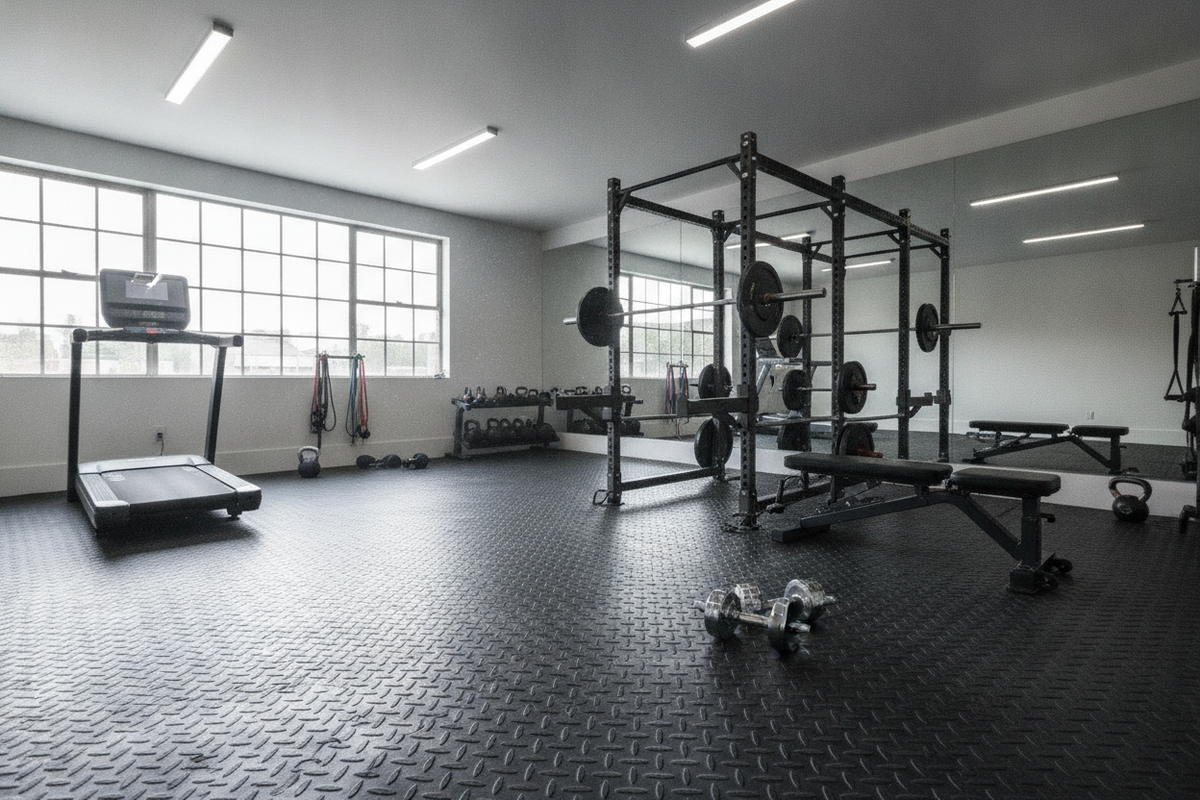
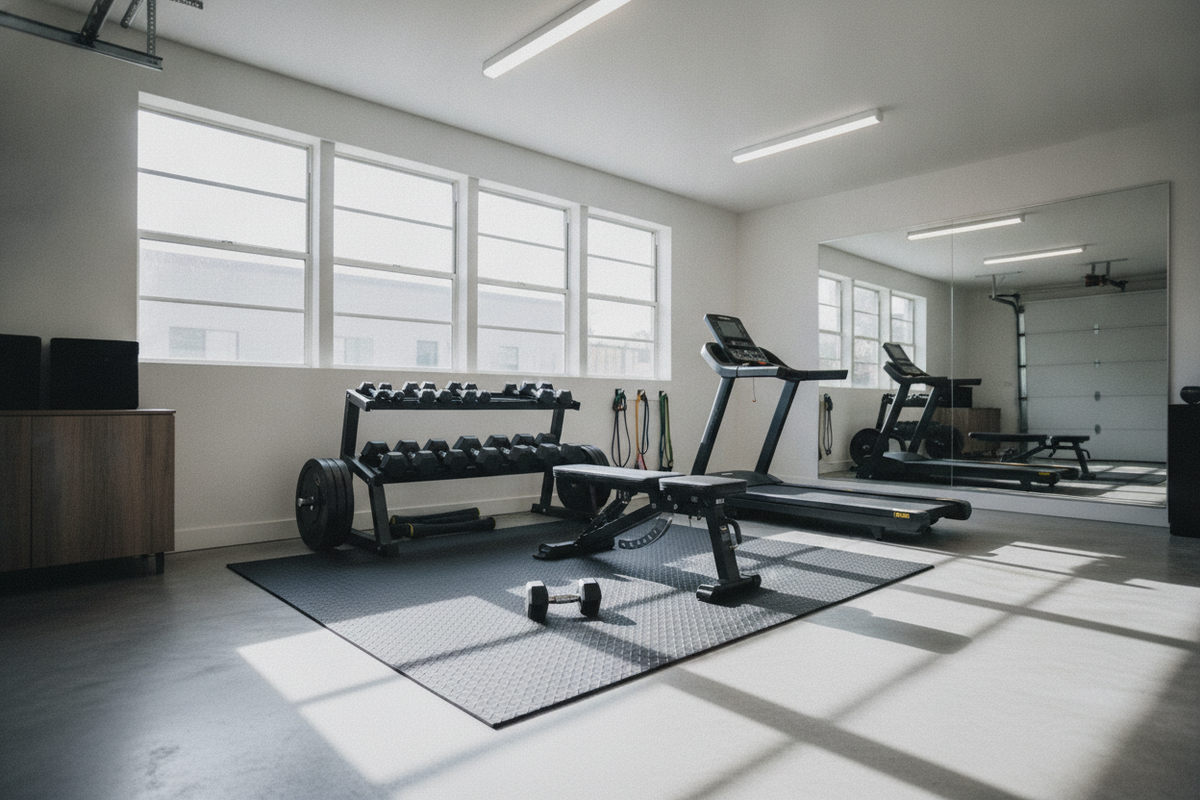
A dense, wide-format rubber or high-density PVC mat creates a dedicated training boundary that grips the underlying floor while providing enough firmness for heavy heel drive. Utilizing an expansive workout product ensures that dynamic lunges, wide-stance sumo squats, and floor thrusts remain within a single, secure footprint without requiring constant repositioning.
Equipment Placement, Mat Anchoring, and Care
Setting up your home workout zone properly enhances session flow and preserves equipment longevity:
- Mat Placement: Unroll the mat on a dry, debris-free subfloor to maximize traction between the mat backing and the room floor.
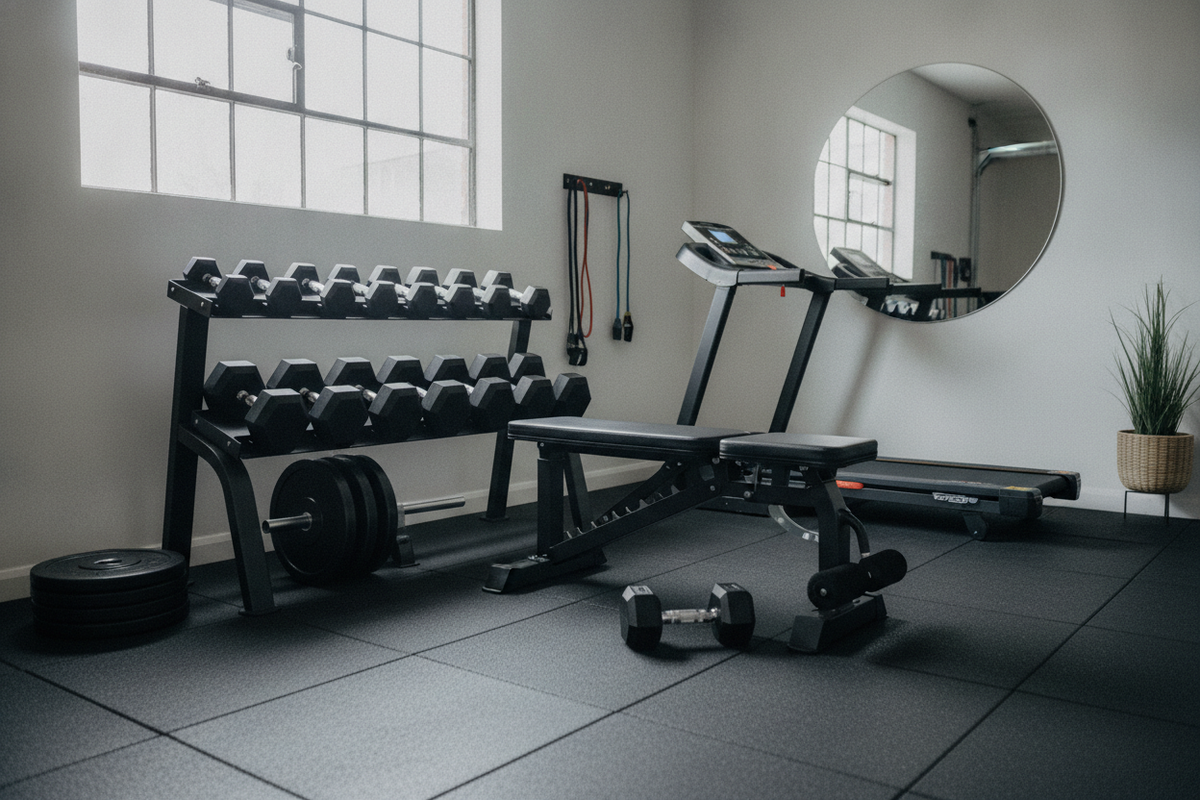
- Bench Anchoring: When setting up for hip thrusts, place the rear legs of the bench directly onto a non-slip mat surface or flush against a sturdy wall to prevent shifting.
- Surface Maintenance: Sweat and dust accumulation degrade surface grip over time. Wipe down textured mat surfaces with a mild soap solution and allow them to air dry fully before rolling or stacking weights on them.
Sample Weekly Split and Progression Strategies
Organizing but and thigh workouts across the training week helps manage fatigue while providing sufficient stimulus for steady adaptation. Splitting lower-body work across two dedicated days is often more sustainable than condensing all thigh and glute volume into a single exhaustive session.
A practical split might feature a knee-focused emphasis on Day 1 and a hip-focused emphasis on Day 2:
- Day 1 (Quad & Glute Focus): Goblet squats, reverse lunges, leg press variations, and elevated heel-elevated split squats.
- Day 2 (Hamstring & Posterior Chain Focus): Romanian deadlifts, barbell hip thrusts, single-leg glute bridges, and hamstring sliders.
For additional programming templates, mobility sequences, and progression strategies, visiting an established workout resource can assist in tailoring weekly routines to individual space and equipment configurations.
Conclusion: Building a Sustainable Lower-Body Routine on a Solid Foundation
Finding the best workout for legs and bum comes down to mastering foundational movement mechanics and maintaining consistent progression over time. Combining compound squats, targeted hinges, and focused bridge thrusts creates a comprehensive stimulus for the quadriceps, hamstrings, and glutes.
By pairing disciplined technique with a thoughtfully staged training surface, you ensure reliable grip, joint comfort, and subfloor protection. A stable floor setup provides the physical confidence needed to perform every rep with control and intent.