Bum Body Part Anatomy: Functional Glute Mechanics, Movement Vectors, and Home Gym Floor Staging
Understanding the Bum Body Part: Muscular Architecture and Function
The colloquial term bum body part refers anatomically to the gluteal complex, a major muscular junction situated at the rear of the pelvis. Far from serving merely as an aesthetic contour, this region constitutes one of the primary kinetic power centers of the human body. It bridges the torso and lower limbs, facilitating locomotion, posture, and pelvic orientation during dynamic tasks.
Functionally, the bum part of the body comprises three distinct overlapping muscles, each governing specific movement patterns:
- Gluteus Maximus: The largest and most superficial muscle in the group, primarily responsible for hip extension (driving the thigh backward), external rotation, and transverse abduction. It serves as the primary driver during standing vertical thrusts, sprinting strides, and deep squat ascents.
- Gluteus Medius: Positioned along the lateral hip beneath the upper perimeter of the maximus, this fan-shaped muscle acts as the chief abductor of the hip, lifting the leg outward. Crucially, it functions as a primary pelvis stabilizer during single-leg support phases in walking, running, and split squats.
- Gluteus Minimus: The deepest of the trio, mirroring the path of the medius to provide synergistic abduction and internal rotation assistance while maintaining femoral head alignment in the hip socket.
Understanding how these muscles interact allows home gym practitioners to construct balanced exercise selections that develop strength evenly across all three planes of motion.
Core Movement Vectors for the Gluteal Region
Training the bum body part requires addressing multiple directional forces rather than relying solely on traditional vertical loading. Because the gluteal complex spans several attachment points across the ilium, sacrum, and femur, varying the vector of resistance alters muscular recruitment.
Biomechanical training generally classifies glute loading into three distinct directional categories:
- Horizontal Vector (Anteroposterior): Movements where peak tension occurs perpendicular to the spine, such as hip thrusts and glute bridges. These patterns produce high tension at shortened muscle lengths, making them exceptional for targeting the upper and lower divisions of the gluteus maximus.
- Vertical Vector (Axial): Upright patterns where force travels parallel to the spine against gravity, including back squats, deadlifts, and step-ups. These movements subject the gluteal complex to high mechanical tension in lengthened positions near the bottom turnaround point. Balancing these patterns within a structured body part workout schedule helps avoid regional overuse while ensuring full-range muscular development.
- Lateral Vector (Frontal Plane): Sideways movements such as lateral band walks, cable abductions, and curtsy lunges. These focus heavily on the gluteus medius and minimus, reinforcing side-to-side hip stability necessary for heavy bilateral lifts.
Exercise Types: Floor-Based vs. Upright Glute Training
A comprehensive workout program balances grounded, floor-based exercises with standing compound patterns. Reviewing a comprehensive body part exercise list reveals that both modalities offer unique loading mechanics that complement one another in a home gym setting.
Floor-Based and Mat Movements
Floor-oriented exercises, including quadruped hip extensions (donkey kicks), side-lying clam shells, and prone hamstring-glute raises, isolate the hip joint with minimal axial spinal compression. These movements rely on stable ground contact, allowing lifters to focus strictly on deliberate muscular contraction without the balance demands of standing upright. They are particularly effective as warm-up primers or high-repetition accessory finishers.
Upright and Compound Lifts
Standing exercises, such as Romanian deadlifts, Bulgarian split squats, and loaded lunges, recruit the gluteal group in coordination with the hamstrings, quadriceps, and core musculature. Upright movements place greater demands on balance and ground traction, requiring lifters to anchor their feet firmly against the floor to generate force safely.
Home Gym Floor Staging: Impact Protection and Surface Stability
Executing glute-focused movements at home requires deliberate attention to the training surface. Unlike standard commercial gym installations, residential floors often feature concrete, hardwood, or tile substrates that can cause discomfort during grounded work or sustain structural damage from dropped weights.
Hip Cushioning and Ground Comfort
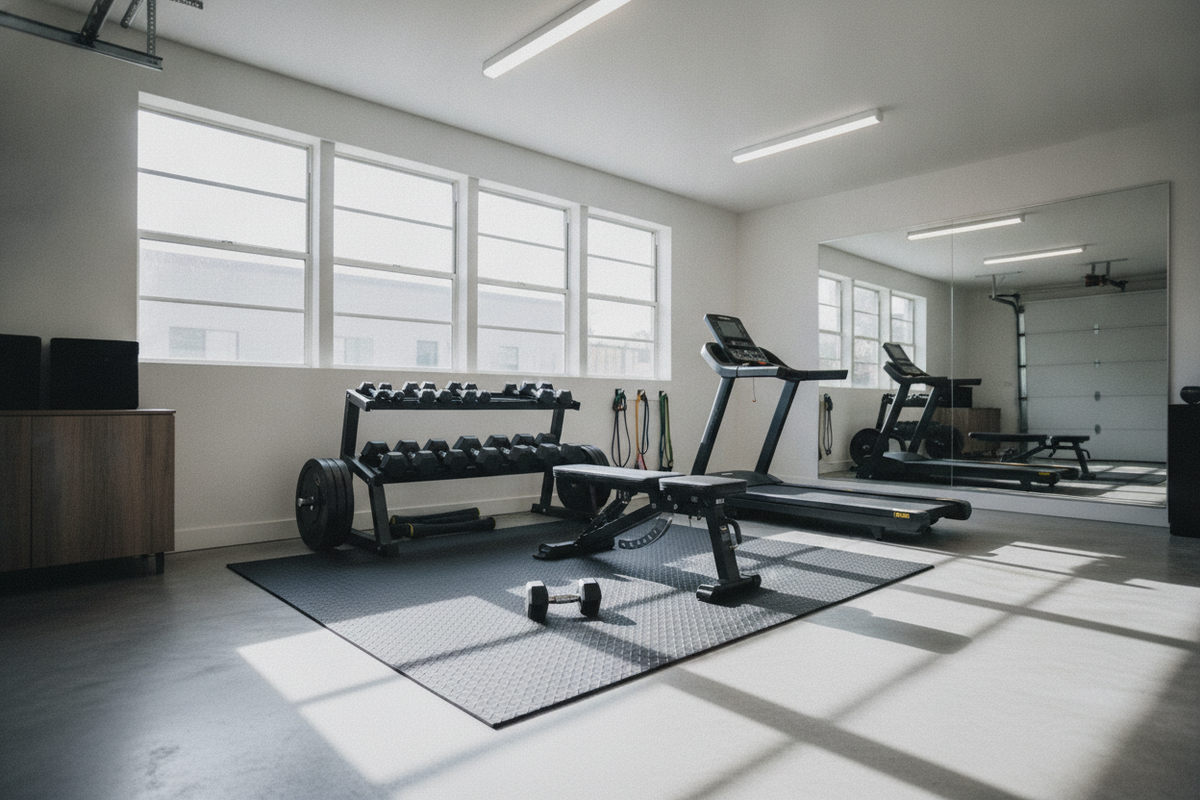
Floor-based glute bridges and quadruped movements place direct pressure on the sacrum, knees, and palms. A dedicated high-density exercise mat distributes body weight evenly, protecting bony landmarks from painful contact against rigid subfloors. Choosing a mat with balanced firmness ensures that the surface cushions joints without collapsing excessively under point loads.
Bench Anchoring for Hip Thrusts
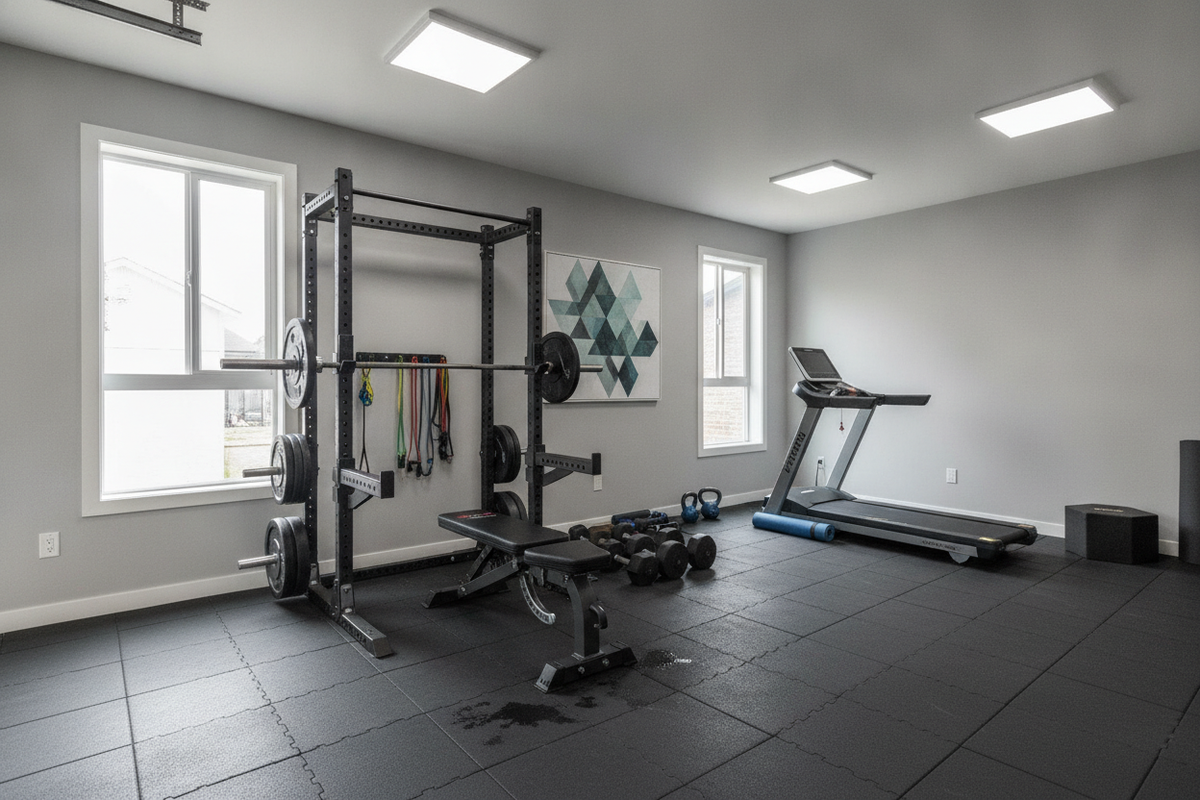
The barbell hip thrust requires positioning an adjustable bench or specialized thrust box behind the upper back while driving the feet into the floor. On bare hardwood or polished concrete, unanchored benches frequently slide backward during peak contraction, disrupting the exercise setup. Positioning your bench across a textured, slip-resistant rubber flooring surface locks equipment firmly in place, maintaining a steady foundation throughout heavy sets.
Subfloor Defense Against Heavy Barbell Work
Lower-body movements like Romanian deadlifts and conventional pulls place significant downward force on the ground. A dense rubber gym mat shields the underlying subfloor from mechanical shock, cracking, and surface scratching caused by cast-iron or urethane-coated weight plates.
Equipment Placement and Layout for Lower-Body Workouts
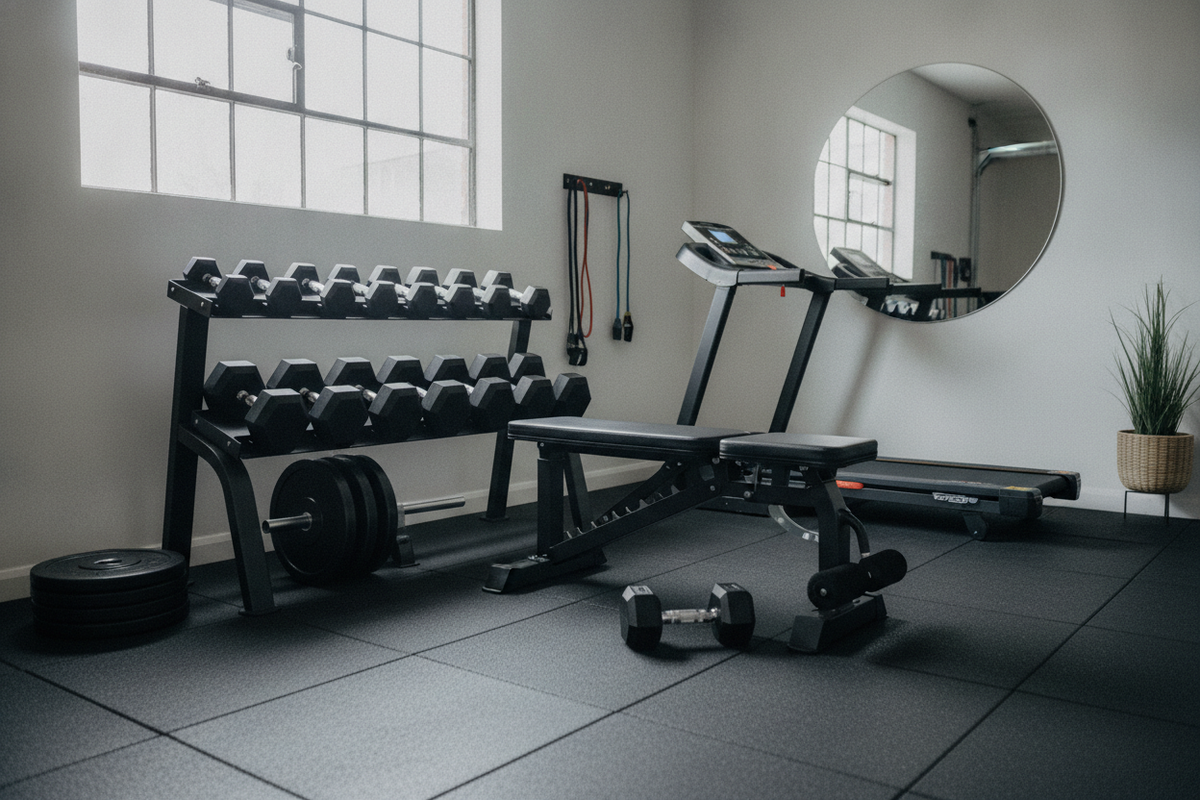
Establishing an efficient layout in your workout space prevents clutter, reduces setup friction, and eliminates common body part routine planning mistakes. Lower-body sessions frequently involve multiple training implements, including barbells, dumbbells, resistance loops, and benches.
To maintain an organized and functional training zone, consider the following spatial layout recommendations:
- Define the Primary Lifting Footprint: Designate a central clearing of protective matting for compound standing movements. Ensure you have ample clearance on all sides to load barbell plates comfortably and step into lunge trajectories without contacting surrounding walls or racks.
- Position Benches Along Mat Seams: When setting up for hip thrusts or step-ups, place the bench perpendicular to your primary mat line so the feet rest entirely on the non-slip surface rather than on bare surrounding flooring.
- Stage Accessory Tools Nearby: Keep mini-bands, ankle straps, and foam wedges arranged on peripheral shelving or low-profile storage racks. Having accessories organized nearby allows smooth transitions between heavy compounds and isolation work without creating floor hazards.
Mat Maintenance and Hygiene for High-Contact Floor Routines
Because glute training involves extensive floor contact—with backs, shoulders, hands, and footwear directly engaging the ground—routine mat maintenance is critical for hygiene and longevity.
Perspiration and shoe grit can gradually degrade mat textures and compromise traction over time. To preserve your flooring:
- Perform Regular Surface Wipedowns: After each session, wipe down high-contact zones using a mild solution of warm water and gentle dish soap or non-corrosive gym equipment cleaner. Avoid harsh solvents, bleach, or concentrated abrasives that can dry out rubber or degrade high-density foam cells.
- Dry Thoroughly Before Storage: If using rollable or folding mats, allow the material to air dry completely before rolling or stacking to prevent moisture entrapment and unpleasant odors.
- Sweep Pre-Session Debris: Remove loose grit and dust with a soft broom before placing heavy equipment or lying down, ensuring that fine particles do not grind into the mat material under weighted pressure.
By pairing an anatomical understanding of the bum body part with properly staged protective flooring, home gym enthusiasts can build resilient lower-body strength in a functional, organized training environment.