Bulking Workout Plan at Home: Hypertrophy Splits, Heavy Compounds, and Grounded Floor Staging
Principles of an Effective At-Home Bulking Routine
Building significant muscular size outside of a commercial fitness facility requires deliberate planning around movement selection, mechanical tension, and environmental staging. Many lifters assume hypertrophy demands an extensive array of specialized selectorized machines, yet foundational muscle building depends primarily on exposing target muscle groups to sufficient mechanical loading and progressive challenge over time. When transitioning to a dedicated home routine, stripping away unnecessary complexity allows you to focus on high-yield movement patterns that yield dependable training stimulus.
A successful bulking program balances training stimulus with deliberate recovery. Muscle hypertrophy is driven by regular application of tension near muscular fatigue, supported by systemic rest and nutritional surplus. Rather than cycling haphazardly through novel movements, committing to a consistent, foundational workout plan enables clean tracking of mechanical overload across weeks. When your training framework stays steady, tracking improvements in technical execution, control, and repetition quality becomes straightforward.
Essential Compound Exercises to Bulk Up at Home
To maximize training efficiency when building mass at home, multi-joint compound exercises should serve as the cornerstone of every lifting session. These patterns recruit vast amounts of functional musculature simultaneously, creating widespread systemic demand that single-joint accessory work cannot match.
- Hip Hinge Variations: Romanian deadlifts, conventional barbell pulls, or heavy dumbbell suitcase deadlifts recruit the posterior chain, taxing the hamstrings, gluteal complex, and erector spinae.
- Squat Variations: Front squats, goblet squats, and split squats load the quadriceps and adductors while demanding core bracing and pelvic stability.
- Horizontal and Vertical Pressing: Floor presses, weighted push-ups, overhead barbell presses, and seated dumbbell shoulder presses build mass across the pectorals, deltoids, and triceps.
- Pulling Patterns: Bent-over barbell rows, chest-supported dumbbell rows, and pull-up variations target the latissimus dorsi, rhomboids, and mid-trapezius structures.
Executing these lifts at home requires exceptional bodily control and a solid foundation. Because home environments often lack external safety catches or spotters found on commercial power racks, lifters must cultivate crisp technique and controlled eccentric tempos across every set.
Structuring Your Weekly Home Bulking Split
Volume distribution plays a critical role in sustaining consistent hypertrophy without inducing systemic joint irritation. A structured split ensures individual muscle groups receive repeated exposure to mechanical tension throughout the training week while providing adequate downtime between sessions for local tissue repair.
For many lifters training in residential spaces, an upper-lower split or a push-pull-legs sequence provides the ideal balance between session volume and systemic recovery. Exploring resources on our training hub helps clarify how to distribute weekly training volume based on available home equipment and scheduling constraints.
An upper-lower structure divides weekly work into dedicated upper-body days focusing on compound presses and rows, followed by lower-body days prioritizing squats, hinges, and single-leg stability work. This framework creates predictable recovery cycles, allowing connective tissues to adapt between heavy sessions. Alternating heavy multi-joint days with moderate-rep accessory pairings maintains a productive training frequency without overwhelming home training sessions.
Home Gym Staging: Flooring Stability and Subfloor Protection
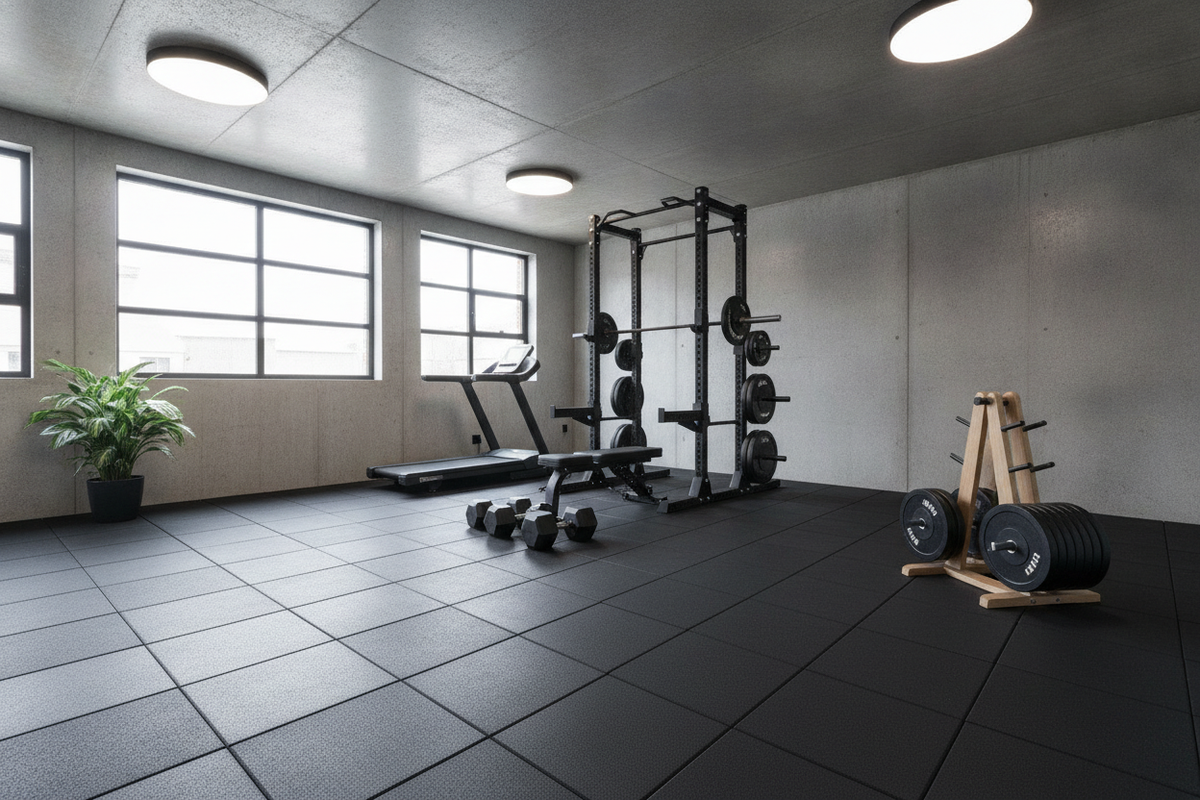
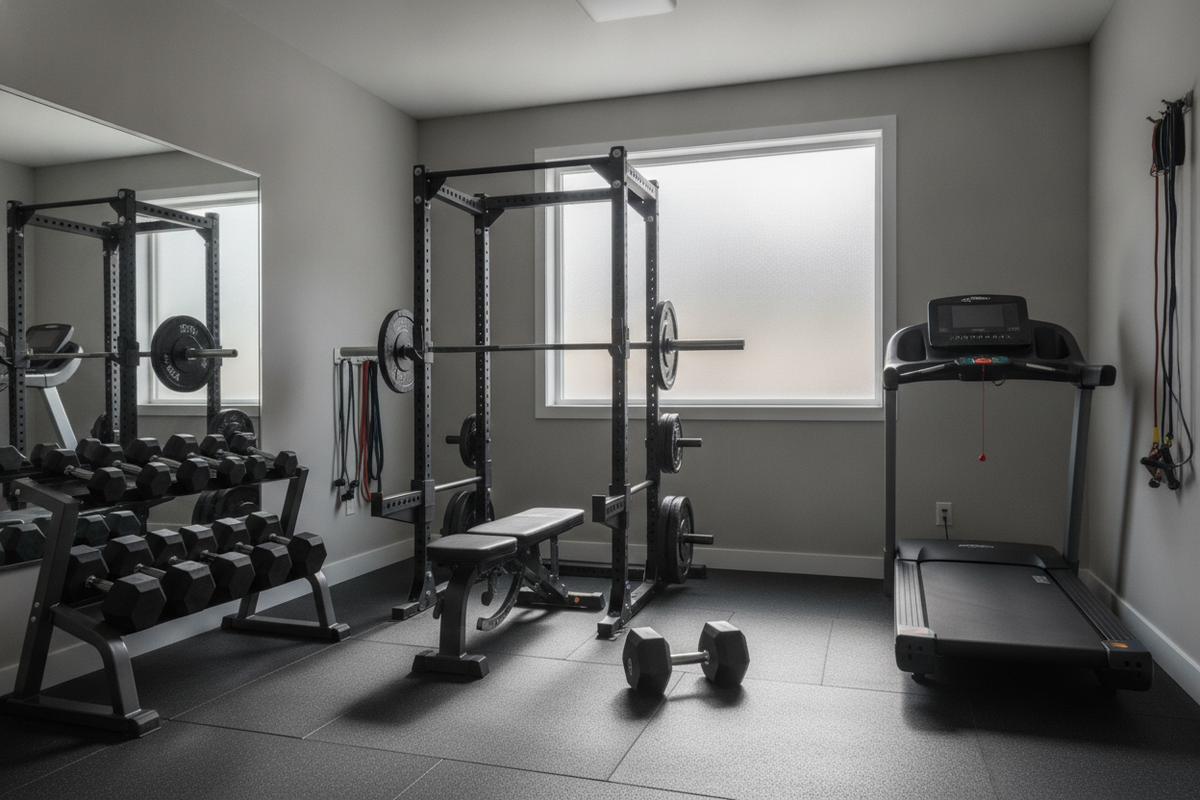
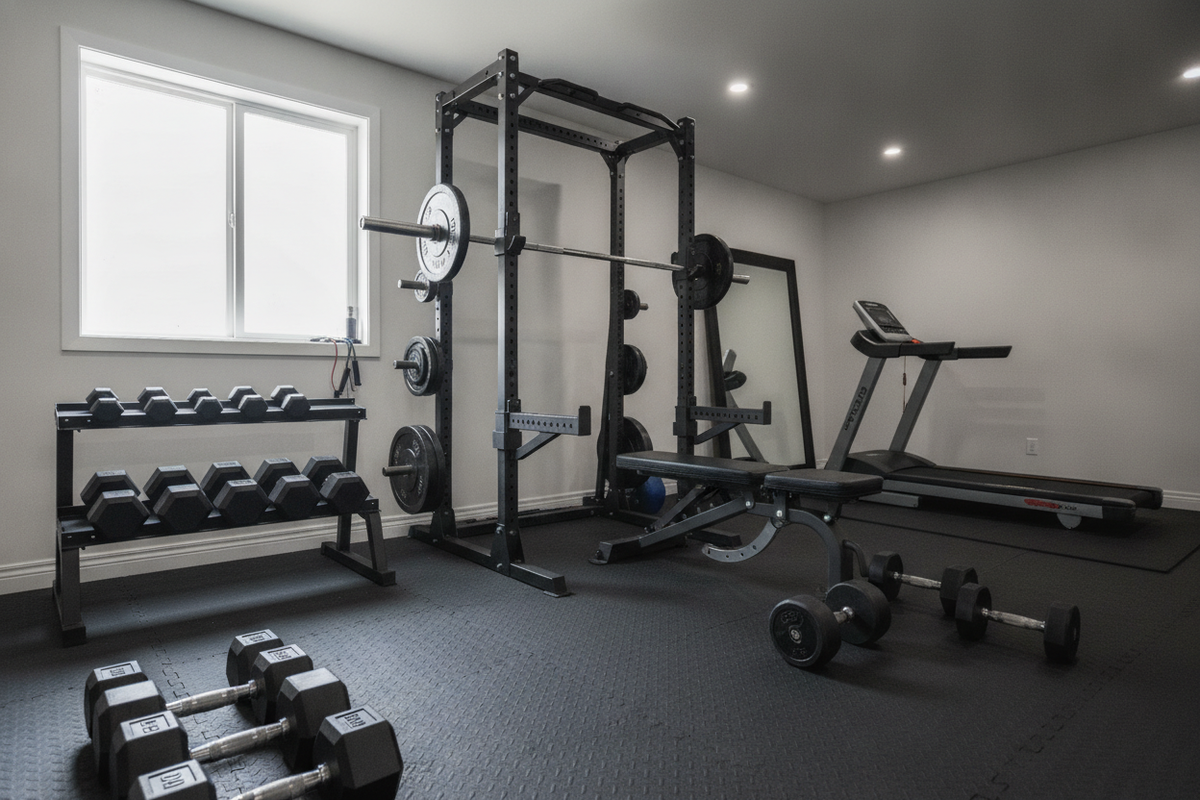
Executing heavy compound lifts at home introduces structural challenges that standard residential flooring is not equipped to handle. Lifting heavy dumbbells, racking loaded barbells, or anchoring your feet during aggressive unilateral lifts generates high localized pressure points. Operating directly on bare concrete, tile, or residential carpet creates real risks of surface damage, unstable foot placement, and joint discomfort during heavy loading phases.
Establishing a designated lifting perimeter with a heavy-duty exercise mat provides the necessary mechanical barrier between your equipment and the subfloor. A dense, broad workout mat serves several functions:
- Traction and Plantar Grip: Firm, textured mat surfaces prevent foot slippage during wide-stance squats or unilateral split squat variations, ensuring consistent force transfer into the ground.
- Load Distribution: Dense composite surfaces dissipate localized downward force, protecting underlying hardwood or tile from gouges during dumbbell set-downs.
- Joint Comfort: Controlled floor staging cushions joints during kneeling accessories, hip thrust setups, and floor-based pressing movements without introducing excessive squish that could undermine balance.
Maintaining a dedicated lifting surface ensures that your training area remains predictable from session to session, allowing you to direct your mental focus toward lifting execution rather than footing insecurity.
Progressive Overload Strategies Without Commercial Gym Racks
In a commercial gym, progressive overload is frequently reduced to simply adding microplates to a barbell. At home, where weight assortments or rack capacities may be fixed, hypertrophy can be reliably stimulated using diverse overload modalities that elevate mechanical tension without necessarily requiring massive load increases.
Integrating techniques from an advanced home workout plan allows lifters to systematically escalate difficulty. Effective overload methods include:
- Tempo Manipulation: Slowing the eccentric phase of a squat or dumbbell press increases time under tension, placing muscular fibers under sustained load throughout the full range of motion.
- Paused Repetitions: Eliminating the stretch-shortening cycle by introducing a dead-stop pause at the bottom of a goblet squat or row forces voluntary muscular contraction to drive the weight upward.
- Density Adjustments: Completing the same total volume of repetitions within a condensed workout timeframe increases systemic density and metabolic work capacity.
- Mechanical Drop Sets: Shifting from an advantageous biomechanical angle to a challenging variation within the same working set extends muscular stimulus safely without touching additional plates.
Implementing these techniques systematically ensures continuous hypertrophy stimulus, keeping your bulking progress on track regardless of home equipment constraints.
Maintenance and Space Organization for High-Volume Home Training
A functional home training space must remain organized, hygienic, and free of physical hazards to support repeated high-intensity training cycles. When training for size gains, accumulating dumbbells, resistance bands, and weight plates can quickly clutter limited residential floor plans, creating tripping hazards and degrading the training environment.
Establish a habit of clearing the lifting platform immediately after concluding each session. Weights should be stored on stable perimeter racks or designated perimeter pads rather than left standing on dynamic movement zones. Periodically wiping down your workout flooring with mild soap and water removes sweat, skin oils, and ambient dust, preserving the non-slip grip characteristics of the mat surface.
By pairing rigorous compound programming with organized, floor-protective staging, you create a sustainable, dedicated training environment that reliably drives muscular bulking within the comfort of your home.