My Problem With Every Free Weight Exercise Program Online
I’ve spent the last decade in garage gyms, basement dungeons, and commercial warehouses. I’ve bought the 45-lb bars that bent under 300 lbs and the 'heavy-duty' benches that wobbled the second I picked up a pair of 50s. Most of what passes for a free weight exercise program these days is a joke.
You’ve seen them. You scroll through Instagram or Pinterest, find a 'home workout,' and by exercise three, they’re asking you to use a Lat Pulldown machine or a Pec Deck. Most free weight training routines are just repackaged commercial gym plans that assume you have 2,000 square feet of equipment and a membership card.
Quick Takeaways
- Most 'home' plans secretly require machines you don't own.
- Junk volume (too many isolation moves) kills your recovery and joint health.
- Focus on four movements: Push, Pull, Hinge, and Squat.
- Progressive overload—adding weight or reps—is the only way to grow.
- Safety is paramount when training alone; get a rack with spotter arms.
The Big Lie About Most 'Home Gym' Routines
The fitness industry has a bad habit of lying to home lifters. They promise a complete free weight training program for beginners, but then they sneak in cable crossovers or leg presses. They call them 'optional,' but we both know that if you skip half the movements, you aren't following the plan.
I’m tired of seeing people waste time printing out another generic PDF template that doesn't fit their space. If you have a barbell, a bench, and some plates, you have enough. You don't need a $3,000 functional trainer to get big shoulders or a thick back. You need to stop looking for variety and start looking for intensity.
Why Junk Volume is Wrecking Your Joints
We’ve all been there. You see an influencer doing a free weights lifting routine with six different types of lateral raises and three variations of tricep kickbacks. You try it in your garage, and by week three, your elbows feel like they’re filled with glass. That’s junk volume.
When you're working with a free weight program, you have to prioritize recovery. Unlike machines that lock you into a fixed path, free weights require your stabilizer muscles to work overtime. If you’re hitting 20 sets per body part, you aren't training hard; you're just making yourself tired. Focus on heavy free weight lifting workouts that leave you gassed after five or six high-quality movements.
The Only 4 Movements That Actually Matter
If your free weights training plan doesn't center on these four pillars, throw it away. You need a Push (bench or overhead press), a Pull (rows or pull-ups), a Hinge (deadlifts or cleans), and a Squat. That’s the secret sauce for building raw strength at home.
A solid free weight routine at home should be built around these biomechanical basics. Every muscle group is covered. Your quads and glutes get smashed by squats; your posterior chain handles the hinges; your chest, shoulders, and triceps take the pushes; and your back and biceps handle the pulls. Everything else—the curls, the shrugs, the calf raises—is just the cherry on top. If you can’t squat your body weight yet, you don't need to worry about 'peak contraction' on a concentration curl.
Structuring a Free Weight Exercise Program That Works
You have two real choices for a free weights training program: Full Body or Push/Pull/Legs (PPL). If you’re training three days a week, go Full Body. If you can commit to four or five, PPL is your best bet. The key is consistency and, more importantly, safety.
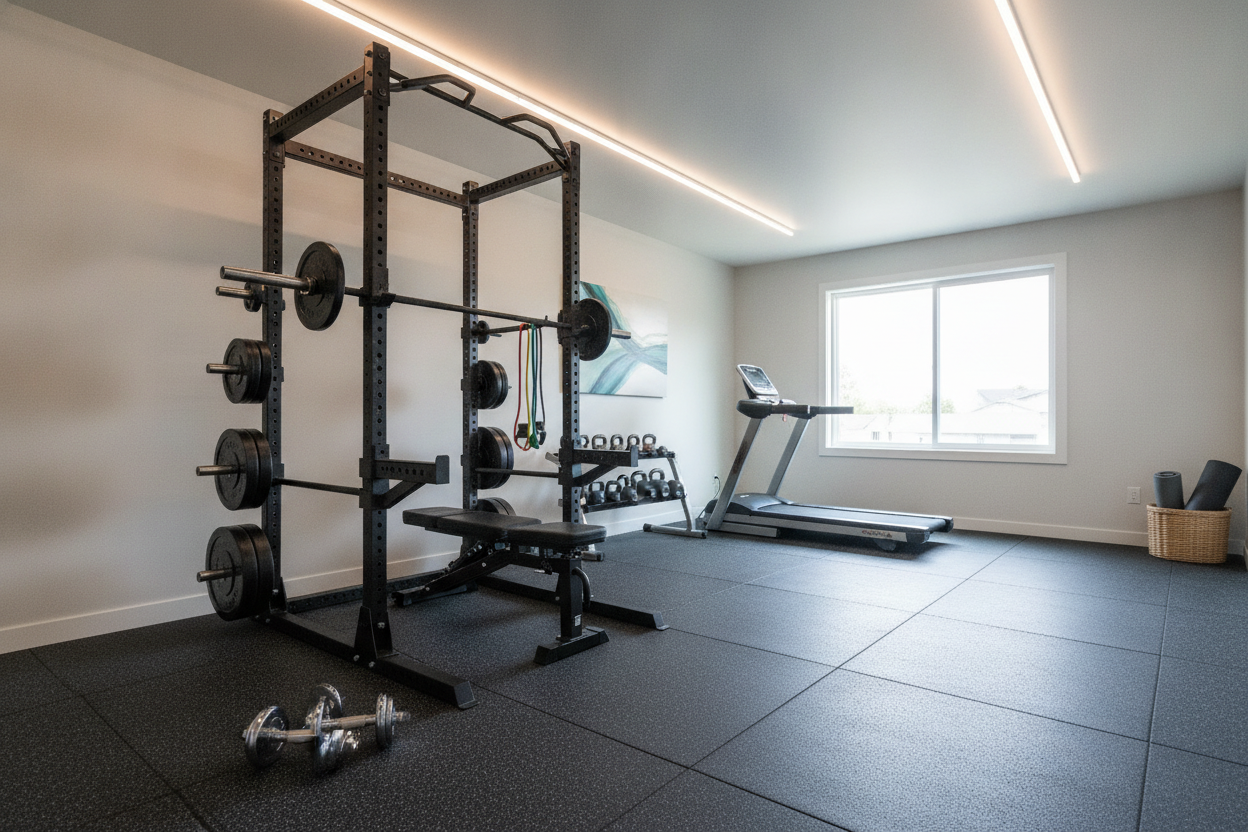
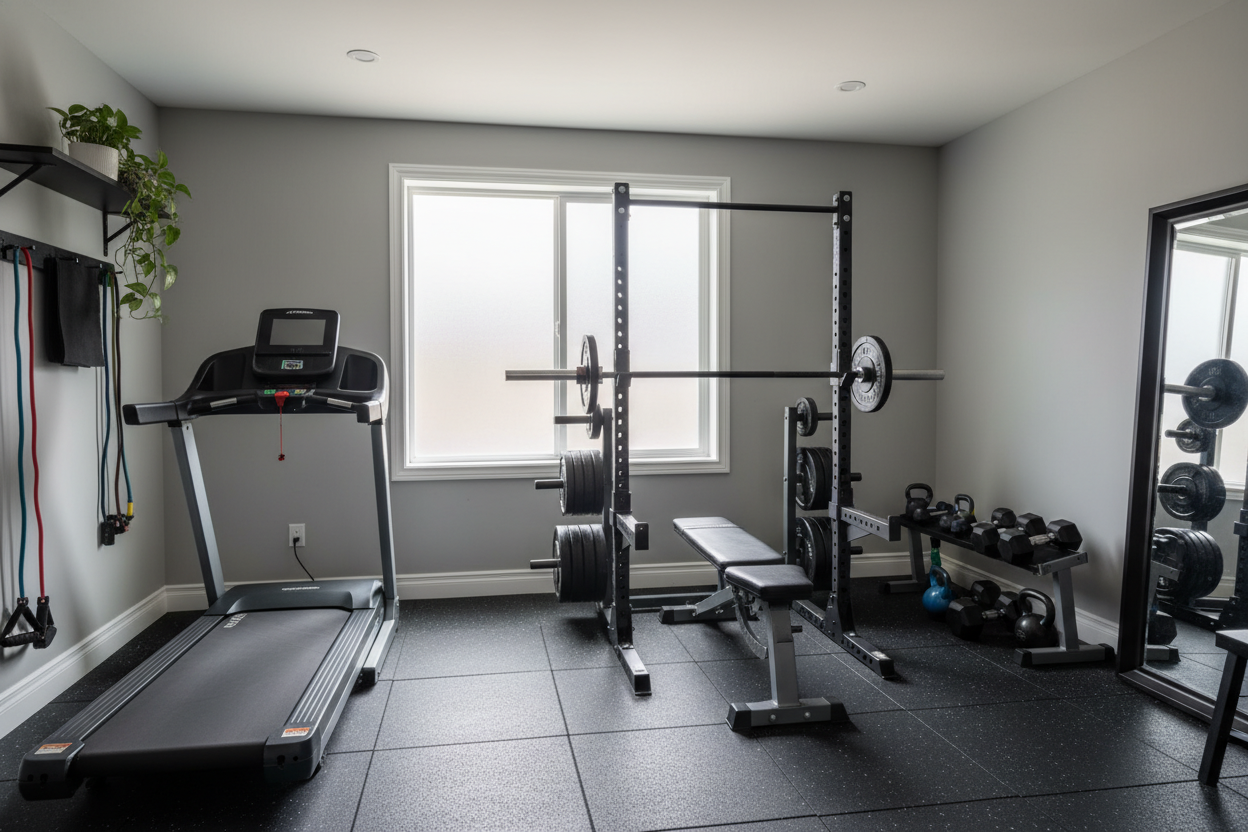
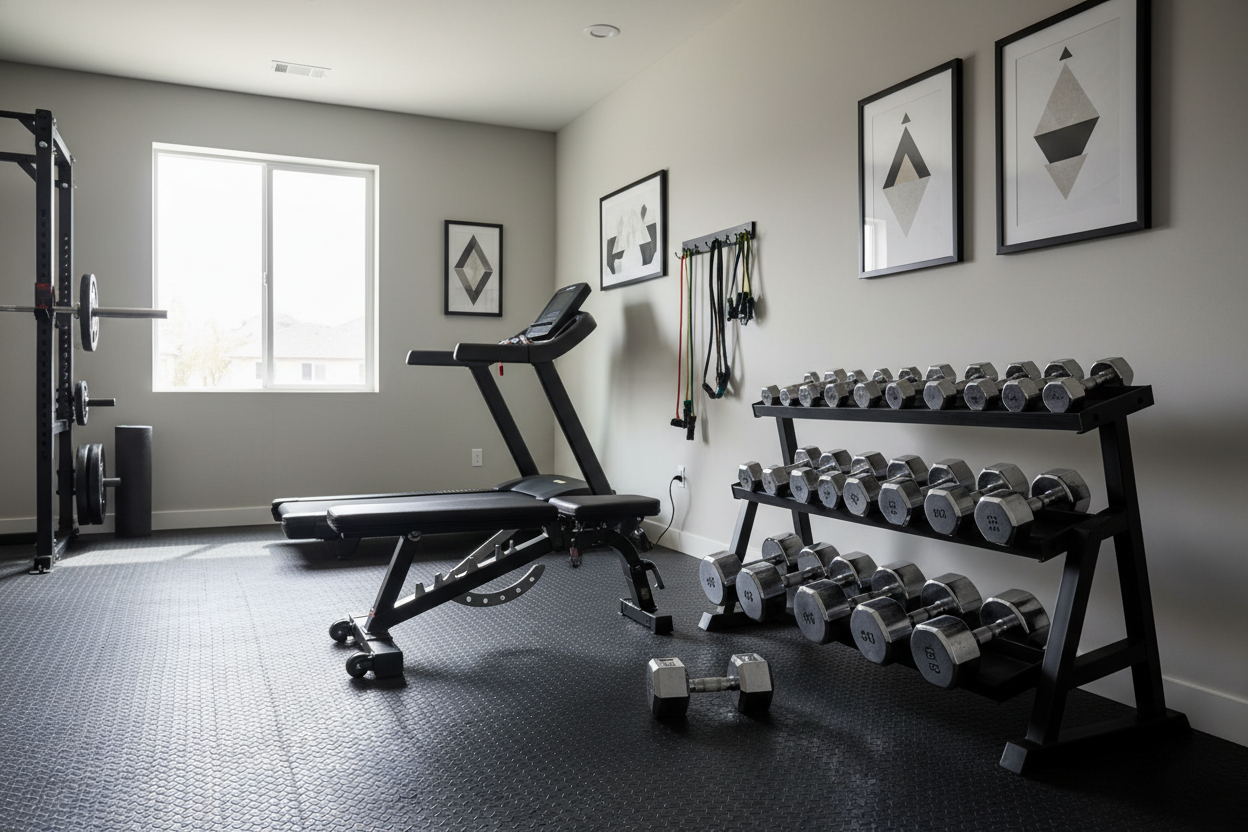
Since you’re likely training alone, you need a solid power rack and bench combo. I’ve seen too many guys try to 'roll of shame' a failed bench press. Don't be that guy. Get a rack with safety pins so you can actually push to failure without a spotter. For your accessory work, a heavy-duty adjustable weight bench is non-negotiable. It lets you hit incline presses and seated rows, which are essential for a well-rounded free weight training exercise selection.
Stop Changing Your Routine Every Two Weeks
'Muscle confusion' is a marketing term used to sell new apps. Your muscles don't get confused; they get adapted. The most effective free weight routines are boring. They involve doing the same five or six lifts every week and trying to add 5 lbs to the bar or one extra rep to the set. That is progressive overload.
If you keep swapping your free weight routines every time you get bored, you’ll never see results. Stick to a plan for at least 12 weeks. Track your numbers in a notebook—not just your phone. There is something about seeing your progress written in ink that makes you want to crush the next session.
Personal Experience: The 300-lb Lesson
Early in my home gym days, I tried to run a high-volume 'pro' routine I found online. It had me doing 25 sets of chest on Mondays. I didn't have a rack yet, so I was floor-pressing 225 lbs off the ground. One day, my wrist slipped, and I almost crushed my ribcage because I was chasing a 'pump' instead of safety and structure. I realized then that a real free weights workout plan isn't about how many exercises you do, but how safely and intensely you can perform the big ones. I bought a real rack the next day and cut my volume in half. My strength exploded.
FAQ
Can I build muscle with just dumbbells?
Absolutely. You can run a full free weight program with just dumbbells, though you'll eventually need heavy ones (up to 80 or 100 lbs) for squats and rows. Barbells are just more efficient for loading heavy weight quickly.
How many days a week should I train?
Three to four days is the sweet spot for most people. It gives your central nervous system enough time to recover from heavy compound lifts while keeping the frequency high enough to trigger growth.
Do I need a spotter for free weights?
Not if you have the right gear. If you have a power rack with safety bars or spotter arms, you can safely lift to failure on squats and bench press by yourself without needing a partner.