I Quit the Commercial Gym: The Reality of Lifting at Home
I was standing in a puddle of someone else's sweat, waiting for the only functional power rack while a teenager filmed his third set of mediocre curls. It was 6:15 PM on a Tuesday. I looked at the 'Out of Order' sign on the cable machine—the same sign that had been there since October—and realized I was paying $80 a month for the privilege of being frustrated. That was the night I decided lifting at home was the only way forward. It wasn't about building a Pinterest-perfect sanctuary; it was about reclaiming my time and actually getting under the bar without a permit.
- Flooring is your most important investment to save your house and your joints.
- Discipline is harder when your couch is twenty feet away.
- You can get elite results with a rack, a bar, and some iron—skip the infomercial junk.
- The ROI on a home setup usually hits the break-even point in under two years.
The Day I Finally Canceled My Membership
The breakup wasn't dramatic, but it was final. I walked to the front desk, handed over my sweat-stained key tag, and felt an immediate sense of relief. For years, I’d tolerated the 'commute-and-queue' lifestyle. I’d spend twenty minutes driving, ten minutes finding a locker, and another fifteen minutes hovering like a vulture around the bench press. By the time I actually touched a weight, my pre-workout had already peaked and I was just annoyed.
I realized that the commercial gym environment had become an obstacle to my progress rather than a tool for it. When you have to modify your entire program because the equipment you need is broken or occupied, you aren't training; you're just reacting. Transitioning to a home setup meant I could finally run a program exactly as written. No more 'subbing' barbell rows for some janky machine because the floor space was too crowded. I bought a rack, a decent bar, and started my journey in a cold, dusty garage. It was the best training decision I ever made.
The Brutal Truth About Weightlifting at Home
Let's get one thing straight: weightlifting at home isn't all 'Rocky' montages and high-fives. It is often lonely, occasionally freezing, and entirely dependent on your own internal drive. In a public gym, there’s a performative energy that keeps you moving. At home, there is no one to judge you if you sit on your bench for ten minutes scrolling through your phone. You have to be your own drill sergeant.
Then there’s the environment. Unless you’re dropping five figures on a finished basement, you’re likely dealing with a garage or a spare room. My garage gets up to 95 degrees in July and drops to 30 in January. I’ve had to learn that the bar will be painfully cold to the touch in the winter and that I’ll be dripping on my platform in the summer. There are household distractions, too—the laundry buzzer, the dog barking at the mailman, or the temptation to go check the fridge. You have to build a 'gym bubble' mentally. If you can’t find the grit to train when the conditions are sub-optimal and no one is watching, a home gym won't save you.
Stop Buying Crap: The Bare Minimum Gear You Actually Need
If you scroll through social media, you’d think you need a $5,000 motorized pulley system and color-coded urethane plates. You don't. Most of that stuff is high-margin fluff designed for people who like owning equipment more than they like using it. To build real strength, you need a power rack with safeties, an Olympic barbell, and enough iron to make you struggle. Everything else is a luxury. Avoid the 'all-in-one' machines that use proprietary cables; when those cables snap, and they will, your entire gym becomes a very expensive clothes rack.
Start From the Ground Up
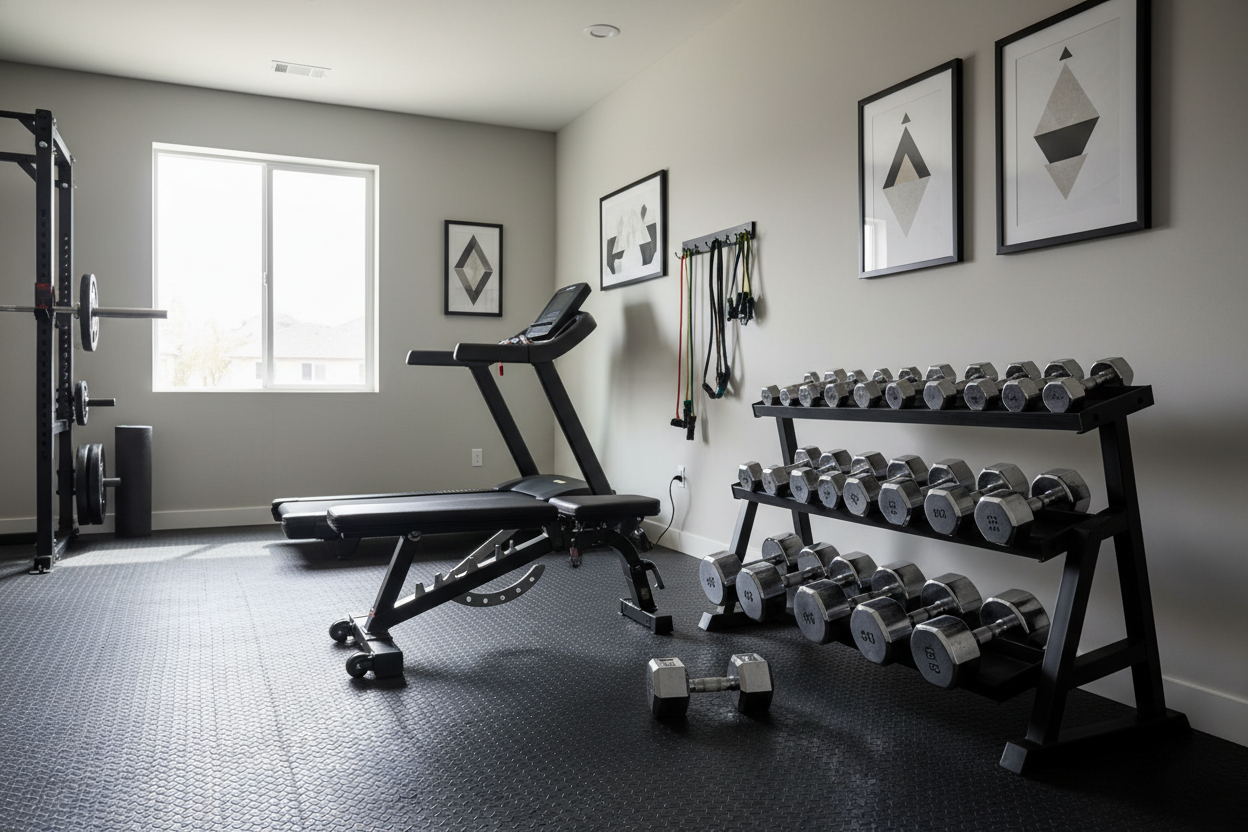
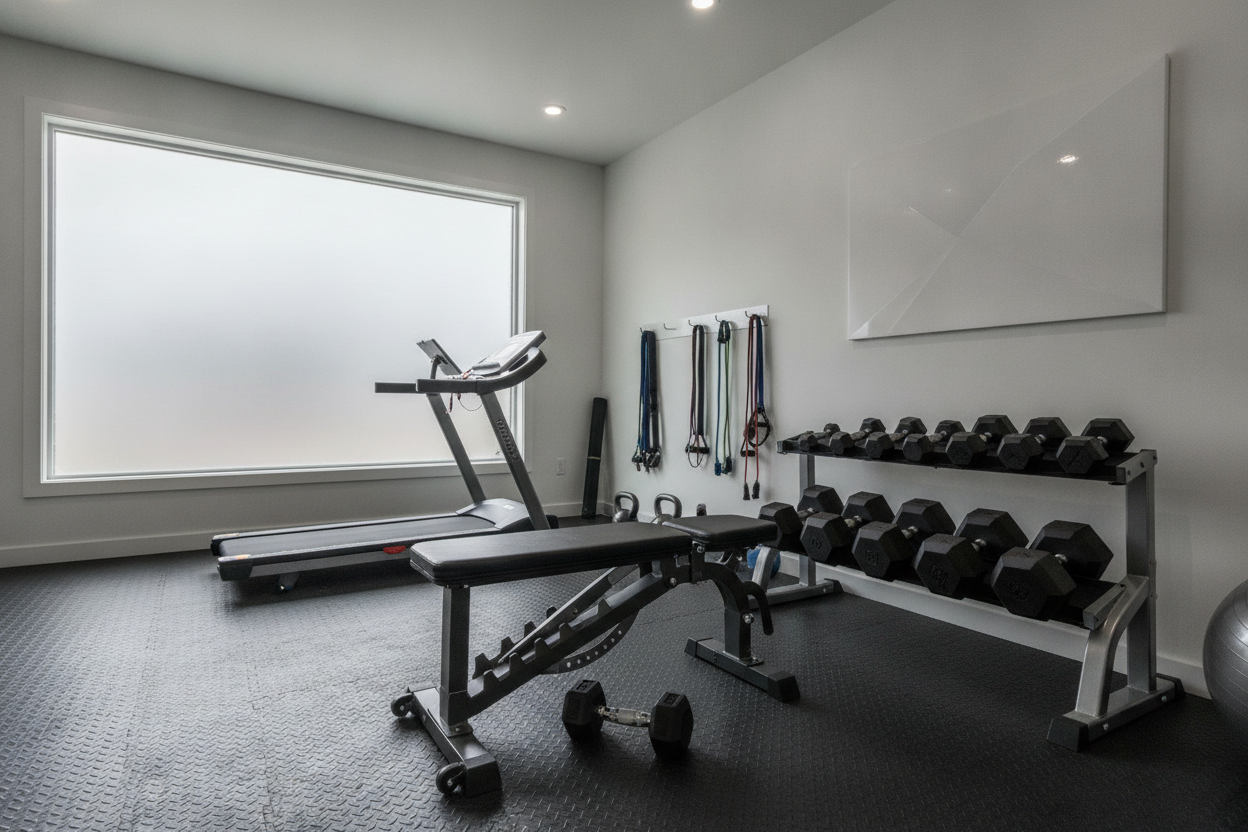
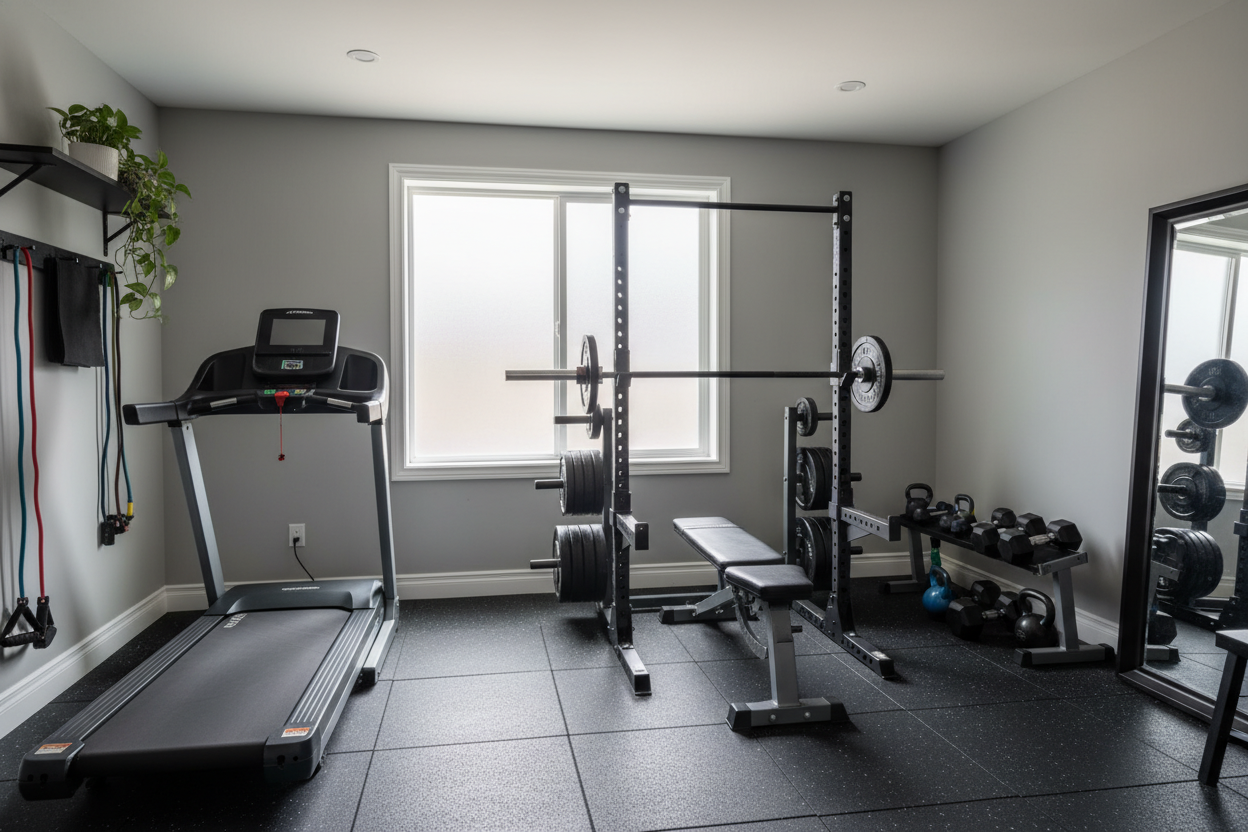
Before you even think about which barbell has the best knurling, look at your floor. Concrete is unforgiving. If you drop a 45-lb plate on bare concrete, you’re either going to crack the plate or the slab—and the slab is a lot more expensive to fix. You need a dedicated, high-impact large exercise mat for home gym use to create a safe zone. This isn't just about protection; it's about stability. A squishy carpet or a slick hardwood floor will ruin your force production on squats and deadlifts.
If you're planning on doing any heavy pulling, don't skimp on the footprint. I recommend a 6x8ft exercise mat as the baseline for a lifting station. This gives you enough room to center a rack and still have a landing zone for deadlifts. I once tried to save money by using thin foam puzzle tiles from a big-box store. Within a month, they were compressed flat and sliding apart mid-set. Get real high-density rubber. Your shins and your landlord will thank you.
How to Lift Weights at Home Without Losing Your Mind
The biggest hurdle for most people making the switch is the lack of variety. You’re used to having forty different machines for every body part. When you're learning how to lift weights at home, you have to embrace the 'Big Rocks' philosophy. If you don't have a leg press, you do lunges. If you don't have a cable crossover, you do flies with dumbbells or bands. You aren't losing gains; you're actually forced to master more demanding, stabilizer-heavy movements.
I see too many people overcomplicating how to weight train at home by trying to replicate a 15,000-square-foot facility in a 100-square-foot spare room. They buy five different types of attachment handles but don't own a solid set of plates. Stick to the basics: Squat, Hinges, Pushes, and Pulls. You can build a world-class physique with nothing but a barbell and a bench if your intensity is high enough. Focus on progressive overload. If you did 200 lbs for five last week, do it for six this week. The iron doesn't care if it's in a fancy club or your basement.
Why Beginners Actually Have the Advantage Here
If you're just starting out, the commercial gym can be a nightmare. 'Gymtimidation' is a real thing, and it keeps people from ever touching a barbell. Learning how to weight lift at home removes the fear of judgment. You can spend an hour practicing your squat depth in front of a mirror without feeling like you're 'taking up space' or being watched by the regulars. You can fail, you can look awkward, and you can learn the mechanics at your own pace.
This is why a beginner's introduction to weight lifting should happen at home. It builds a foundation of confidence. When I first started, I was terrified of the deadlift because I didn't want to make noise or look like I didn't know what I was doing. At home, I could record my sets, compare them to coaching videos, and fix my form in total privacy. By the time you do decide to hit a public gym, you’ll be the one with the perfect technique that everyone else is watching.
The Final Verdict: Is the Switch Worth It?
Let’s talk numbers. My old gym was $960 a year. Add in the gas, the wear and tear on the car, and the 'convenience' snacks I’d buy at the front desk, and I was pushing $1,200 annually. My home setup cost me about $2,000 total. In less than two years, the gym paid for itself. But the real ROI isn't the money—it's the time. I save five hours a week on commuting and waiting for equipment. That’s 260 hours a year I got back.
If you have the space—even a small corner—make the leap. You’ll miss the sauna and maybe the variety of the machines for a week, but you’ll never miss the crowds. Lifting at home turns training from a scheduled chore into a seamless part of your life. Just remember: buy the good mats first, keep the distractions out, and don't be afraid to train in a hoodie when the temperature drops.
Frequently Asked Questions
Is it too loud for an apartment?
It depends on your floor and your neighbors. If you use high-density rubber mats and avoid dropping deadlifts from the top, it’s usually fine. Stick to controlled eccentrics and maybe opt for adjustable dumbbells over a full barbell set if you're on the third floor.
How much space do I actually need?
A 6x8 foot area is the 'sweet spot.' It’s enough for a standard 7-foot Olympic bar to have clearance on both sides and for you to move around a bench. If you have less than that, look into short-bar options or adjustable dumbbells.
Will I get bored training alone?
You might, but that’s where a good program and a solid playlist come in. If you find yourself losing steam, join an online community or follow a structured app-based program to keep your numbers moving up. Results are the best cure for boredom.