My Dumbbells Gather Dust After This Upper Body Machine Workout
I used to be a barbell purist. If a workout didn't involve a 45-lb iron bar and the constant threat of a crushed windpipe, I didn't think it counted. But after years of nagging shoulder tweaks and plateaus that wouldn't budge, I realized I was spending more energy balancing the weight than actually moving it. Switching to a dedicated upper body machine workout changed the math entirely.
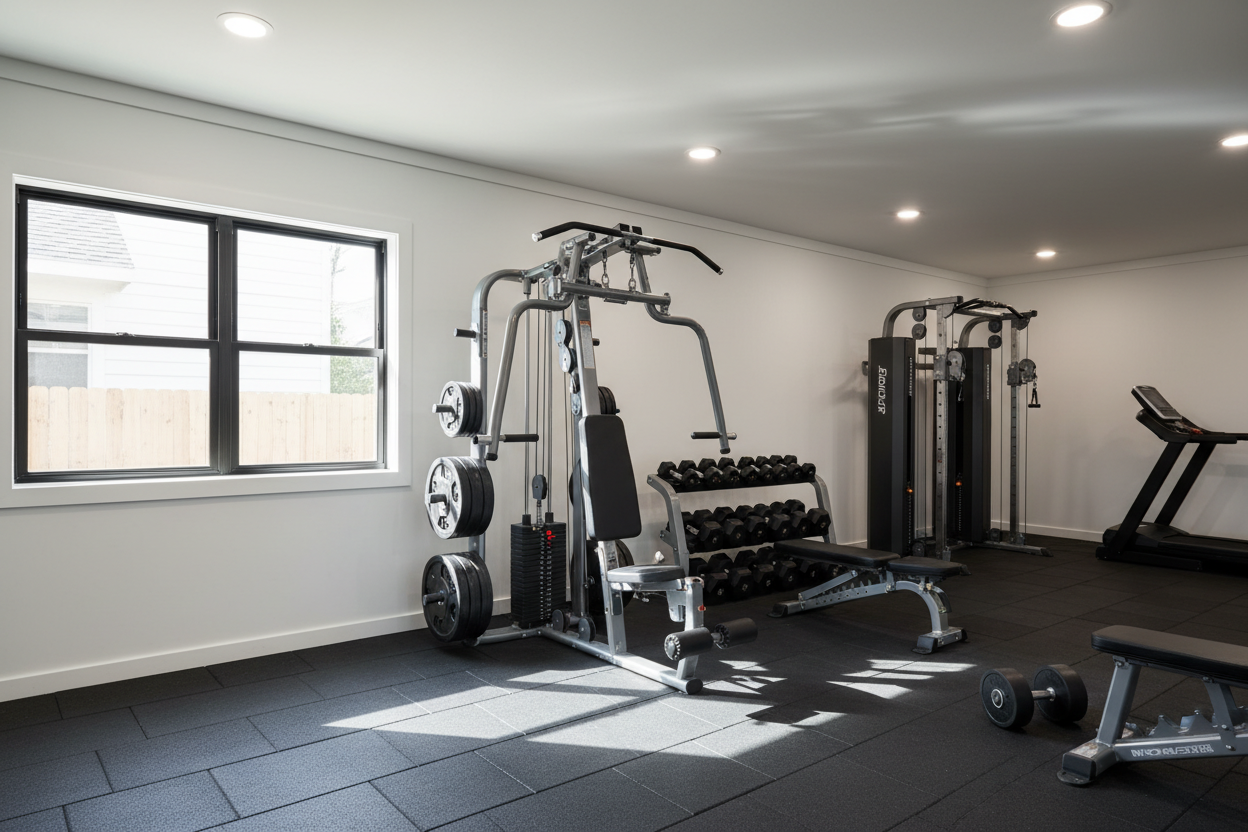
The secret isn't in the iron; it's in the stability. When you aren't wobbling on a bench trying to keep two 80-lb dumbbells from drifting, you can actually take your muscles to the brink. My garage gym setup has shifted from 100% free weights to a hybrid model that prioritizes fixed-path movements for high-volume days.
Quick Takeaways
- Stability is King: Removing the need to balance weight allows for 10-15% more mechanical tension on the target muscle.
- Safety at Failure: You can push to true muscular failure without needing a spotter to save your life.
- Joint Longevity: Fixed paths often feel 'greasier' and more natural on cranky elbows and shoulders.
- Efficiency: Moving a pin is faster than swapping plates or hunting for the matching dumbbell.
Why I Stopped Worshipping the Barbell
The biggest lie in fitness is that free weights are the only way to get big. I spent years fighting 'energy leaks.' During a heavy row, my lower back would round before my lats were even tired. During a bench press, my shaky rotator cuffs would give out before my chest got a real pump. By integrating upper body workout machines for home, I finally plugged those leaks.
When you sit in a chest press machine, your torso is braced against a backpad. Your core doesn't have to work to keep you from falling over. This means 100% of your neural drive goes straight into your pecs. It’s the 'constraint-advantage'—by limiting your range of motion to a specific arc, you maximize the output of the muscle you're actually trying to train. I’ve seen more growth in six months of machine-heavy training than in two years of strictly 'functional' free weight lifting.
Designing the Ultimate Upper Body Machine Workout Plan
A solid upper body machine workout plan shouldn't just be a random collection of movements. I like to pair opposing muscle groups to keep the blood flowing and the rest periods short. Here is the exact template I’ve been running twice a week:
- Machine Chest Press: 3 sets of 8-12 reps. Focus on a 3-second negative.
- Seated Cable Row: 3 sets of 10-15 reps. Use a neutral grip to save your wrists.
- Lat Pulldown: 3 sets of 12-15 reps. Stop an inch above your chest to keep tension on the lats.
- Machine Overhead Press: 2 sets of 10-12 reps. This is where machines shine—no lower back arching.
- Machine Rear Delt Fly: 2 sets of 15-20 reps. High volume for those '3D' shoulders.
This routine hits every major angle without leaving you feeling like you got hit by a truck. If you’re looking to scale this up, you can easily turn this into a full body machine workout by adding a leg press and a hamstring curl at the end. The goal here is density—getting more quality work done in 45 minutes than most people do in 90.
The Truth About Women's Machine Training
There’s a weird stigma that women should stick to light weights and 'toning' exercises. It's nonsense. An upper body workout gym machines female routine is actually one of the most efficient ways to build the strength needed for things like unassisted pull-ups. Most women find that their grip strength or forearm endurance fails long before their back muscles do. Using machines bypasses that bottleneck.
An upper body gym workout female machines focus allows for specific targeting of the upper back and shoulders, which creates that tapered look many are after. Plus, machines like the assisted pull-up or the chest-supported row provide the safety net needed to use heavy enough weight to actually see a change. You don't need pink dumbbells; you need a weight stack that challenges your physiology.
Protecting Your Concrete (And Your Joints)
If you're building a home gym, remember that machines are heavy. We're talking 300 to 600 lbs of steel concentrated in a small footprint. I made the mistake of putting a functional trainer directly on my garage concrete, and within a month, the vibration from the weight stacks had started to pit the floor. You absolutely need high-quality gym flooring for home workout setups.
Look for 3/4-inch rubber mats. Anything thinner will compress under the weight of a selectorized stack. Beyond the floor, machines offer a level of joint protection that dumbbells can't touch. The fixed path prevents the micro-oscillations that irritate tendons. If you have 'gym elbow' from years of heavy lifting, machines are your ticket to staying in the game.
What About Leg Day?
The beauty of a machine-based upper body day is that it saves your Central Nervous System (CNS). Free weight compounds like deadlifts and squats are taxing on the whole body. By using an upper body machine workout, you aren't frying your spinal erectors or your nervous system just to hit your chest. This leaves you completely fresh to tackle a lower body strength machine or a heavy squat session later in the week.
I’ve found that my leg strength has actually increased since I stopped doing heavy standing overhead presses and barbell rows. I have more 'gas in the tank' for the days that really matter. It’s about being a specialist on the days you want to grow, and a generalist only when you have to.
Personal Experience: The Day I Almost Dropped 100s
I remember trying to hit a PR on dumbbell incline press. I was on my 8th rep with the 100s, and my left stabilizer muscle just... quit. The weight started drifting toward my face, and if it weren't for a very fast-acting stranger, I’d be missing teeth. That was the day I bought my first plate-loaded chest press. I realized that my chest had more strength, but my 'balance' didn't. Now, I can load up four plates on each side and push until my vision gets blurry, knowing the machine has the weight handled. It’s not 'cheating'—it’s smart engineering.
FAQ
Are machines better for building muscle than free weights?
They aren't 'better' in a vacuum, but they are more efficient for hypertrophy. Because they provide more stability, you can push the target muscle to absolute failure more safely than with free weights.
Can I do an upper body machine workout every day?
No. Your muscles still need 48 hours to recover. Machines allow you to train with higher intensity, which actually means you might need more recovery time, not less.
What if my home gym is too small for big machines?
Look for 'functional trainers' or 'cable crossovers.' They have a smaller footprint but allow you to perform almost every machine-based movement using various handles and attachments.