Full Body Machine Workout: Maximize Your Home Gym Gains
If you have ever hit a plateau with free weights or found yourself avoiding the barbell due to nagging joint pain, you are not alone. Transitioning to a full body machine workout can breathe new life into your training while drastically reducing your injury risk.
For decades, fitness purists claimed that working out with machines only was a surefire way to limit your progress. That myth is officially dead. Whether you are outfitting a compact garage gym or looking for a machine only workout program full body routine to maximize hypertrophy, modern home gym equipment offers incredible versatility. This guide breaks down exactly how to structure your training and choose the right gear for a complete full body equipment workout.
Key Takeaways
- Safety Meets Intensity: A full-body gym machine workout allows you to push closer to muscular failure without the need for a spotter.
- Constant Tension: Cable and leverage systems provide continuous resistance, optimizing muscle growth compared to traditional free weights.
- Space Efficiency: Modern multi-gyms and functional trainers make a full body workout using machines entirely possible in spaces as small as 10x10 feet.
- Versatility: A well-designed machine only workout plan can accommodate everything from heavy compound presses to isolated accessory movements.
The Science Behind a Machine Only Workout Program
Designing a full-body machine workout plan is not just for beginners or those recovering from injuries. Advanced lifters frequently use total body machine workouts to isolate stubborn muscle groups and accumulate high-quality volume.
Constant Tension and Hypertrophy
When you perform a machine bodybuilding workout, the resistance profile often matches your muscle's natural strength curve. Unlike a dumbbell fly where the tension drops at the top of the movement, a cable crossover keeps the chest engaged through the entire range of motion. This constant tension is the secret weapon of any effective full body machine only workout.
CNS Recovery
Heavy barbell squats and deadlifts are incredibly taxing on your Central Nervous System (CNS). By substituting these with a gym machine full body workout—utilizing leg presses, hack squats, and chest-supported rows—you can train with high intensity more frequently without burning out.
Structuring Your Total Body Machine Routines
To get the most out of your full body workout machines only setup, you need a strategic approach to exercise selection. You cannot just wander from station to station; you need a structured full body gym equipment workout plan.
The Essential Movements
The best full body machine workout incorporates all major movement patterns. A balanced session should include a push (chest press or overhead press machine), a pull (lat pulldown or seated cable row), a knee-dominant leg movement (leg press or hack squat), and a hinge (cable pull-throughs or machine hamstring curls). By hitting these four pillars, you guarantee a true total body workout with machines.
Frequency and Volume
For a standard full body workout machine routine, aim for 3 to 4 days a week. Perform 3 sets of 8-12 repetitions per exercise. Because you are working out with machines only, you can safely implement intensity techniques like drop sets and rest-pause sets to force muscle adaptation.
Choosing the Ultimate Full Body Workout Gym Machine
Not all exercise machines full body workout setups are created equal. If you are building out a home space, your equipment choice dictates the quality of your total body machine exercises.
Functional Trainers vs. Multi-Gyms
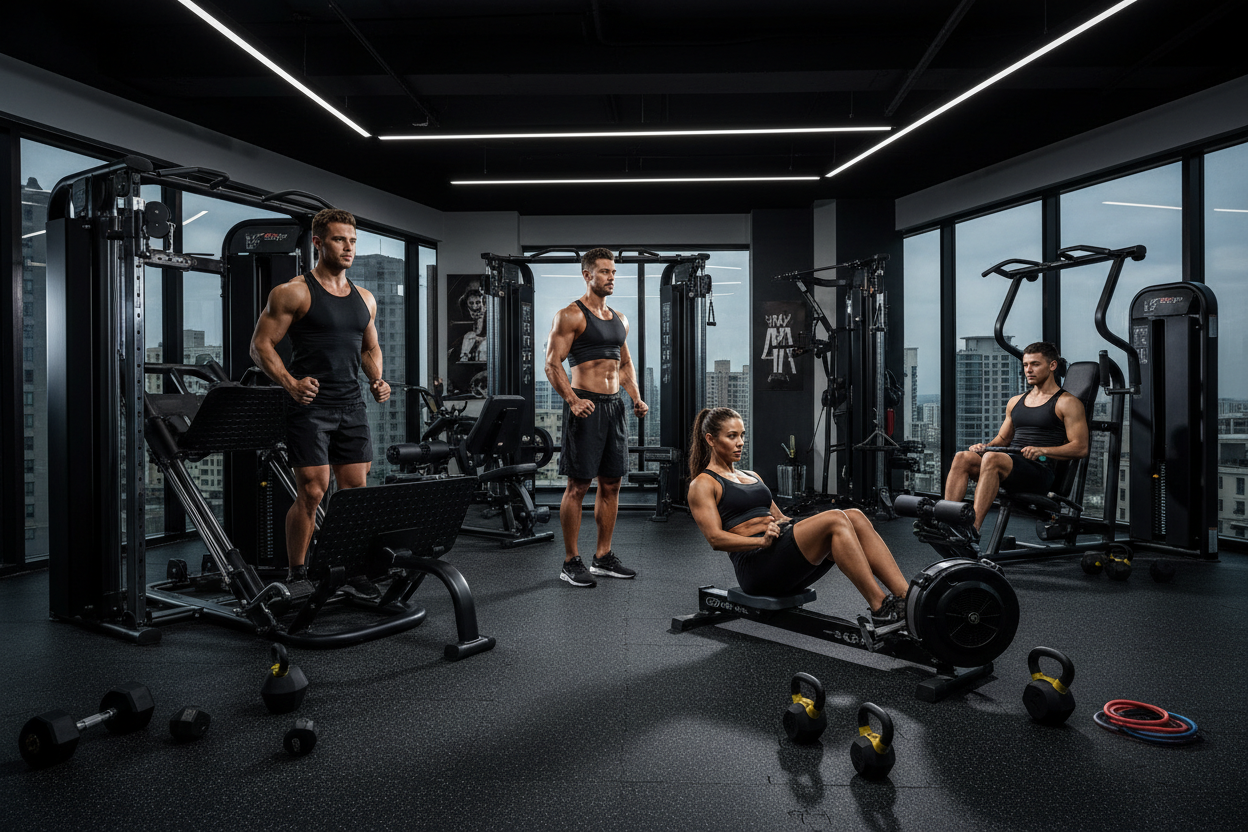
A functional trainer (dual adjustable pulleys) is arguably the king of the machine only workout. It offers infinite angles and allows for unilateral training. However, traditional multi-gyms with fixed movement arms are often more budget-friendly and provide heavier weight stacks for movements like lat pulldowns and chest presses. When selecting your weight machine full body workout centerpiece, consider your ceiling height—many functional trainers require at least 84 inches of clearance.
From Our Gym: Honest Take
I recently spent 12 weeks running a strict machine only workout plan using a standard dual-stack functional trainer in my own 10x12 garage gym. I wanted to see if a machine only bodybuilding phase could match my usual barbell routine.
One critical detail most spec sheets will not tell you is the cable travel limit. At 6'2, I maxed out the cable length on overhead triceps extensions, which forced me to perform them kneeling. However, the constant tension of the cables resulted in some of the best mind-muscle connection I have ever felt during a full body workout on machines. My shoulders felt healthier, and I added noticeable size to my lats. If you are taller, always check the usable cable travel—not just the machine's overall height—before you buy.
Frequently Asked Questions
Can you build muscle working out with machines only?
Absolutely. Muscle growth requires progressive overload, mechanical tension, and adequate recovery. Workout with machines only can provide all three, often with a lower risk of injury compared to free weights.
What is the best full body machine workout routine?
The ideal routine targets all major muscle groups in a single session. A great starting point is the leg press, chest press machine, lat pulldown, seated cable row, machine shoulder press, and cable crunches. Perform this 3 times a week.
Are total body machine exercises safe for beginners?
Yes, they are highly recommended for beginners. Machines guide you through a fixed, safe range of motion, which helps novices learn proper biomechanics and build a baseline of strength before attempting complex free-weight lifts.
How much space do I need for a full body workout using machines?
A high-quality multi-gym or functional trainer typically requires a footprint of about 6x6 feet, plus an additional 2-3 feet of operational clearance around the unit. Always measure your ceiling height, as pull-up bars on these machines often reach over 7 feet tall.