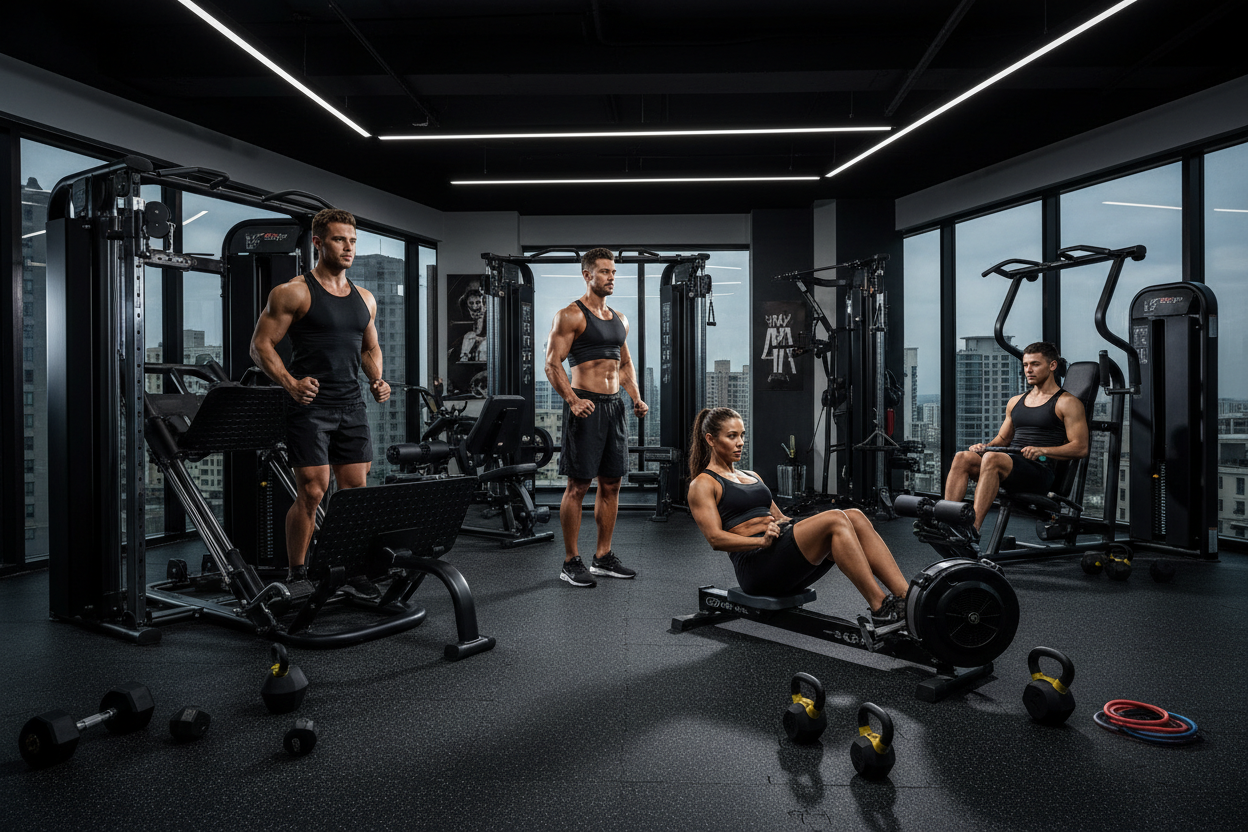
Home Cable Gym Machine: Is It Actually Worth the Space?
If you have ever tried to squeeze a full commercial gym's worth of equipment into a two-car garage or a spare bedroom, you know the struggle. Free weights are fantastic, but they demand serious real estate. That is exactly why adding a home cable gym machine has become the ultimate game-changer for North American garage and basement setups.
Whether you are hitting a plateau with dumbbells or just want the joint-friendly, constant tension that pulleys provide, a cable setup can transform your training. But with dozens of models on the market, how do you choose? This guide will help you navigate the specs, space requirements, and hidden details you need to know before pulling the trigger.
Key Takeaways
- Space efficiency: Functional trainers and cable towers pack dozens of exercises into a compact footprint.
- Pulley ratios matter: A 2:1 ratio means a 100 lb stack provides 50 lbs of actual resistance.
- Plate-loaded vs. weight stack: Plate-loaded saves money, while selectorized weight stacks save time.
- Constant tension: Cables provide uniform resistance throughout the entire range of motion, unlike free weights.
Sizing Up Your Space: Will It Fit?
The biggest mistake buyers make isn't about the weight capacity—it is misjudging the room needed to actually use their new home cable workout machine.
Ceiling Clearance is Crucial
Most standard basements sit around 84 to 96 inches high. High-end cable towers often brush the 82-inch mark. You need to account for not just the machine, but your own height when doing pull-ups on the integrated bar. Always leave at least 6 inches of breathing room above the highest point of the frame.
Footprint vs. Working Area
A corner-mounted all in-one cable machine might only take up a 4x4 foot square, but you need an additional 4 to 6 feet of forward clearance for exercises like cable crossovers or walking lunges. Measure your 'working area', not just the static equipment footprint.
Weight Stacks vs. Plate-Loaded Systems
When shopping for a cable system, your budget and current equipment will dictate your path.
The Plate-Loaded Advantage
If you already own a stack of Olympic bumper plates, a plate-loaded cable system offers incredible value. They are cheaper to ship, easier to move, and allow you to utilize the weights you already have. The trade-off? Changing weights between supersets takes a bit more time.
The Selectorized Convenience
Selectorized machines feature built-in weight stacks with a pin system. They are the hallmark of commercial gyms and offer unmatched convenience for drop sets and quick transitions. While they cost more upfront and are heavy to install, the frictionless workflow is often worth the investment for daily users.
From Our Gym: Honest Take
We have tested dozens of setups over the years, and I can tell you firsthand that the smoothness of the pulleys makes or breaks a cable machine. Last year, I installed a popular dual-stack functional trainer in my own garage gym. The aluminum pulleys with sealed bearings were noticeably smoother than the nylon ones on my previous budget model—no catching or jerking during heavy tricep pushdowns.
However, here is my honest caveat: the 2:1 pulley ratio caught me off guard. When I pinned 150 lbs for a seated row, I was actually only pulling 75 lbs. If you are a heavy lifter, you might max out a standard 160 lb stack faster than you think. I highly recommend looking for systems with a 1:1 ratio option or upgrading to 200 lb stacks if you plan on doing heavy compound pulls.
Frequently Asked Questions
Is a cable machine worth it for a home gym?
Absolutely. Cables provide constant tension and allow you to hit angles that are nearly impossible with barbells and dumbbells alone. They are especially valuable for isolation work, rehab exercises, and maximizing limited floor space.
How much space do I need for a home cable machine?
While compact functional trainers can fit into a 4x4 foot corner, you should plan for at least a 6x8 foot total area. This ensures you have enough room to step away from the machine for exercises like cable flyes and lat pulldowns.
Can I build muscle with just cables?
Yes. Muscle growth requires progressive overload and time under tension, both of which cables excel at providing. While free weights are great for absolute strength, cables are highly effective for hypertrophy due to the continuous resistance they place on the muscle.