Why Most Exercises for Osteoporosis PDF Handouts Are Way Too Easy
I recently looked at an exercises for osteoporosis pdf my aunt brought home from her clinic. It was three pages of clip-art showing people in rocking chairs doing ankle circles and squeezing rubber balls. I nearly threw my coffee through the window. If you are dealing with bone loss, the medical establishment often treats you like you are made of blown glass, but that is exactly how you stay fragile.
The truth is that bone is a living, reactive tissue. It does not get stronger because you ‘moved’ a little bit; it gets stronger because you gave it a reason to survive a load. When I see a typical weight-bearing exercises handout, it usually lacks the one thing that actually triggers bone growth: intensity. You need to stop looking for ways to avoid effort and start looking for ways to safely challenge your skeletal system.
- Bones require mechanical loading to increase density; light stretching won't cut it.
- Axial loading (weight on the spine/hips) is the gold standard for preventing fractures.
- Safety does not mean ‘light’; it means using proper form and stable equipment.
- Progressive overload is just as important for a 70-year-old as it is for a 20-year-old.
The Problem With Your Doctor's Flimsy Handout
Most osteoporosis exercise pdf documents you find online are designed by legal departments, not strength coaches. They are terrified you might fall or strain a muscle, so they prescribe movements that are so low-intensity they barely qualify as exercise. If you are just doing seated leg extensions with a two-pound ankle weight, you are not building bone. You are just passing time.
To actually see a change in a DEXA scan, you need what we call osteogenic loading. This means putting enough stress on the bone to create tiny deformations that signal the body to deposit more calcium. A resistance band exercises for osteoporosis pdf might be a decent starting point for someone who hasn't moved in a decade, but it should be a bridge, not a destination. You cannot expect a thin piece of latex to provide the same stimulus as a barbell or a heavy kettlebell.
Furthermore, many of these handouts focus on isolated movements. Bone health is a systemic issue. You want movements that force your whole body to stabilize and carry weight. When you see printable pictures of weight-bearing exercises for osteoporosis that only show people sitting down, you are looking at a program that is missing the mark on functional bone density.
Wolff's Law: Why Bones Need Actual Weight-Bearing Stress
There is a principle in anatomy called Wolff's Law. It states that bone in a healthy person or animal will adapt to the loads under which it is placed. If loading on a particular bone increases, the bone will remodel itself over time to become stronger to resist that sort of loading. This is why a weight bearing exercises for osteoporosis pdf must include standing movements.
I often hear people say they get their exercise from swimming or cycling. While those are great for your heart, they are essentially a non weight-bearing exercises pdf in real life. Your bones are floating in water or supported by a bike frame. There is no impact, no gravity-driven compression, and therefore, very little bone adaptation. You need the ground-reaction forces that come from standing, stepping, and lifting.
This is where the distinction between ‘weight-bearing’ and ‘resistance training’ gets blurry. A good osteoporosis weight bearing exercises pdf should include both. Weight-bearing means your bones are supporting your weight against gravity (like walking or hiking). Resistance training means you are adding external load (like dumbbells). For the best results, you need to combine them. Walking is the baseline; lifting is the builder.
Stripping the Fluff: Movements That Actually Build Density
If you want to stop the clock on bone loss, you need to stop wasting time on 'toning' exercises. You need to focus on the big movers. I always recommend people look at a bare-bones list of weight exercises to understand which movements provide the most bang for your buck. We are looking for movements that load the hips, the femurs, and the spine.
In any weight bearing exercises for osteoporosis at home pdf, you should see variations of the squat, the hinge, and the press. These aren't just for bodybuilders. They are the fundamental patterns of human movement. By loading these patterns, you are strengthening the exact areas most prone to osteoporotic fractures.
Lower Body Power (The Hip & Femur Fix)
The hip is the most critical area for anyone with low bone density. A hip fracture can be life-altering, so we train the hips like our lives depend on it. This starts with the squat. Whether it is a chair squat, a goblet squat, or a box squat, you are teaching your femurs to handle load. You can follow a blueprint for lower body power to see how to transition from bodyweight to actual resistance.
Deadlifts are the other half of the equation. I know, 'deadlift' sounds scary for a senior. But a deadlift is just picking something up off the floor with a flat back. It is the ultimate weight bearing exercises for seniors pdf staple because it builds massive density in the posterior chain. Start with a light kettlebell on a raised block. The goal is to eventually move more than just a gallon of milk.
Core & Spine (Stabilization Without Flexion)
This is where most osteoporosis exercises for seniors pdf handouts get dangerous. Many of them still include crunches or seated twists. If you have thinning vertebrae, spinal flexion (rounding your back) under load is a huge no-no. It puts unnecessary pressure on the front of the vertebrae, which is where compression fractures happen.
Instead, your core exercises for osteoporosis pdf should focus on 'anti-rotation' and 'anti-flexion.' Think planks, bird-dogs, and Farmer's carries. You want to learn how to keep your spine stiff and neutral while your limbs move. This protects the spine while the axial loading from your weights does the work of building bone density in the vertebrae.
How to Upgrade Your Printable Routine Safely at Home
If you are moving past the basic exercise for osteoporosis pdf and starting to lift real weight at home, you need to stop using the coffee table as a bench. I have seen too many people try to do step-ups on a plastic chair. If you are serious about loading your bones, you need a sturdy adjustable weight bench that won't wobble when you sit down with dumbbells.
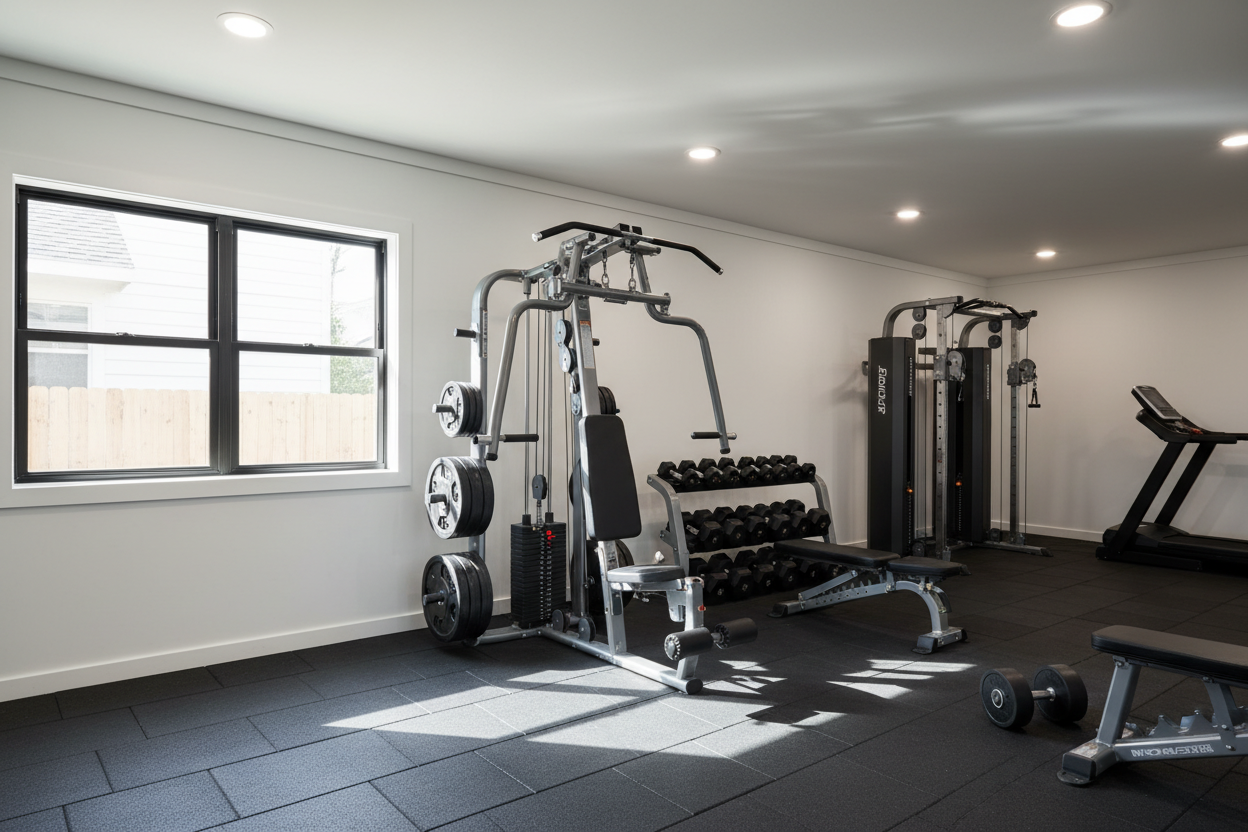
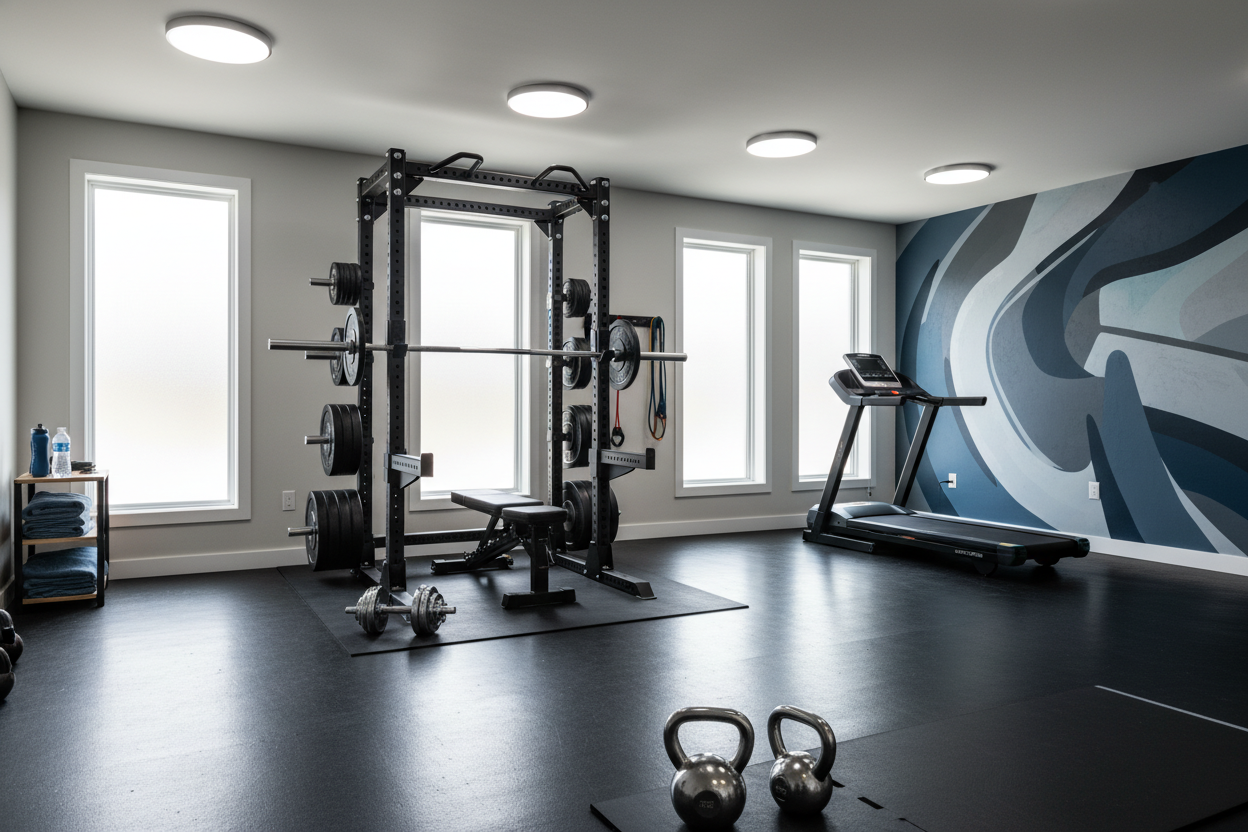
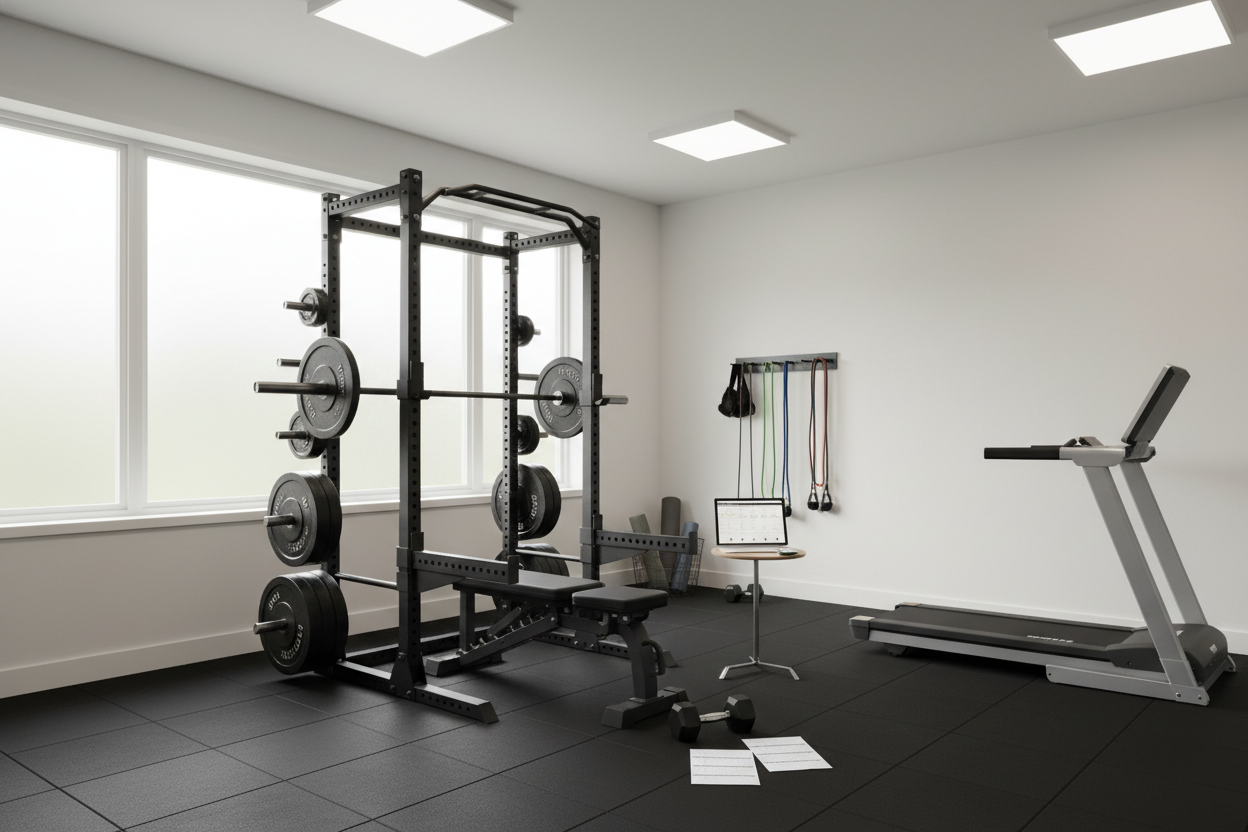
For those who are ready to really push their density scores, a power rack and bench package is the ultimate safety net. A rack allows you to set safety pins. If you are doing a squat and feel off-balance, the pins catch the weight so you don't have to. It turns a 'scary' exercise into a controlled, measurable movement. This is how you bridge the gap between a physical therapy office and a home gym that actually produces results.
When setting up your space, focus on stability. Hard flooring or a thin, high-density gym mat is better than plush carpet, which can be a trip hazard and makes your ankles work too hard to stabilize. You want a rock-solid foundation so that 100% of your focus is on the lift, not on whether you're going to tip over.
What to Look For Before You Hit Print
Before you commit to an osteoporosis physical therapy protocol pdf, look for these three things. First, does it mention 'progressive overload'? If the plan doesn't tell you how to make the exercises harder over time, it’s a waste of paper. Second, does it include weight-bearing exercise for osteoporosis pdf staples like standing movements? If it’s all on the floor, it’s not for bones.
Third, check for pictures. You want printable pictures of weight-bearing exercises for osteoporosis that show neutral spine alignment. If the model in the photo is slouching or rounding their back, delete the file. You deserve a program that respects the biology of bone growth and the reality of your safety.
Personal Experience: The 'Fragile' Trap
A few years ago, I started training my mother after her doctor told her she had osteopenia. At first, I was terrified. I gave her the light bands and the seated rows. We did that for three months, and her follow-up scan showed zero change. I realized I was falling into the same trap as the clinic handouts.
We changed tactics. I bought her a real set of dumbbells and a solid bench. We started with five-pound goblet squats and worked up to twenty-five pounds over six months. She was nervous about the weight, but she felt 'sturdier' in her daily life. Her next scan showed an actual increase in bone mineral density in her lumbar spine. The lesson? You can't protect yourself into strength. You have to build it.
FAQ
Is walking enough for osteoporosis?
Walking is a great start, but for most people, it isn't enough of a stimulus to significantly increase bone density. You need to add resistance training to truly see an impact on your DEXA scores.
Can I do these exercises if I already have a fracture?
You must be cleared by a doctor first. However, once a fracture is healed, controlled loading is often the best way to prevent the next one. Just avoid high-impact jumping or spinal flexion.
How many days a week should I lift for bone health?
Two to three days of dedicated resistance training is the sweet spot. Your bones need the days in between to recover and remodel. Consistency over months is more important than intensity over days.