Muscle Building Naturally: Hypertrophy Foundations, Movement Programming, and Home Floor Staging
Principles of Muscle Building Naturally: Tension, Effort, and Adaptation
Pursuing muscle building naturally requires a steady commitment to foundational training variables rather than quick shortcuts. At the center of natural hypertrophy is mechanical tension, which occurs when muscle fibers generate force against meaningful external resistance through a controlled range of motion. Unlike accelerated regimens reliant on synthetic compounds, natural adaptations accumulate over months and years of consistent effort, progressive stimulus, and deliberate recovery windows.
Understanding how to build natural muscle starts with clarifying what drives tissue adaptation. Lifting loads close to muscular failure challenges motor units across targeted muscle groups. Controlling repetition cadence—particularly during the eccentric or lowering phase—amplifies the time under tension while protecting joint connective tissue from unnecessary ballistic shock. Because natural lifters rely on endogenous hormonal rhythms, managing systemic fatigue is just as vital as the stimulus itself. Balancing workout intensity with complete recovery between training bouts helps ensure consistent strength progression over time.
Core Movement Patterns for Long-Term Natural Muscle Development
Rather than accumulating dozens of isolation exercises in a single workout, sustainable natural training revolves around multi-joint compound movement patterns. These archetypes recruit significant muscle mass simultaneously, allowing lifters to handle heavier loads and build a well-proportioned, resilient physique. Lifters frequently organize their weekly sessions around a foundational five-pattern movement structure to ensure balanced physical development.
- Squat Variations: Develop quadriceps, glutes, and core stability through back squats, front squats, or goblet variations.
- Hip Hinges: Target the posterior chain, including hamstrings, gluteal tissues, and spinal erectors, using deadlifts or Romanian deadlifts.
- Upper-Body Pushing: Build chest, shoulder, and triceps volume via horizontal barbell or dumbbell presses alongside overhead pressing angles.
- Upper-Body Pulling: Reinforce the back musculature, rear deltoids, and biceps with pull-ups, chin-ups, and chest-supported rows.
- Loaded Carries and Core Bracing: Reinforce grip strength, shoulder stability, and midline rigidity to support heavier compound lifts.
Balancing Free Weights, Bodyweight Drills, and Fixed Paths
A well-rounded home gym program integrates multiple tool types rather than dogmatically relying on one. Free weights such as barbells and dumbbells provide open movement pathways that demand active stabilization from smaller supporting muscles. Bodyweight drills build relative strength and body awareness without adding spinal compression. When comparing free weights and resistance machines, fixed paths and cable stacks offer continuous tension curves and lower stability demands, making them useful for accumulating training volume without overtaxing balance and spinal stabilizers.
The Role of Ground Stability in Natural Strength and Hypertrophy
Effective force generation begins at the surface underfoot. When performing heavy compound lifts like squats, deadlifts, and overhead presses, the feet serve as the primary base through which energy transfers into the load. Spreading the toes, establishing three-point foot contact across the heel and ball of the foot, and maintaining an unyielding surface allows muscles to contract with full neurological drive.
Squishy, overly compliant flooring, such as soft foam tiles or high-pile carpeting, introduces unwanted micro-instability. When the base beneath a lifter shifts or compresses unevenly, the body instinctively dampens force output to preserve balance. This reflex blunts peak muscle recruitment and can misalign ankle, knee, and hip tracking under load. Dense, non-slip rubber mats provide a firm, predictable platform that supports natural movement mechanics and steady barbell paths.
Home Gym Floor Staging and Room Protection Architecture
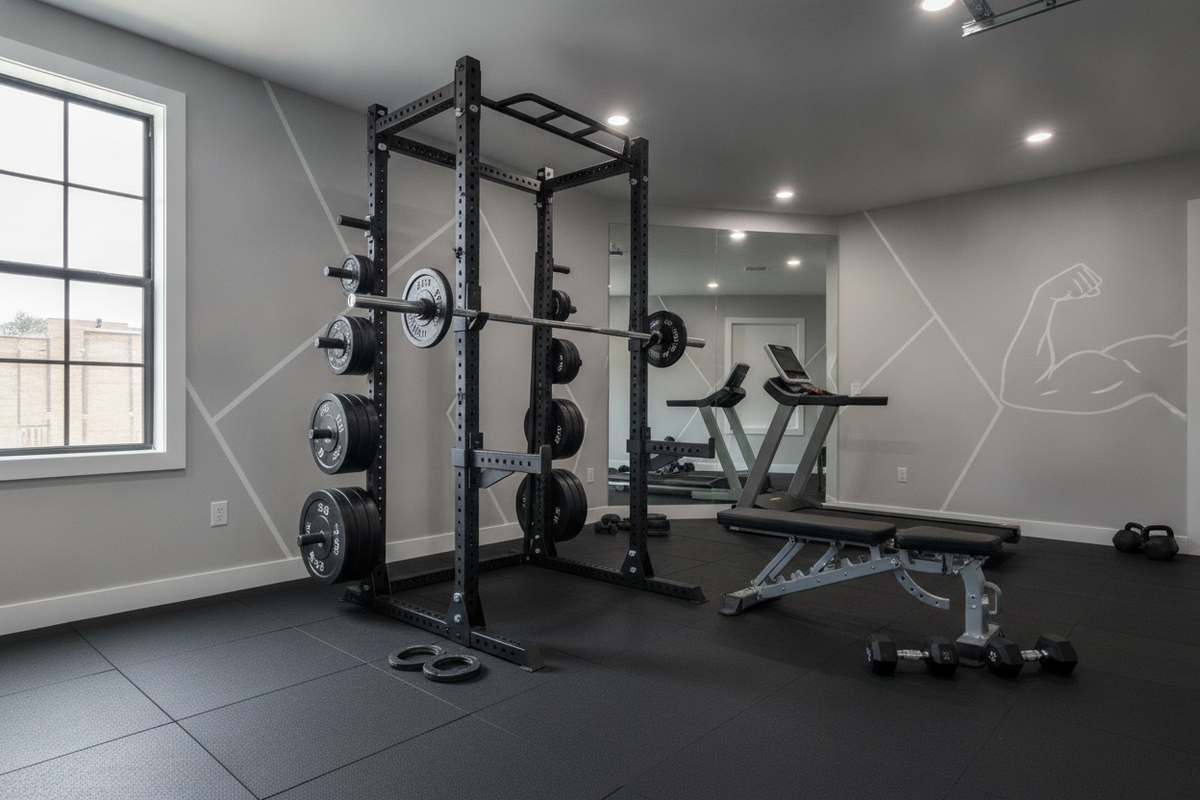
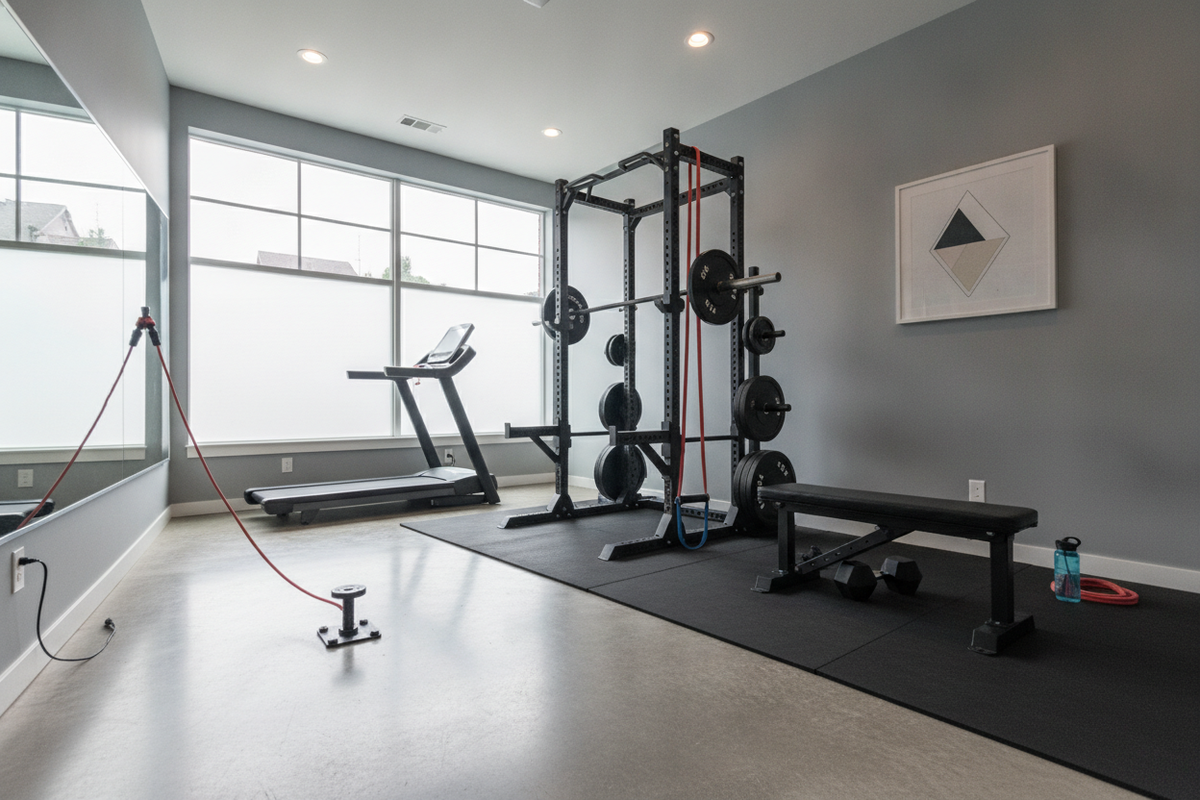
Lifting at home requires thoughtful layout choices to protect the building structure, the equipment, and the athlete. Dropping heavy barbells or dumbbells onto unprotected concrete, tile, or hardwood can crack subflooring, chip weights, and generate disruptive vibrational noise throughout the home. A dedicated lifting zone built with dense, impact-absorbing rubber mats shields underlying surfaces while creating a clean, defined workout territory.
When staging a home lifting room, consider laying continuous high-density protective mats across the primary working zone. These mats distribute dropped weight across a broader surface area, buffering dynamic loads from deadlifts or dumbbell bench presses. In addition to safeguarding the subfloor, durable matting reduces ambient rattling from metal weight plates and helps keep heavy equipment from sliding out of alignment during rigorous training sessions.
Equipment Placement and Traffic Flow for Safe Heavy Lifts
An efficient home training space balances floor coverage with intuitive equipment zoning. Keeping designated pathways clear of stray plates and dumbbells helps prevent accidental trips when moving around the room between strenuous sets.
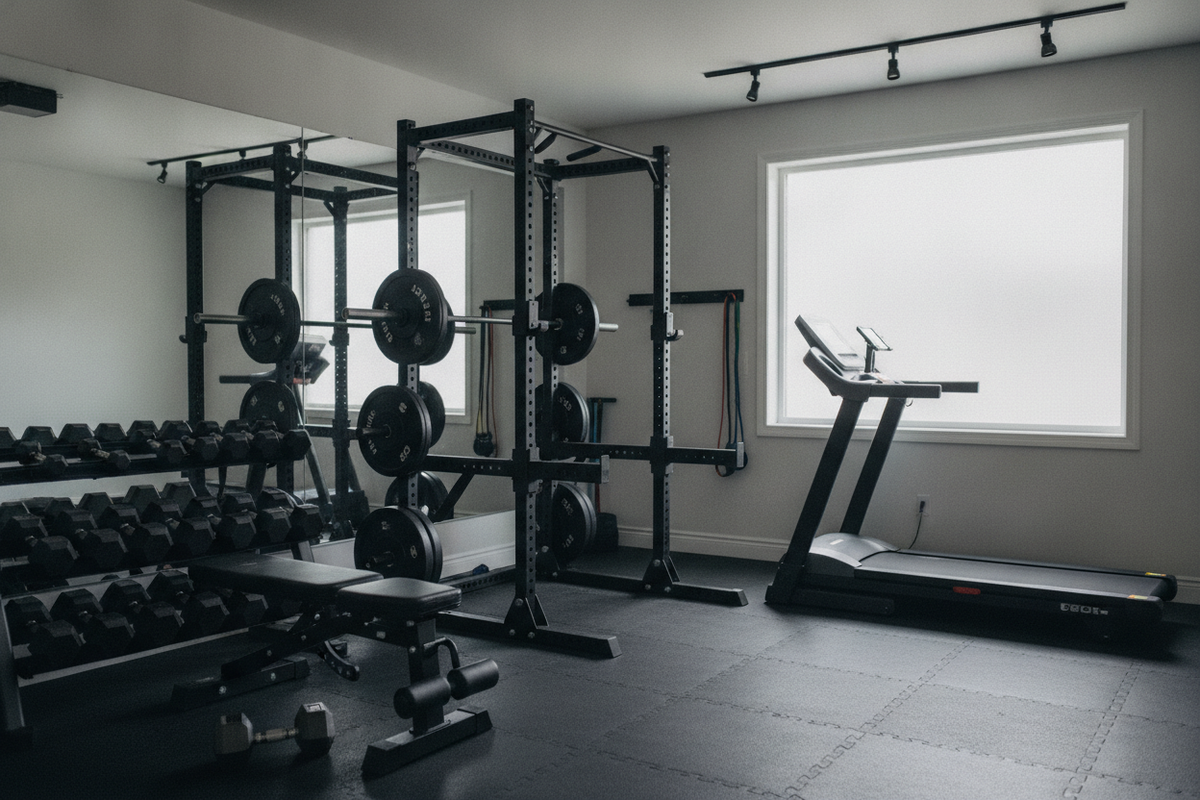
- Power Rack Anchor Zone: Position the squat rack against a supportive wall or over a level subfloor section, ensuring ample clearance on either side for loading and unloading weight plates.
- Dumbbell and Bench Staging: Reserve an open floor lane adjacent to dumbbell storage racks so you can step directly into position for flat, incline, or seated pressing movements.
- Open Platform Lane: Keep a clean, flat channel open for deadlifts, cleans, or lunges without encroaching on bench footprints or storage zones.
- Plate Tree and Accessory Storage: Mount or position storage pegs close to the primary barbell station to minimize carrying heavy plates across the room.
Routine Maintenance and Surface Care for Heavy Lifting Mats
High-density gym flooring endures significant physical wear from dropped weights, chalk dust, and sweat. Establishing a consistent maintenance routine preserves surface grip and ensures the training area stays hygienic and functional over years of use.
Sweep or vacuum the surface regularly to eliminate grit, chalk, and debris that could compromise foot traction during heavy sets. For periodic washing, use a neutral floor cleaner or mild soap mixed with warm water, applying it with a lightly dampened microfiber mop. Avoid aggressive chemical solvents or abrasive brushes, as harsh compounds can degrade rubber binders and leave slippery residues. Inspecting interlocking mat edges or floor seams periodically ensures that panels remain tightly joined without lifting at the corners, maintaining a flat, level training foundation.
Structuring Natural Progression Without Overtraining
Natural lifters achieve long-term muscle gains through disciplined progressive overload rather than sporadic intensity spikes. Progressing does not always mean adding weight to the bar every single session; it can also involve completing more repetitions with the same weight, improving form cadence, reducing rest intervals between sets, or adding an extra working set per movement pattern.
Lifters starting their journey benefit from adopting structured beginner lifting routines that focus on mastering fundamental movements before introducing advanced training splits. Pairing structured programming with dependable ground stability, adequate sleep, and sound nutrition creates the sustainable environment needed for continuous natural muscle hypertrophy.