Build Glute Muscle Fast: Force Vectors, Movement Execution, and Floor Anchoring
Biomechanical Foundations: Why Glutes Respond to Specific Force Vectors
Lifters who want to build glute muscle fast often encounter plateaus when their routines rely solely on high-repetition bodyweight circuits or unfocused kickbacks. The gluteal complex—primarily the gluteus maximus, gluteus medius, and gluteus minimus—requires exposure to substantial mechanical tension across multiple angles to trigger meaningful adaptation. Understanding the structural orientation of these muscle fibers allows you to select movements that directly challenge the hip extensors rather than dissipating load into neighboring muscle groups.
Muscular growth in the hips responds best when you pair horizontal force vectors with vertical and axial loading patterns. Horizontal actions, such as barbell hip thrusts and weighted glute bridges, generate peak tension at full hip extension, where the gluteus maximus reaches complete contraction. Conversely, axial and vertical vectors, found in movements like romanian deadlifts and deep squats, place peak mechanical tension on the muscle fibers while they are elongated under load. To explore multi-joint loading vectors and gym exercise variations in greater depth, review our comprehensive building glutes booty guide.
Lateral stability patterns also play an indispensable role in building glutes fast. The gluteus medius and minimus act as primary hip abductors and pelvic stabilizers during unilateral movements. When you eliminate passive momentum and force these stabilizing structures to anchor the pelvis against rotational forces, the entire hip complex responds with balanced development and improved baseline strength.
Core Movement Architecture for Rapid Glute Hypertrophy
Establishing an efficient movement architecture ensures that every repetition directly stimulates muscle fibers rather than taxing connective tissues unnecessarily. When considering how to build booty muscle fast, structuring training around four primary movement categories creates a reliable foundation:
- Primary Horizontal Hip Extension: Barbell hip thrusts, dumbbell bridges, and machine thrusts. These isolate hip extension while maintaining a bent knee, which naturally reduces hamstring contribution and directs load onto the gluteus maximus.
- Lengthening Hinges: Romanian deadlifts, deficit stiff-leg deadlifts, and cable pull-throughs. These emphasize hip pushback and eccentric stretch, creating significant tension through the gluteal ties and upper hamstrings.
- Unilateral Hybrids: Bulgarian split squats, reverse lunges, and step-ups. By loading one limb at a time with a slight torso lean, these exercises challenge both the prime movers and the pelvic stabilizers.
- Abduction and Rotation Finishers: Seated machine abductions, cable kickbacks, and lateral band walks. These serve as accessory movements to exhaust remaining motor units without adding excessive systemic fatigue.
Integrating these complementary categories produces a complete stimulus across all fiber regions. For structured exercise breakdowns and home-friendly programming suggestions, consult our detailed build muscle booty guide.
Execution Nuances: Eliminating Momentum and Protecting the Lumbar Spine
Proper technical execution dictates whether resistance loads the target musculature or strains the lower back. During heavy hip thrusts, lifters frequently arch the lumbar spine aggressively to achieve what feels like a higher finish point. To build glute muscle fast, prioritize a neutral or slightly posterior pelvic tilt at the top of the movement. Keeping the ribcage pinned down and the chin tucked toward the chest prevents spinal hyperextension and ensures that the glutes, rather than the lumbar erectors, absorb the load.
Foot placement serves as an immediate diagnostic tool during bridges and thrusts. Positioning the feet too far forward shifts the primary tension into the hamstrings, while bringing them too close to the hips increases knee flexion and shifts work to the quadriceps. Aim for vertical shins when your hips reach full lockout. To refine these movement cues, adjust tempos, and master pelvic alignment across various lifts, see our dedicated build glutes booty guide.
Controlling movement tempo further enhances motor unit recruitment. Rushing through the eccentric phase relies on elastic bounce rather than muscular control. Slowing the descent and incorporating deliberate isometric pauses at peak contraction forces the target fibers to work through the entire range of motion, maximizing tension without requiring reckless loading.
Floor Staging and Setup: Preventing Slippage and Bench Shift Under Load
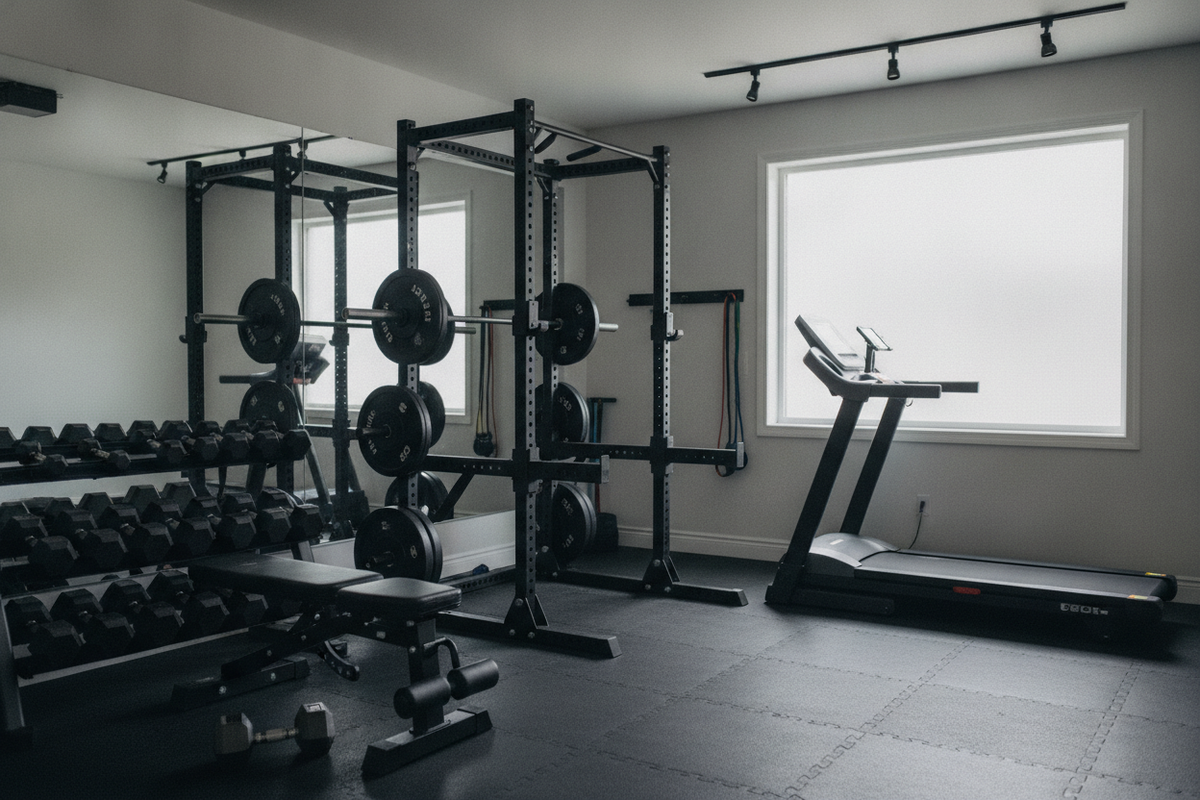
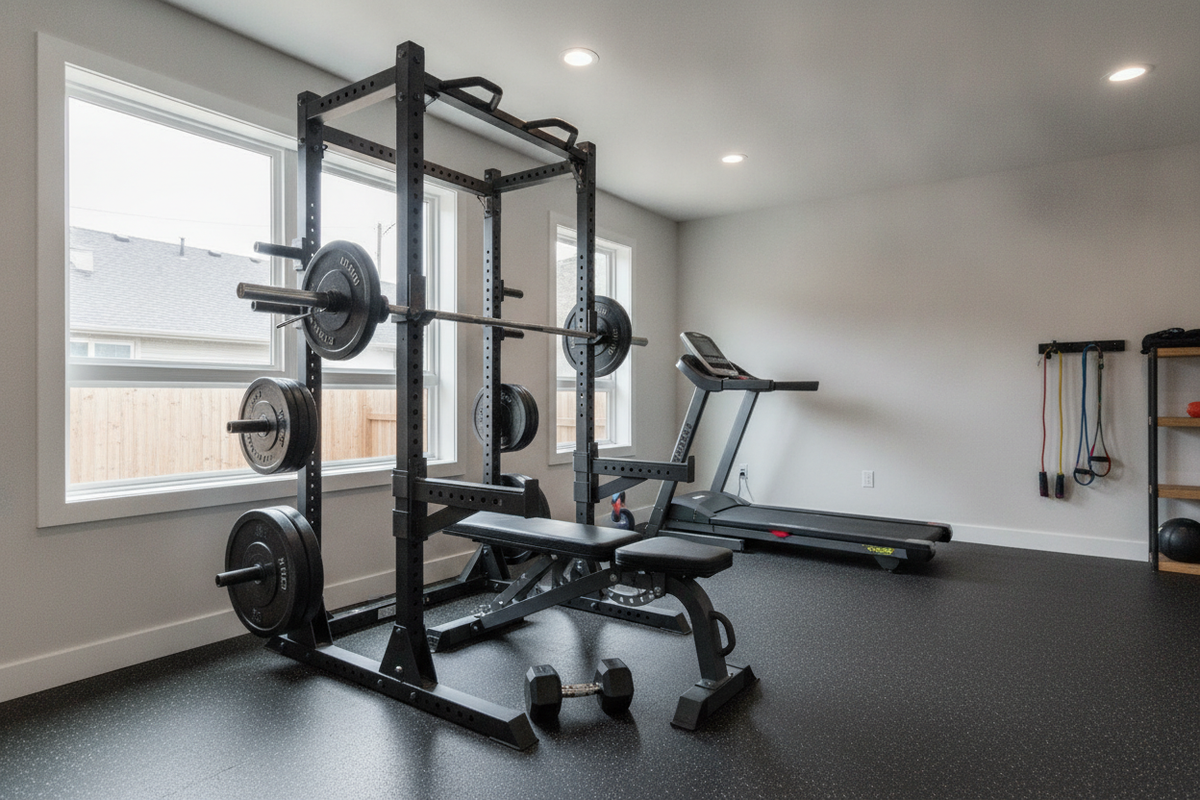
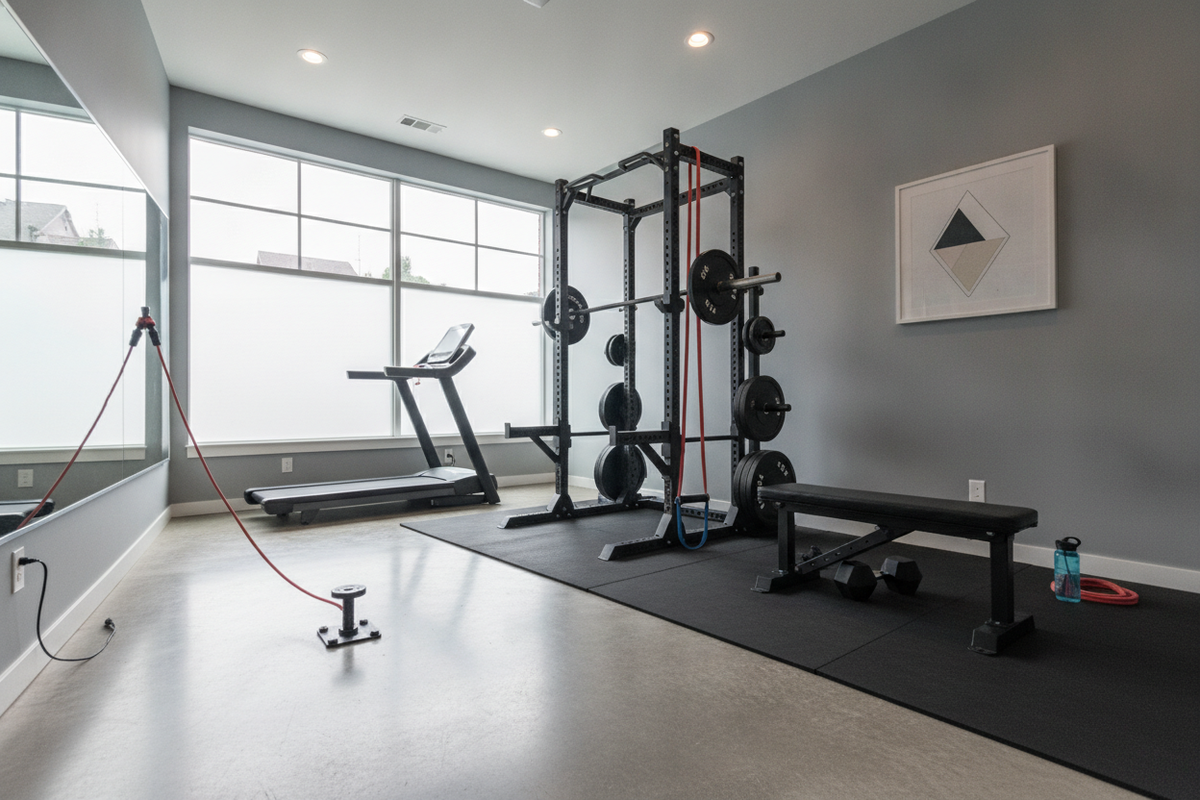
A frequently overlooked factor in home gym glute training is the stability of the floor beneath your equipment. Hip thrusts and heavy unilateral lunges generate intense horizontal and diagonal shear forces. During a hip thrust, driving through the heels pushes your weight bench backward. If that bench rests on slick hardwood, smooth tile, or low-density foam, it can easily slide mid-set, throwing the spine out of alignment and compromising force transfer.
To maintain safety and mechanical efficiency while building glutes fast, your training platform must provide firm floor grip and adequate surface traction:
- High-Density Rubber Surface: Dense, vulcanized rubber matting grips the floor beneath it while holding the rubber feet of weight benches securely in place, preventing shifting under heavy horizontal loads.
- Subfloor Protection: Heavy dumbbells and barbells used for hinges and deadlifts place concentrated weight on residential subfloors. Dense gym mats absorb shock and distribute point-load stress across a broader surface area.
- Footwear Traction: Performing split squats or lunges requires stable traction under the drive foot. Textured rubber matting prevents foot slip, allowing you to maintain a forward torso lean and deep hip stretch with confidence.
- Layout and Spacing: Ensure ample floor clearance around benches and racks so you can set up barbells, position floor wedges, and transition between compound sets and floor stretches without tripping hazards.
Speaking from experience as an equipment editor, I always pay close attention to bench grip against the floor during setup, because even a minor slide ruins an entire working set. Establishing a secure, non-slip training zone provides the stability required to express full muscular effort safely.
Weekly Programming Structure and Progressive Loading Strategies
Accelerating muscle development requires a logical programming framework rather than random daily workouts. Spreading your glute volume across two to three dedicated sessions each week allows you to train with high effort during every working set while providing sufficient recovery intervals between workouts. For an in-depth perspective on multi-session weekly frequency and lower-body training balance, explore our build muscle fast guide.
Progressive overload remains the core driver of muscle growth. While adding load to the barbell or dumbbell is a classic progression method, it is not the only option. You can consistently challenge the target muscles by adding an extra repetition with identical form, extending the pause duration at peak contraction, or slowing the eccentric phase. Systematically documenting these variables from week to week ensures steady physical adaptation.
Finally, muscular synthesis demands adequate downtime and balanced nutrition. Demanding lower-body sessions deplete local energy stores and stress neuromuscular pathways. Prioritizing consistent sleep, sufficient protein intake, and scheduled rest days between heavy sessions provides the physiological environment your body needs to rebuild tissue and sustain long-term strength gains.