Building Muscle After 65: Training Architecture, Joint Comfort, and Home Floor Setup
Foundational Principles for Muscle Development Later in Life
Approaching resistance exercise in mature adulthood requires shifting emphasis from maximal external load toward movement control, deliberate execution, and joint integrity. When exploring how to build muscle after 65, the underlying physiological response still relies on mechanical tension delivered through structured resistance. Skeletal muscle adapts when prompted to counter resistance, meaning that intentional form combined with steady consistency provides a viable pathway to support lean tissue, balance, and everyday physical capacity.
Rather than chasing rapid weight increases or aggressive training volume, a sustainable plan emphasizes smooth acceleration, full control over the eccentric phase of each repetition, and predictable movement trajectories. This conservative, quality-focused approach allows lifters to accumulate muscular work without exposing joints, tendons, and ligaments to unnecessary distress.
Prioritizing Movement Quality and Joint Congruence
Joint congruence describes how smoothly articulating surfaces stay aligned throughout a given movement path. As connective tissues adapt over time, choosing exercises that follow natural joint anatomy becomes a primary consideration. For lifters working on building muscle after 65, prioritizing exercises that fit their individual structure prevents irritating the shoulders, hips, and knees.
Choosing variations with free handles, dumbbells, or resistance bands often provides greater wrist, elbow, and shoulder freedom than rigid straight bars. Pairing this movement freedom with a grounded stance allows the body to distribute load across active muscle bellies rather than concentrating stress within joint capsules.
Understanding Progressive Stimulus Without Extreme Strain
Muscular development relies on progression, yet progression does not strictly require adding heavy weight to an exercise each week. For mature trainees, progressive stimulus can be achieved through multiple low-impact adjustments:
- Slowing the lowering phase: Spending several deliberate seconds lowering a dumbbell or resistance band increases muscle engagement without extra load.
- Pausing at mid-range: Introducing brief isometric pauses eliminates momentum and challenges the target muscle during its most stable positions.
- Refining movement symmetry: Paying close attention to equal side-to-side force distribution builds baseline coordination and stability.
- Regulating rest transitions: Maintaining consistent rest intervals keeps training density structured without rushing through sets.
Core Movement Patterns Adapted for Joint Longevity
A balanced strength regimen organizes training around foundational human movements. Employing a structured five-pattern movement method helps lifters cover major movement arcs—squatting, hinging, pushing, pulling, and carrying—without overcomplicating daily session design.
When deciding between equipment styles, evaluating machine versus free-weight muscle building options often comes down to spatial availability and personal comfort. In a home gym environment, free weights and bands paired with dependable floor staging offer flexible variations that mimic practical movement requirements.
Lower-Body Mechanics: Supported Squats and Hip Hinges
Lower-body movements form the core of functional independence. Exercises like chair-assisted squats, goblet squats with modest loads, and Romanian deadlifts reinforce the hips, glutes, and thighs. In our editorial view, establishing balanced foot pressure across the entire sole creates an immediate foundation for lower-body confidence.
Focusing on strengthening the quadriceps for stability allows lifters to control their descent smoothly. Ensuring knees track in line with the middle toes and keeping feet firmly anchored to the floor supports natural tracking through the hips and ankles during each repetition.
Upper-Body Resistance: Controlled Pulls and Stable Presses
Upper-body movements benefit from solid base support. Chest presses executed on a stable bench or directly on a firm exercise mat limit shoulder hyperextension by providing a natural floor stop. This floor press variation targets the chest and triceps while protecting the anterior shoulder capsule.
Pulling exercises, such as chest-supported dumbbell rows or seated resistance band rows, strengthen the upper back and rear shoulders. Building posterior upper-body strength helps counterbalance forward-leaning posture and reinforces shoulder stability during daily tasks.
The Role of Ground Traction and Flooring Support
While resistance selection often receives the most attention, the physical surface beneath your feet serves as the foundation for every standing exercise. Lifting on slick hardwoods, unpadded concrete, or shifting area rugs compromises balance and limits your ability to generate force securely.
Traction Underfoot for Fall Prevention and Balance
Stable footing is essential when learning how to build muscle at 65. Exercises that require a split stance, hip hinge, or single-arm reach demand reliable surface friction. A dedicated, non-slip exercise mat prevents foot slide during lateral transitions and staggered stances.
Textured matting provides sensory feedback through the soles of the shoes or bare feet, helping lifters detect weight shifts and make subtle posture corrections. This tactile stability encourages proper form without the hesitation caused by slippery flooring.
Joint Cushioning and Subfloor Dampening
Standing on unyielding hard floors for extended periods can transmit excess pressure into the ankles, knees, and lower back. High-density gym matting offers a balance of firm support and surface dampening. Unlike overly plush yoga mats that compress excessively and destabilize balance, high-density exercise flooring maintains structural firmness while easing ground impact during bodyweight and weighted sessions.
Home Gym Layout and Equipment Staging for Mature Lifters
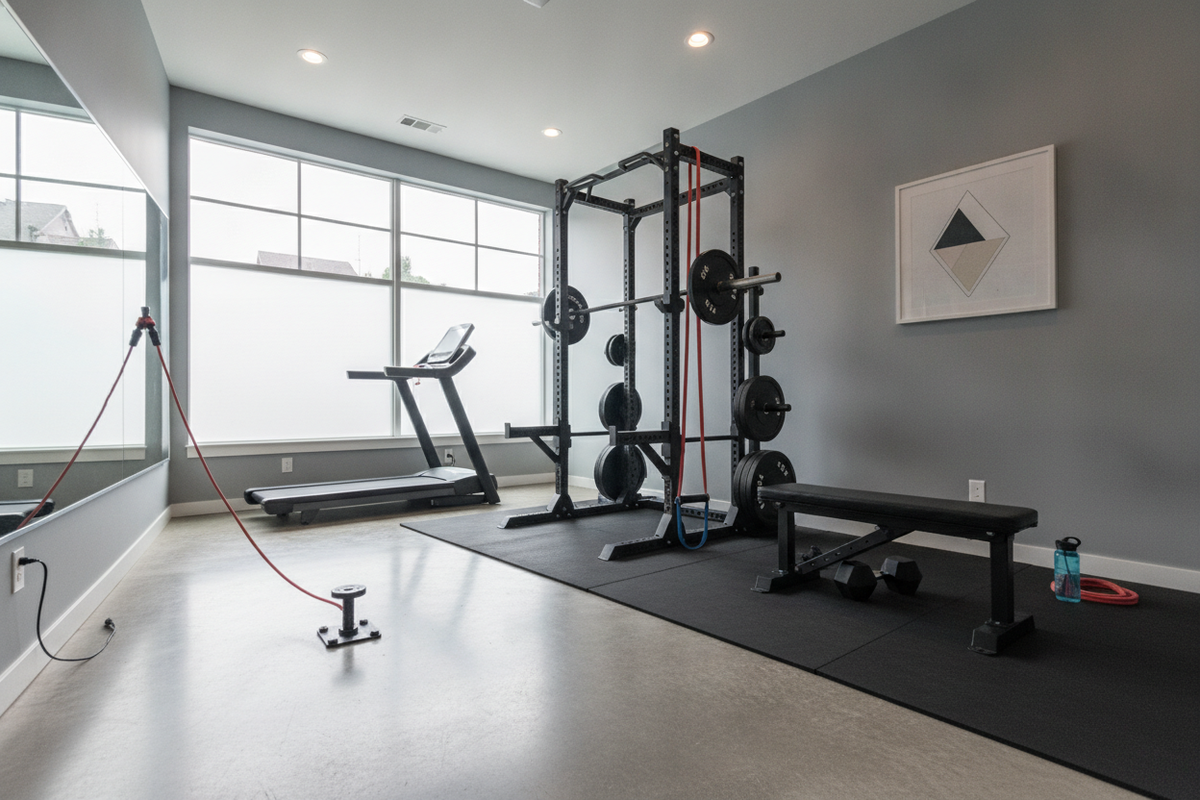
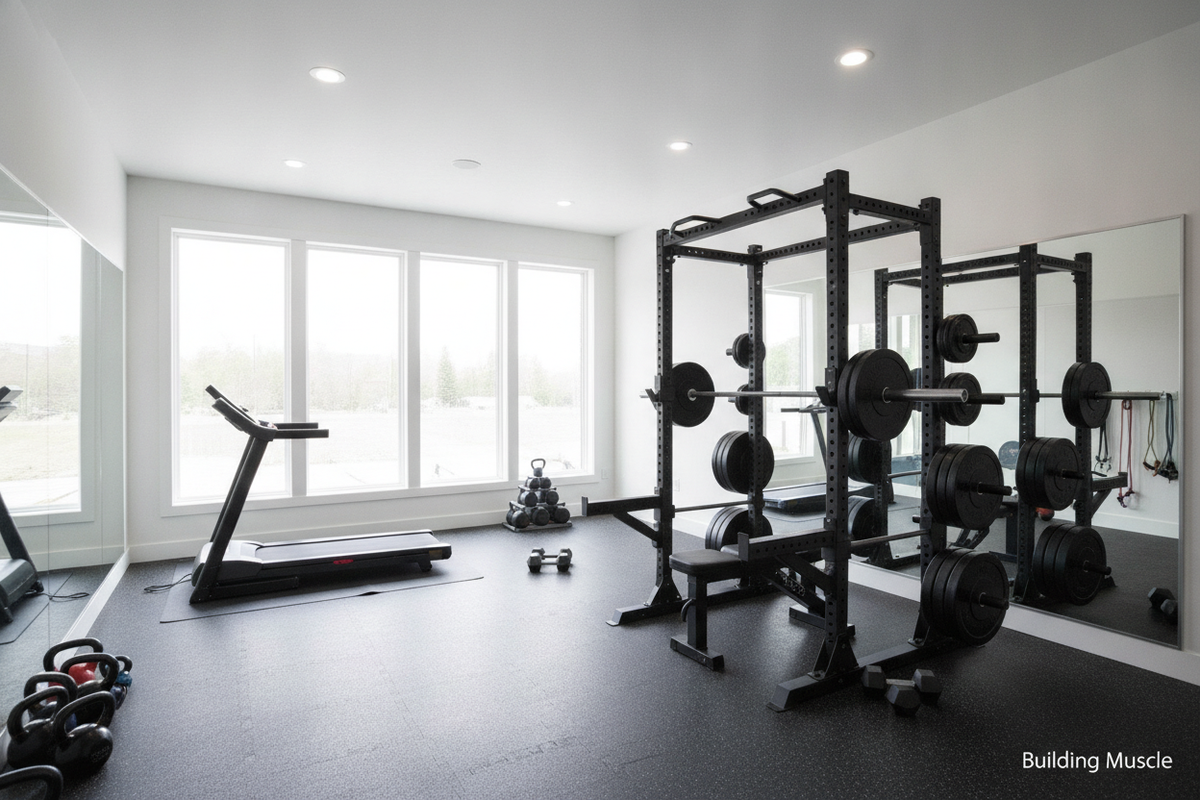
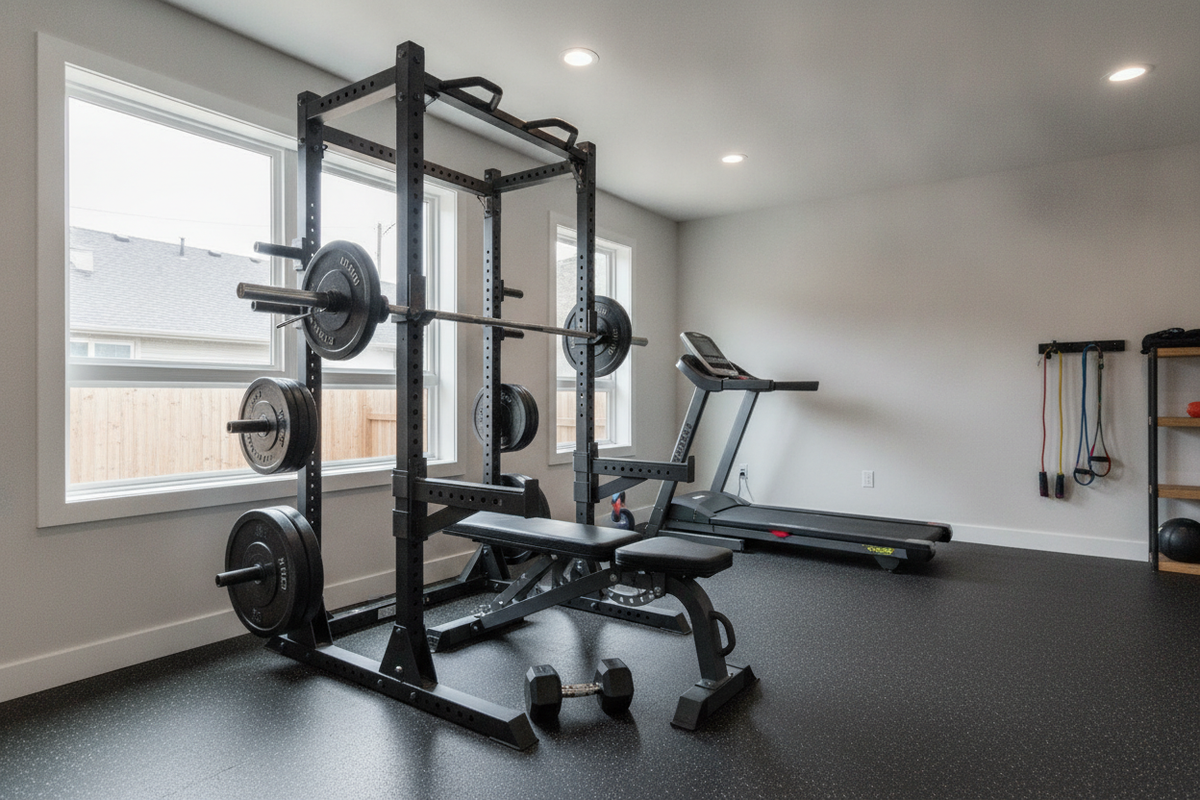
A well-organized home workout area enhances routine adherence and supports physical ease during exercise. Thoughtful floor planning reduces unnecessary bending, reaching, and repositioning between exercises.
Clear Pathways and Equipment Positioning
Eliminating tripping hazards around your workout perimeter creates an orderly training environment. Keep active floor space uncluttered by implementing a few practical habits:
- Designated weight storage: Place dumbbells, kettlebells, and bands on elevated racks or dedicated perimeter mats rather than leaving them in walking lanes.
- Stable bench placement: Ensure adjustable benches sit entirely on flat, non-slip matting so they do not rock or slide during seated or lying movements.
- Unobstructed perimeter: Maintain clear walking space around the perimeter of the primary training mat for seamless transitions.
Surface Maintenance and Hygiene Protocols
Regular maintenance preserves mat traction and keeps training areas fresh. Dust, pet dander, and sweat residue can diminish surface grip over time, increasing the potential for foot slippage. Wiping down exercise mats with mild soap and water or gentle surface cleaners maintains natural surface friction without degrading the high-density material.
Structuring a Sustainable Weekly Routine
Consistency outperforms intensity when maintaining muscle later in life. Organizing workouts into non-consecutive training days provides adequate recovery between sessions while keeping movement regular and predictable. A sample weekly template might feature two to three full-body sessions focusing on fundamental compound movements, complemented by daily walking and gentle mobility routines.
By unifying joint-friendly resistance exercises, deliberate tempo, and a secure floor surface, lifters over 65 can build strength, protect joint health, and train with confidence at home.