Momo Muscles & Fighter Training: Program Breakdown, Home Workouts, and Floor Staging
Understanding the Momo Muscle Training Philosophy and Combat Conditioning
Digital fitness coaching has shifted away from isolated bodybuilding splits toward dynamic, athletic movement patterns. Programs inspired by combat arts, such as those associated with coach Momo and the broader momo muscles training methodology, emphasize functional performance, full-body coordination, and explosive conditioning. Rather than training muscles purely for aesthetic volume, combat-inspired routines focus on how strength translates into multi-directional agility, rotational power, and sustained cardiovascular stamina.
The interest surrounding momomuscle and martial-arts-style conditioning stems from a desire to combine calisthenics, functional resistance training, and high-intensity tempo work. Whether an athlete is exploring momo fitness options, looking into morgan olson fitness blueprints, or analyzing downloadable templates like the fighter program, understanding the underlying athletic mechanics helps in selecting a curriculum that matches individual home gym goals.
Core Tenets of Fighter-Style Strength and Mobility
A true muscle fighter curriculum moves across all three planes of motion: sagittal, frontal, and transverse. Traditional resistance programs often emphasize sagittal movement—such as linear squats and bench presses—while neglecting lateral transitions and rotational force generation. Combat conditioning balances these vectors by incorporating several distinct training pillars:
- Rotational Kinetic Chains: Utilizing torso rotation and hip drive during medicine ball throws, band twists, and dynamic punching mechanics.
- Unilateral Stability: Developing single-leg balance and structural control through split squats, curtsy lunges, and single-arm pressing.
- Ground-Based Calisthenics: Building relative bodyweight strength with push-up progressions, bear crawls, and sprawls that challenge joint stability.
- Plyometric Elasticity: Incorporating jump variations and quick footwork drills to enhance tendon stiffness and athletic responsiveness.
Athletes aiming to balance functional resistance methods with traditional loads can reference our free muscle guide to explore how different resistance modalities contribute to muscular development.
Digital PDF Programs vs. Interactive Coaching Formats
When searching for a momo muscle pdf or digital coaching plan, athletes encounter two primary delivery formats: static downloadable manuals and interactive coaching applications. Static guides, such as a momo muscle fighter program pdf, provide structured multi-week training logs, exercise tables, and prescribed rest intervals. These documents allow lifters to progress at their own pace without monthly subscriptions.
In contrast, app-based platforms or personalized coaching tiers offer video demonstrations, direct feedback, and automated weight tracking. When reading an objective momo muscle review or general momomuscle review, consider your personal learning style. Athletes with solid movement foundations often thrive with a written template, whereas beginners may benefit from visual demonstrations to ensure proper form during complex multi-joint exercises.
Evaluating Downloadable Workout Blueprints and Program Structure
Assessing any online routine requires examining the training volume, frequency splits, and progression schemes. A well-constructed combat fitness blueprint systematically rotates between heavier strength days, aerobic capacity sessions, and dedicated mobility routines to prevent overtraining.
Volume, Frequency, and Movement Balance
A balanced combat conditioning plan typically divides training into four or five weekly sessions. Instead of isolating muscle groups, the schedule prioritizes movement patterns:
- Push/Pull Integration: Pairing horizontal presses with vertical pulls to maintain shoulder health and posture.
- Hinge and Squat Rotations: Alternating bilateral hip hinges like deadlifts with dynamic squat variations to support lower-body drive.
- Conditioning Intervals: Implementing short rest intervals, shadow rounds, or sprint work at the end of resistance sessions to build metabolic conditioning.
- Active Recovery: Dedicating sessions to thoracic spine mobility, hip opening, and joint decompression.
For individuals seeking structured templates, reviewing our pdf fitness guide provides insight into how printable schedules organize progressive overload across distinct training phases.
Equipment Requirements for Home Program Execution
Most combat-style programs emphasize minimal, highly versatile equipment. You do not need commercial machines to execute high-tempo functional sessions. A functional home training setup often relies on:
- A compact pair of adjustable dumbbells or kettlebells for unilateral strength work.
- Variable resistance loop bands and handle bands for rotational mobility and speed drills.
- A heavy-duty jump rope for footwork pacing and warm-up circuits.
- A supportive pull-up bar or suspension trainer for bodyweight pulling strength.
To assemble a versatile functional space on a budget, consult our discount fitness guide for practical purchasing strategies.
Adapting High-Tempo Fighter Workouts to a Home Gym Setting
Executing dynamic routines at home presents unique spatial and spatial management challenges. Fighter conditioning requires rapid lateral changes, floor transitions, and rotational movements that demand thoughtful layout planning.
Modifying Multi-Planar Drills for Confined Spaces
Standard living spaces or garage bays often have limited square footage. When running drills from a momo muscle fighter program or similar combat fitness routine, athletes can modify wide-roaming exercises into stationary variations without losing training intensity:
- Replace broad jumps with high-tuck jumps or depth drops that emphasize vertical impact control over horizontal distance.
- Swap wide agility ladder runs with rapid high knees or stationary split switches on a textured mat surface.
- Convert lateral traveling lunges into stationary alternating cross-behind lunges to stay centered within your training perimeter.
For more layout ideas and workout optimization strategies, check out our practical fitness program guide designed for small spaces.
Progressive Overload and Intensity Modulation at Home
When training with limited free weights, progressive overload relies on variables beyond merely adding iron plates. Home athletes can advance their conditioning by altering tempo, extending time under tension, or reducing transition times between rounds:
- Eccentric Control: Slow down the descent of squats, push-ups, or lunges to increase muscular engagement.
- Density Training: Complete a set volume of rounds within a decreasing timeframe across several weeks.
- Isometrics: Add pauses at the bottom of combat sprawls or lunge holds to reinforce joint stability.
Home Gym Staging: Flooring, Subfloor Protection, and Spatial Safety
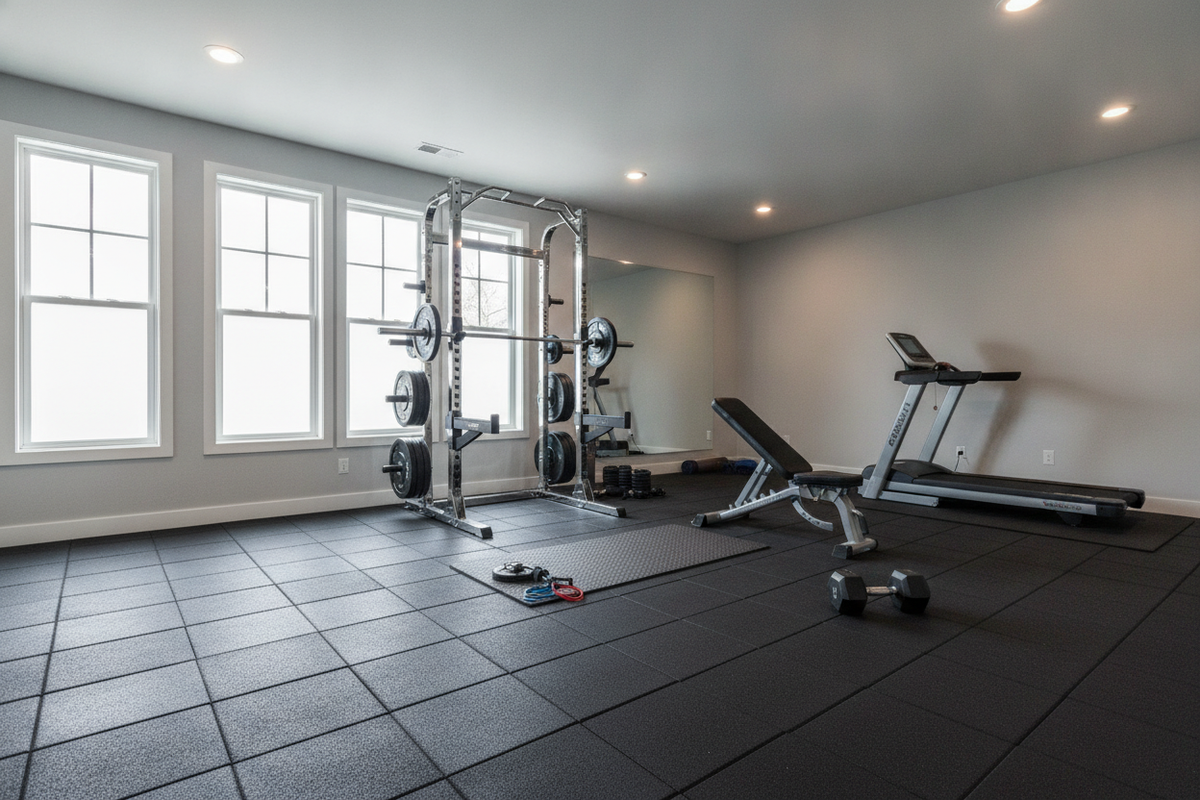
The foundation of any high-tempo training area is the floor. Combat-style routines involve explosive plyometrics, rapid footwork pivots, and frequent transitions down to the floor for planks, sprawls, and burpees. Training on bare concrete, slick hardwood, or unstable thin carpet compromises both joint comfort and equipment longevity.
Traction and Lateral Grip for Agility Work
Dynamic movement creates significant shear forces against the floor. Standard yoga mats often slide or bunch up under lateral pressure, creating footing instability during quick direction changes. A high-density, large-format fitness mat provides a non-slip textured surface that grips both athletic shoes and bare subfloors, allowing you to pivot, plant, and sprawl confidently.
Subfloor Protection and Impact Dissipation
Functional combat circuits frequently involve setting down heavy kettlebells, dropping dumbbells, or absorbing repeated plyometric landings. High-density rubber or specialized polymer floor mats disperse mechanical impact energy, shielding residential subfloors from cracking while dampening vibration and acoustic noise throughout the home.
Mat Maintenance and Cleanliness Protocols
Intense combat-inspired workouts generate substantial perspiration and floor contact. Keeping your training surface clean preserves surface grip and material longevity:
- Post-Workout Wipe Down: Use a mild cleaning solution or gym equipment wipe to remove sweat and surface oils after every session.
- Avoid Harsh Chemicals: Steer clear of bleach or abrasive solvents that can degrade mat texture or compromise non-slip coatings.
- Periodic Deep Cleaning: Mop the surface weekly with warm water and neutral detergent, allowing the area to dry thoroughly before your next workout.
Decision Checklist for Selecting and Executing Online Fitness Programs
Before investing in downloadable training materials or launching a high-intensity routine, run through this practical checklist to ensure a safe, sustainable home fitness journey:
- Assess Movement Baseline: Ensure you are comfortable with basic bodyweight hinge, push, pull, and squat mechanics before attempting explosive plyometric progressions.
- Verify Floor Clearances: Maintain at least an unobstructed perimeter around your primary mat zone to accommodate wide arm reaches and lateral steps.
- Inspect Surface Grip: Confirm that your training mat stays firmly anchored to the underlying floor during aggressive multi-directional footwork.
- Plan Recovery Intervals: Match your weekly schedule to your personal recovery capacity, balancing high-impact fighter circuits with lower-intensity mobility days.