Adapting an Online Fitness Program for Your Home Gym
I remember my first attempt at following a streaming workout in my cramped 10x12 spare bedroom. I was mid-lunge, trying to squint at my phone propped up against a water bottle, lost my balance, and nearly put my knee through the drywall. That is the exact moment I realized that starting a new fitness program at home requires more than just hitting play. You have to actively translate that digital instruction into your physical space.
Over the past five years, I have built and tested dozens of home gyms for my clients, specifically optimizing them for streaming apps and remote coaching. It is entirely possible to get gym-quality results at home, but you need to eliminate the spatial friction first.
Quick Takeaways
- Match your equipment inventory to the app before subscribing so you do not waste money.
- Mount screens at a 42-inch height to protect your cervical spine during floor work.
- Use adjustable dumbbells and heavy resistance bands to replicate bulky commercial machines.
- Keep a physical or digital logbook separate from your streaming device to track progressive overload.
The Rise of the Digital Fitness Space
We have seen an absolute explosion in fitness training programs online. What used to require driving to a commercial gym and paying a trainer eighty bucks an hour can now be streamed directly to your living room for a fraction of the cost. You can access everything from high-intensity interval routines to powerlifting blocks right from your smartphone.
But transitioning these digital workouts into a physical home space requires deliberate planning. When you follow fitness online, the instructor is usually filming in a massive, well-lit studio with endless racks of kettlebells and barbells. Your reality might be a one-car garage or a corner of your home office. If you jump into a new routine without adapting your environment, you will spend half your workout pausing the video to search for gear or rearranging furniture to make room for jumping jacks.
The goal is to make your fitness online program feel seamless. You want to walk into your designated workout area, pull up your app, and immediately get to work without any logistical hurdles.
Choosing the Right Digital Workouts for Your Equipment
The biggest mistake I see clients make is paying for an expensive fitness plan online without checking the equipment requirements first. You do not want to be three days into a six-week block only to discover you need a dedicated leg press machine and a full set of bumper plates.
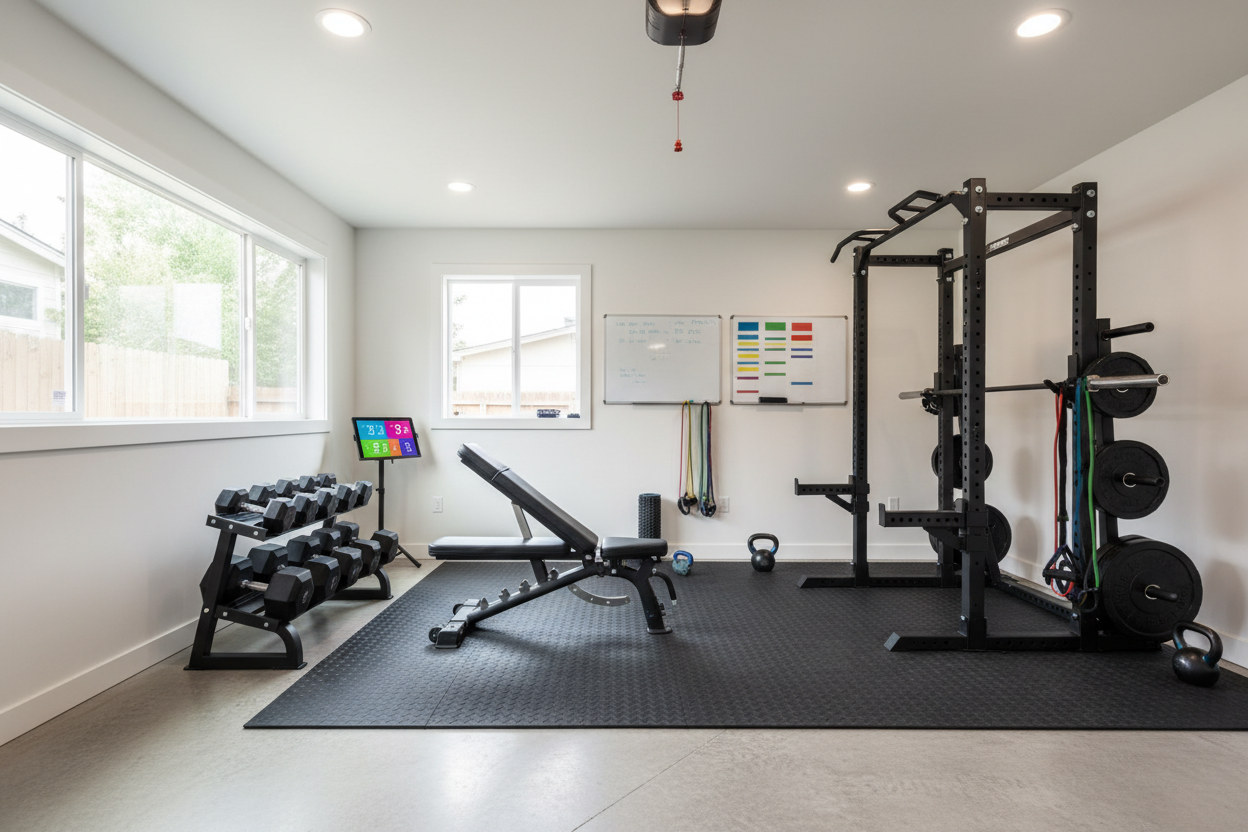
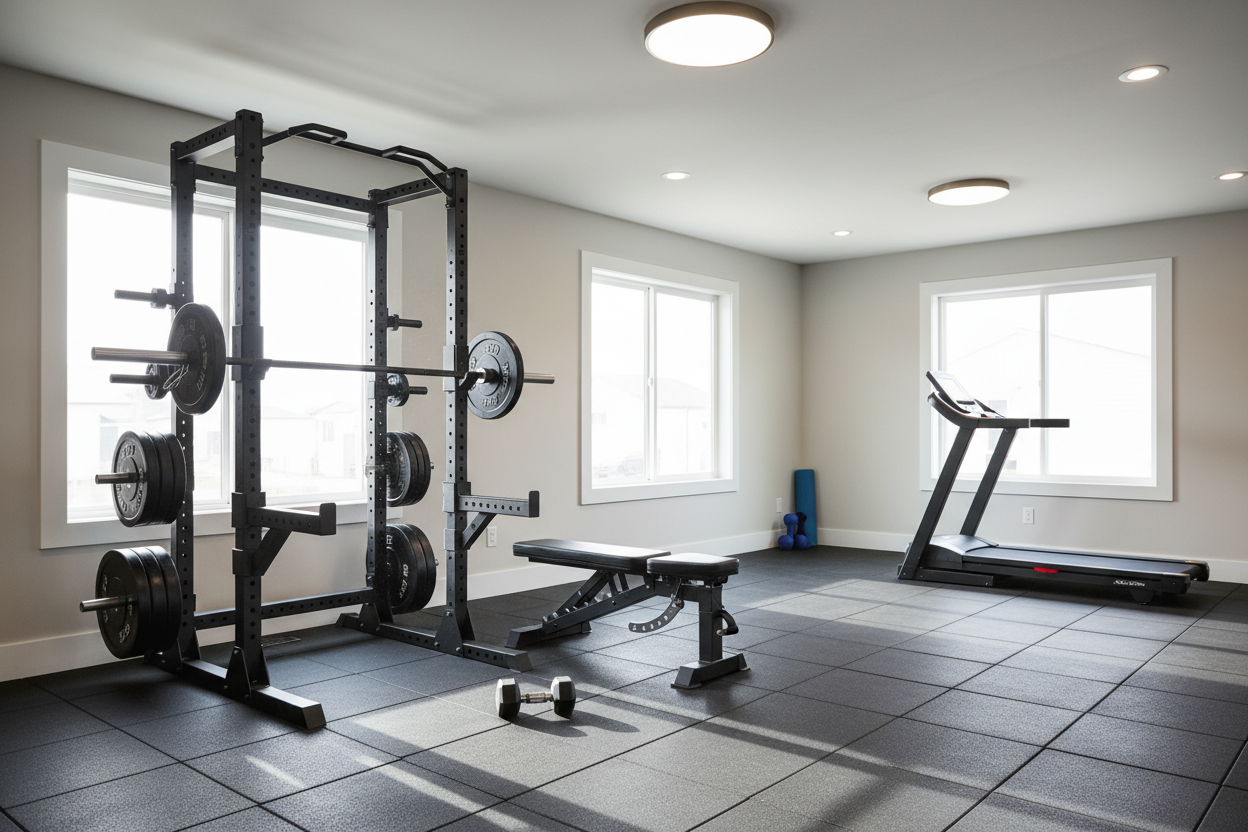
Before you commit to any workout programs, audit your home gym. Do you have a pair of 5 to 52.5-pound adjustable dumbbells? A flat bench? A pull-up bar? Write down exactly what you own. Then, screen the new workout programs you are considering. Many apps offer a filter feature that allows you to sort routines by available equipment. If you are just starting out, it is wise to stick to a basic gym workout plan that focuses on fundamental movements rather than buying a complex digital subscription that demands gear you do not have.
For guys specifically looking to build muscle at home, the best online workout programs for men will usually offer alternative exercises for every movement. If the app tells you to do a barbell back squat, it should immediately offer a dumbbell goblet squat as a substitute. If the app is rigid and demands commercial machines, it is not the right fit for your home setup.
Setting Up Your Screen and Streaming Tech
Where you put your screen dictates the quality of your workout. If your phone is on the floor, you are going to compromise your neck alignment every time you look down to check your form. I learned this the hard way. I used to balance an iPad on a folding chair while testing fitness training programs online. During a heavy set of renegade rows, I knocked the chair over and cracked the screen. That is my honest downside to relying on mobile devices—they are fragile and hard to position securely.
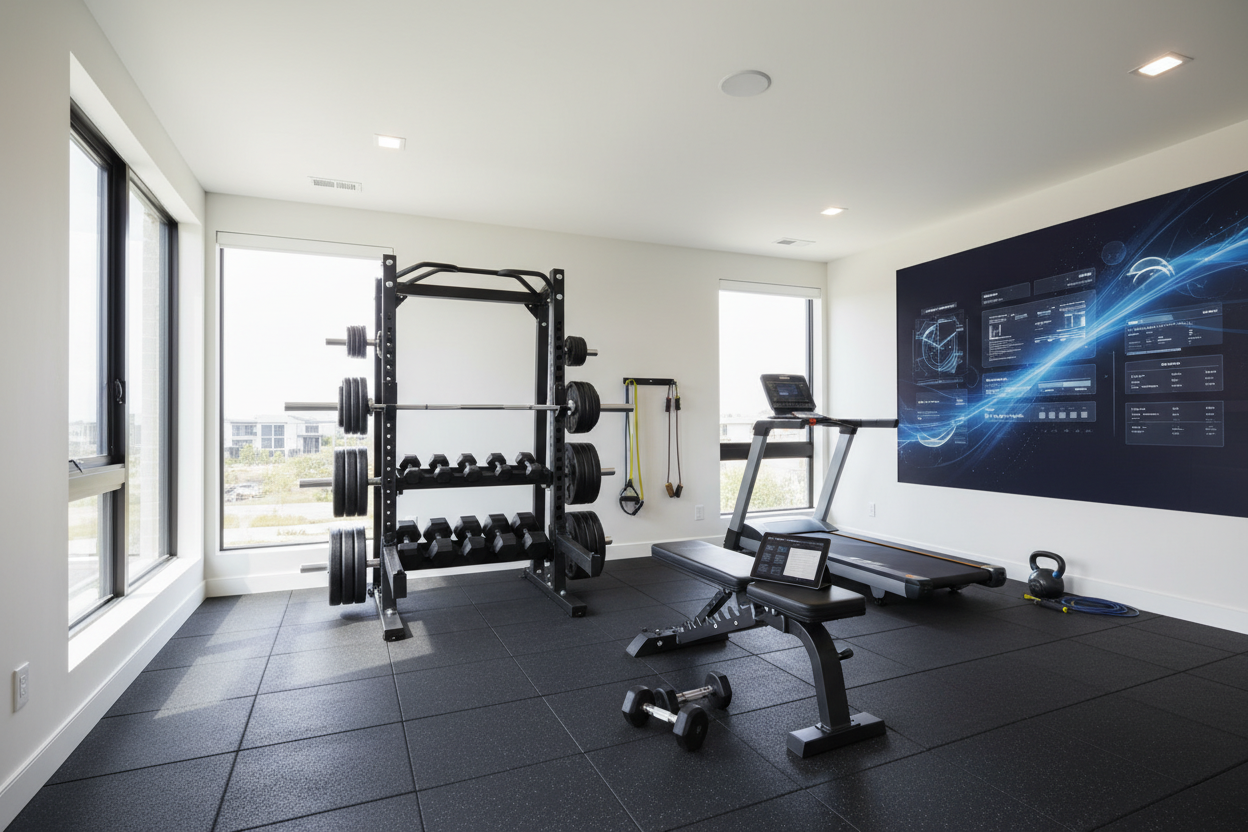
To fix this, you need to deliberately elevate your home gym setup with smart tech placement. I recommend mounting a 32 to 43-inch flatscreen TV on a swivel wall mount. Position the center of the screen about 42 inches off the floor. This height works perfectly because it is visible when you are standing for overhead presses, but still easy to see when you are on the floor doing core work.
If you prefer following virtual workout programs on a tablet, invest in a heavy-duty tripod stand. Look for one with a solid cast-iron base that will not tip over if you accidentally bump it with a resistance band. Being able to move the screen around your lifting area ensures you always have a clear line of sight without cranking your cervical spine.
Modifying Gym Workouts Online for Home Spaces
When you are following an online gym training program, you will inevitably encounter exercises designed for commercial gym equipment. The secret to success is learning how to substitute those movements using what you have. You do not need a cable crossover machine to get a great chest workout; you just need to understand the mechanics of the movement.
Let's say your online gym fitness program calls for a seated cable row. You can easily replicate that pulling angle by looping a heavy resistance band (look for one with 40 to 80 pounds of tension) around a sturdy upright, like the leg of your power rack or a heavy lally column in your basement. If the app calls for a leg extension machine, you can swap it for a dumbbell Bulgarian split squat. The muscle stimulus is what matters, not the specific machine.
Because you will be doing a lot of these modifications on the ground—especially when swapping machine work for bodyweight or banded alternatives—you need a comfortable surface. A large exercise mat is an absolute necessity for comfortably performing the floor-based modifications and dynamic movements often found in online workout routines. It provides the traction you need for heavy dumbbell work while protecting your joints during plyometrics.
Once you get the hang of swapping exercises, gym workouts online become incredibly flexible. You start looking at the movement patterns—push, pull, hinge, squat—rather than the specific apparatus.
Tracking Progress With Online Fitness Plans
One major trap with digital workouts is falling into the entertainment mindset. You hit play, sweat for forty-five minutes, and close the app. But if you want to see actual physical changes, you have to apply progressive overload. You need to lift heavier weights or perform more reps over time.
This can be tricky when you are juggling a streaming video on your TV and trying to log weights on your phone. My advice? Go old school. Keep a physical spiral notebook next to your weights. Write down the exercises from your online fitness plan before you hit play. As you go through the routine, jot down your sets and reps with a pen. It keeps you off your phone and stops you from getting distracted by text messages mid-workout.
If you prefer a digital route, run your streaming app on a TV and use a dedicated logging app on your phone. If you are struggling to find good templates to follow, check out a curated workout hub to find reliable fitness guides and tracking sheets. The key is to treat online gym programs with the same analytical approach you would a traditional gym routine.
Staying Consistent With Virtual Coaching
The hardest part of any online exercise program is the lack of physical presence. There is no trainer standing over you, counting your reps or forcing you to finish the set. You have to manufacture your own accountability.
To stay consistent, schedule your online workout routines just like you would a real-life meeting. Put them in your calendar. Set up your home gym the night before—lay out your dumbbells, queue up the app on your TV, and have your water bottle ready. When you remove the friction of setup, you are much less likely to skip the session.
Finally, engage with the community features if your fitness training programs online offer them. Posting your completed workouts to a private group or messaging your virtual coach can provide that crucial layer of social accountability. You might be lifting alone in your garage, but you do not have to do the program in isolation.
Can I build muscle with just an online fitness plan and dumbbells?
Absolutely. As long as you have adjustable dumbbells that challenge you (up to 50 pounds or more) and you consistently apply progressive overload, you can stimulate significant muscle growth following online gym programs.
How much space do I need for most digital workouts?
Most virtual workout programs require an area of at least 6x6 feet. This gives you enough clearance to step forward for lunges, lie down flat for core work, and extend your arms overhead without hitting a wall or ceiling fan.
What if the app doesn't offer exercise modifications?
If a fitness online program strictly requires commercial machines and offers no dumbbell or banded alternatives, it is best to cancel the subscription. Look for best fitness guides that specifically cater to home gym environments and provide flexible exercise swaps.