Leg Exercise Equipment: Home Gym Buying Guide
Understanding Leg Exercise Equipment: Archetypes and Movement Demands
Selecting appropriate leg exercise equipment requires an understanding of how lower-body structures produce force. The lower body relies on foundational movement patterns: bilateral knee flexion and extension, hip hinging, unilateral stepping, and lateral stabilization. Different training tools address these mechanics through distinct resistance profiles.
When configuring an area for training, lifters encounter several core equipment formats. Dedicated machines guide user movement along fixed arcs, while free-weight setups demand active stabilization across multiple planes. Compact tools provide dynamic tension without requiring substantial dedicated floor space. Matching the right equipment for leg workout routines to personal goals ensures that movement patterns remain balanced, sustainable, and properly supported within your training environment.
A well-planned setup balances compound loading tools with targeted isolation stations. By understanding how each piece of exercise leg equipment interacts with human biomechanics and room layouts, you can assemble a functional training zone tailored to long-term performance.
Categorizing Equipment by Training Vector and Joint Stress
Equipment design directly shapes joint stress and muscular recruitment. Biomechanically, lower-body implements fall into three primary structural categories: free-form axial loading implements, guided-path mechanical stations, and multi-planar dynamic tools. Evaluating these categories helps clarify which fitness equipment legs respond to best under specific programming parameters.
Free-form tools, such as barbells and dumbbells, distribute load across the skeleton while demanding balance and core engagement. Conversely, guided systems isolate specific angles, reducing balance demands to focus stress onto target muscles. Choosing appropriate strength training equipment for legs involves deciding where you want the primary stabilizing burden to fall—on the lifter or on the machine frame.
Multi-Joint and Axial Loading Tools: Racks, Free Weights, and Leg Presses
Compound exercises recruit large muscle groups across multiple joints simultaneously. Within commercial facilities and dedicated home gyms, power racks, half racks, and specialized leg press stations form the backbone of lower-body strength development. These stations accommodate heavy loading for squats, lunges, and pressing variations.
A dedicated exercise machine for your legs like a 45-degree leg press or vertical press allows deep knee and hip flexion while supporting the spinal column against a padded backrest. This setup directs force through the quadriceps and glutes while mitigating axial spinal loading. However, because these machines concentrate significant mass across a relatively compact footprint, placing them on stable, level flooring is essential for reliable operation.
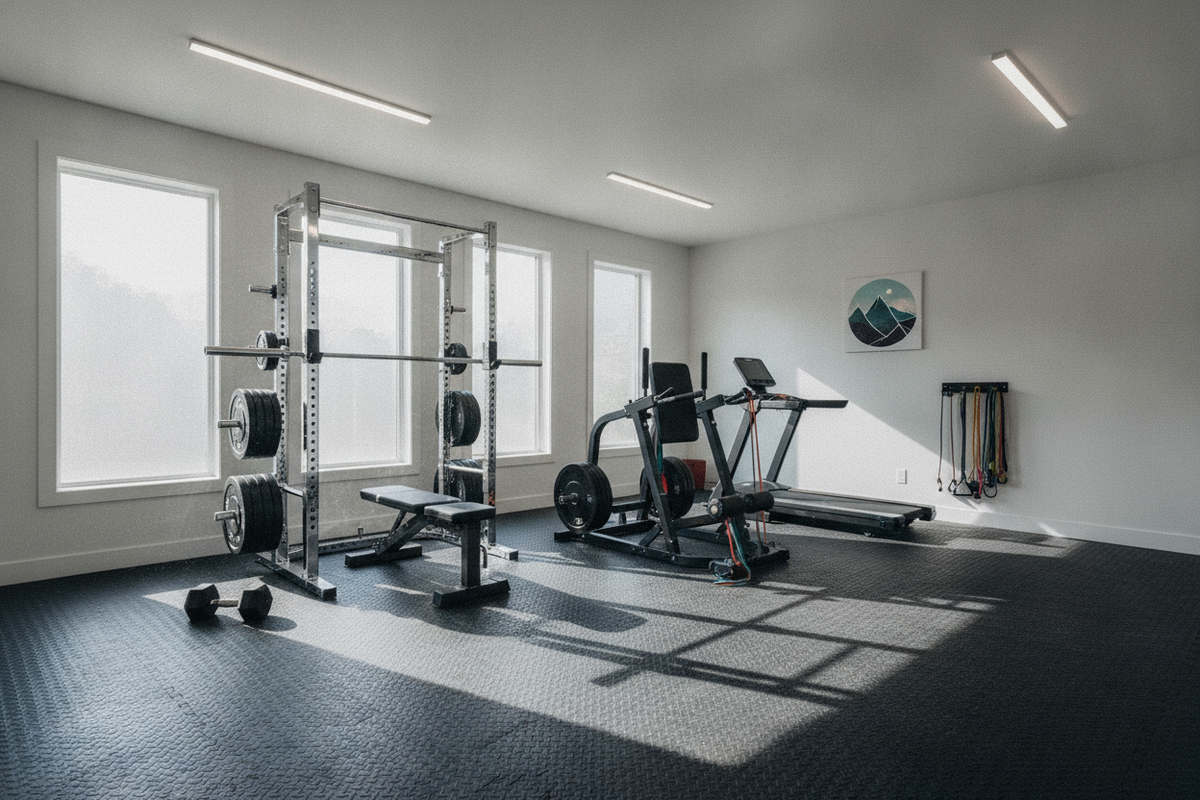
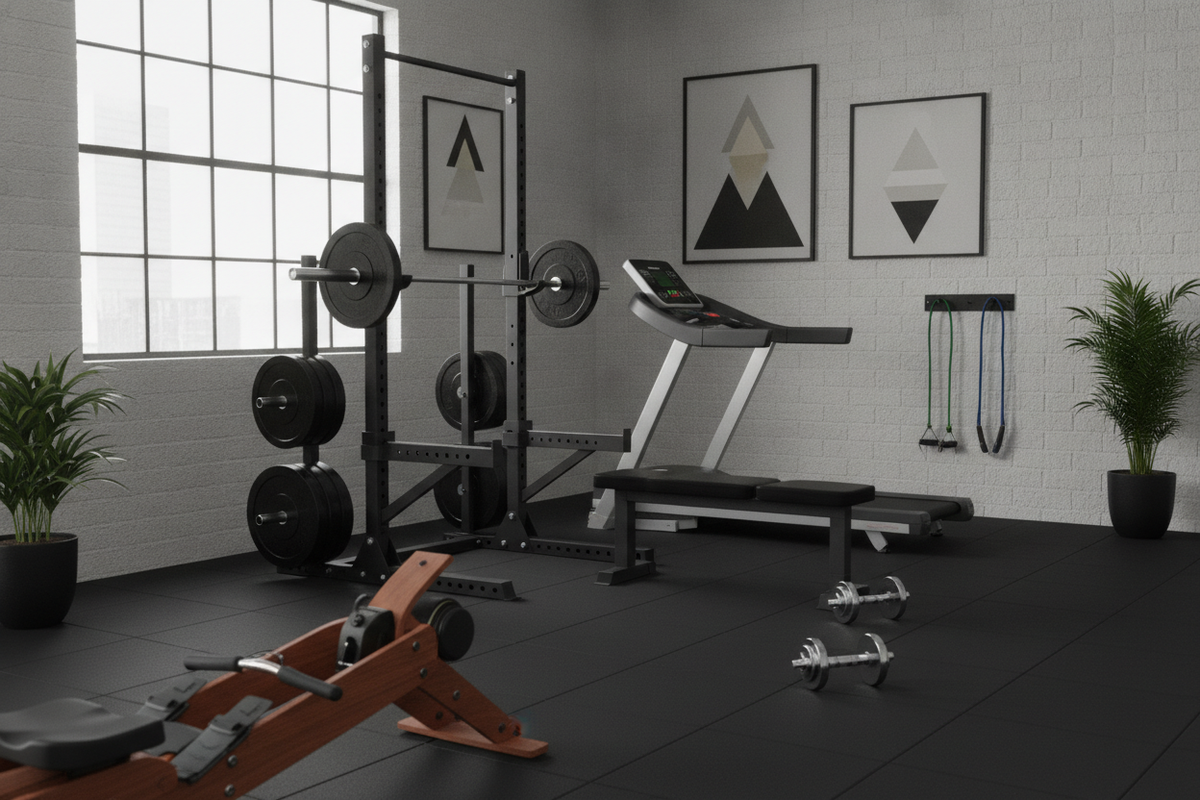
Barbell-based movements inside a power rack provide open-chain loading, allowing natural joint paths. When building out a home facility, incorporating quality weight equipment for legs requires planning for adequate vertical clearance, plate-storage space, and a generous perimeter around the rack for plate loading and unloading.
Isolated Contraction and Pattern-Specific Apparatuses: Extensions, Curls, and In-and-Out Units
While compound stations build global capacity, isolation apparatuses target specific muscle bellies and movement planes. Single-joint knee extension benches and seated or lying leg curl stations isolate the quadriceps and hamstring groups without placing significant demands on hip stabilizers.
Specialized hip adduction and abduction machines—often referred to as a leg in and out machine—target the inner groin and outer hip musculature. These tools apply lateral resistance that is difficult to replicate with traditional free weights. Lifters seeking comprehensive guidance on these fixed-path mechanisms can consult our detailed leg machine gym guide to evaluate variations in seat angles, cam profiles, and pad alignments.
When selecting a single-joint legs fitness machine, look for adjustable pivot points. Aligning the machine's axis of rotation directly with the anatomical joint helps maintain smooth resistance through the entire range of motion.
Low-Impact, Rehabilitation, and Dynamic Conditioning Options
Not every lower-body routine requires heavy iron plates. Many users benefit from low-impact tools designed for movement re-education, cardiovascular conditioning, or gentle joint mobility. A dedicated leg rehab machine or seated pedal exerciser offers controlled, repetitive motion that encourages blood flow and joint lubrication without aggressive eccentric loading.
Dynamic bodyweight systems, such as a lateral leg slider machine or smooth glide boards, provide continuous tension through lateral lunges and curtsy squats. These sliding surfaces encourage smooth friction control rather than abrupt ground impacts, making them accessible additions for diverse fitness levels.
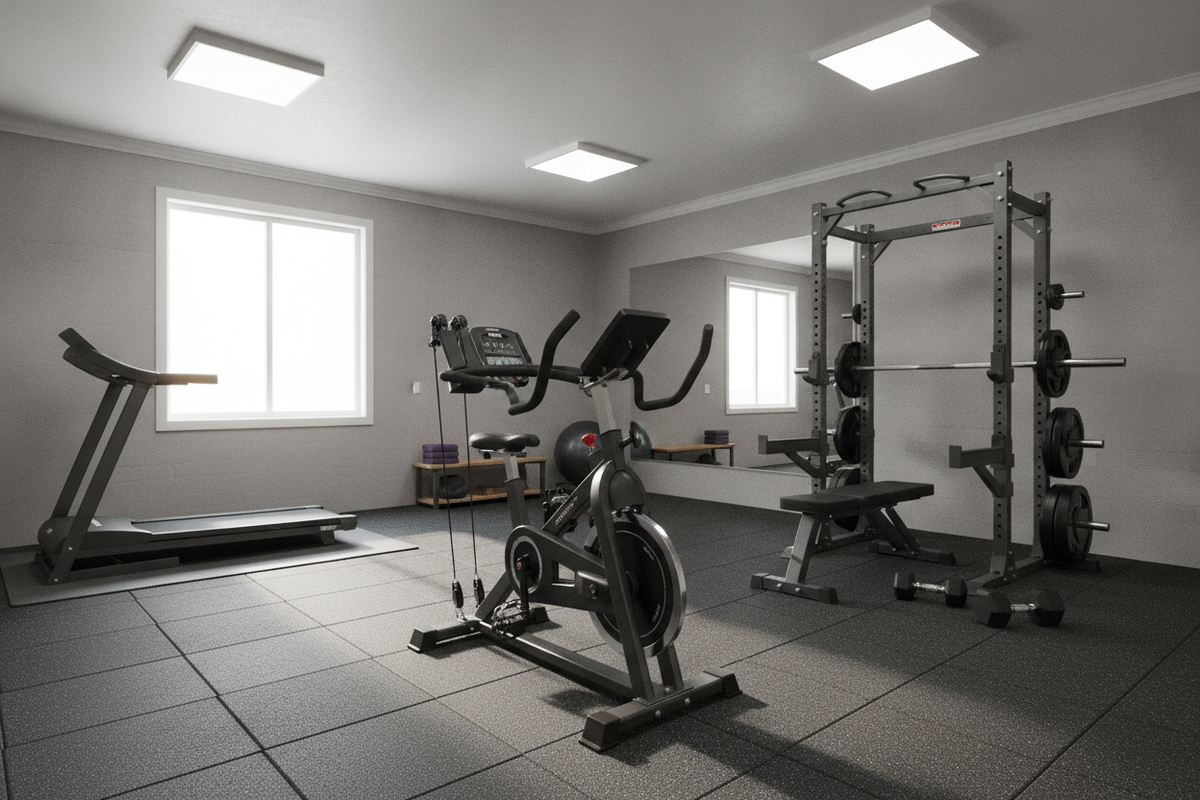
For conditioning, integrating a dedicated leg cardio machine—such as an upright bike, air bike, or stair stepper—provides rhythmic lower-body engagement. These units challenge muscular endurance in the calves, quads, and glutes while elevating the heart rate, serving as an effective warm-up or standalone conditioning option.
Compact Home Gym Implements and Portable Leg Accessories
Full-sized selectorized stations offer dedicated paths of motion, but they also demand considerable space and investment. For smaller residential training spaces, compact implements and portable accessories provide functional lower-body training within a fraction of the footprint.
Effective options for home setups include:
- Resistance Bands and Loop Straps: Provide accommodating resistance for lateral band walks, glute bridges, and assisted squats.
- Ankle Cuffs and Cable Attachments: Facilitate multi-directional leg kicks, adduction pulls, and knee raises when paired with compact cable pulleys.
- Slant Boards and Squat Wedges: Elevate the heels during squats to encourage deeper knee flexion and upright torso positioning.
- Compact Glute Ham Rollers: Enable smooth eccentric hamstring curls using bodyweight resistance on a smooth surface.
Complementing primary stations with items from a dedicated strength training accessories collection allows lifters to adjust resistance angles, target smaller stabilizing muscles, and introduce training variety without crowding the room with bulky machinery.
Home Gym Staging: Point Loads, Vibration Dampening, and Subfloor Defense
Integrating heavy lower-body equipment into a residential area requires careful consideration of structural support and surface protection. Free weights, loaded plate trees, and heavy steel frames exert substantial concentrated downward force. Without adequate floor preparation, these point loads can permanently mar concrete, dent hardwood, or crush underlying carpet fibers.
Dynamic exercises like lunges, jump squats, and heavy deadlifts transmit vibration directly into the subfloor. Layering heavy-duty, dense rubber surfacing beneath machines and free-weight zones absorbs impact energy and dampens acoustic vibration. High-density mats also provide essential grip, helping lifters maintain foot traction during heavy presses or unstable unilateral movements.
To safeguard residential subfloors beneath comprehensive multi-station setups, utilizing a dedicated exercise gym workout product creates an uninterrupted protective foundation. A continuous protective mat keeps heavy equipment feet from shifting during dynamic movement, preserves room aesthetics, and creates a clear, stable zone for focused leg training.
Selection Framework: Choosing the Right Leg Apparatus for Your Space
Selecting the best apparatus involves balancing functional training goals, available spatial dimensions, and structural requirements. In my view, lifters often underestimate how much clearance space is needed around a machine until plates are already clanking against the drywall.
Follow this structured framework when evaluating lower-body equipment:
- Define Primary Movement Priorities: Determine whether your programming emphasizes heavy bilateral compound strength, rehabilitation and low-impact movement, or single-joint muscular isolation.
- Measure Usable Clearance: Measure ceiling height, wall boundaries, and walk-around zones. Ensure that loading horns, extended levers, and user travel paths remain completely clear of household obstacles.
- Assess Subfloor Durability: Calculate the combined mass of the equipment, added weight plates, and the lifter. Confirm that the selected surface can support the load without structural strain.
- Plan Long-Term Flooring Defense: Install resilient, non-porous matting before assembling heavy steel frames to avoid awkward repositioning later.
For a deeper dive into residential product comparisons and floor-space optimization, check out our comprehensive leg exercise equipment guide. By approaching equipment selection systematically, you can build a lower-body training space that remains safe, efficient, and adaptable for years to come.